


Oak Leather Dining Chairs
Oak leather dining chairs combine timber frames with upholstered hides, offering sturdy seating for everyday meals.
The Form and Period of Oak Leather Dining Chairs
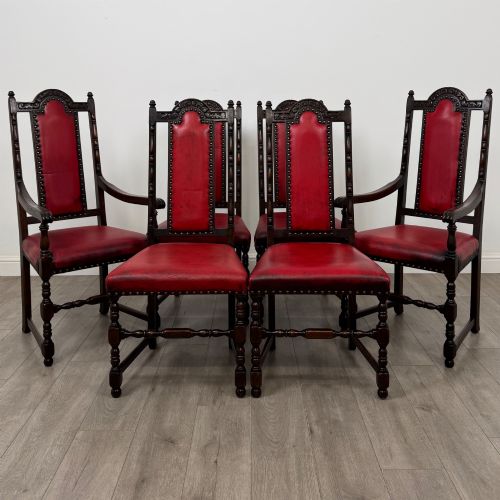
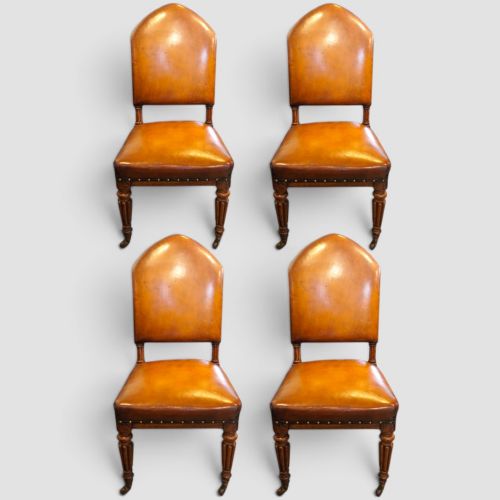
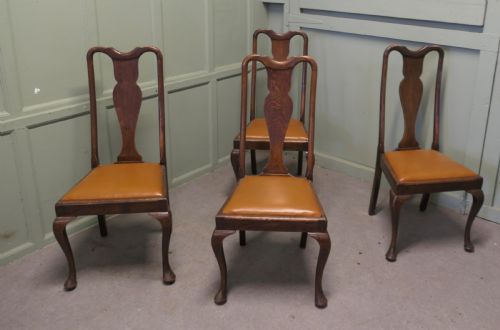
Oak leather dining chairs bring together sturdy timber frames and hide upholstery for household use, appearing frequently in sets spanning multiple seats. When searching for oak leather dining chairs, buyers encounter pieces originating from the Victorian era, the Edwardian period, and the nineteen-thirties.
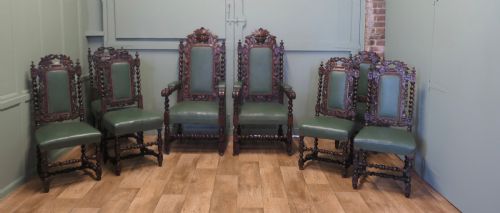
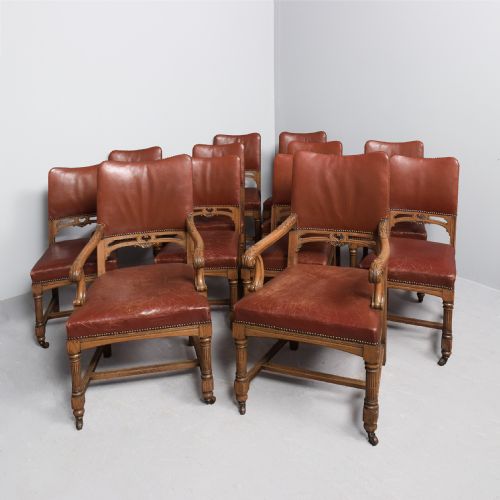
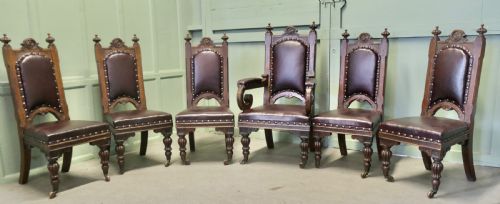
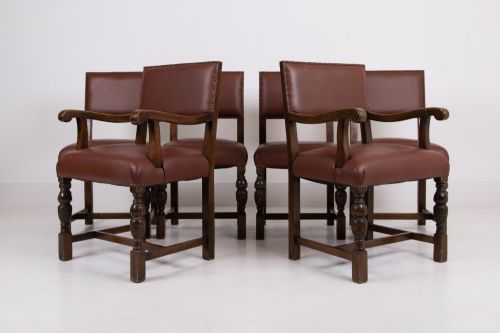
Makers and designers from history produced these chairs in various stylistic revivals, including Jacobean, Gothic, and Arts and Crafts movements. The evidence shows these dining seats configured as pairs, fours, sixes, eights, tens, and larger groupings.
English oak appears alongside foreign varieties such as French, Spanish, and Portuguese timber. Workshops constructed these forms for functional dining rooms and boardroom spaces alike.
Materials and Construction
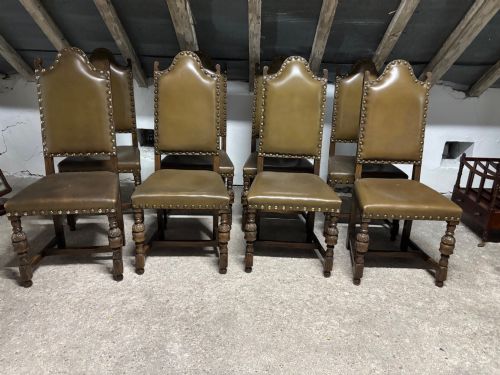
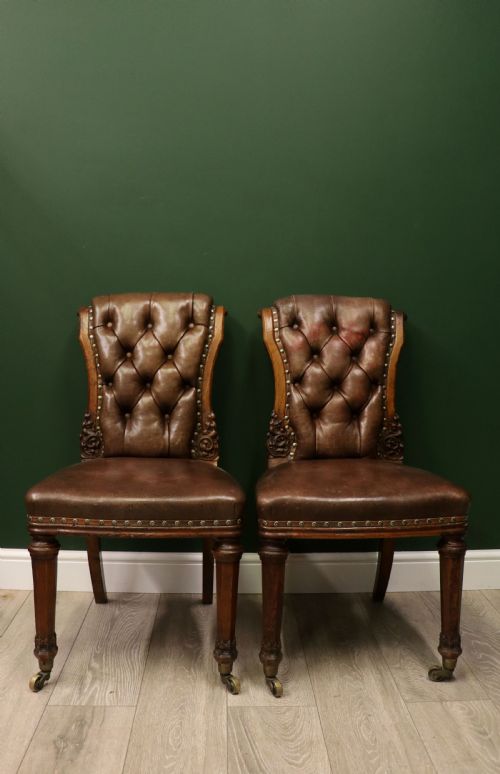
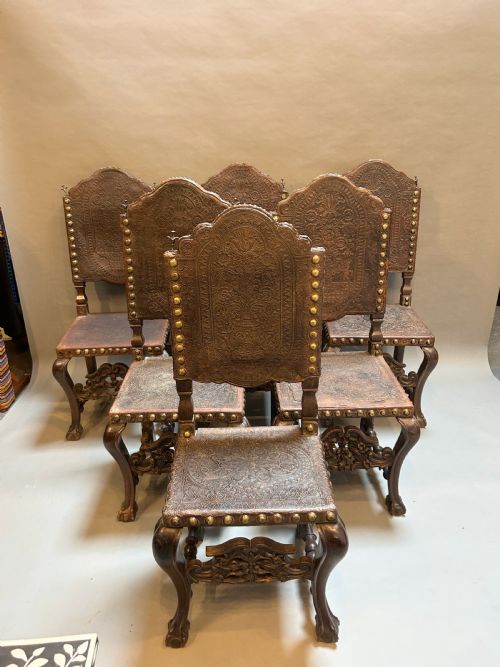
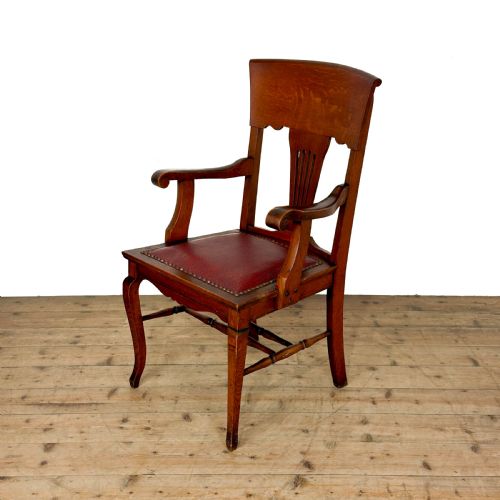
Constructed primarily from oak and English oak, these frames rely on traditional joinery methods to support daily weight. Workshops incorporated brass studs to secure the leather upholstery firmly to the wooden structure.
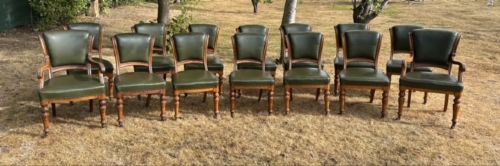
Upholstery departments utilised genuine leather, embossed leather, and sometimes green leatherette for the seat pads and high backs. Certain pieces exhibit limed finishes or rich golden oak patination developed over decades of use.
Retail Price Guide 2026
Typical UK retail prices for oak leather dining chairs, calculated from the Sellingantiques database of over a million retail prices indexed since 2003. This retail price guide relies exclusively on Sellingantiques data; no external sources or auction records are used, so the figures do not describe the wider market.
Frames utilise English, French, Spanish, and Portuguese oak alongside brass hardware and leather.
Gradations in Quality
The distinction between standard commercial production and the work of notable makers lies in the depth of carving and the selection of timber. Pieces carrying attribution to workshops like Gillows or Lamb of Manchester display superior structural joinery and refined proportions.
The handling of the hide upholstery dictates visual appeal, with hand-tooled or embossed leather elevating the status of a set far above plain utilitarian coverings. Consistent colour across a large set of twelve or fourteen chairs maintains greater harmony than matched sets gathered together later.
Lamb Of Manchester·George Henry Walton·Gillows·Gillows of Lancaster·A W N Pugin
The Oak Leather Dining Chairs Glossary
- Jacobean Revival
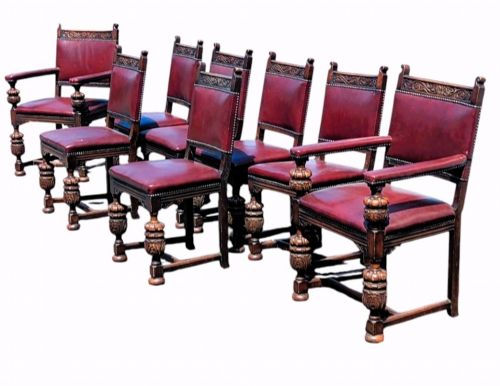
- A nineteenth-century style imitating seventeenth-century English furniture. It employs turned legs and heavy framing.
- Arts and Crafts
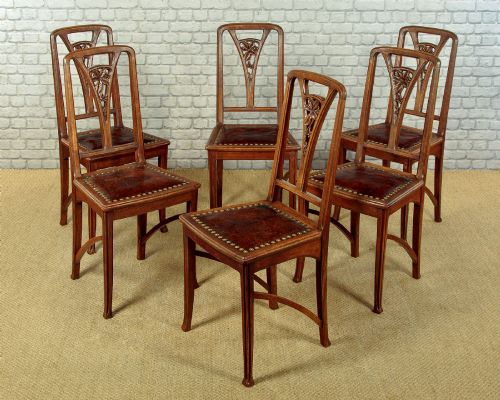
- A movement prioritising visible construction and honest materials. Chairs from this style often feature high backs and exposed tenons.
- Gothic Revival
- An architectural style applied to furniture. This manifests as pointed arches, heavy mouldings, and sombre timber tones.
Frequently Asked Questions
How do I clean the leather seats?
Wipe surfaces gently with a damp cloth to remove dust and debris.
Apply a suitable leather conditioner periodically to prevent the hide from drying and cracking.
Are these chairs suitable for daily use?
Oak frames provide immense structural stability and strength for regular dining.
Ensure joints remain tight and stable before subjecting older frames to heavy daily strain.
How do I identify Victorian examples?
Look for dense timber patination, traditional hand-cut joinery, and period upholstery techniques such as brass studding.
Stylistic cues like heavy turned legs or Gothic Revival arches often point towards nineteenth-century origins.
What defines Arts and Crafts chairs?
These pieces emphasise honest construction, straight lines, and functional joinery over ornamental carving.
High backs and square frames frequently characterise this particular movement.