


Oak Leather Bench
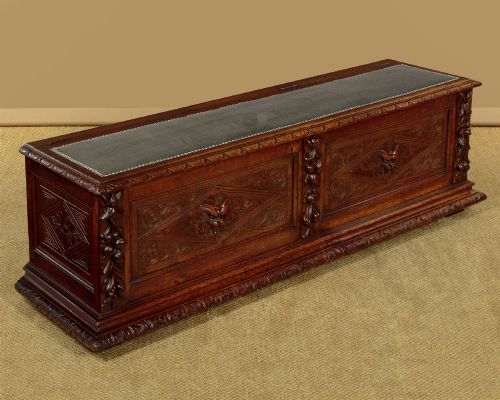
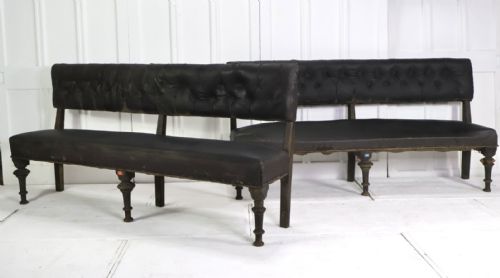
An oak leather bench offers solid timber framing paired with durable hide seating, suiting hallways, studies and reception spaces.
Oak Leather Bench
An oak leather bench brings together sturdy timber frames and hide upholstery across several forms including settles, window seats, stools and hall benches. When searching for an oak leather bench, buyers encounter pieces spanning the Victorian and Edwardian eras alongside late nineteenth and early twentieth century examples.
The selection ranges from carved settles and club fenders to pairs of window seats and joint stools. Styles lean towards Gothic Revival, Arts and Crafts and Jacobean Revival aesthetics, often incorporating carved details and metal studs.
Irish country house hall benches and medical consultant tables sit alongside domestic seating forms. These pieces serve functional seating roles while displaying period woodworking and upholstery traditions.
How they were made
Frames are constructed from solid oak, frequently shaped through carving, turning or jointing techniques. Woodworkers utilised traditional joinery methods to ensure structural stability for heavy seating use.
Upholstery involves leather secured to the wooden bases, often finished with brass or metal studs along the edges. Carved ornamentation, such as lions heads, appears across structural elements on specific Victorian and Edwardian pieces.
Among the oak frames and leather hides, a medical consultant's massage table occasionally turns up to treat weary collectors.
What varies in quality
Quality depends upon the depth and execution of the timber carving, from plain joint stools to elaborately detailed Gothic Revival settles and lion head motifs. The integrity of the oak frame and the proportion of the overall form distinguish standard workshop output from higher grade commissions.
The treatment of the leather upholstery and the selection of supportive materials dictate the refinement of the piece. Maker attribution, such as works associated with James Shoolbred or William Birch, elevates the standing of an item within the historical record.
William Birch·James Shoolbred
The Oak Leather Bench Glossary
- Settle
- A wooden wooden bench featuring a high back, solid arms and enclosed storage or lower framing. This form provides shelter from draughts in entrance halls and large rooms.
- Joint Stool
- An early form of wooden stool constructed with mortise and tenon joints using pegs. These sturdy pieces serve as precursors to later domestic seating.
- Club Fender
- A low upholstered seat surrounding a fireplace hearth, traditionally featuring metal frames and leather top rails. They offer sociable seating close to the fire.
- Gothic Revival
- An architectural and decorative style drawing inspiration from medieval forms. Pieces display pointed arches, tracery and heavy carved ornamentation.
- Arts and Crafts
- A design movement emphasising handcraftsmanship and simple vernacular forms. Furniture from this tradition highlights honest construction and visible materials.
Oak Leather Bench: Frequently Asked Questions
Where should I place an oak leather bench?
These pieces suit entrance halls, long corridors, and studies where sturdy seating and surface presence are useful.
Their substantial timber frames and durable leather surfaces also function effectively beneath windows or alongside large dining tables.
How do I distinguish Victorian from Edwardian pieces?
Victorian examples often feature heavier carving, darker finishes, and dramatic stylistic revivals like Gothic or Jacobean ornamentation.
Edwardian pieces generally present lighter proportions and simpler lines, reflecting shifts in domestic interior taste around the turn of the century.
What is a club fender bench?
A club fender is a low seating structure designed to fit around the perimeter of a fireplace hearth.
The top rail is typically upholstered in leather, allowing people to sit close to the fire while the open metal base permits heat circulation.
How should I care for the leather upholstery?
Keep the leather conditioned with appropriate balms to prevent drying and cracking over time.
Position the bench away from direct sunlight and strong heat sources to preserve the natural hide and timber finish.