


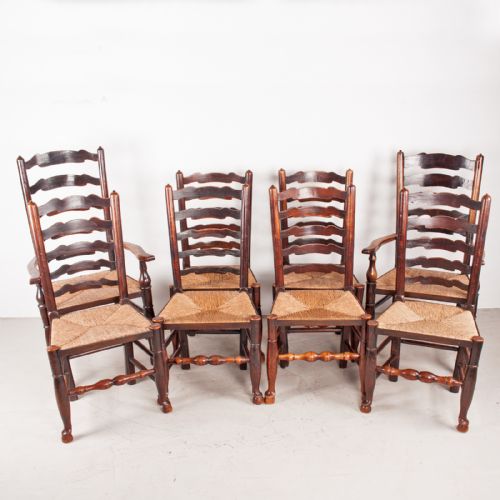


Oak Ladderback Armchair
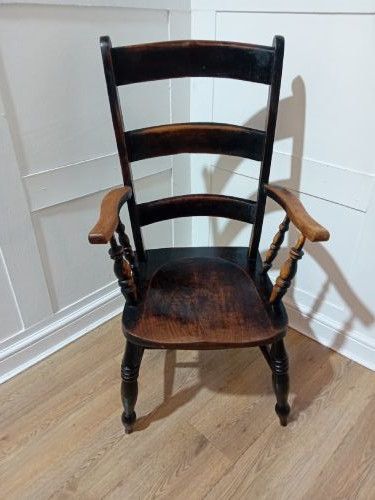
An oak ladderback armchair provides sturdy vernacular seating built with horizontal slats, offering a traditional form valued for both everyday utility and rustic character.
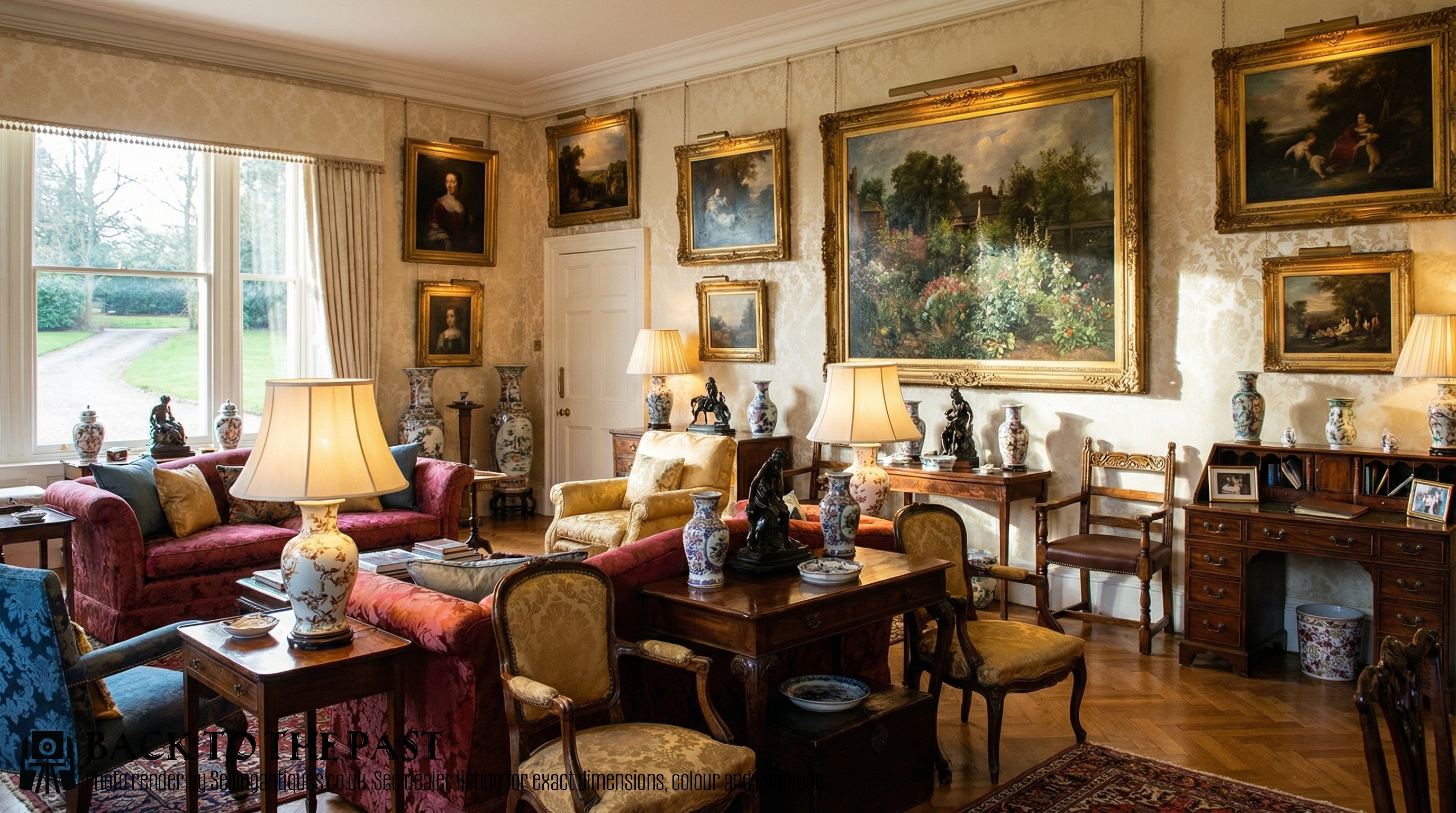
Oak Ladderback Armchair
An oak ladderback armchair is a functional piece of vernacular seating defined by its horizontal back rails, which resemble the rungs of a ladder. Buyers searching for an oak ladderback armchair encounter various regional styles, including English country, Arts and Crafts, and French provincial designs.
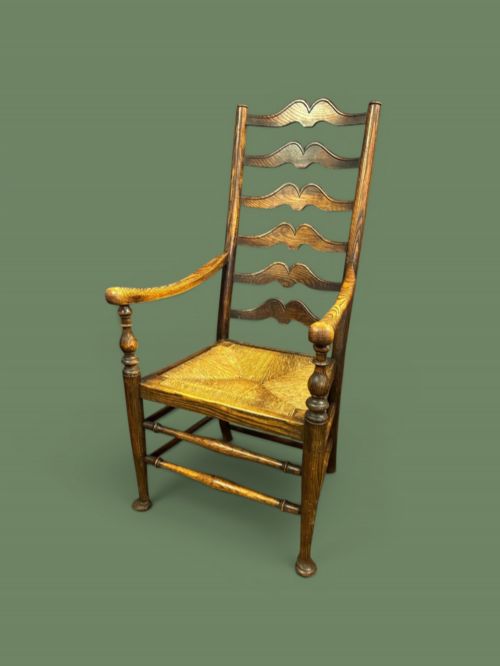
The version most commonly met on this page combines a sturdy wooden frame with a woven rush seat, often featuring arms and a high back for support. These chairs serve well as desk chairs, kitchen seating, or occasional armchairs in rustic settings.
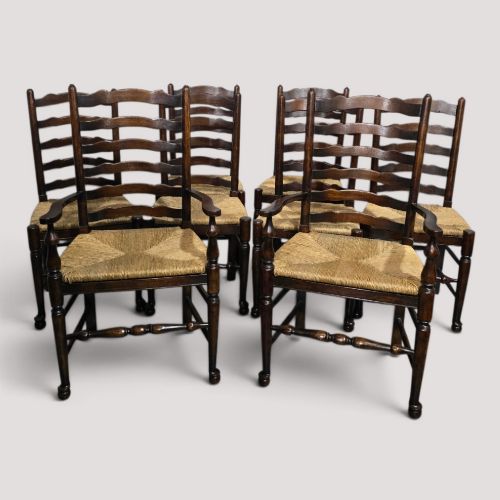
Origins span the nineteenth century and early twentieth century, taking in Victorian and Regency periods alongside modernist Arts and Crafts interpretations. Pieces range from single country carvers to matched and harlequin dining sets.
Materials and construction methods
Makers built these frames primarily using solid oak, frequently incorporating supporting timbers such as elm, ash, beech, and painted elements. Turned uprights and curved back rails demanded careful carpentry to achieve rigid joints without modern adhesives.
Seats relied on natural rush woven tightly over wooden frames, though some examples utilised fabric or plain wood. Paint and original finishes appear across country vernacular and provincial pieces, preserving the surface texture of the timber.
Oak Ladderback Armchair Retail Price Guide 2026
Typical asking prices for oak ladderback armchair among the pieces listed under this phrase on Sellingantiques today, from the lower quarter to the upper quarter. They describe what is for sale here now, not the wider market.
Some chairs arrived small enough for a nursery yet sturdy enough to survive generations of toddlers rocking near the hearth.
Judging quality and craftsmanship
Quality rests in the integrity of the timber framing and the tightness of the woven rush seat. A well-made frame displays balanced proportions and secure joints that withstand daily use.
Refined examples show careful turning on the uprights and arms, whereas simpler provincial pieces prioritize robust utility over decorative detail.
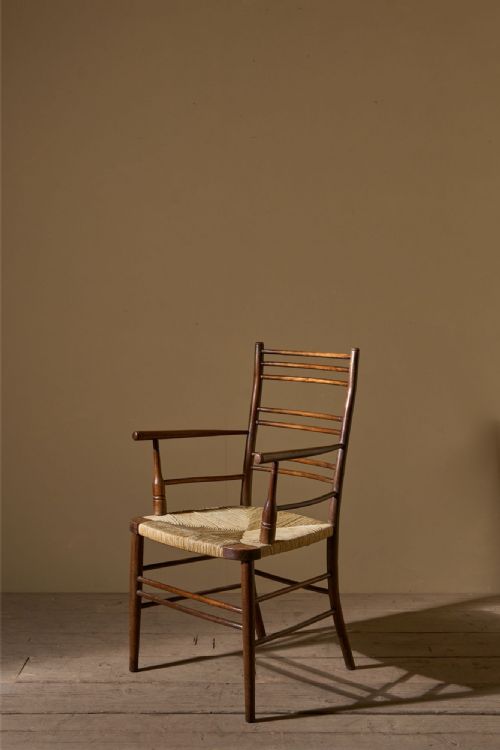
Liberty & Co·Dicon Nance
The Oak Ladderback Armchair Glossary
- Ladderback
- A chair style featuring horizontal slats or rails between the vertical back posts. This traditional form dates back centuries in British and European vernacular furniture.
- Rush seat
- A seating surface woven from dried marsh grasses or sedge around a wooden frame. It provides a resilient and comfortable base.
- Carver
- An armchair designed to match a set of dining chairs, typically placed at the head of a table. These pieces feature integrated armrests for added support.
- Harlequin set
- A collection of chairs that are similar in style and period but not originally made as a single matching group. They offer a collected appearance around a dining table.
- Vernacular furniture
- Practical items made by local craftspeople using regional traditions and readily available materials. These pieces reflect the functional needs of rural households.
Oak Ladderback Armchair: Frequently Asked Questions
What is an oak ladderback armchair?
An oak ladderback armchair is a traditional wooden seat featuring horizontal back slats and integrated armrests. These pieces stem from various regional vernacular traditions across Britain and Europe.
They appear in settings ranging from farmhouse kitchens to Arts and Crafts interiors, combining structural strength with simple decorative appeal.
How were rush seats made?
Rush seats were constructed by twisting dried marsh grass or sedge into sturdy cords and weaving them directly around the chair frame. This technique created a supportive and slightly flexible platform.
Craftspeople used natural materials that responded to humidity, requiring careful handling to maintain the tight weave over decades.
How do I style a ladderback chair?
These armchairs fit naturally into country houses, rustic dining rooms, and eclectic studies where traditional woodwork adds warmth. Pairing a single carver with simpler side chairs creates a balanced seating arrangement.
They also function effectively as desk chairs or standalone reading seats in bedrooms and hallways.
How can I tell the age of these chairs?
Dating relies on examining the timber grain, tool marks, joinery methods, and the degree of wear on the rush seat. Nineteenth-century examples often display hand-turned components and distinct patination.
Later Arts and Crafts pieces reflect specific workshop designs and simplified structural lines characteristic of the early twentieth century.