




Oak Kitchen Cupboard Hutch
These oak kitchen cupboard hutch pieces combine heavy timber storage with open plate display, bringing centuries of practical utility and regional craftsmanship into the modern home.
Oak Kitchen Cupboard Hutch
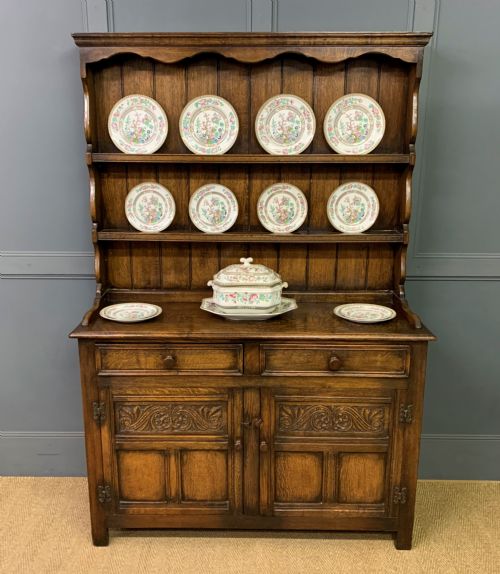
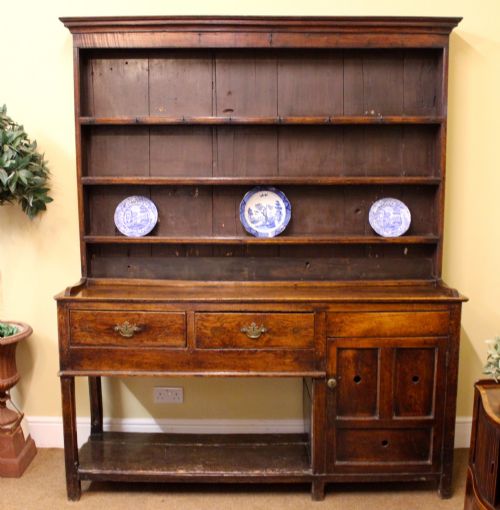
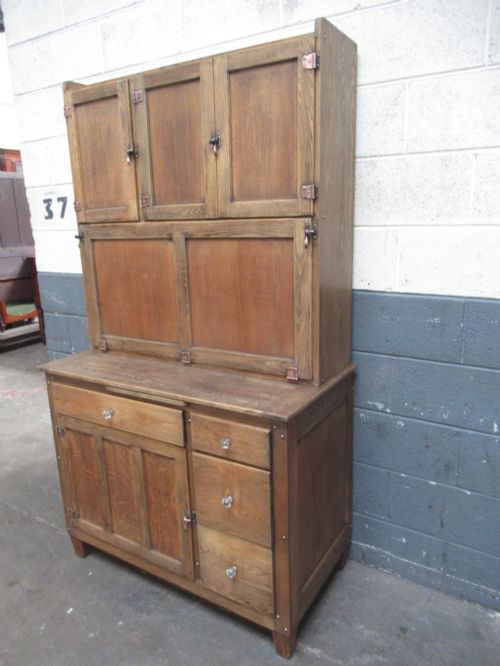
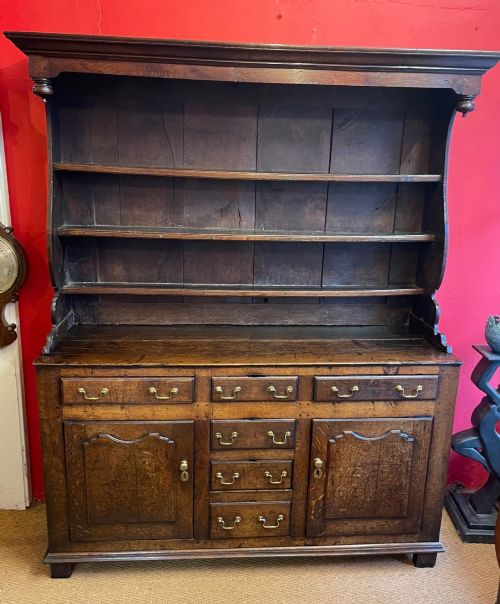
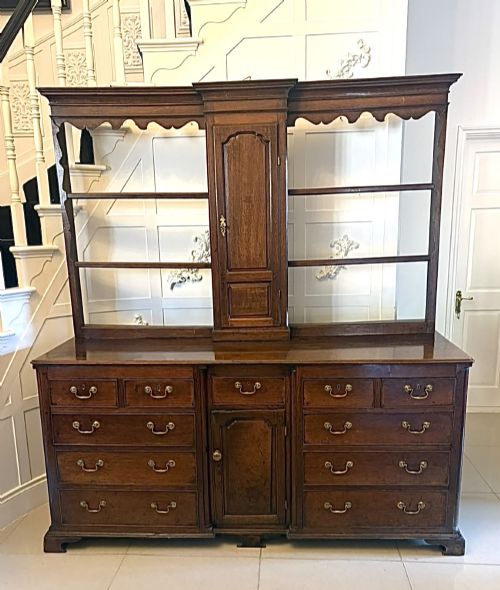
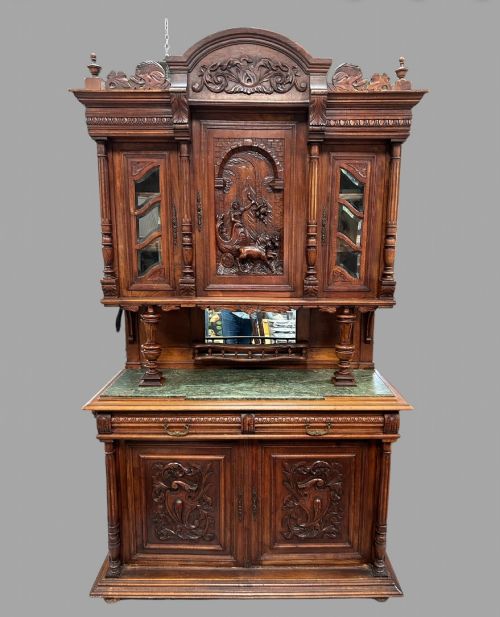
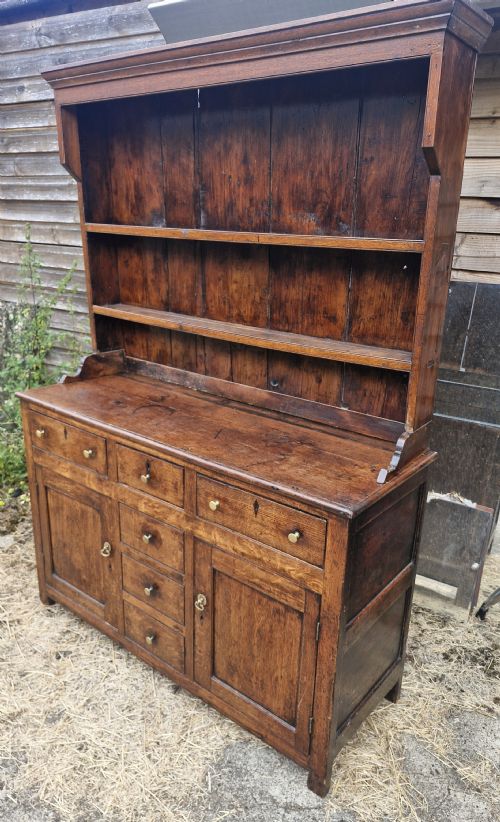
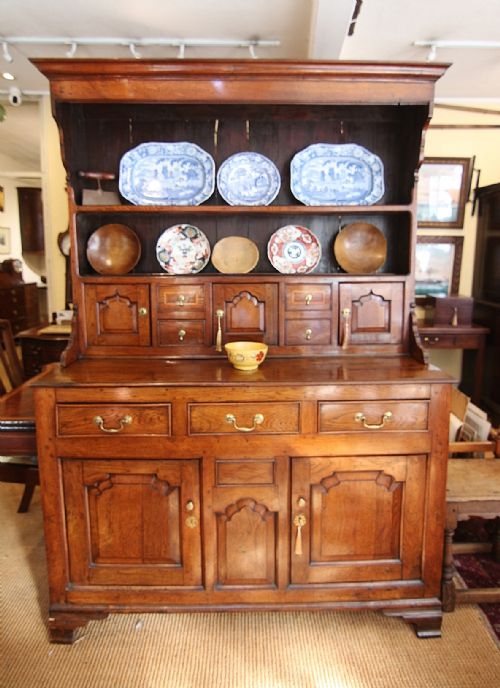
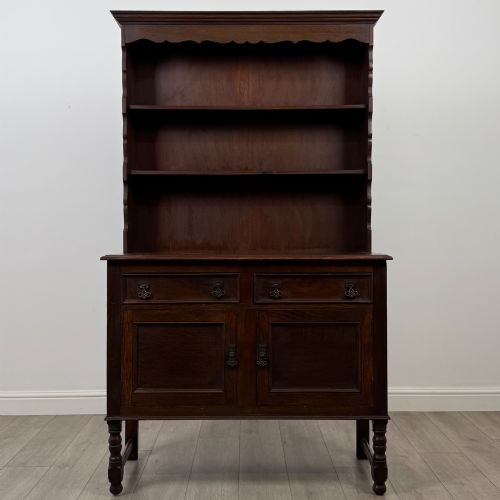
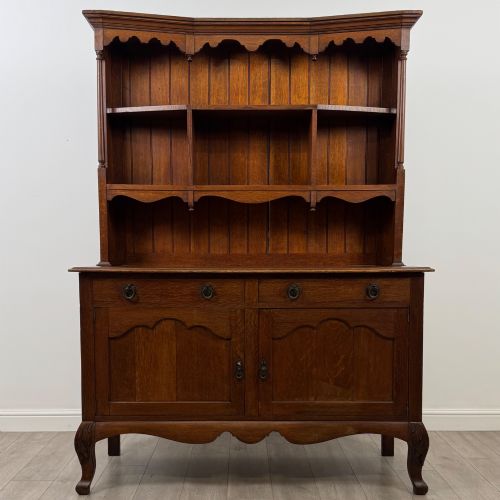
An oak kitchen cupboard hutch functions as a foundational storage unit, combining a lower base of drawers and cupboards with an upper plate rack or glazed cabinet. When you search for an oak kitchen cupboard hutch, you meet examples spanning from the eighteenth century through to the early twentieth century, originating from English, Welsh, and French provincial workshops.
The regional variety is substantial, ranging from compact cottage dressers to imposing Snowdonia and belly rack forms. Most pieces encountered on this page date from the eighteenth and nineteenth centuries, constructed predominantly in solid oak with occasional regional adaptations in walnut or pine.
The upper sections vary significantly between open shelves for displaying crockery and enclosed glazed doors for dust-free storage. Lower portions incorporate configurations of drawers, breakfront designs, and panelled cupboards suited to kitchen and dining room storage.
What separates standard pieces from the finest examples
The grade of timber and the ambition of the carving determine the standing of a piece within its period. Rich surface patination, developed through generations of polishing and use, marks out pieces that have retained their original finish and timber integrity.
Proportion and regional detailing dictate desirability, with Snowdonia and belly rack formations demonstrating greater regional character than plain provincial equivalents. The survival of original brass or iron hardware and unaltered plate racks further elevates a piece.
Oak Kitchen Cupboard Hutch Retail Price Guide 2026
Typical asking prices for oak kitchen cupboard hutch among the pieces listed under this phrase on Sellingantiques today, from the lower quarter to the upper quarter. They describe what is for sale here now, not the wider market.
Listings span multiple centuries, incorporating Georgian country pieces, Victorian glazed Welsh dressers, and Edwardian golden oak designs.
Heals of London
The Oak Kitchen Cupboard Hutch Glossary
- Welsh dresser
- A traditional regional form featuring a lower base of cupboards and drawers surmounted by an open plate rack. These units served for both storing and displaying domestic kitchenware.
- Plate rack
- The upper shelving component attached to the back of a dresser, designed with grooves to hold plates upright. This feature allows ceramics to be displayed safely in domestic interiors.
- Belly rack
- A regional Welsh dresser variant characterised by a distinct protruding central section in the base cabinetry. This design provides additional interior capacity to the lower cupboards.
- Buffet a deux corps
- A heavy two-part French provincial cabinet comprising an upper and lower section separated horizontally. These large storage pieces often incorporate carved panel doors.
- Green Man
- A sculptural architectural motif depicting a human face emerging from or entwined with foliage. This decorative carving appears on later Victorian revival furniture.
- Breakfront
- A piece of furniture where the central section projects forward from the flanking outer sections. This architectural arrangement creates depth and visual rhythm across the drawer facade.
Oak Kitchen Cupboard Hutch: Frequently Asked Questions
What is the difference between a dresser and a hutch?
A dresser traditionally combines a lower storage base of drawers and cupboards with an upper open rack for displaying plates and crockery. In various regions, this form is also known as a hutch or a buffet, depending on whether the upper section is open or enclosed by glazed doors.
Historically, these pieces evolved in kitchens and dining rooms to house both everyday utensils and best tableware. The lower cupboards kept heavy pots and provisions secure, while the upper shelves presented ceramics to visitors.
How do I date an antique oak dresser?
Dating relies on examining construction techniques, timber selection, and hardware styles across the piece. Hand-cut dovetails, pegged joints, and timber shrinkage patterns help distinguish eighteenth-century country pieces from later nineteenth-century revivals.
Regional characteristics and carved motifs also provide chronological markers. Geometric carvings and shaped friezes often point to earlier periods, while later Victorian pieces frequently display heavier applied mouldings and machine-sawn backing boards.
Are these dressers delivered in one piece?
Most traditional dressers and hutches are constructed in two distinct parts, separating the upper plate rack or glazed cabinet from the lower base cabinet. This two-part construction aids transportation and manoeuvrability through doorways.
When positioning the unit in a room, the upper section simply rests upon or is secured to the lower sideboard base. Fixings are usually minimal, relying on gravity and wooden dowels or brackets to keep the two components aligned.
How do I care for antique oak furniture?
Maintaining antique oak involves keeping the timber away from direct heat sources and rapid humidity fluctuations to prevent splitting. Regular dusting with a dry, soft cloth preserves the surface without requiring heavy chemical polishes.
Applying a traditional beeswax periodically helps nourish the grain and maintain the natural lustre of the finish. Avoiding synthetic sprays ensures the historic paturation remains undisturbed over time.