
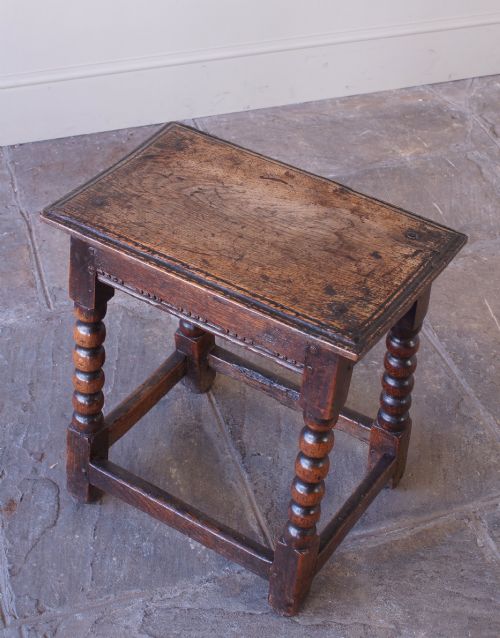
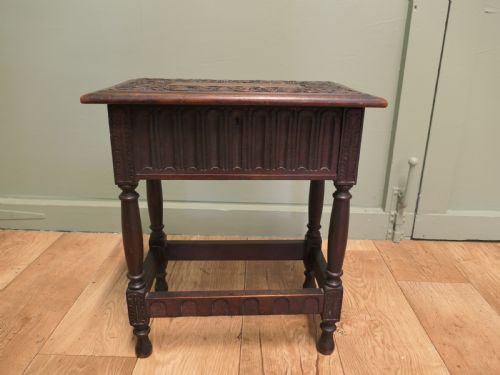
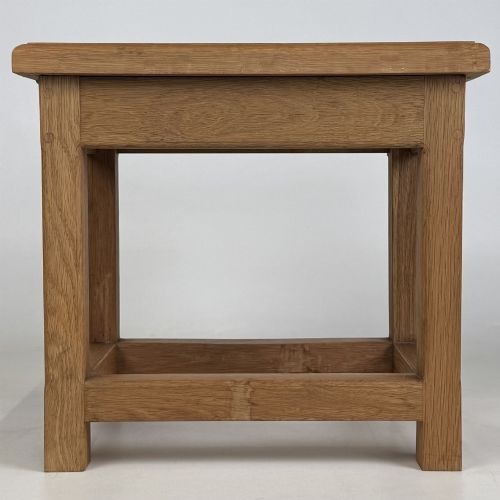
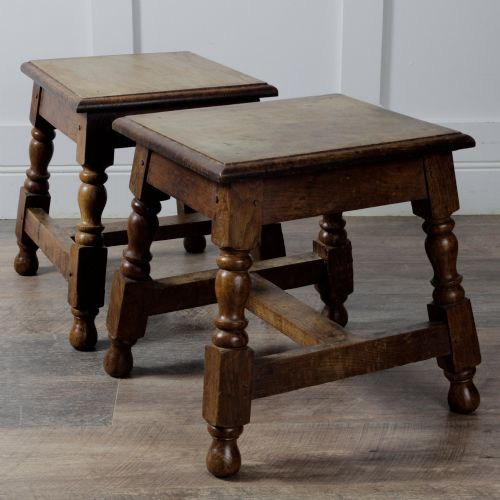
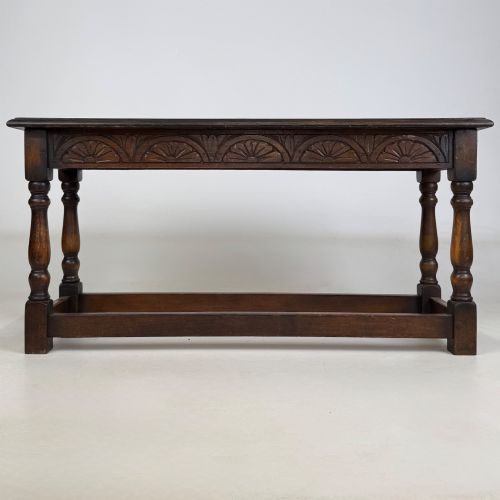
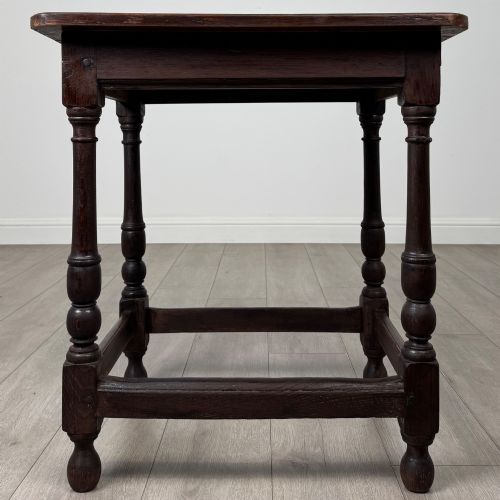
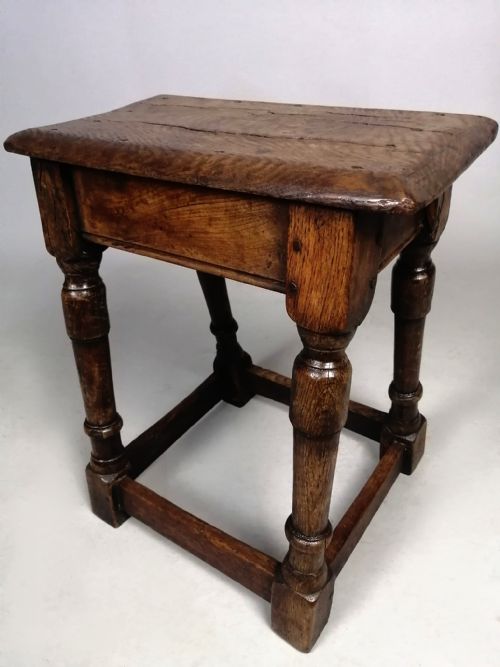
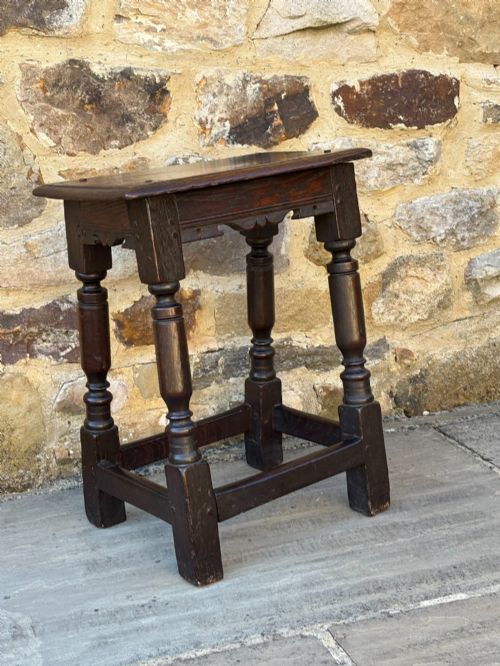
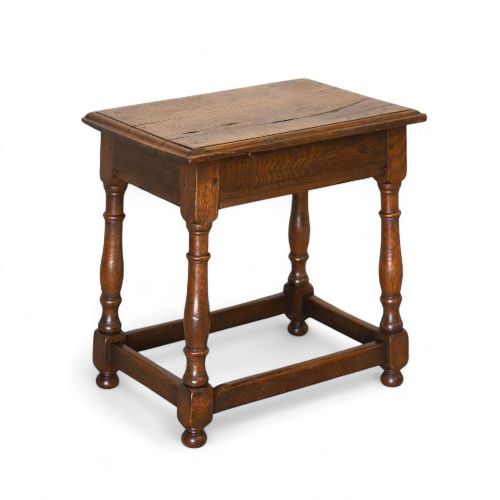
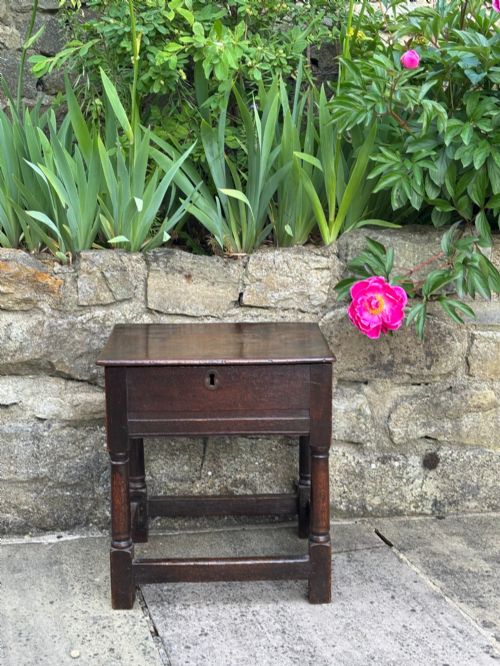
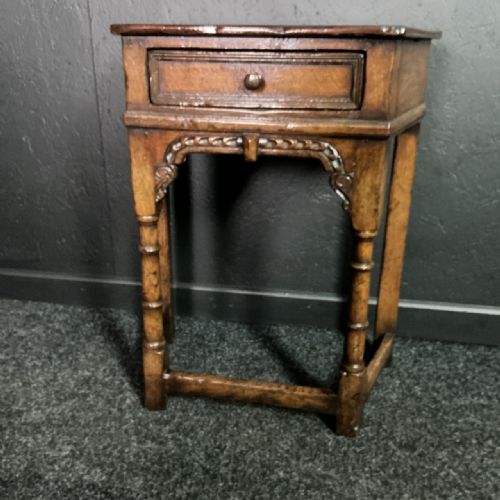
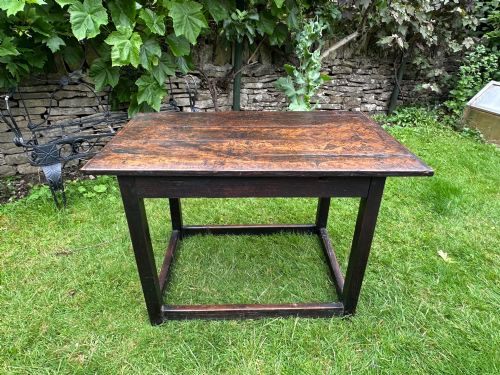

Oak Joint Stool Table
An oak joint stool table combines sturdy traditional joinery with versatile low surface space, making it a practical choice for rustic interiors.
Oak Joint Stool Table
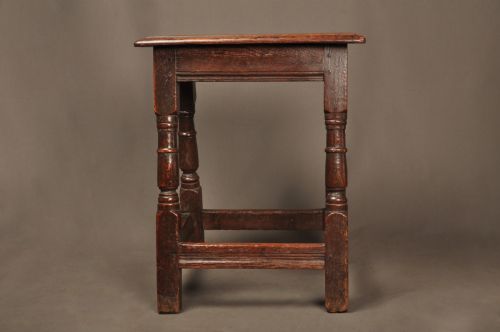
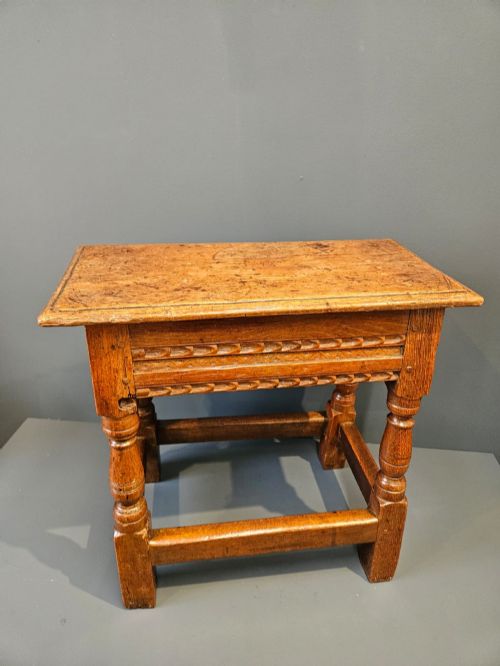
When buyers search for an oak joint stool table, they seek solid timber seating and low occasional surfaces built with pegged mortise and tenon construction. These pieces bridge the gap between sturdy utilitarian seats and compact side tables, originally utilised for domestic tasks before finding favour as decorative accents.
The selections span authentic seventeenth-century examples alongside later nineteenth-century revivals and twentieth-century interpretations. Many items double as small tables, lamp stands, or bedside surfaces, reflecting how historic forms adapt to modern rooms.
Materials and Construction
Craftsmen built these items primarily from English oak, frequently pairing it with elm for tops or secondary elements, and occasionally incorporating yew wood. Hardwoods provide the structural density required for rigid frames and flat plank surfaces.
Makers utilised pegged construction and mortise and tenon joints rather than metal nails or modern glues. This traditional joinery allows the timber to expand and contract naturally while maintaining the tight angles of the legs and rails.
Markers of Quality
The standard of craftsmanship shows in the crispness of hand-carved details and the proportion of the turned legs. Superior examples display tight grain patterns in the timber and minimal replacement of original pegs or stretchers.
Surface patination distinguishes finer pieces from lesser ones, with deep natural warmth developing from centuries of use and wax polishing. The integrity of the underlying joinery determines whether a piece retains its historical honesty.
The Oak Joint Stool Table Glossary
- Joint stool
- A sturdy wooden stool constructed with pegged mortise and tenon joints rather than simple nailed boards. These pieces served multiple domestic purposes in early households.
- Plank top
- A solid surface constructed from joined boards of timber rather than a single wide slab. This method accommodated the available width of native hardwood trees.
- Pegged construction
- A framing technique utilising wooden pins to lock mortise and tenon joints securely in place. This method avoids metal fasteners entirely.
- Lowboy
- A small side table or dressing table featuring drawers supported by four legs. It shares the same structural timber and period aesthetic as related stools.
- Box stool
- A specialised seating form incorporating a concealed storage compartment beneath the liftable lid. It combines utility with compact proportions.
Oak Joint Stool Table: Frequently Asked Questions
What is a joint stool table?
A joint stool table is a sturdy timber seating piece or small surface constructed using pegged mortise and tenon joinery. These versatile items function equally well as low tables, lamp stands, or traditional seats.
Historically built from oak or elm, they offer compact proportions that suit smaller spaces and traditional interiors.
How do I tell seventeenth-century pieces from revivals?
Seventeenth-century originals show authentic tool marks, natural timber shrinkage, and dark patination accumulated over centuries of use. Revival pieces from the Victorian and Edwardian eras often feature machine-sawn elements and different wear patterns.
Examining the construction pegs and the underside of the top boards helps clarify the actual period of manufacture.
Where can I use an oak joint stool table?
These compact pieces fit easily beside a sofa or armchair to hold lamps, books, or drinks. Their sturdy flat tops also make them suitable as bedside stands or plant display surfaces.
Their restrained profile allows them to integrate into both rustic country houses and contemporary living spaces.
Did these pieces always serve as tables?
Original seventeenth-century examples were primarily designed as sturdy seats for domestic use. Over time, their convenient height and flat surfaces led to them being repurposed as occasional tables and stands.
Many listings reflect this dual identity by categorising them as both stools and tables.