
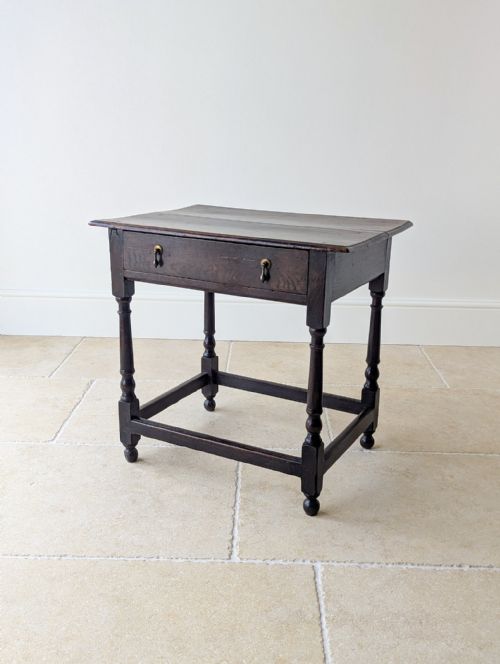
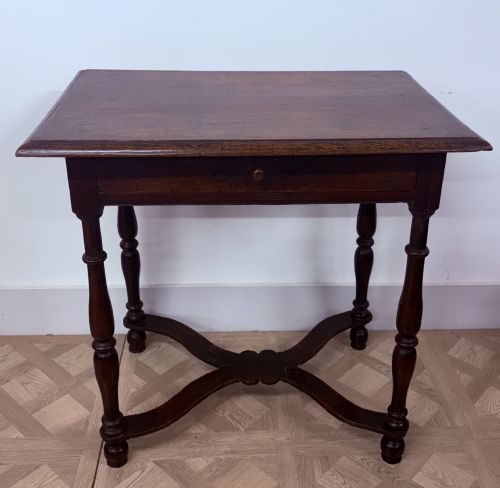
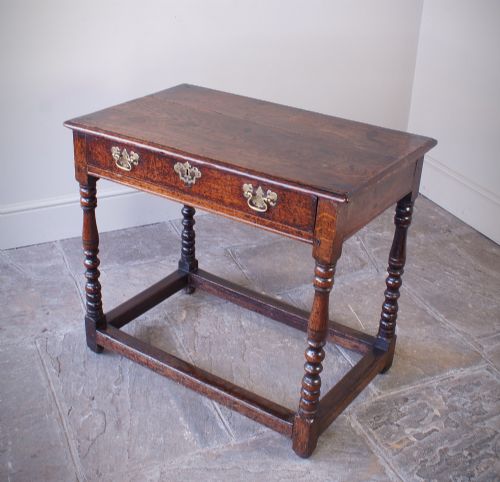
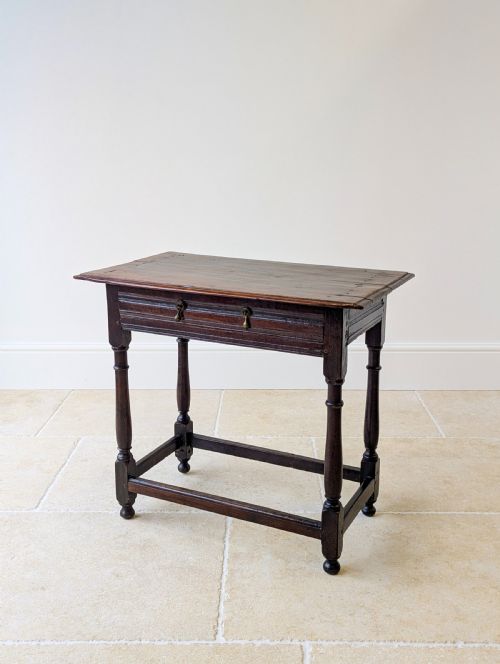
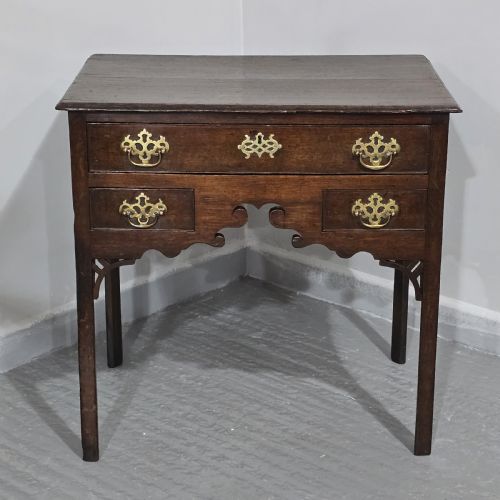


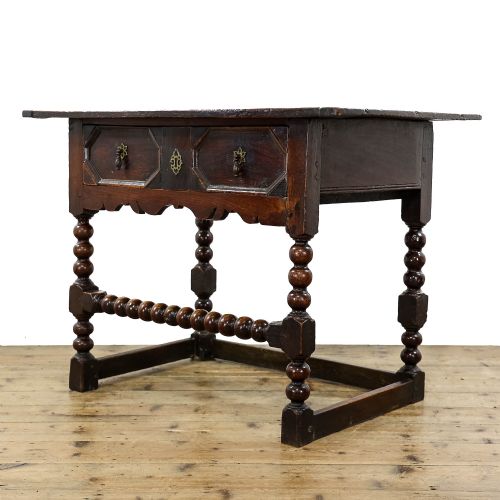

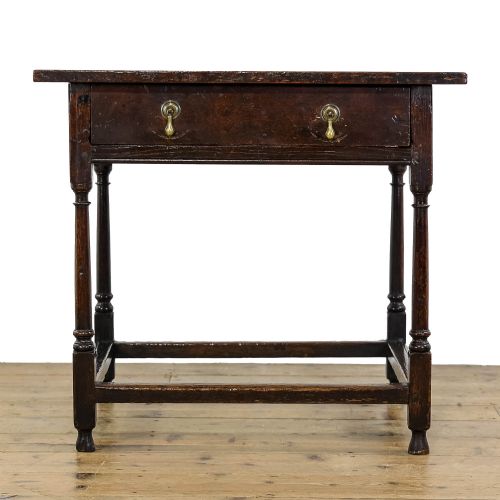


17th Century Oak Lowboy
A 17th century oak lowboy offers compact proportions and sturdy timber, making it a practical choice for period interiors.
17th Century Oak Lowboy
A 17th century oak lowboy is typically encountered as a side table, occasional table, or small chest of drawers from the seventeenth century and the William and Mary or Charles II periods. These low-standing tables provide surface space and storage without dominating a room.
The selection ranges from authentic late seventeenth-century examples to nineteenth-century Jacobean Revival interpretations. Buyers often find pieces dating around sixteen-ninety that display the characteristic dark timber and straightforward construction of the era.
Materials and construction
Makers utilised solid oak for the primary framework, panels, and tops, selecting timber that yields a dense and durable structure. Brass hardware such as drop handles and drawer pulls appears on pieces with drawers.
Joinery techniques from the period rely on mortise and tenon joints secured with wooden pegs. Surfaces feature moulded fronts and panel details rather than heavy applied ornamentation.
Some tables arrive with centuries of ink stains tucked inside the drawers, left behind by forgotten seventeenth-century letter writers.
Assessing quality and authenticity
Quality rests in the survival of original timber and the integrity of the structural joints. Pieces that retain their early surface patination and unreplaced brass fittings hold greater interest for collectors.
The distinction between seventeenth-century originals and later nineteenth-century revival pieces affects the character of the timber and the wear patterns. Hand-planed surfaces and period tool marks separate early examples from later reproductions.
The 17th Century Oak Lowboy Glossary
- Lowboy
- A low side table featuring one or more drawers, originating in the late seventeenth century. These pieces served various domestic purposes including writing and dressing.
- William and Mary
- A design style spanning the late seventeenth and early turn of the century. It is characterised by turned legs and geometric moulding.
- Moulded front
- A decorative treatment applied to drawer fronts or rails. This technique creates depth and shadow using shaped timber profiles.
17th Century Oak Lowboy: Frequently Asked Questions
What is a lowboy used for?
A lowboy functions as a compact side table or occasional table with storage drawers. Historically, people placed them in chambers and parlours for personal belongings or writing.
Today, they fit easily into entrance halls or living spaces as accent tables that provide surface area without bulk.
How do I date an oak lowboy?
Dating relies on examining the construction methods, timber patination, and hardware styles. Seventeenth-century examples show hand-cut joinery and signs of age in the grain.
Revival pieces from the nineteenth century often reveal different tool marks and machine-sawn timber elements upon closer inspection.
Are all lowboys from the seventeenth century?
Many surviving pieces date from the seventeenth century, particularly the William and Mary and Charles II periods. However, nineteenth-century cabinetmakers also produced revival versions.
Both period originals and later revival interpretations appear in the available selection.
How do I care for antique oak?
Antique oak benefits from stable indoor humidity and protection from direct sunlight. Simple dusting with a dry cloth preserves the finish.
Applying occasional traditional wax helps maintain the natural sheen of the timber over time.