


Jacobean Oak Hall Table
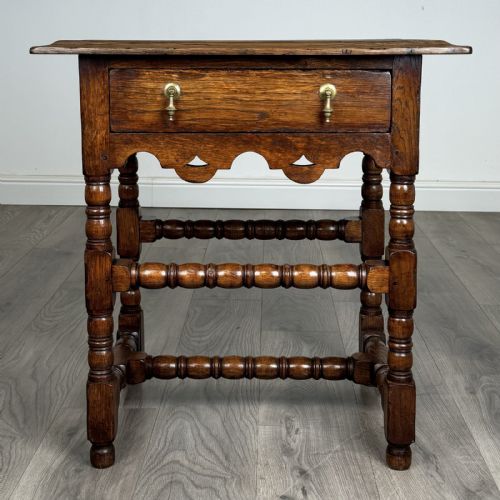
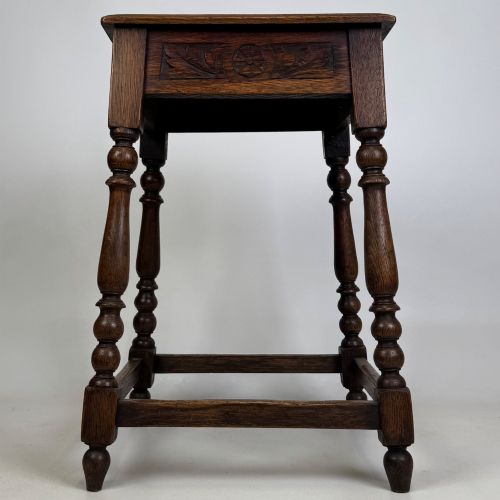
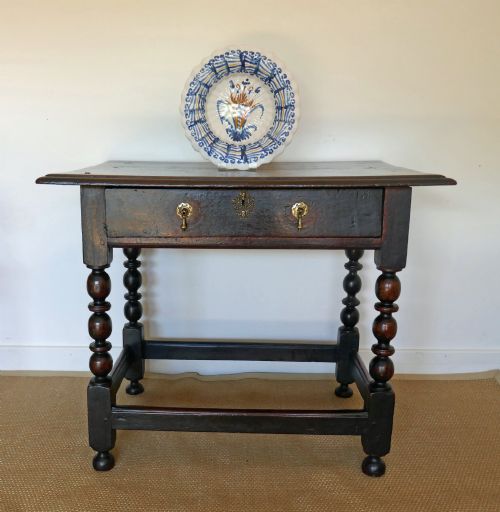
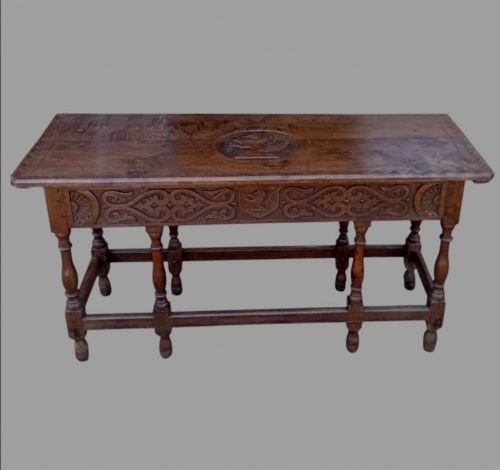
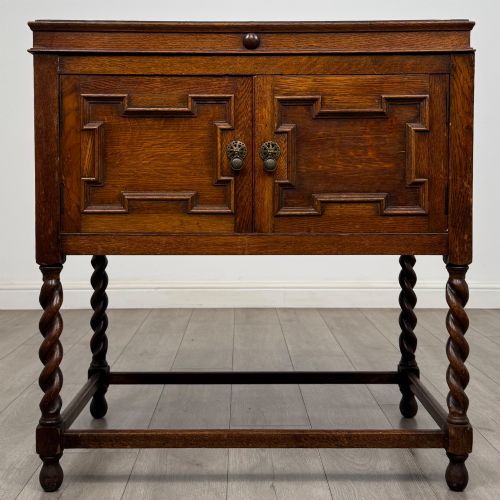
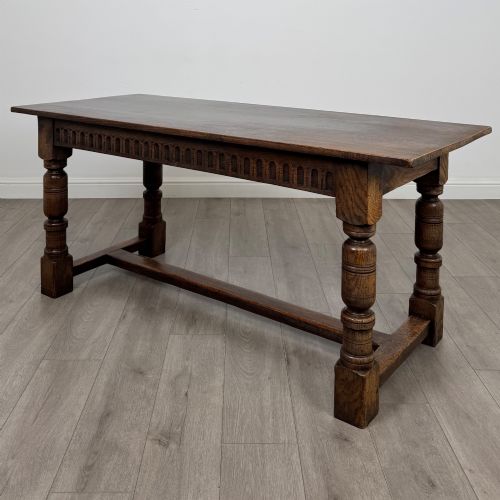
A jacobean oak hall table brings heavy timber, turned legs and carved panels straight into an entryway.
Jacobean Oak Hall Table
When searching for a jacobean oak hall table, buyers encounter heavy timber surfaces designed for narrow spaces, ranging from seventeenth-century originals to early twentieth-century revival pieces. Side tables, console tables, and dresser bases frequently appear in the listings alongside benches and desks.
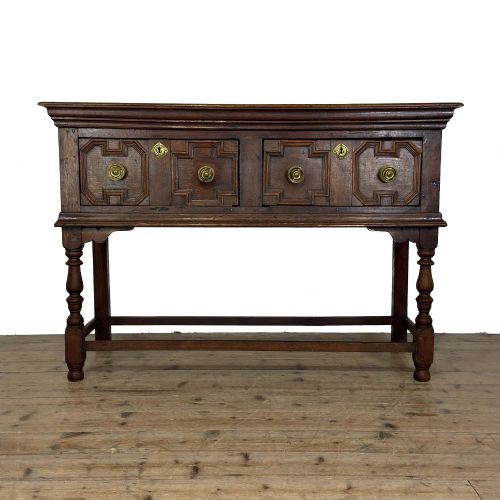
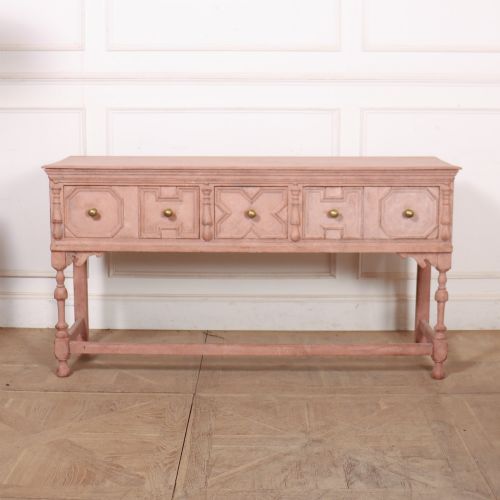
The version most commonly met on this page is the Jacobean revival side table or console dating from the Edwardian period or the nineteen-twenties, constructed to mimic the dark, richly figured grain and proportions of seventeenth-century English furniture.
Originating primarily from English workshops, these pieces often feature drawers, carved friezes, and stretcher bases designed to anchor a hallway while providing a practical surface for everyday use.
How they were made
Construction relies heavily on solid oak, selected for durability and pronounced grain, sometimes augmented by painted wood, brass, or iron hardware.
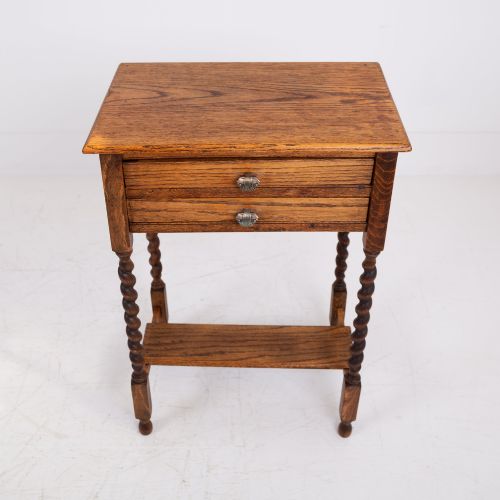
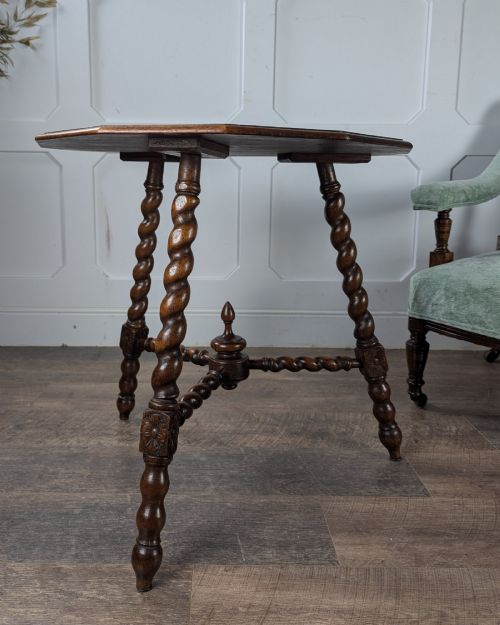
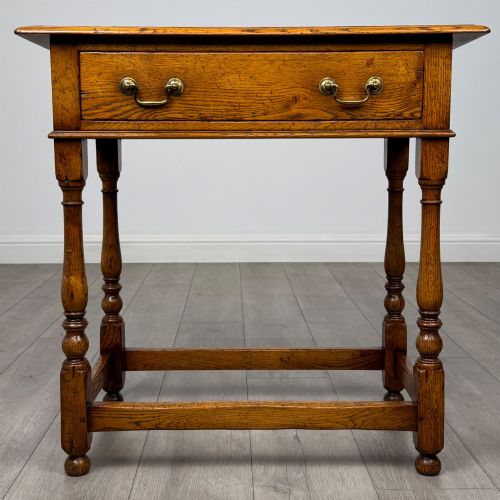
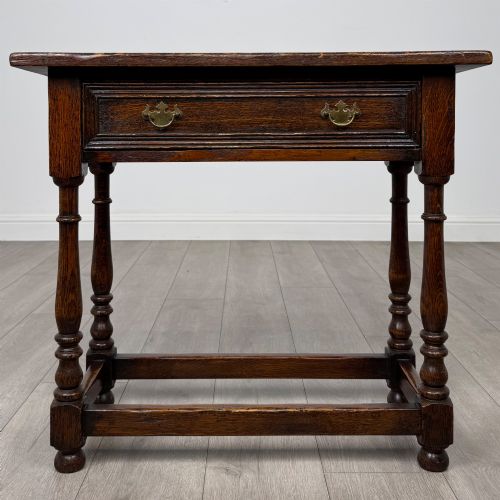
Joinery methods include mortise and tenon frames alongside hand-cut drawers, paired with decorative turning techniques such as bobbin-turning and barley-twist legs.
Listings span from the seventeenth century through Victorian and Edwardian eras up to nineteen-thirty, predominantly featuring solid oak paired with brass and iron hardware.
What varies in quality
The standard of carving and the crispness of geometric mouldings set finer examples apart from simpler production pieces, particularly where hand-tooling meets mass revival manufacturing.
Proportion and timber selection dictate overall appeal, with dense, highly figured solid oak and well-balanced structural frames commanding greater interest than utilitarian substitutes.
The Jacobean Oak Hall Table Glossary
- Jacobean Revival
- A nineteenth and twentieth-century style copying seventeenth-century English furniture forms. It uses dark-stained oak and deep relief carving.
- Bobbin-Turned
- A type of turning resembling a string of beads or spools. It appears frequently on seventeenth-century and revival table legs.
- Dresser Base
- A low rectangular cabinet or table with drawers and sometimes a lower shelf, often utilised as a hall or side table.
- Refractory Style
- A heavy dining or side table design featuring thick legs connected by low floor stretchers. It draws inspiration from medieval monastery tables.
- Lowboy
- A small seventeenth or eighteenth-century dressing or side table fitted with one or more drawers. It stands on four tall legs.
Jacobean Oak Hall Table: Frequently Asked Questions
Are these tables suitable for small hallways?
Many surviving examples are built with narrow proportions specifically designed for corridors and entrance halls without obstructing pathways.
Drawer space also provides practical storage for keys and post while maintaining a compact footprint.
How do I spot a seventeenth-century original?
Original pieces from the seventeen-hundreds display period-specific tool marks, hand-split timber, and pegged joints rather than modern fixings.
Wear patterns around handles and feet also accumulate naturally over centuries of domestic use.
What is a monks bench?
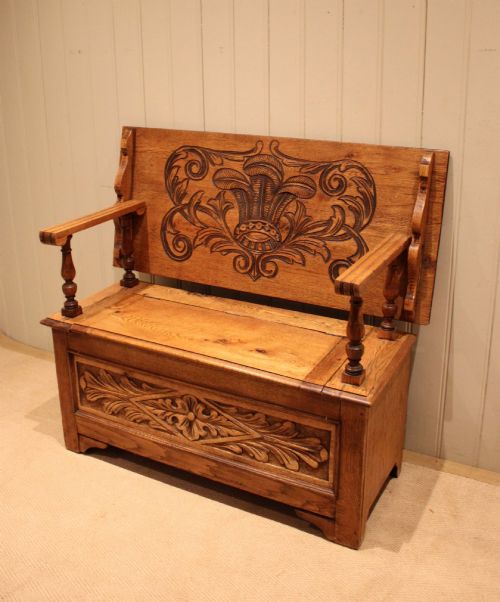
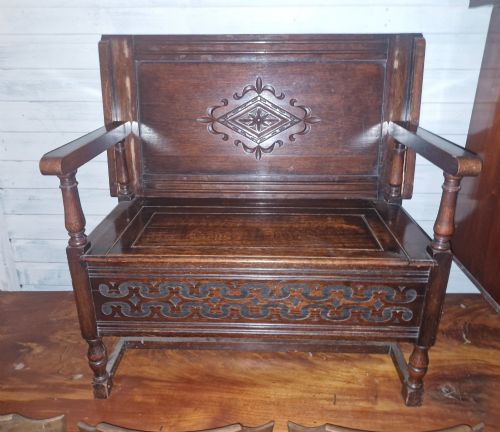
A monks bench is a convertible furniture form featuring a lift-up seat and a backrest that folds down to create a table surface.
This dual-purpose design was traditionally utilised in smaller homes to save interior floor space.
How should I care for antique oak?
Solid oak benefits from application of traditional beeswax to nourish the timber and protect the surface from moisture and dry air.
Keeping tables away from direct heat sources prevents the wood from splitting or warping over time.