
Oak Hallway Bench
An oak hallway bench brings solid timber architecture straight to the threshold, offering a practical seat and storage where guests first enter the home.
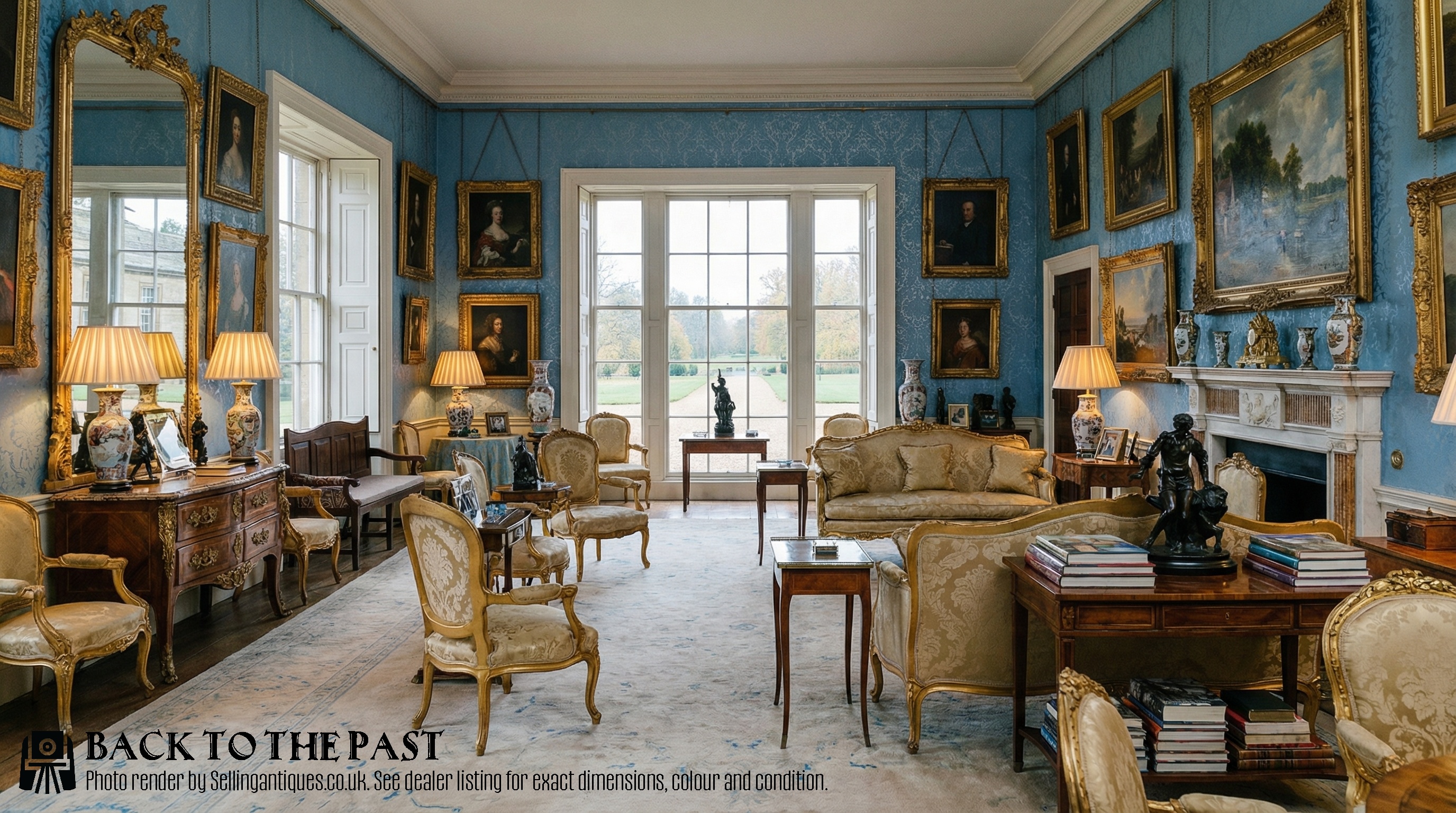
Oak Hallway Bench
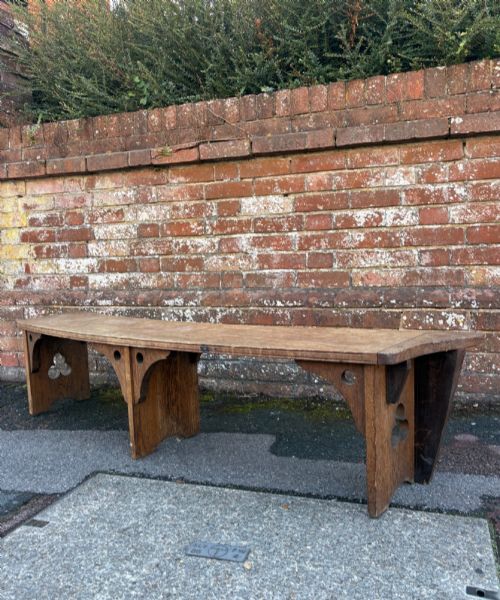
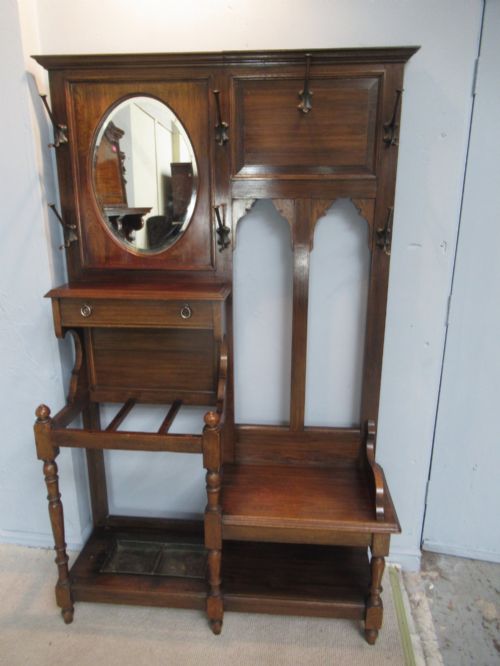
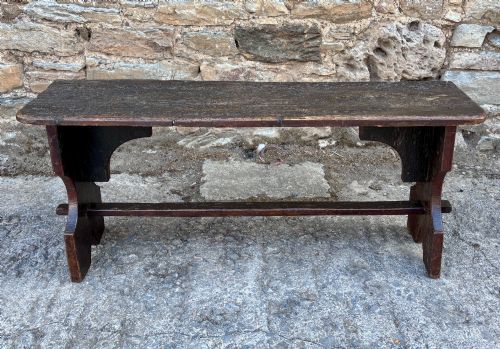
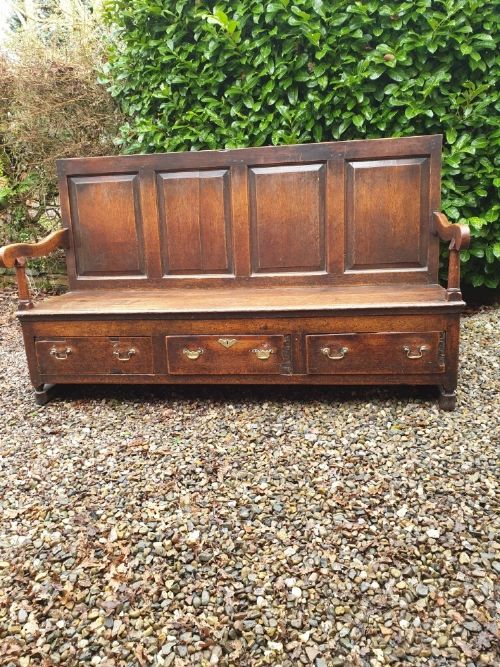
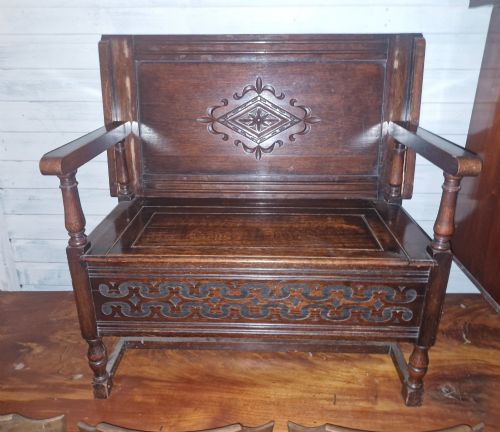
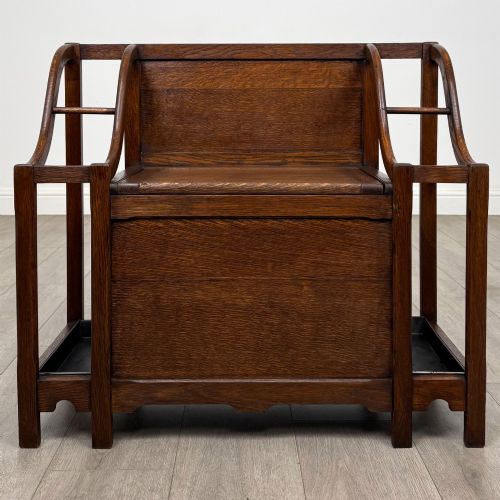
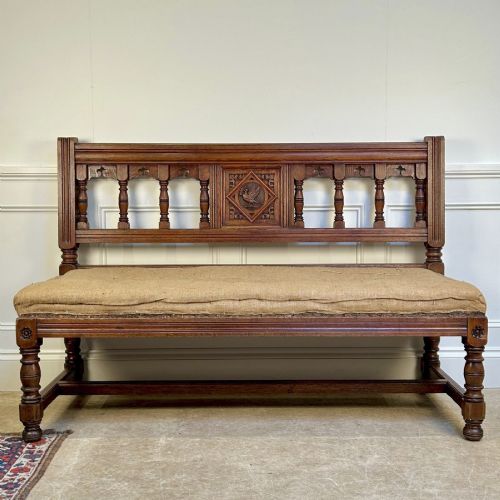
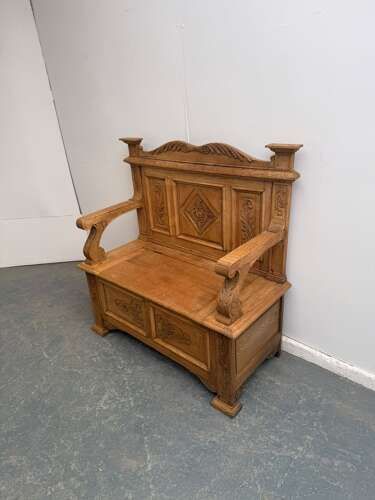
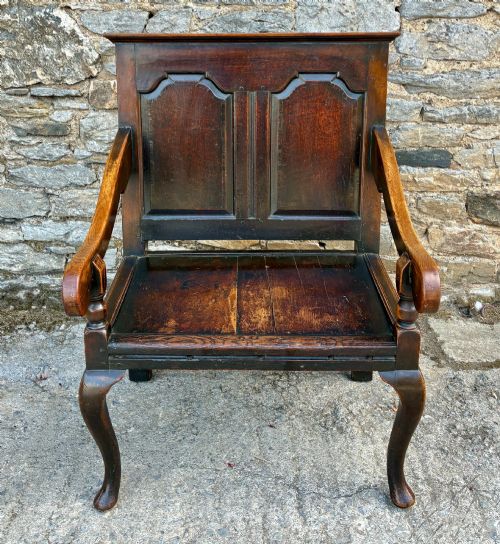
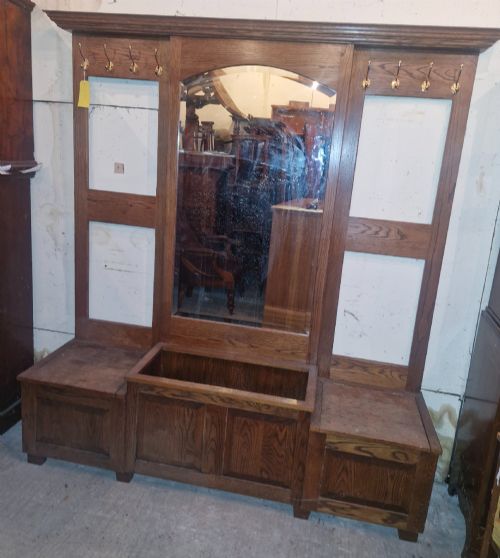
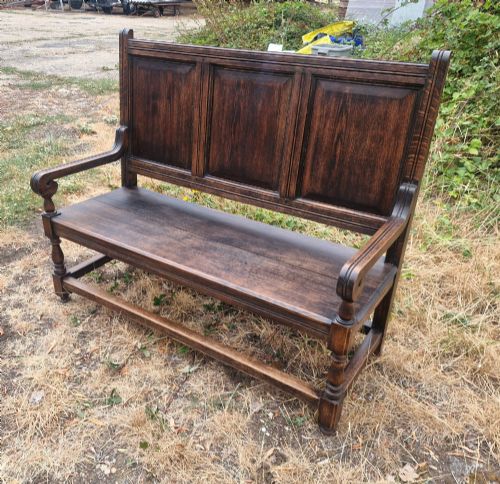
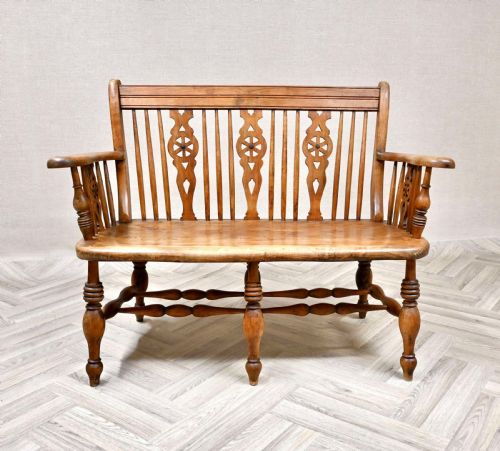
When you search for an oak hallway bench, you encounter diverse forms ranging from simple plank seats to multifunctional box settles and stands fitted with coat hooks or stick holders. These pieces span the 18th century, Georgian and Victorian eras, through to Edwardian and later 20th-century interpretations.
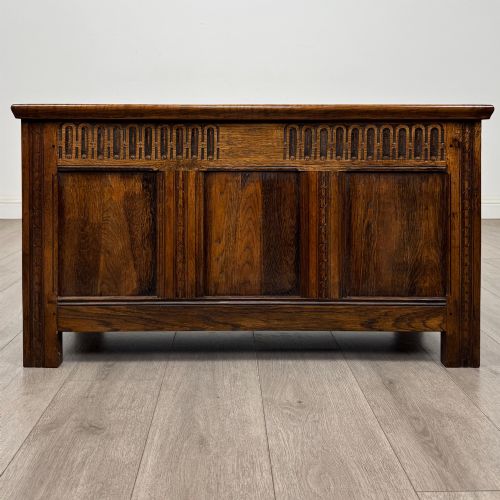
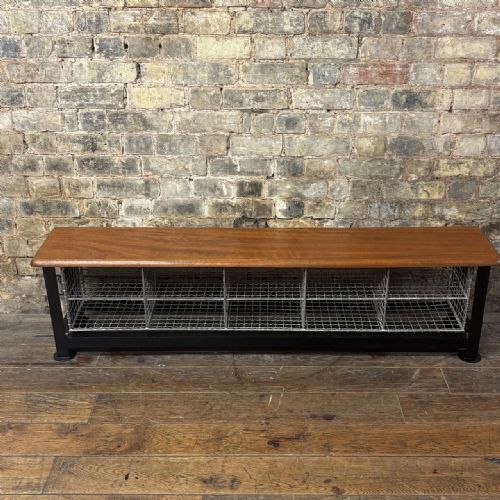
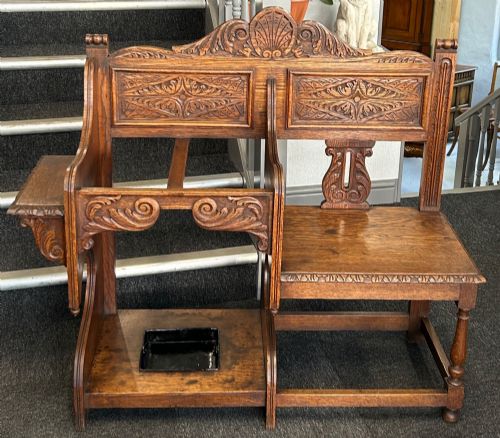
The selections on this page most frequently present as box settles with lift-up lids, narrow luggage racks, and carved hall seats showing Gothic or country influences. Makers and makers' workshops incorporated elm, brass, and glass alongside primary timber to build these utilitarian entrance furnishings.
Regional variations emerge clearly across the inventory, including Welsh and English country designs alongside continental French examples. Buyers find both compact forms suitable for narrow passages and large country house settles built for expansive halls.
Materials and construction methods
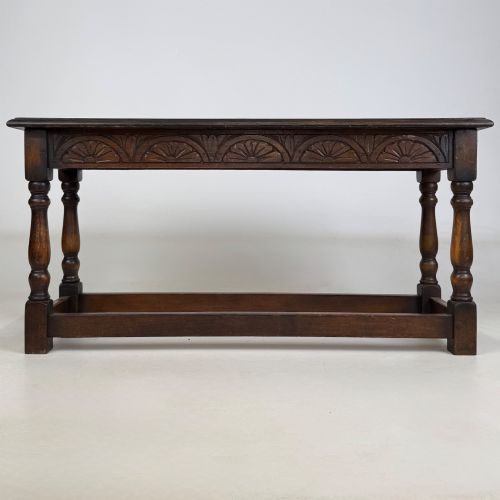
Carpenters built these furnishings using solid oak planks, frequently augmented with secondary timbers like elm and hardwood. Joinery relies on pegged mortise and tenon joints, panelled construction, and hand-carved ornamentation.
Metalwork appears in the form of brass coat hooks, hinges, and mounting plates that add structural utility to stands and boxes. Wax and polish finishes protect the timber surfaces while highlighting the natural grain and age of the wood.
Listings feature oak alongside brass, iron, glass, and fabric elements across 18th-century, Victorian, and Edwardian periods.
Judging build and character
Quality rests in the integrity of the timber, the weight of the solid construction, and the crispness of hand-carved details such as trefoils or tulip decorations. Pieces retaining original brass hardware and uncompromised structural joins hold distinct character.
Simpler vernacular examples demonstrate honest country craftsmanship, whereas pieces attributed to known cabinet makers exhibit refined proportion and deliberate stylistic revivals.
Gillows·James Shoolbred And Co·Shapland And Petter·Liberty
The Oak Hallway Bench Glossary
- Box settle
- A high-backed wooden bench featuring a compartment beneath the seat for storage. This enclosed design protected occupants from draughts in older hallways.
- Hall stand
- A multi-functional entrance piece combining a seat with vertical panels, mirror glass, coat hooks, and umbrella stands. These items maximised utility in tight Victorian and Edwardian vestibules.
- Luggage rack
- A low slatted bench traditionally placed in bedrooms or halls for holding bags and cases. They often feature open wooden slats supported by sturdy legs.
- Trefoil
- A three-lobed decorative carving resembling clover leaves, frequently found in Gothic Revival and Arts and Crafts ornamentation. This motif punctuates panel work and backrests.
- Jacobean Revival
- A 19th-century stylistic movement emulating 17th-century English furniture through heavy proportions, geometric panelling, and dark wax finishes.
Oak Hallway Bench: Frequently Asked Questions
How were oak hallway benches used originally?
These furnishings provided a sturdy perch for putting on or removing boots and shoes near the house entrance. The integrated boxes and shelves held everyday items like hats, walking sticks, and coats.
In larger country houses, grander settles also served to block cold draughts from sweeping through the front door into the main living quarters.
How do I fit an oak hallway bench into a modern home?
A narrow bench or luggage rack fits easily into compact contemporary corridors without blocking foot traffic. Models with lift-up lids or built-in coat stands offer discreet storage for shoes, scarves, and bags.
Pairing the timber with neutral walls allows the grain and historical patination of the oak to stand out as a focal point.
How can I tell a Georgian bench from a Victorian one?
Georgian examples tend to feature simpler, sparser lines with understated panel work, tulip motifs, or unadorned country proportions. They reflect earlier hand-tooling methods and older timber ageing.
Victorian and Edwardian versions frequently showcase heavier revival styles, such as Jacobean or Gothic influences, along with applied factory brassware, mirror glass, and elaborate carved supports.