


Oak Hall Armchair
An oak hall armchair stands as a sturdy piece of seating furniture, built from solid timber to anchor an entrance or hallway with presence.
Oak Hall Armchair
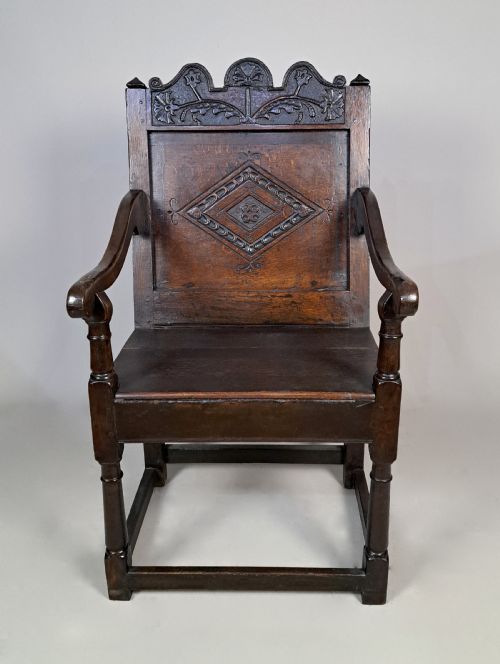
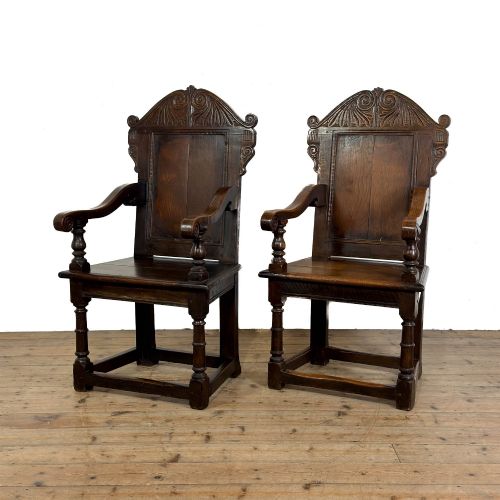
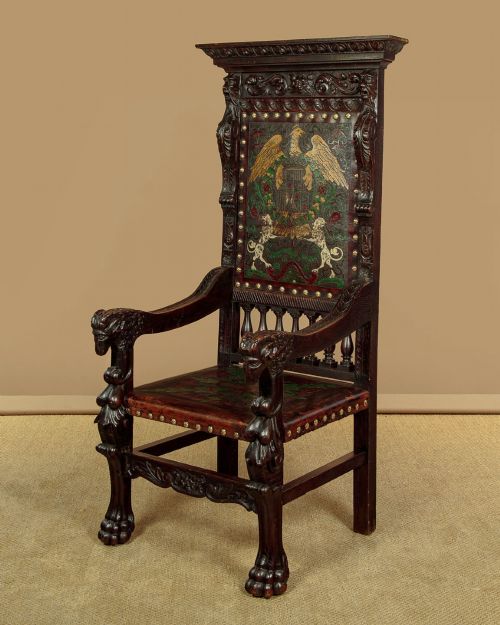
An oak hall armchair serves as a substantial seat for an entrance, hallway or reception space, often taking a rigid, upright form designed for formal rather than relaxed use. Pieces matching this phrase span centuries of cabinet-making, from original seventeenth-century wainscot examples to nineteenth-century revival interpretations.
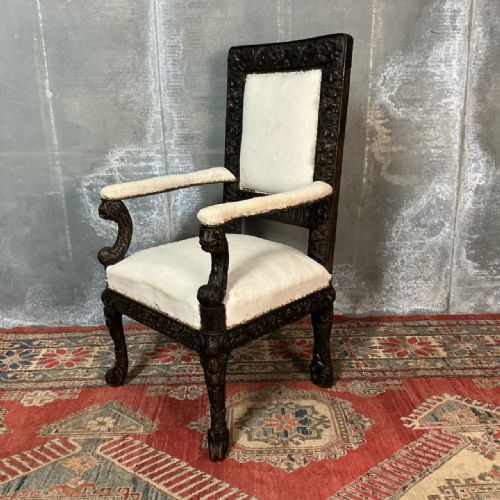
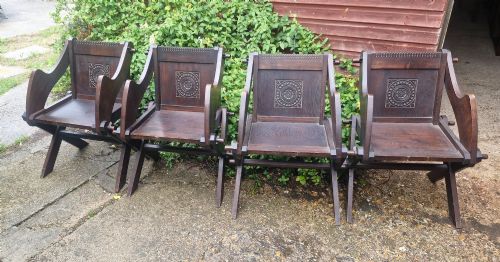
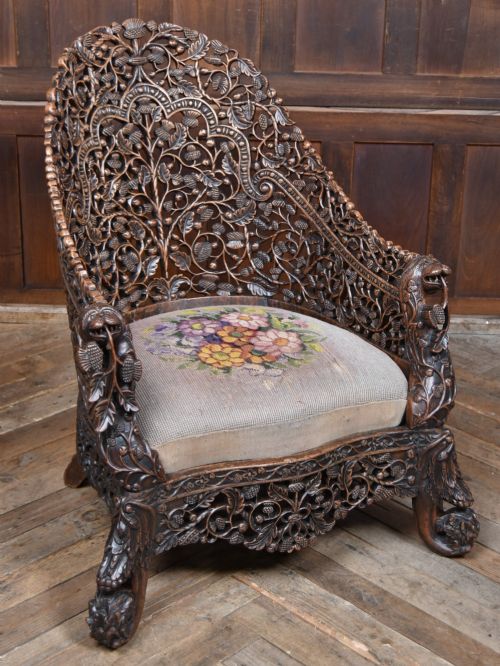
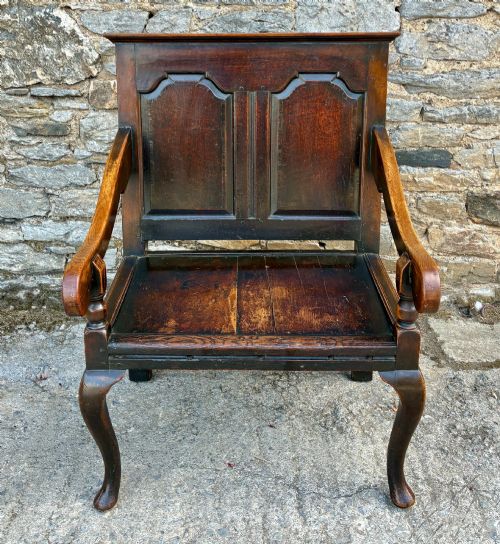
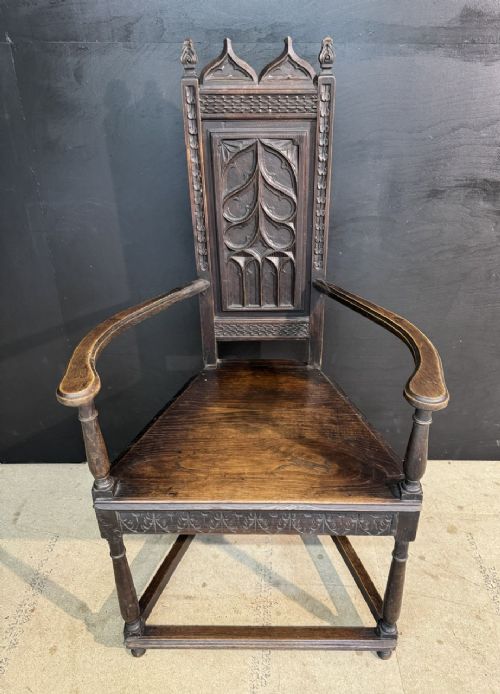
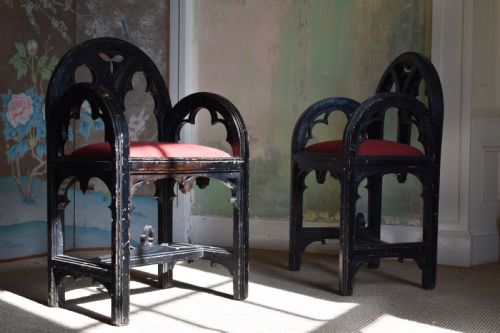
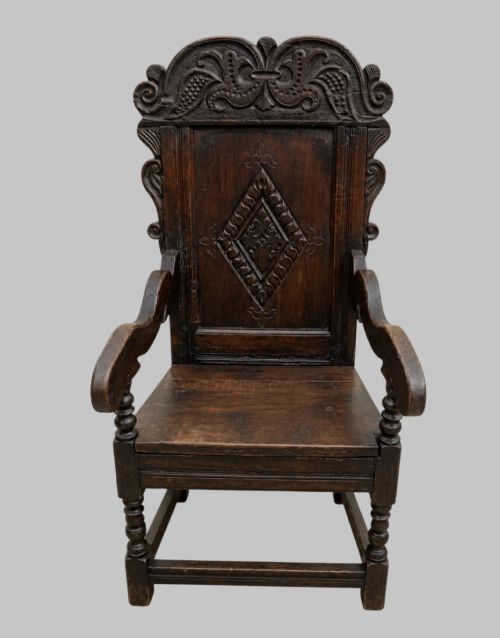
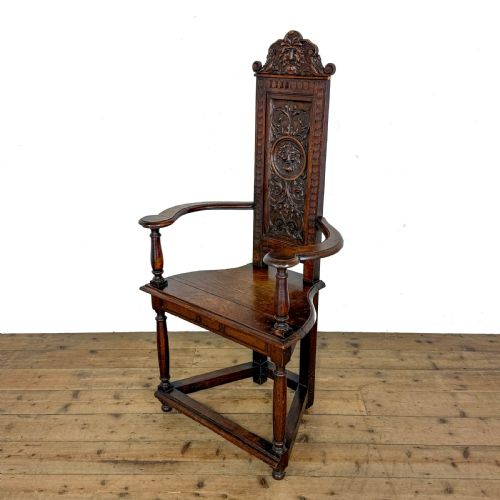
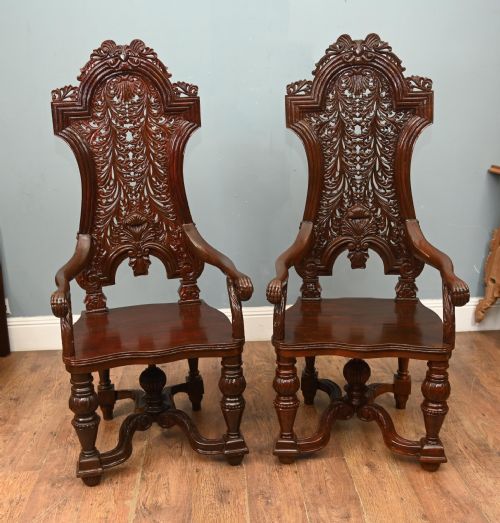
The selection here encompasses heavy throne chairs, Glastonbury designs with sloped arm supports, and panelled wainscot constructions. Makers drew upon Gothic, Jacobean and Renaissance styles, applying deep relief carvings of foliage, grotesque masks and heraldic motifs to solid timber frames.
Many items date from the Victorian era and the early twentieth century, when workshops looked backwards to earlier centuries for inspiration. Alongside British pieces in English and Welsh oak, occasional continental European influences appear in the form of French, Flemish and Austro-Hungarian details.
How they were made
Makers constructed these seats primarily from solid oak, utilising traditional joinery methods such as mortise and tenon joints secured with wooden pegs. Carvers worked directly into the dense timber using gouges and chisels to produce elaborate strapwork, panels and figural reliefs.
Upholstery materials varied according to the period, with leather panels, woven leather straps, brass studs, velvet and heavy woven textiles fastened to the wooden frames. Caning and buttoned leather inserts also appear on nineteenth-century and Edwardian variants, while structural supports frequently incorporate brass hardware.
Materials recorded across the inventory include solid oak, leather, woven textiles, velvet, brass studs and cane panels.
What varies in quality
The depth and crispness of the hand-carving determine much of the visual distinction across the range, with skilled chiselling separating ambitious workshop output from routine commercial production. Timber selection also matters, as well-figured quarter-sawn oak displays striking medullary rays that enhance the surface texture.
Structural integrity dictates the enduring utility of each piece, distinguishing chairs that retain their original pegged joinery and solid panel backs from those weakened by poor timber movement or clumsy later alterations. The quality of supplementary materials, such as supple leather panels and secure brass studwork, completes the distinction.
The Oak Hall Armchair Glossary
- Wainscot
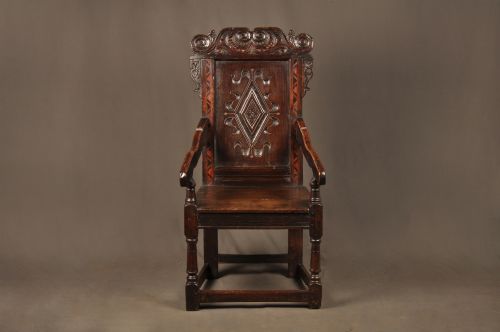
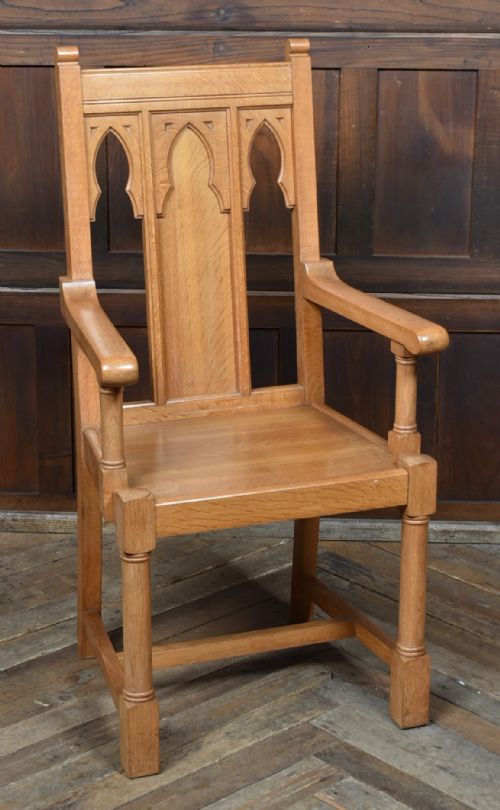
- A heavy wooden armchair with a panelled back and solid seat, originating in the seventeenth century or earlier. These pieces often feature box-like underframes and substantial arm rests.
- Glastonbury chair
- A type of folding or X-framed chair with sloping arms and a pitched seat, derived from a medieval monastic design. Revival versions became popular during the Gothic revival of the nineteenth century.
- Throne chair
- A tall, imposing seat with a high back, frequently embellished with elaborate crestings, deep carving and upholstered panels. They were designed to dominate a hall or reception room.
- Quarter-sawn
- A method of cutting oak logs radially to reveal distinctive medullary ray patterns across the grain. This cut provides superior dimensional stability to the timber panels.
- Strapwork
- A ornamentation style consisting of flat, interlaced bands resembling leather straps or ribbons. It appears frequently on the friezes and panels of Jacobean and revival furniture.
Oak Hall Armchair: Frequently Asked Questions
How do I date an oak hall armchair?
Dating relies on examining the construction methods, tool marks, timber characteristics and stylistic motifs. Seventeenth-century examples display hand-split boards, pegged mortise and tenon joints, and characteristic Jacobean strapwork or chip carving.
Later nineteenth-century and Edwardian pieces often reveal mechanical saw marks, standardised components and softer interpretation of historic Gothic or Renaissance revival styles.
Where were these armchairs placed?
Historically, these chairs stood in grand entrance halls, corridors and reception areas of large houses and civic buildings. They were intended to impress visitors rather than provide comfortable lounging.
In modern interiors, they function well as architectural statement pieces in spacious hallways, studies or libraries, anchoring the surrounding decor with their solid presence.
What is a wainscot chair?
A wainscot chair is an early form of wooden armchair constructed with panelled backboards similar to wall panelling. They possess solid wooden seats and heavy armrests.
Originating before the era of upholstered furniture, these pieces relied entirely on carpentry skill, sturdy oak timber and occasional surface carving for their decorative impact.