

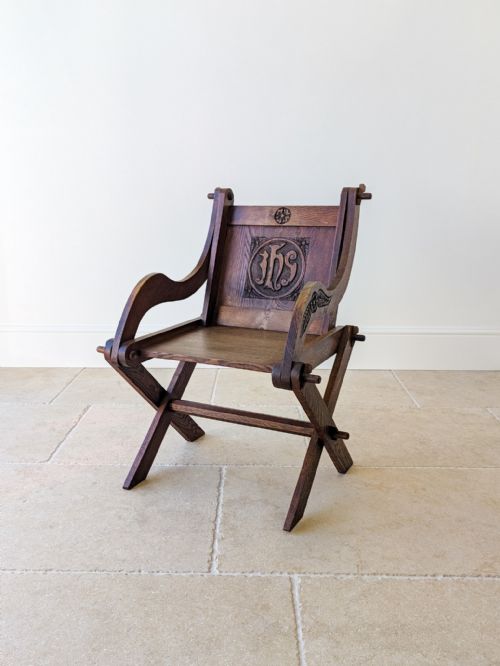
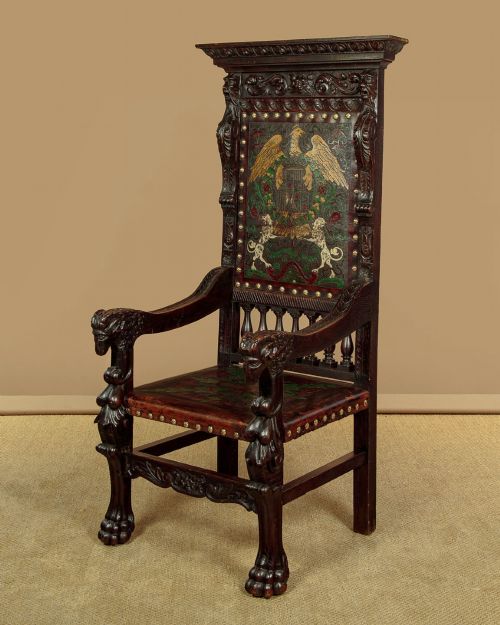


Edwardian Hall Armchair
An Edwardian hall armchair is a sturdy timber seat designed for an entrance passage, offering a blend of period character and everyday utility that anchors a hallway.
Edwardian Hall Armchair
When you search for an edwardian hall armchair, you encounter seating built primarily around the turn of the twentieth century in timber such as oak and mahogany. These chairs serve the hallway or entranceway, balancing robust construction with stylistic ambition from historical revivals.
The pieces appearing on this page range from highback oak carvers to inlaid mahogany elbow chairs. You will find items showing influences from Gothic Revival, Arts and Crafts, and Art Nouveau movements alongside simpler domestic forms.
What Varies in Quality
The standard of carving and timber selection dictates the distinction between standard production and finer pieces. Deeply carved oak panels and crisp satinwood inlay elevate a chair above plain vernacular joinery.
Structural integrity and the retention of original leather or fabric upholstery panels influence the standing of an individual piece. Attribution to known retail houses or prominent designers also marks out exceptional examples.
Edwardian Hall Armchair Retail Price Guide 2026
Typical asking prices for edwardian hall armchair among the pieces listed under this phrase on Sellingantiques today, from the lower quarter to the upper quarter. They describe what is for sale here now, not the wider market.
Listings feature oak most frequently, alongside mahogany, beech, and satinwood inlay.
Liberty of London·A.W.N. Pugin
The Edwardian Hall Armchair Glossary
- Carver armchair
- A sturdy wooden chair with armrests, traditionally placed at the head of a dining table or used as a prominent hall seat. These pieces feature substantial wooden arms integrated into the structural frame.
- Arts and Crafts
- A design movement prioritising traditional craftsmanship, visible construction, and simple forms over mass-produced ornamentation. Pieces in this style often highlight the natural grain of oak.
- Gothic Revival
- An architectural and decorative style drawing inspiration from medieval forms, featuring pointed arches, tracery, and heavy carved details. This aesthetic frequently manifests in dark oak church-style hall seating.
- Satinwood inlay
- A decorative technique where contrasting light-coloured wood is inserted into recesses within a darker mahogany or walnut surface. This method creates geometric or floral patterns across the backrests and frames.
Edwardian Hall Armchair: Frequently Asked Questions
Where do you put an edwardian hall armchair?
These chairs suit entrance halls, vestibules, and wide landings where their timber frames create a strong first impression. They provide a practical spot for putting on shoes or greeting visitors.
In modern homes, they also function well in large studies or bedrooms as occasional seating. Their upright proportions ensure they do not take up excessive floor space.
How do you identify an edwardian hall armchair?
Look for construction traits typical of the early twentieth century, including solid oak or mahogany frames and stylistic touches like satinwood inlay or modest carving. Many examples show nods to Arts and Crafts or Gothic Revival tastes.
Proportions tend to be upright and supportive rather than deeply cushioned. This reflects their original placement in hallways where people sat briefly.
Are these chairs comfortable for daily use?
Hall armchairs were originally built for brief seating rather than long lounging sessions. Many feature solid timber backs or firm leather upholstery panels.
While some feature upholstered seats and arm pads for added comfort, their primary purpose remains decorative and structural. They function best as accent pieces in a room.
How do you care for antique oak and mahogany?
Keep wooden frames away from direct heat sources and strong sunlight to prevent the timber from drying out and splitting. Regular dusting with a soft, dry cloth preserves the finish.
Treat leather panels with appropriate leather balms periodically to maintain suppleness. Avoid using harsh chemical sprays on antique polished surfaces.