
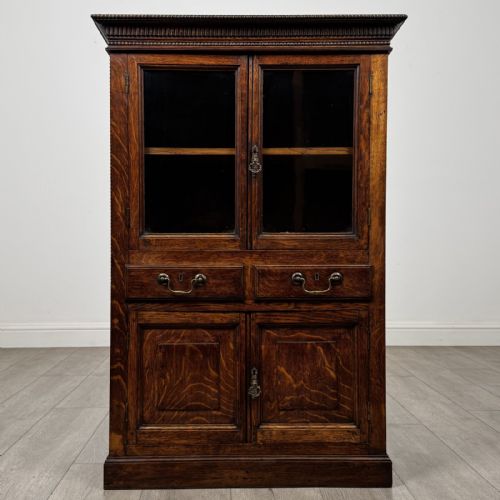
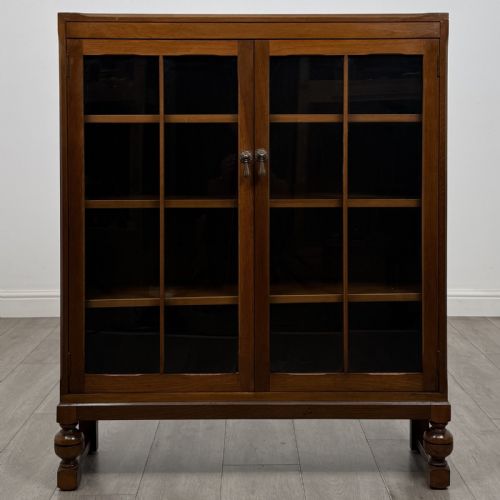
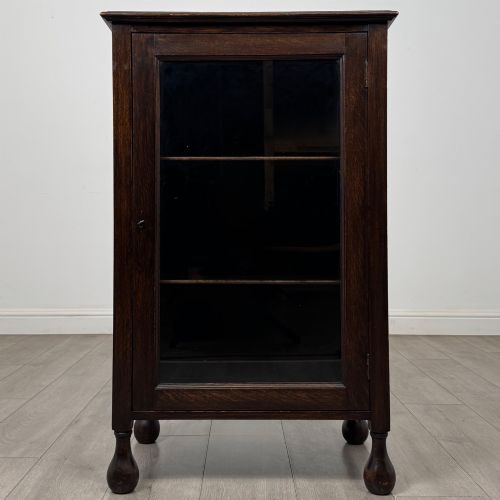
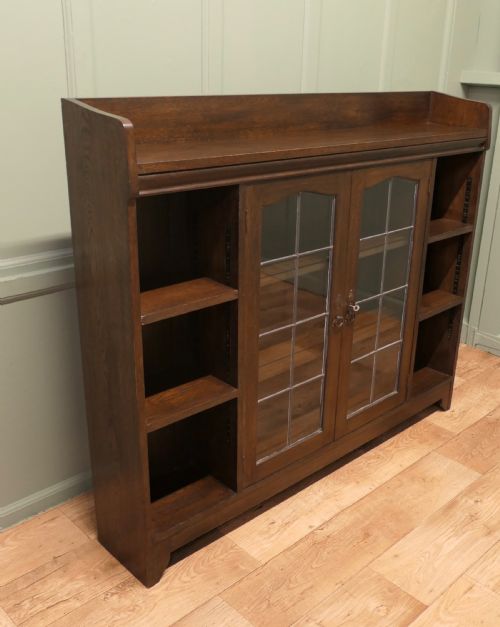
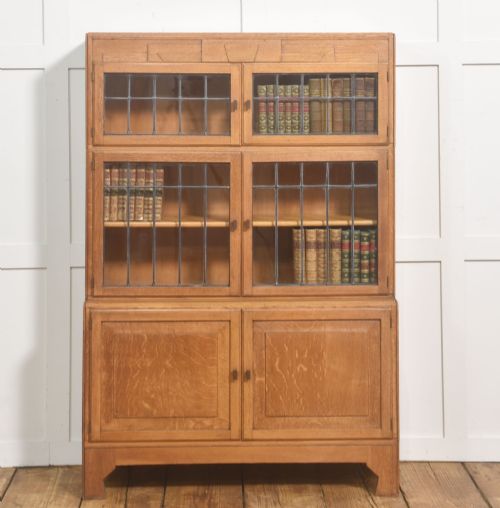
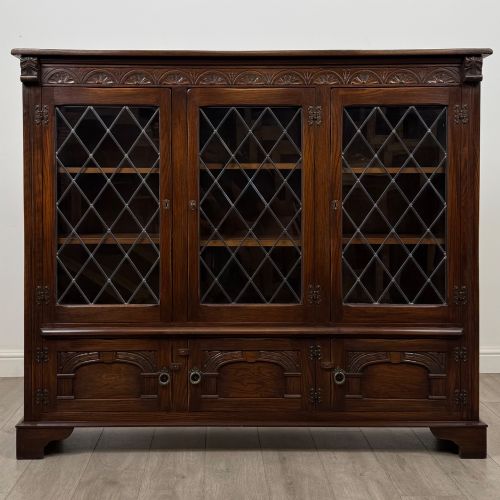
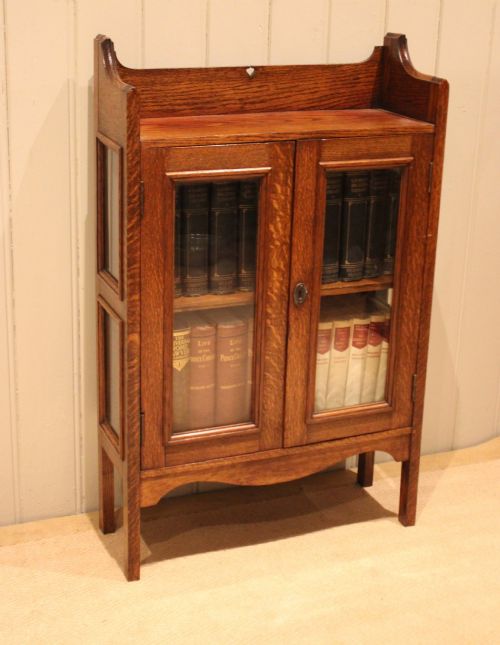
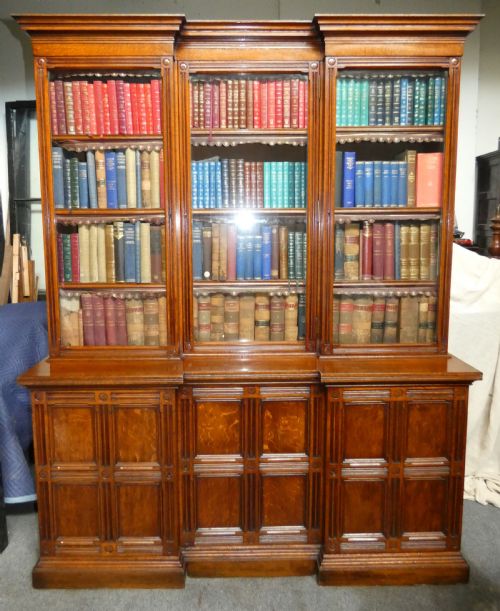



Oak Glazed Display Case
An oak glazed display case brings architectural presence and visible storage to a room, most commonly appearing in Edwardian and early twentieth-century forms.
Oak Glazed Display Case
An oak glazed display case functions primarily to hold and exhibit books, ceramics, or small collections behind transparent panels. When exploring this phrase, buyers encounter everything from compact countertop models and corner cupboards to large floor-standing library bookcases.
The pieces spanning this selection originate predominantly from the Victorian, Edwardian, and 1930s interwar periods, alongside earlier Georgian iterations. Floor-standing cabinets and glazed bookcases dominate the available forms, accompanied by specialised shop display units and smaller wall or table-top variations.
Materials and Construction
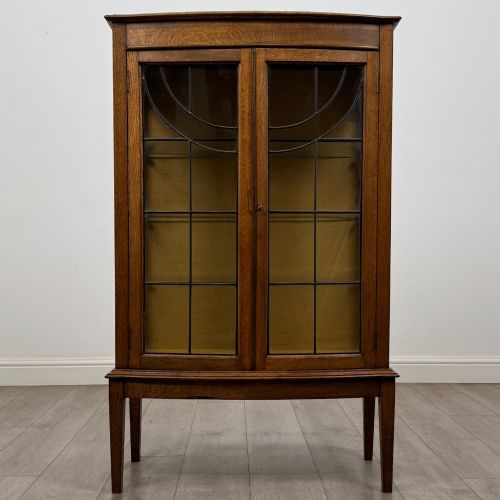
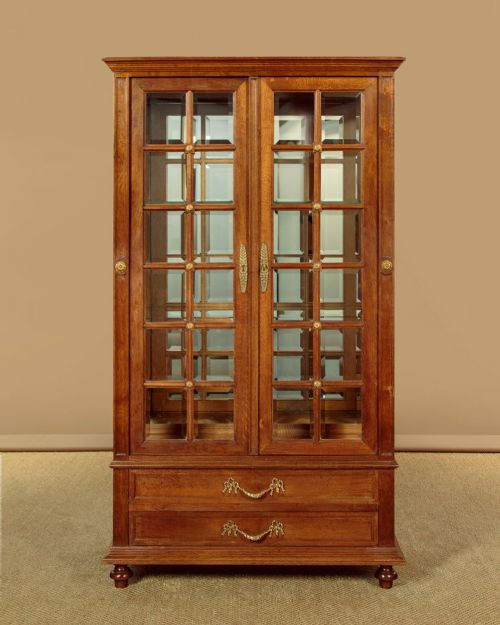
Makers built these cabinets using solid oak or oak veneers over timber frames, frequently incorporating glass panes held by lead or wooden glazing bars. Brass hinges, handles, and occasional gilt mounts provide functional hardware, while internal elements sometimes utilise fabric linings or adjustable wooden shelving.
Structural methods vary from traditional joinery found in earlier Georgian and Victorian pieces to the geometric carving of Jacobean revival styles and the cleaner lines of Art Deco design. Countertop and shop variants often integrate iron or metal brackets and internal drawers alongside their primary wooden frames.
Listings span multiple eras from early eighteenth-century Georgian cupboards to 1930s interwar designs, constructed predominantly in oak with glass and brass elements.
Design and Execution
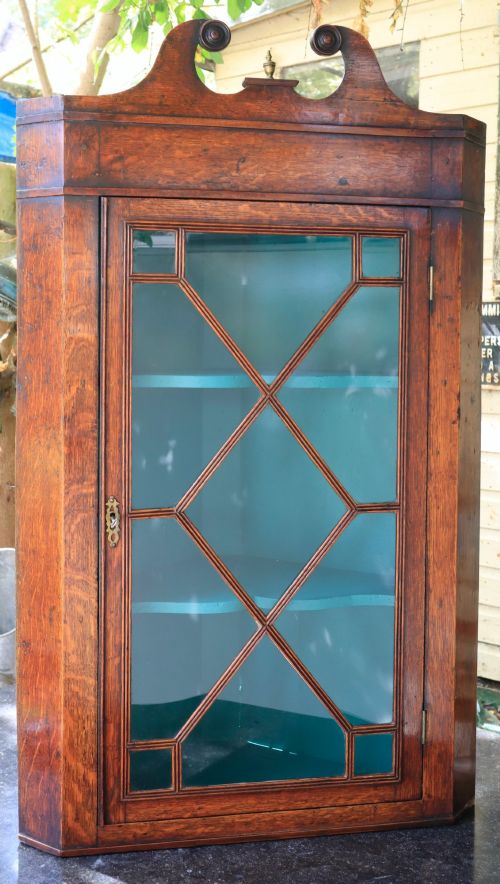
The distinction between standard utility furniture and finer examples lies in the depth of carving, the selection of figured timber, and the harmony of the proportions. Elaborate details such as breakfront cornices, astral glazing bars, and specialist sign-writing elevate certain workshop outputs above plain commercial production.
Integrity of the original glass, smooth operation of doors and drawers, and the retention of period hardware influence the standing of each piece. Finer cabinets demonstrate considered assembly where internal adjustable shelving and secondary timbers match the external quality of the oak.
The Oak Glazed Display Case Glossary
- Breakfront
- A cabinet design where the central section projects forward from the flanking wings. This architectural feature creates visual depth and typically indicates a larger, more substantial library piece.
- Astral glazing
- A network of slender wooden bars that divide a glass door into smaller panes. These delicate divisions structure the transparent front of the cabinet.
- Leaded glass
- Individual glass panes joined together by narrow strips of lead into decorative patterns. This technique appears frequently in Art Deco and Arts and Crafts examples.
- Vitrine
- A glass-fronted display cabinet intended for the presentation of porcelain or curiosities. The term often describes French or continental forms within British collections.
- Corner cabinet
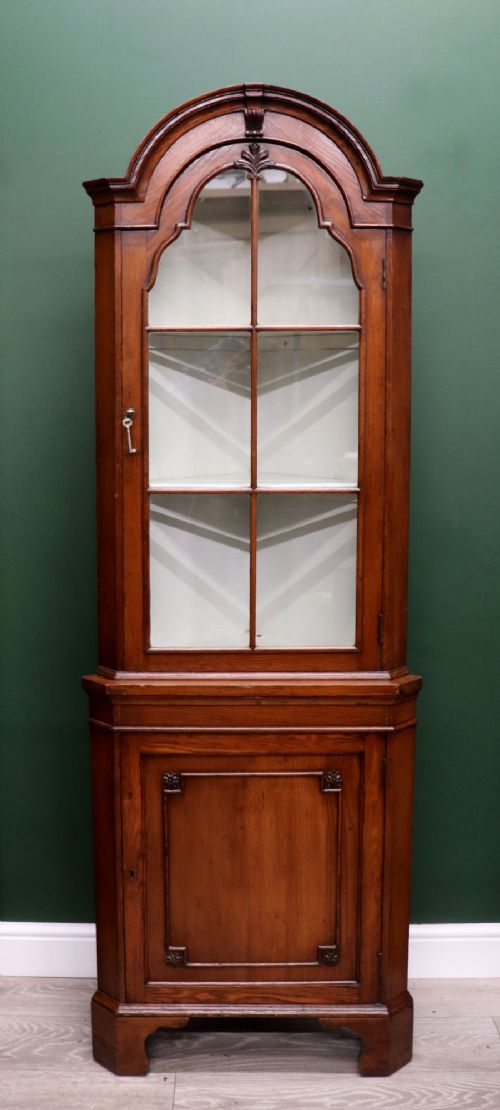
- A triangular furniture form designed to fit neatly into a room intersection. These units maximise floor space while offering multi-aspect glass display.
Oak Glazed Display Case: Frequently Asked Questions
How do I style an oak glazed display case?
These cabinets suit studies, living rooms, and dining spaces where books or collections benefit from protection against dust. Grouping items by tone or material inside the glass creates a balanced visual weight.
Allow the natural grain of the oak to dictate the surrounding palette, pairing the warm timber tones with neutral walls or traditional textiles.
What is the difference between a bookcase and a display cabinet?
While both share glazed fronts, bookcases traditionally feature rows of open or adjustable shelving specifically proportioned for volumes. Display cabinets often emphasise visibility through multi-aspect glass or mirrored backs.
Many period pieces bridge both categories, offering functional library storage alongside showcase capability.
How do I identify an Edwardian oak display case?
Edwardian examples often display lighter golden oak tones, slender glazing bars, and restrained classical or Arts and Crafts influence. They frequently incorporate mirror backs or internal fabric linings.
Construction methods from this era balance machine precision with hand finishing, distinguishing them from heavier Victorian or earlier Georgian precedents.
Can I adjust the shelves in these antique cabinets?
Many Victorian and Edwardian cabinets include fitted adjustable shelving systems using wooden notches, metal pegs, or rack-and-pinion tracks. This flexibility allows the interior height to accommodate varied collections.
Earlier Georgian and rustic pieces more commonly feature fixed internal shelves dictated by the original carcass construction.