

Oak Geometric Moulding
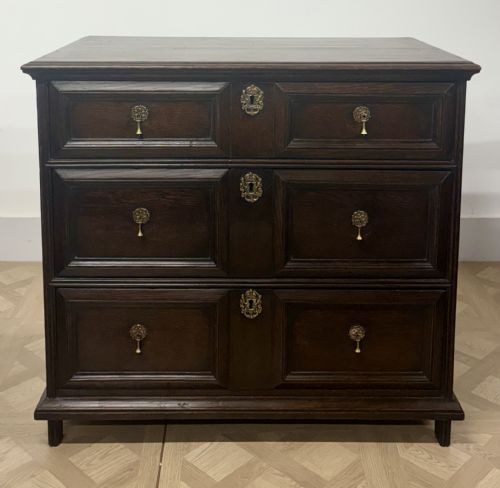
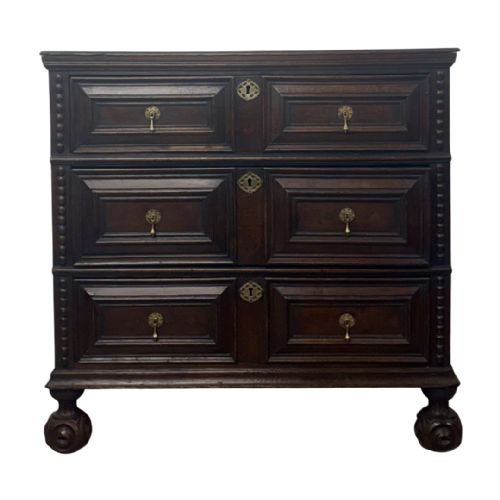
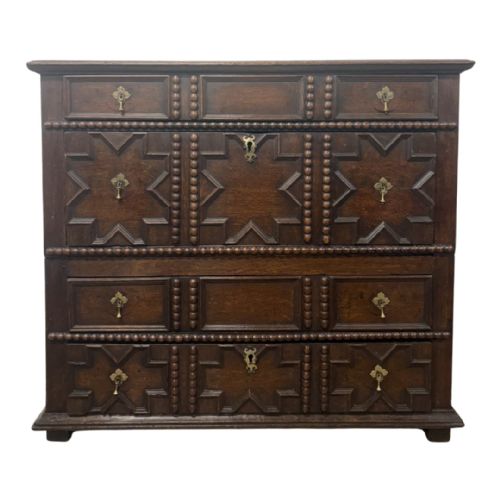
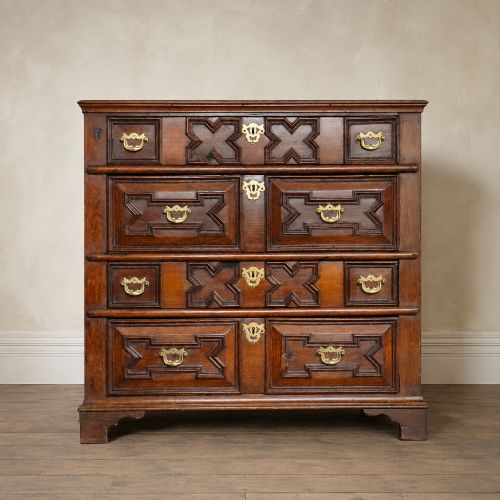
Oak geometric moulding defines seventeenth-century case furniture built with applied projecting bars to create panels and bosses on drawer fronts.
Oak Geometric Moulding
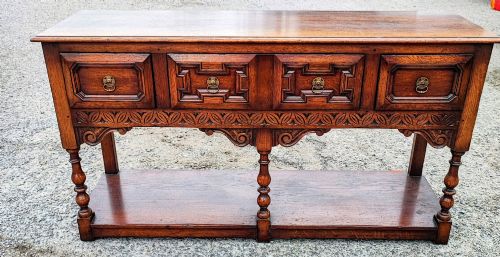
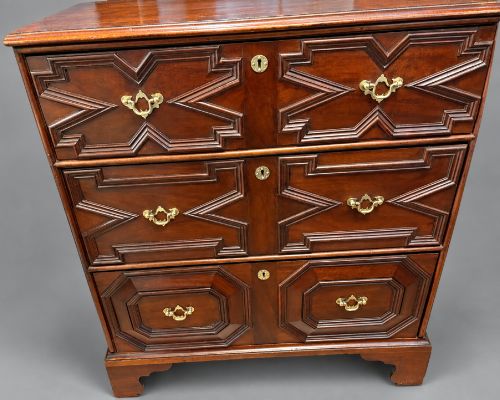
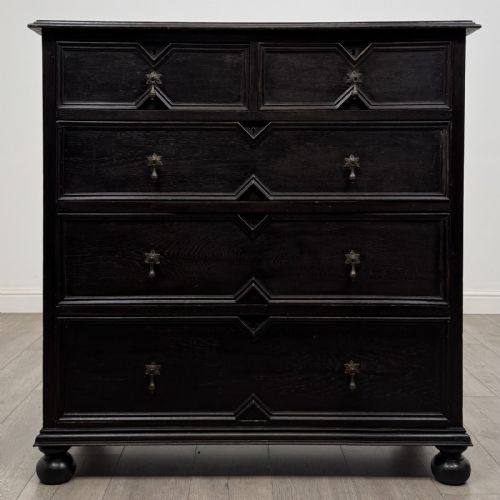
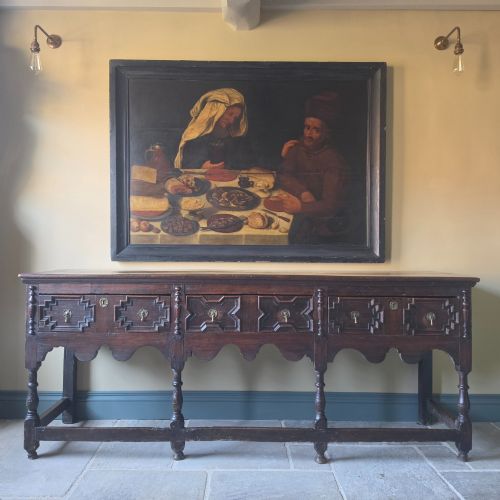
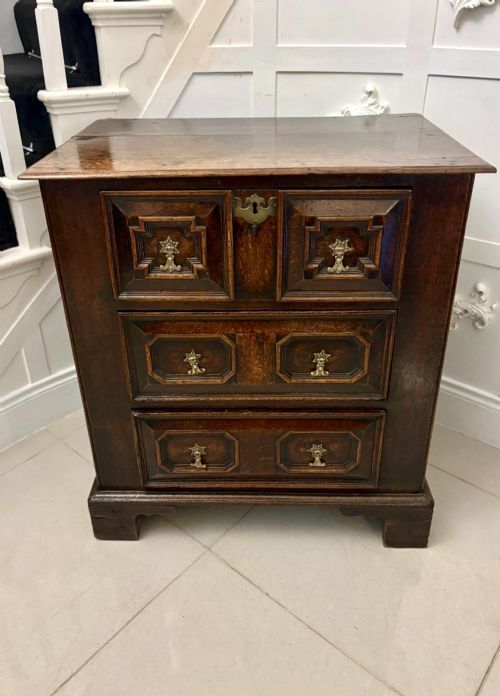
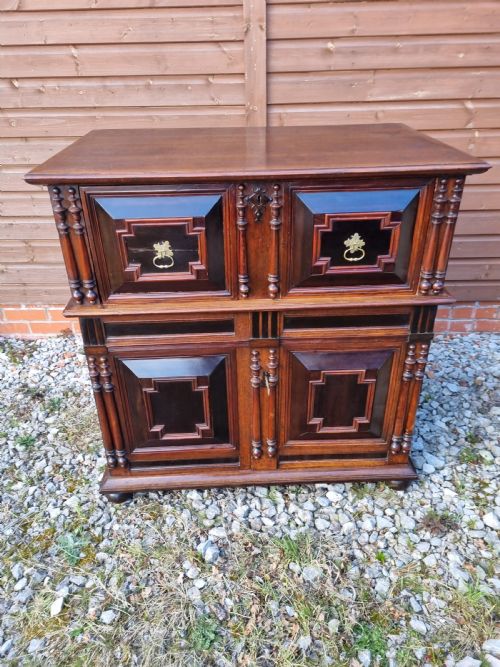
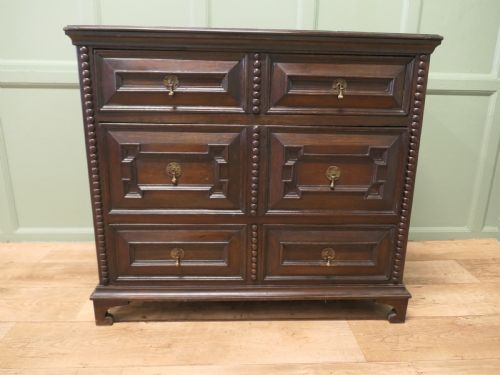
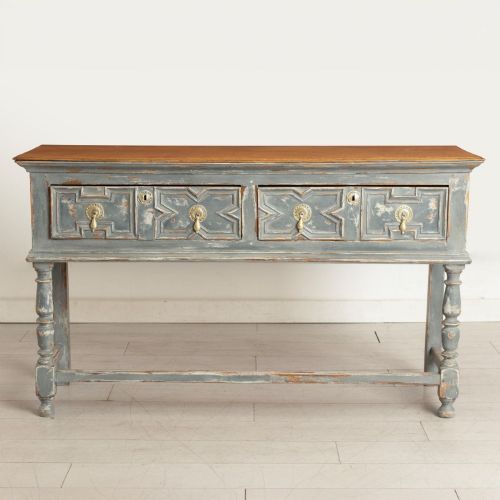
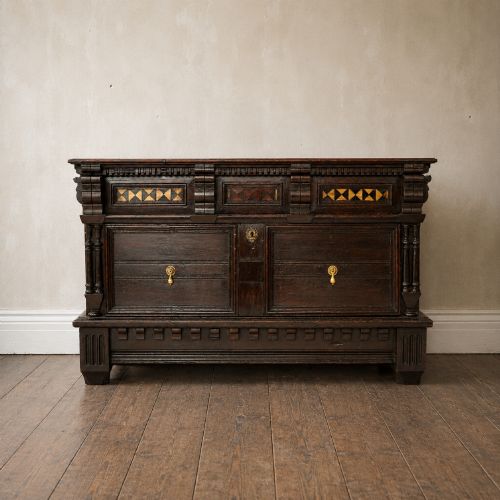
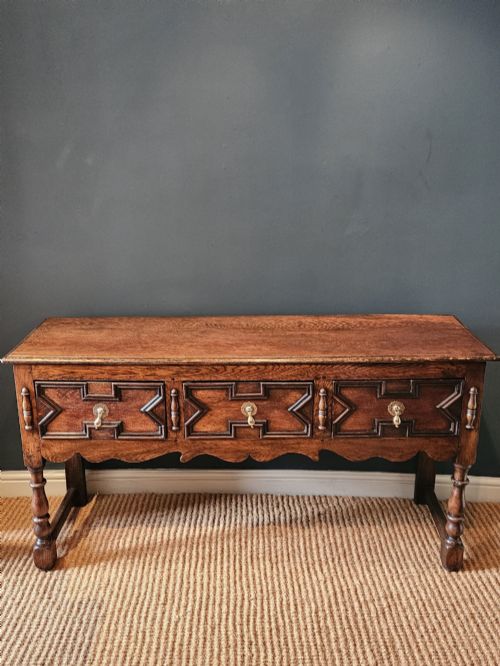
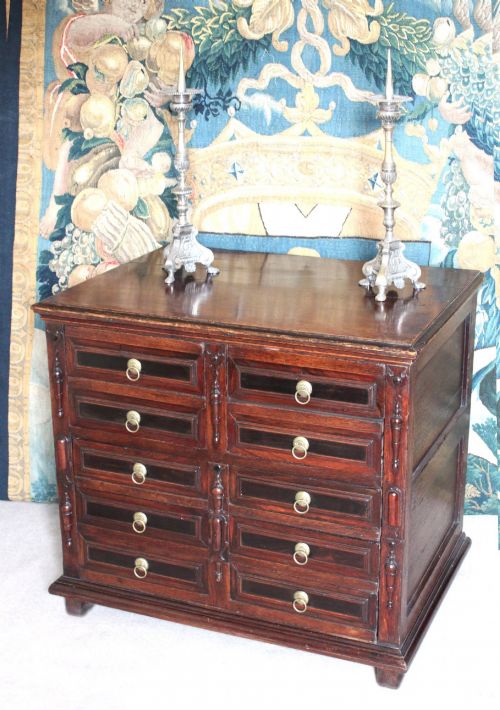
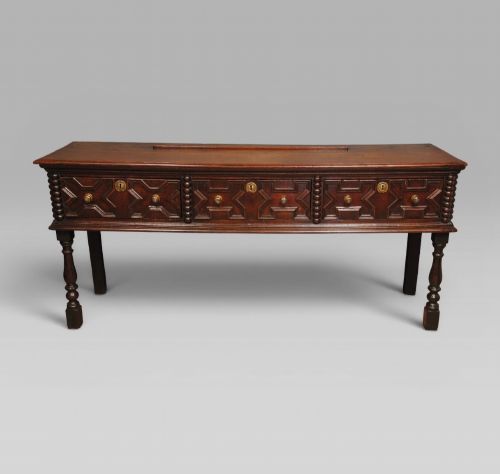
Oak geometric moulding pieces are predominantly chests of drawers and dresser bases originating from the seventeenth century, specifically the Charles II and Jacobean periods. These items display front facades decorated with patterned wooden bars arranged in rectangles, octagons and intersecting shapes. Buyers frequently encounter two-part chests and low dressers sharing these characteristic applied surface designs.
The form spans from the mid seventeenth century through to later revival periods in the nineteenth and twentieth centuries, including pieces dated to nineteen-twenty and nineteen-hundred. Alongside primary oak construction, makers incorporated walnut, fruitwood and ebony, utilising contrasting timbers to highlight the intricate geometric arrangements on the drawers.
How they were made
Joiners constructed these pieces using solid oak carcasses, often pairing them with walnut, fruitwood and ebony for decorative contrast on the facades. Individual mouldings were planed separately by hand and painstakingly glued and pinned onto the drawer fronts to form repeating geometric patterns. Iron and brass hardware, such as drop handles and backplates, were fitted to secure drawers and doors.
Surface finishes involved traditional applications including ebonising and paint, alongside oyster veneering where thin circular slices of wood created figured patterns. Over centuries, these timbers developed a faded patina across the block fronts, bun feet and panelled structures.
Oak Geometric Moulding Retail Price Guide 2026
Typical asking prices for oak geometric moulding among the pieces listed under this phrase on Sellingantiques today, from the lower quarter to the upper quarter. They describe what is for sale here now, not the wider market.
Listings feature oak geometric moulding items spanning from the seventeenth century through to the Georgian era and nineteen-twenty.
What varies in quality
The standard of these pieces depends upon the complexity of the applied pattern work and the integrity of the timber. Finer examples retain their original brasses, uncompromised bun feet and crisp mitres on the mouldings, whereas lesser items suffer from replaced hardware or lost wooden sections. The choice of secondary woods, such as ebony or walnut accents against the oak, dictates the visual depth of the facade.
Originality of the structure dictates the standing of a piece within the period. Items retaining their authentic two-part construction and untouched patination contrast with later nineteenth or twentieth-century interpretations that emulate the Jacobean style without the same depth of material age.
The Oak Geometric Moulding Glossary
- Geometric moulding
- Applied strips of wood arranged in repeating patterns such as octagons and rectangles on drawer fronts and cupboards. This technique creates pronounced surface depth characteristic of seventeenth-century joinery.
- Dresser base
- A low sideboard or serving table fitted with drawers and occasionally cupboards below. These pieces date largely from the seventeenth and eighteenth centuries.
- Oyster veneer
- Thin circular slices cut transversely from small branches or roots to display concentric growth rings. Craftsmen laid these veneers in interlocking patterns across furniture surfaces.
- Ebonised oak
- Timber treated with a dark stain or finish to imitate ebony. This treatment provided stark contrast against lighter oak and fruitwood mouldings.
- Two-part chest
- A piece of case furniture constructed in upper and lower sections designed to stack together. This method aided transport and placement in seventeenth-century homes.
Oak Geometric Moulding: Frequently Asked Questions
What is an oak geometric moulded chest?
An oak geometric moulded chest is a seventeenth-century storage piece featuring drawer fronts decorated with applied wooden bars forming repeating patterns. These designs often incorporate rectangles and octagons.
The joinery requires precise mitring of the applied mouldings onto the solid oak carcass, frequently enhanced with contrasting timbers like ebony or walnut.
How do I date an oak geometric piece?
Dating relies on construction methods, timber usage, and hardware styles. Seventeenth-century originals display hand-planed mouldings, pegged joints, and timber shrinkage appropriate to their age.
Revival pieces from nineteen-twenty or around nineteen-hundred often show mechanical tool marks and different secondary woods behind the primary oak facade.
Were these pieces used for clothing storage?
Chest of drawers and cupboards served primarily for storing textiles, linens, and personal valuables in seventeenth-century households. The robust oak construction protected contents from dampness and pests.
Dresser bases functioned in dining spaces and kitchens for serving food and storing household tablewares.
How should I care for an antique oak surface?
Maintain antique oak by keeping it away from direct heat sources and sudden humidity changes that cause timber to split. Apply microcrystalline wax sparingly to nourish the wood and preserve the historic patina.
Avoid modern silicone polishes which penetrate the grain and alter the aged appearance of the surface.