
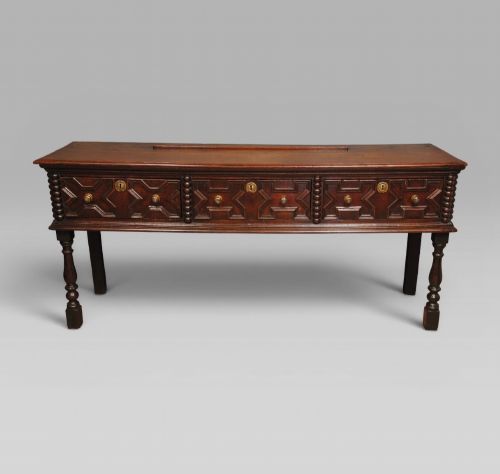
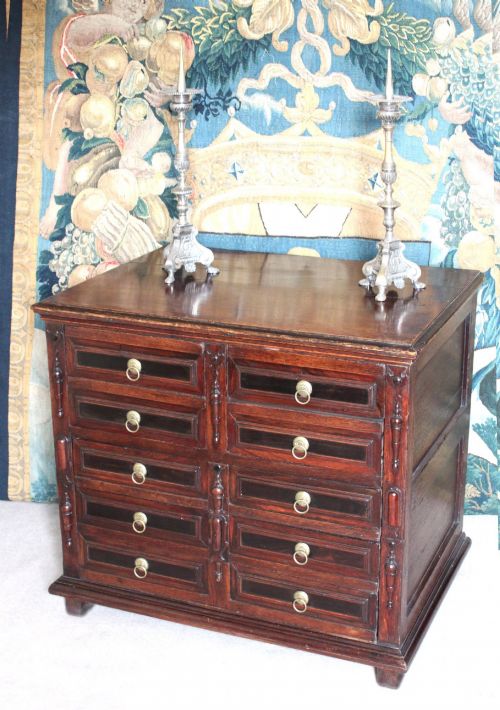
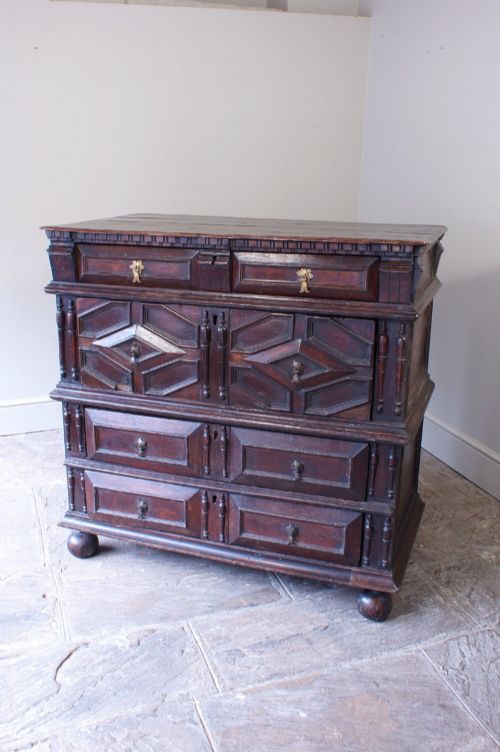
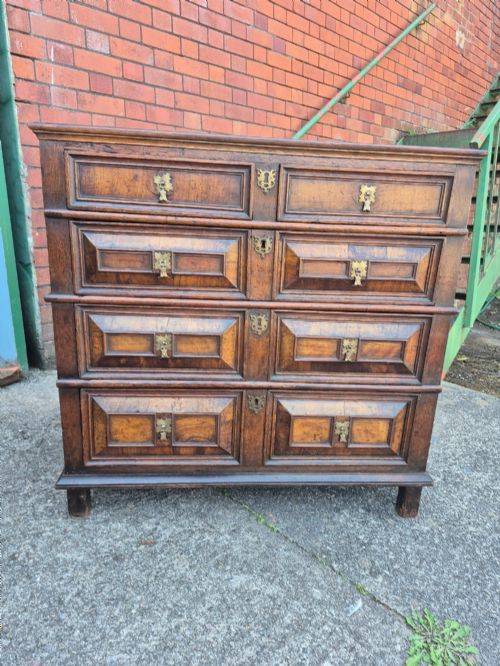


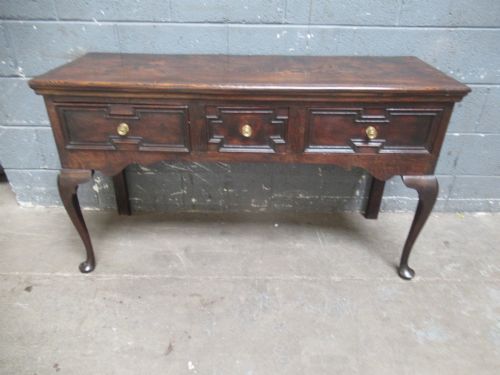
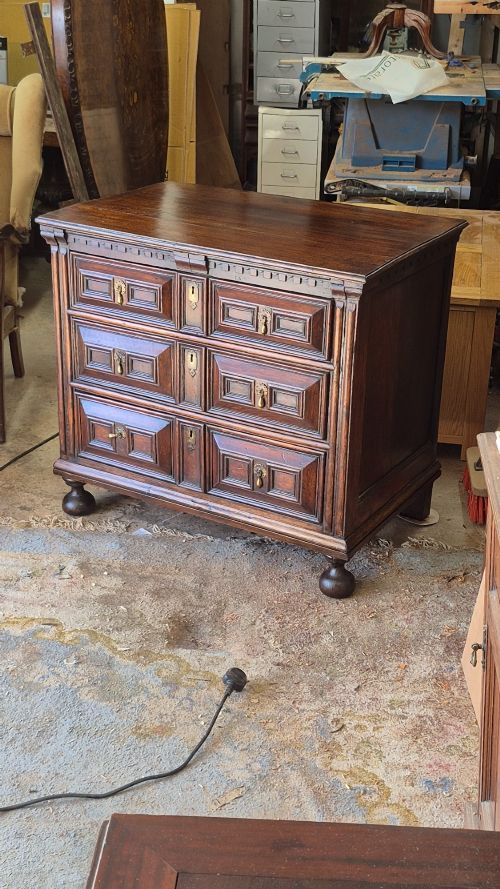
Oak Geometric Moulding Dresser
An oak geometric moulding dresser brings tactile, architectural depth to a room through meticulous drawer fronts built centuries ago.
Oak Geometric Moulding Dresser
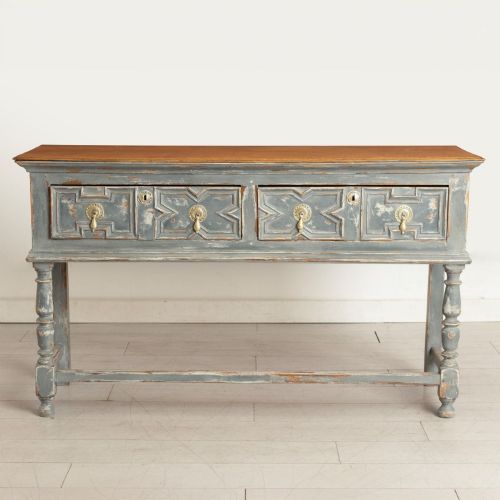
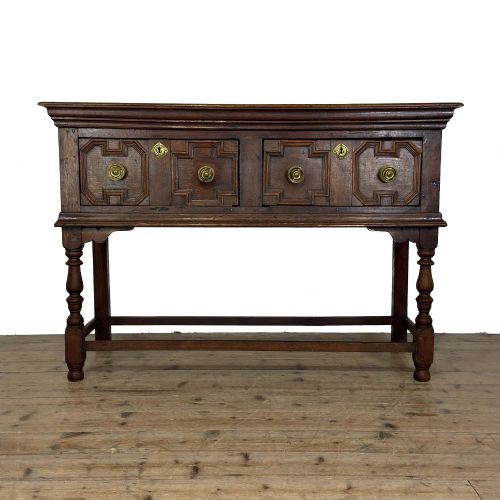
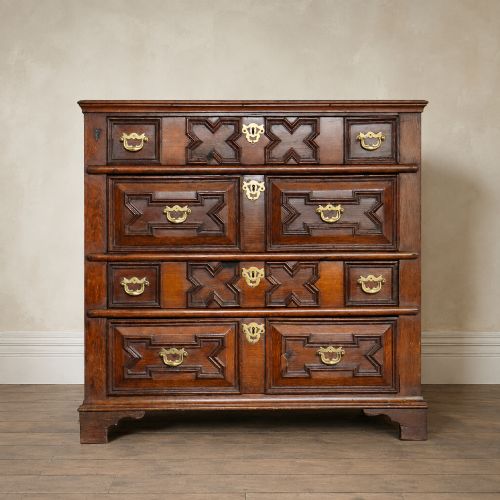
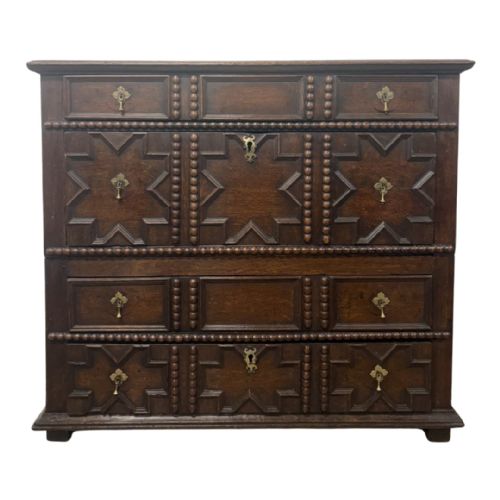
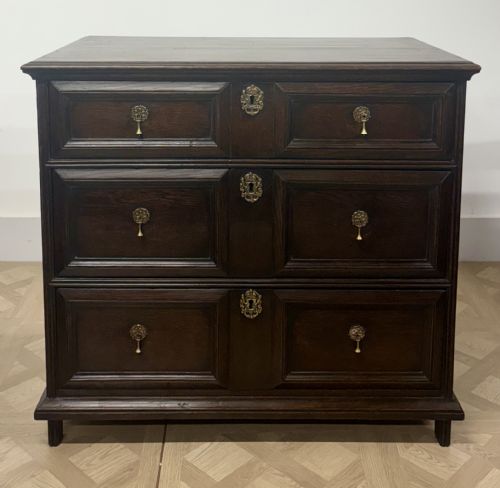
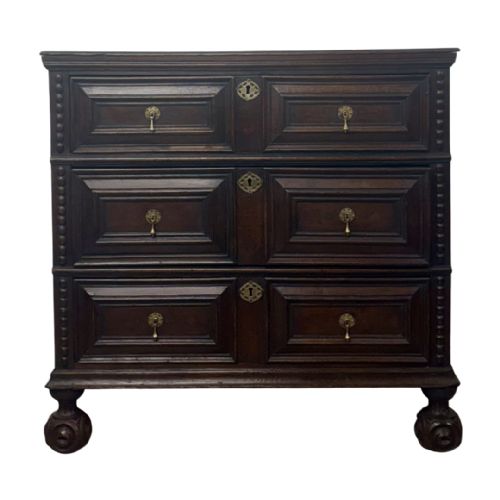
An oak geometric moulding dresser or related chest of drawers combines robust structural timber with intricate applied front decorations. These pieces originate predominantly from the seventeenth century, spanning the Charles II and Jacobean periods, though later revivals also appear.
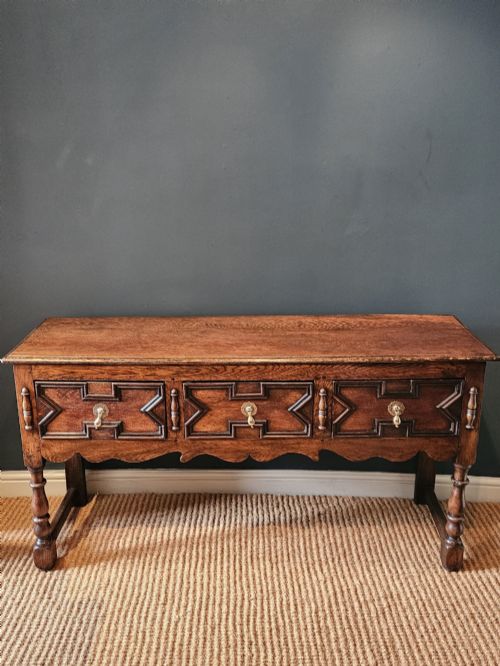
Buyers encounter dresser bases, low servers, and drawer units rather than towering plate racks. The forms rely on solid proportions, often utilising a two-part construction or dedicated banks of drawers.
The aesthetic bridges utilitarian storage and high joinery. Artisans arranged raised mouldings on drawer faces to create panels, lozenges, and geometric grids that catch the light.
Materials and Technique
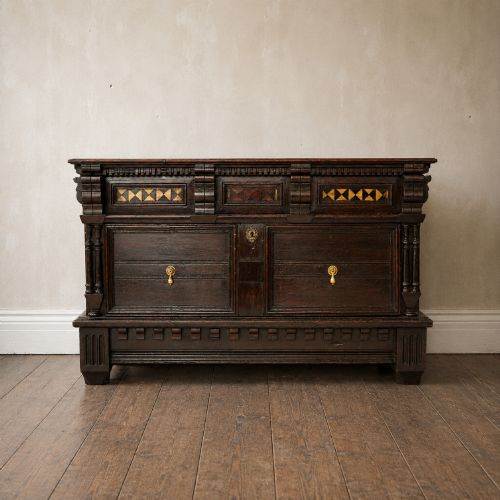
Makers relied primarily on native oak for the main carcasses and framing, occasionally introducing walnut, fruitwood, or oyster veneer for contrast on decorative surfaces. Timber was quarter-sawn to expose attractive medullary rays and ensure structural stability over generations.
Applied geometric mouldings were shaped individually, planed by hand, and pegged or glued onto the drawer fronts to form repeating patterns. Brass drop handles and escutcheons, often supported by original backplates, complete the hardware scheme.
Early makers occasionally hid small wooden pegs just out of sight, ensuring drawer fronts stayed put while families ate hearty stews nearby.
Quality and Distinction
Excellence in these pieces rests on the crispness of the hand-planed mouldings and the integrity of the timber panels. Finer examples retain their original surface patination and uncompromised drawer linings, showing minimal timber replacement.
Proportion and decorative ambition dictate the upper tier of the range. Pieces that integrate secondary woods like walnut or fruitwood alongside oak demonstrate greater ambition from the original workshop.
The Oak Geometric Moulding Dresser Glossary
- Geometric moulding
- Raised wooden strips applied to drawer fronts in repeating rectilinear patterns. This technique defined seventeenth-century case furniture.
- Oyster veneer
- Thin circular slices cut transversely from small branches or roots, arranged to resemble oyster shells. It creates intricate wooden patterns.
- Dresser base
- A low side table or cabinet featuring drawers for storage, lacking the upper plate shelves of a traditional tall dresser.
- Two-part chest
- A piece constructed in upper and lower vertical sections to ease transport and placement within seventeenth-century homes.
- Block front
- A cabinet or drawer face surface divided into three vertical sections, with the outer sections projecting forward from a recessed centre.
Oak Geometric Moulding Dresser: Frequently Asked Questions
How do I date an oak geometric moulding piece?
Examine the construction methods behind the drawers, such as hand-cut dovetails and pegged joints. Timber shrinkage and surface patination provide further clues to seventeenth-century origins.
Compare the moulding profiles against known examples from the Charles II period. Later revivals from around nineteen hundred often display machine-cut precision rather than hand-planed irregularities.
Are these dressers suitable for modern daily use?
These pieces function well as sideboards or storage units in contemporary hallways and living rooms. The deep drawers accommodate modern linens and household items easily.
Keep the wood away from direct heat sources and sudden humidity shifts to protect the antique timber. Regular waxing maintains the natural lustre of the oak.
What is the difference between a dresser base and a chest?
A dresser base typically functions as a low serving surface with drawers arranged horizontally along the top. Chests of drawers generally stand taller with multiple stacked drawer rows.
Both utilise similar geometric moulding techniques on the facade. The choice depends on available wall space and desired surface height.
Should the brass hardware be original?
Original brass drops and escutcheons add historical value to seventeenth-century furniture. Look for matching patination between the hardware and the surrounding oak.
Replacements are common due to centuries of wear. Quality period-appropriate replacements do not diminish the practical utility of the base.