
Oak Entryway Settle
An oak entryway settle is a solid timber seat designed for hallways, built to withstand daily coming and going.
Oak Entryway Settle
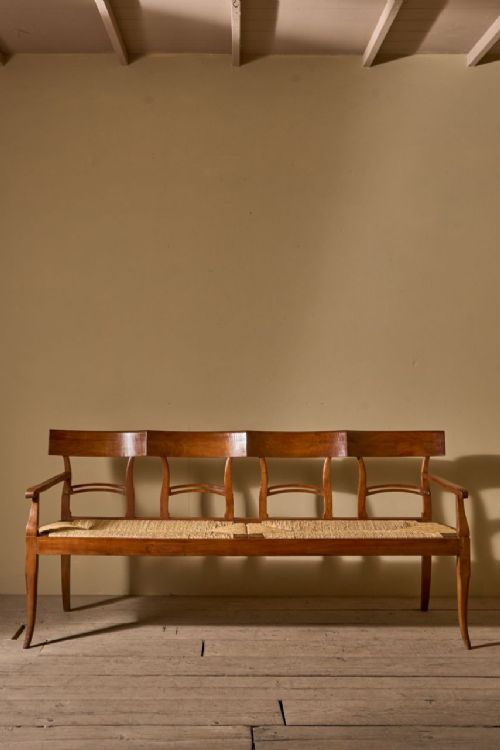
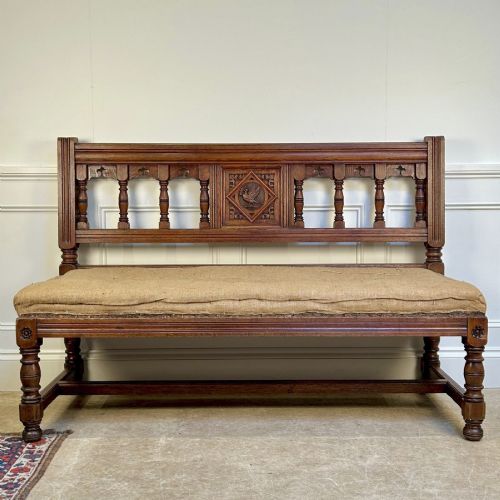
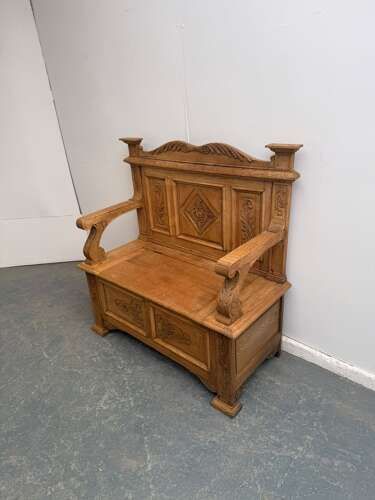
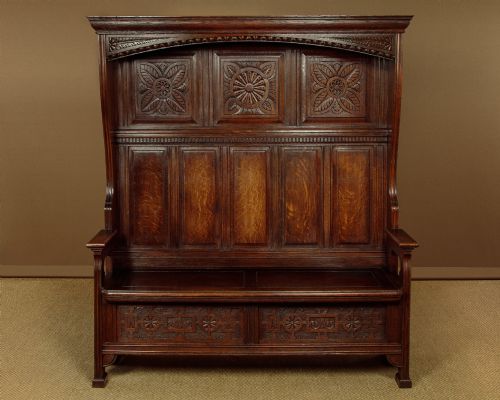
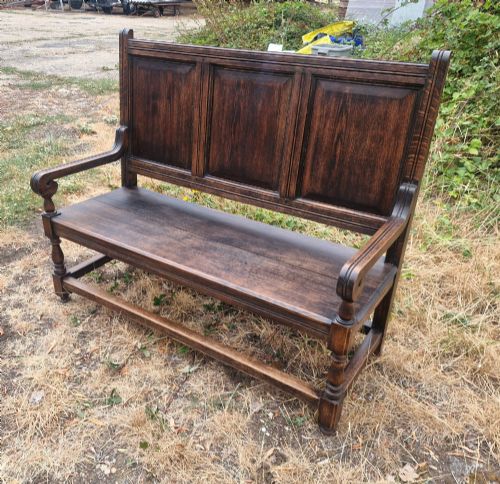
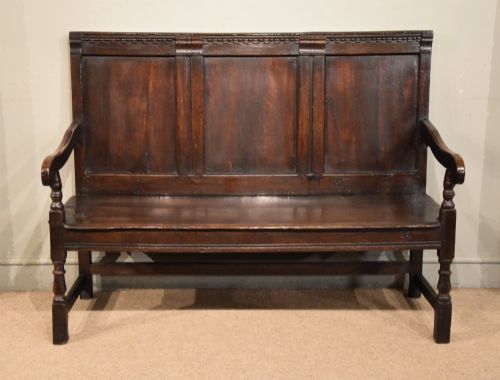
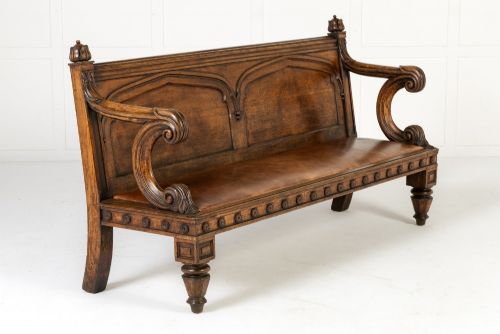
An oak entryway settle serves as a substantial seat for a hallway, corridor or boot room, combining practical storage with timber construction. These pieces range from high-backed designs intended to block draughts to narrow benches fitted with lift-up lids and coat hooks.
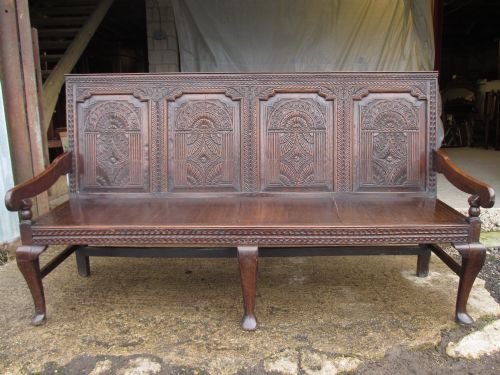
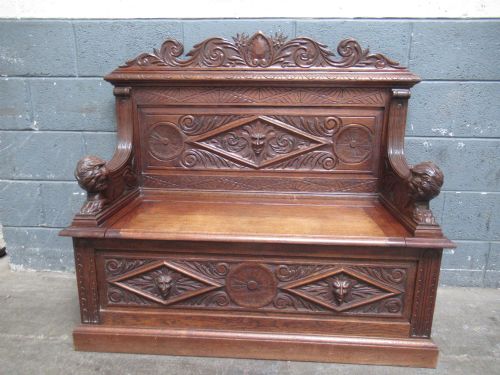
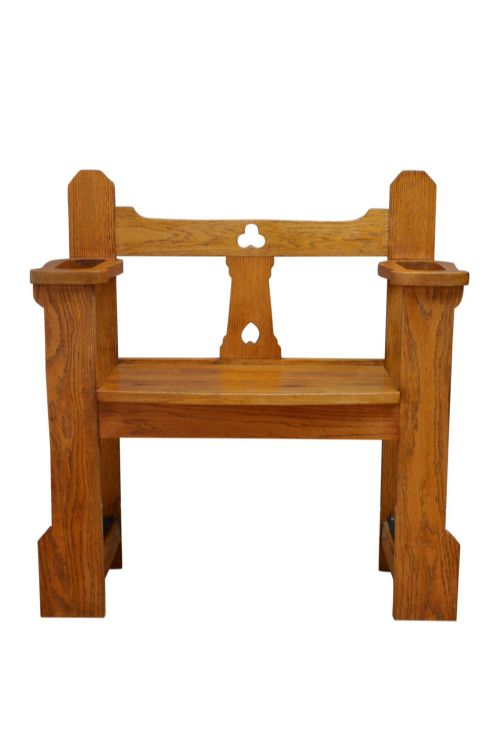
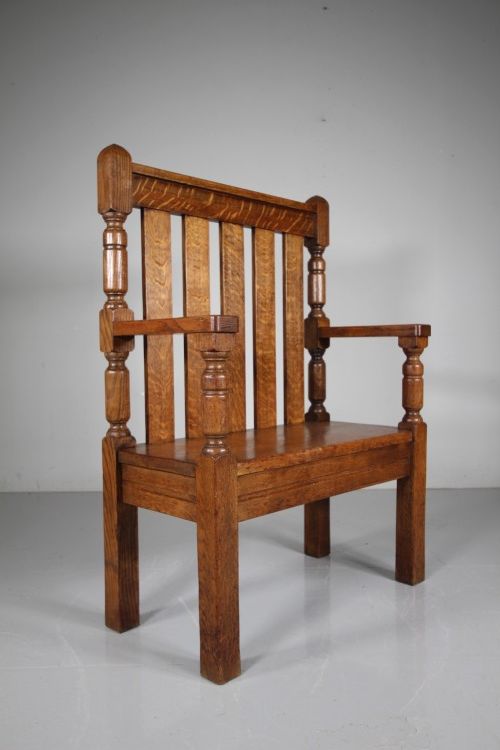
The versions most commonly found here date from the eighteenth and nineteenth centuries, alongside Edwardian and later revival pieces. Many examples incorporate panelled backs, box seats for storage, or carved details drawn from Gothic, Jacobean and Arts and Crafts traditions.
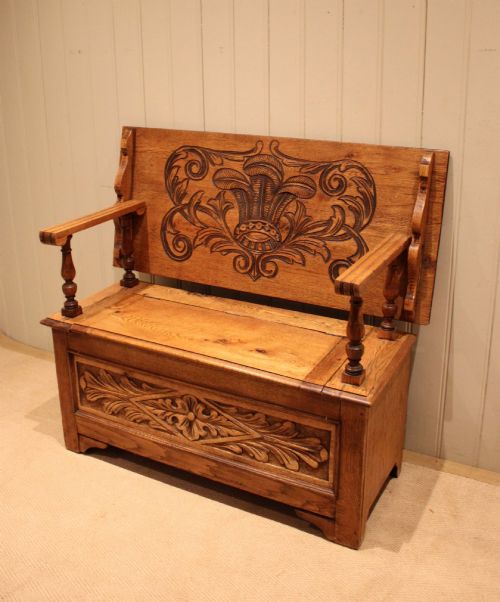
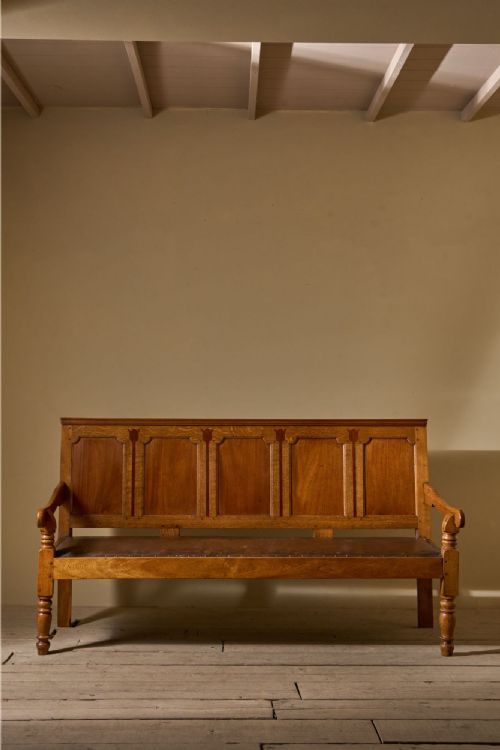
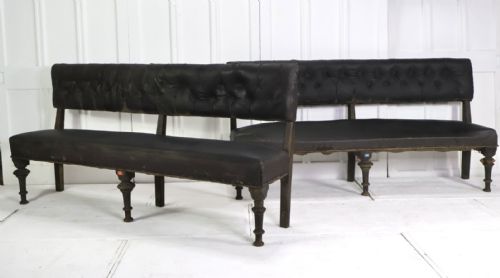
Makers utilised native timber, frequently pairing solid oak with secondary woods, rush seating, brass mounts or leather squab cushions. Their forms vary from simple straight-backed benches to complex convertible monks benches and canopy top designs.
How they were made
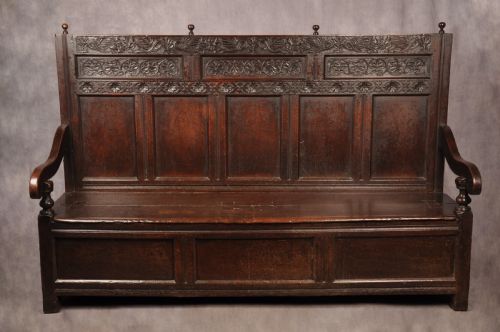
Cabinet makers built these settles primarily using solid oak, employing traditional frame-and-panel construction to accommodate the natural movement of timber over centuries. Joinery relied on pegged mortise and tenon joints, creating rigid structures capable of bearing heavy daily use.
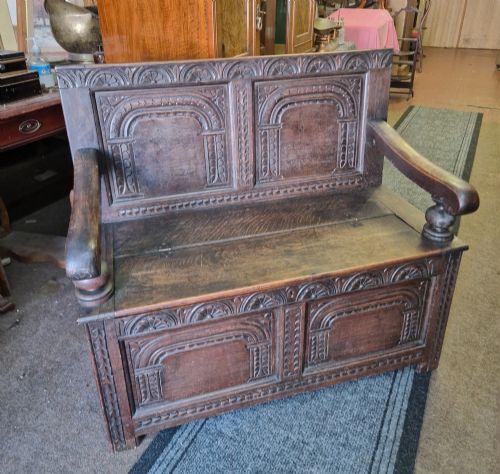
Surface ornamentation involved hand-carving, linenfold panels, punchwork or applied mouldings, often executed in regional vernacular styles. Workshops finished the timber with wax or polish, while secondary materials such as rush, brass and iron provided seating surfaces and hardware.
Listings span multiple eras from the seventeenth century through to the Edwardian period, featuring solid oak alongside cherrywood and burr elm.
What varies in quality
The distinction between standard utility furniture and superior pieces lies in the crispness of the hand-carving and the thickness of the timber boards selected for the seat and back panels. Finer examples display balanced proportions, integrated storage boxes with sound hinges, and timber that has matured to a rich, untouched colour.
Revival and later pieces vary according to the fidelity of their historical styling and the quality of the hardware, such as brass mounts and iron strapwork. Substantial construction without excessive later alterations marks the difference between utilitarian workshop output and distinguished cabinet work.
GIllows·Liberty·James Shoolbred & Co
The Oak Entryway Settle Glossary
- Settle
- A wooden bench with a high back, solid arms and frequently a box seat beneath for storage. It originally stood near the hearth to shield occupants from draughts before finding a place in hallways.
- Monks Bench
- A convertible piece of furniture featuring a hinged back that folds down over the arms to form a table top. This dual-purpose design served small domestic spaces.
- Box Settle
- A settle with a concealed storage compartment beneath the hinged seat lid, used historically for blankets, boots and cloaks. The heavy panelled base often supported the main seat frame.
- Gothic Revival
- An architectural and decorative style popular during the nineteenth century, drawing on medieval forms. Pieces display pointed arches, tracery, carved linenfold and heavy mouldings.
- Arts and Crafts
- A design movement of the late nineteenth and early twentieth centuries emphasising honest construction and visible craftsmanship. Furniture from this period exhibits simpler lines, exposed pegged joints and minimal ornamentation.
Oak Entryway Settle: Frequently Asked Questions
Where did people put settles?
Historically, settles stood in the entrance hall, near the hearth or in the farm kitchen to keep out cold draughts from doors.
Today, they suit modern hallways and boot rooms as a place to sit while removing shoes, with the bonus of interior storage.
Are these pieces comfortable?
Wooden settles have upright backs and solid timber seats designed for posture and durability rather than lounging.
Many owners add loose fabric cushions or leather squab pads to the seat for daily comfort.
How do I date an oak settle?
Dating relies on construction methods, timber grain, tool marks and stylistic details such as panel thickness and carving motifs.
Eighteenth-century examples often show hand-riven oak boards and simpler peg construction, while Victorian pieces display heavier revival carving.