


Oak Dining Room Cupboard
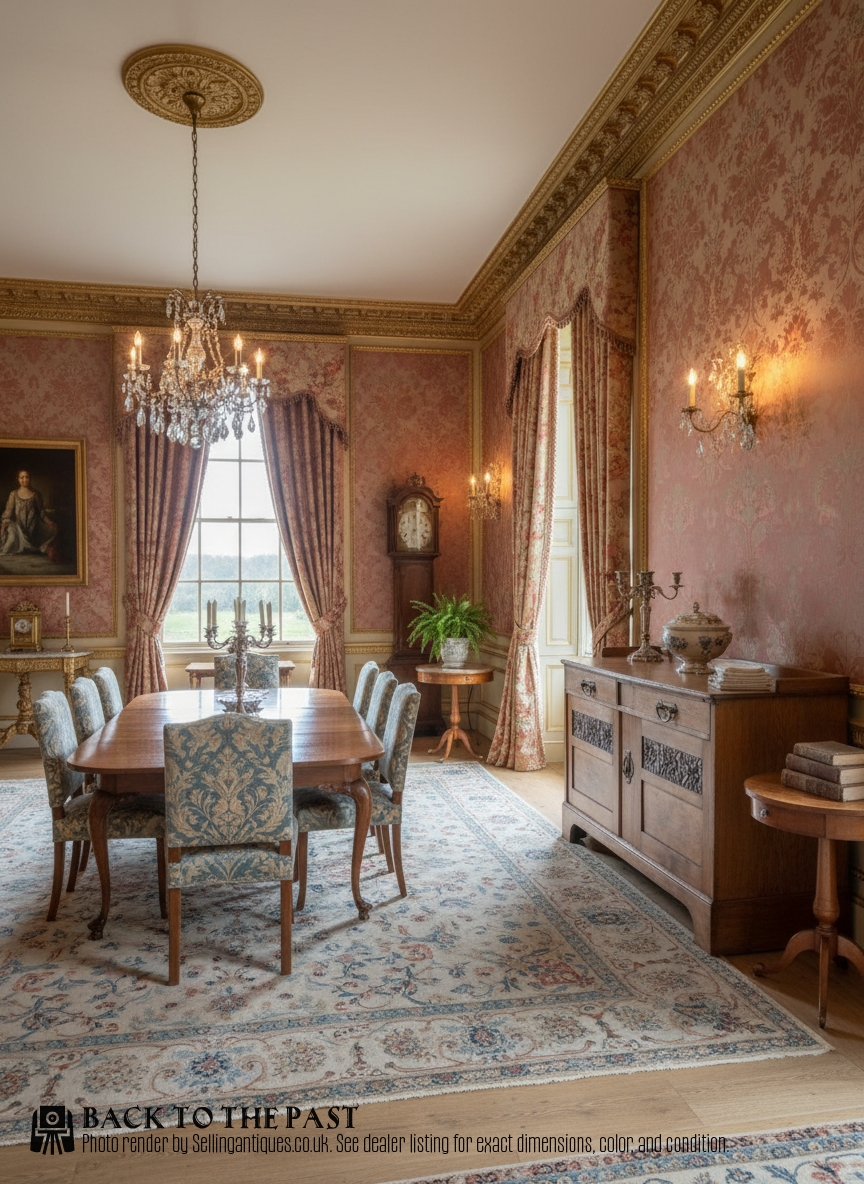
An oak dining room cupboard grounds a room with solid presence, offering substantial storage built to endure.
Oak Dining Room Cupboard
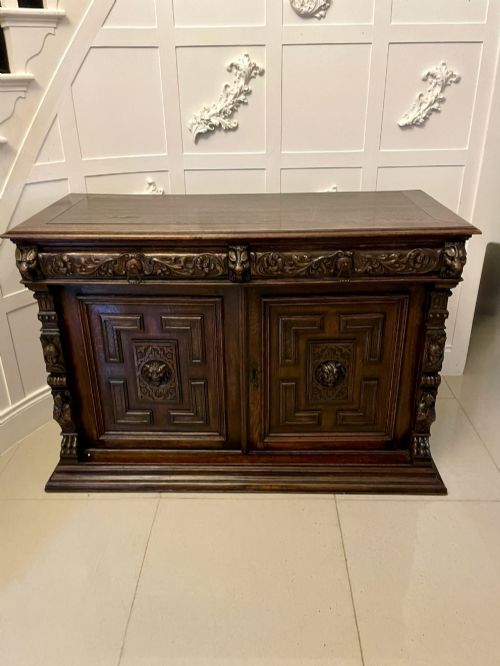
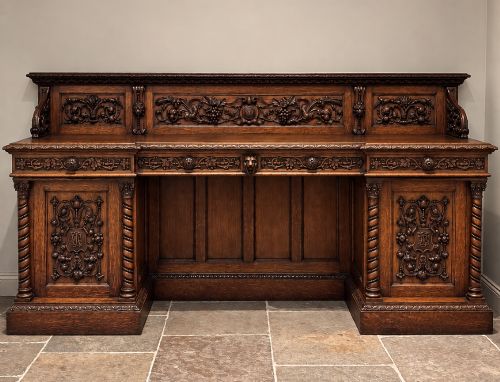
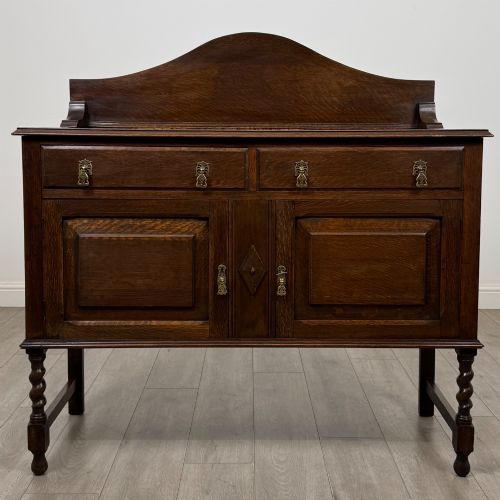
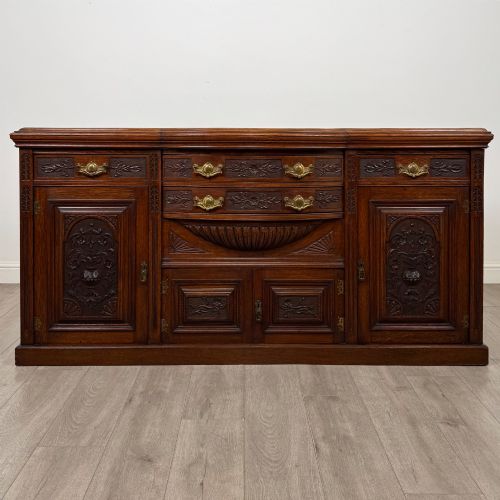
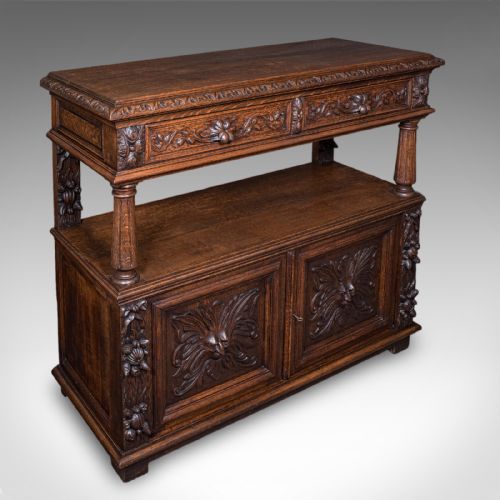
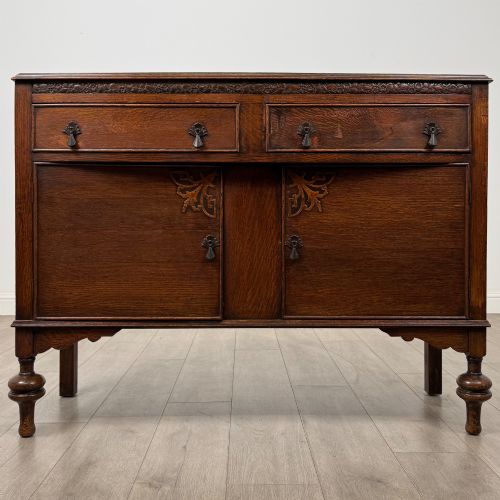
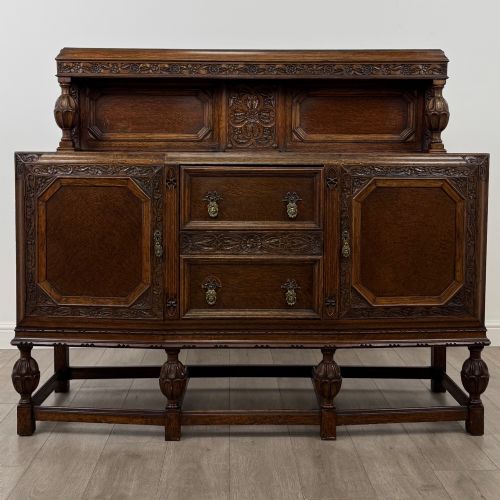
An oak dining room cupboard takes several forms across the centuries, appearing as sideboards, buffets, court cupboards, and dressers. These pieces serve primarily to store tableware and dining provisions while anchoring the room with heavy timber construction.
The versions most commonly met on this page span the Victorian and Edwardian eras, alongside earlier 18th-century French provincial examples and later 20th-century iterations. They range from low buffets to tall mirror-back cabinets.
Makers and regional workshops from Britain and continental Europe shaped these items in styles running from Jacobean Revival and Gothic Revival to Arts and Crafts and French Provincial. Each style brings distinct carving depth and structural ornamentation to the dining space.
How they were made
Construction relies heavily on solid oak, frequently paired with secondary timbers, pollard oak veneers, and wood inlay to create varied surface textures. Metal elements such as brass handles, iron hinges, and glass panels integrate into doors and cabinetry compartments.
Joinery methods involve traditional panel-and-frame construction, hand-carved ornamentation, and distinctive turning work like barley twists. Cabinetmakers shaped panels with deep relief carving, architectural mouldings, and mirrored backings depending on the period and stylistic movement.
Some cupboards hide little shallow drawers behind carved friezes, perfect for stashing secret family recipes or stray teaspoons.
What varies in quality
The depth and crispness of hand carving separate standard production from superior examples, particularly on revival pieces where relief work can range from shallow stamping to intricate chiselling. The selection of timber grain, notably figured pollard oak or carefully matched quarter-sawn boards, dictates visual richness.
Hardware integrity and structural joinery also define the upper tier, where original brass pulls, tight joints, and substantial timber thickness remain intact without excessive restoration.
Maple and Co
The Oak Dining Room Cupboard Glossary
- Court cupboard
- A traditional English enclosed piece of furniture featuring an upper recessed cabinet supported by pillars above a larger lower section. This form provides dual-level storage for household provisions.
- Barley twist
- A type of turning shaped in a spiral resembling a twisted rope, frequently utilised on legs and upright supports during the 17th century and later revival periods.
- Pollard oak
- Timber taken from trees that have been pollarded, resulting in a dense, highly figured grain pattern with knot clusters prized for decorative veneering.
- Arts and Crafts
- A design movement prioritising traditional craftsmanship, visible construction, and simple forms over mass-produced ornamentation.
- Jacobean Revival
- A style popular in the 19th century that reinterprets early 17th-century English furniture characteristics, including heavy geometric moulding and strapwork carving.
Oak Dining Room Cupboard: Frequently Asked Questions
How do I choose the right size?
Measure your dining room floor space and wall clearance carefully before selecting a sideboard or court cupboard. Consider the door swing and drawer extension space alongside your seating arrangements.
Larger mirror-back buffets require high ceilings and substantial wall space, whereas low French provincial cabinets suit smaller rooms and hallways.
How were these cupboards used historically?
Dining room cupboards served to store silver, linen, serving dishes, and dry foodstuffs close to the table. Court cupboards specifically displayed precious plate on the upper tier while concealing provisions below.
Over time, their surface tops also functioned as server spaces during large meals.
How do I care for antique oak?
Keep wooden furniture away from direct heat sources and strong sunlight to prevent the timber from splitting or warping. Dust regularly with a soft, dry cloth and apply occasional wax polish suited for antique finishes.
Avoid liquid cleaners and silicone-based sprays, which can degrade the polished surface over time.
How do I tell periods apart?
Look to the carving styles, hardware, and structural proportions to identify the era of manufacture. Gothic and Jacobean Revival pieces display heavy geometric mouldings and dark finishes, while Arts and Crafts examples show simplified construction and honest joinery.
Edwardian items often incorporate lighter timbers and refined turning work.