
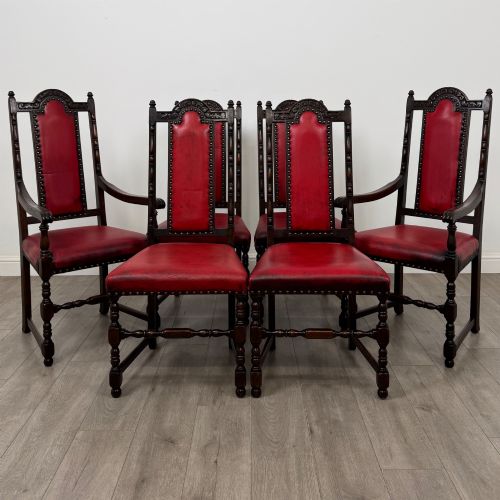
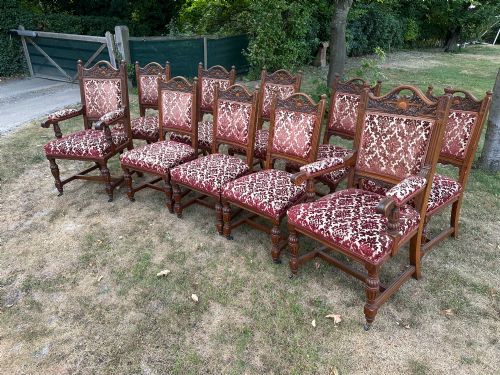
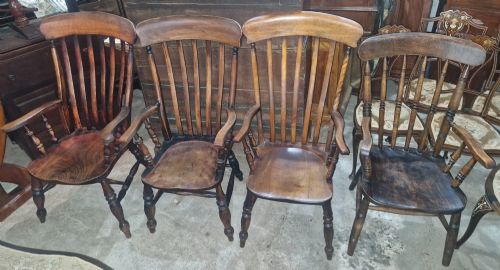
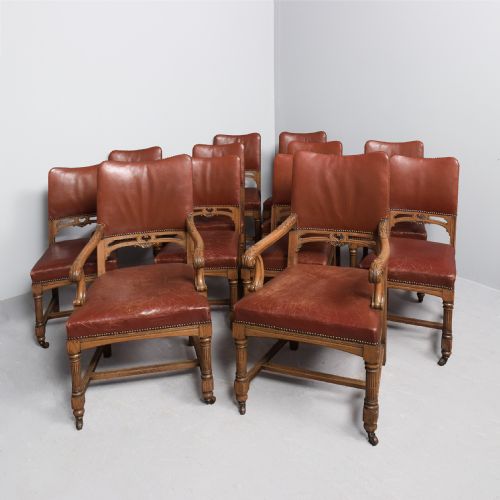
Oak Dining Armchairs
These oak dining armchairs offer heavy timber construction and solid seating for large tables, spanning seventeenth-century origins to twentieth-century revivals.
Oak Dining Armchairs
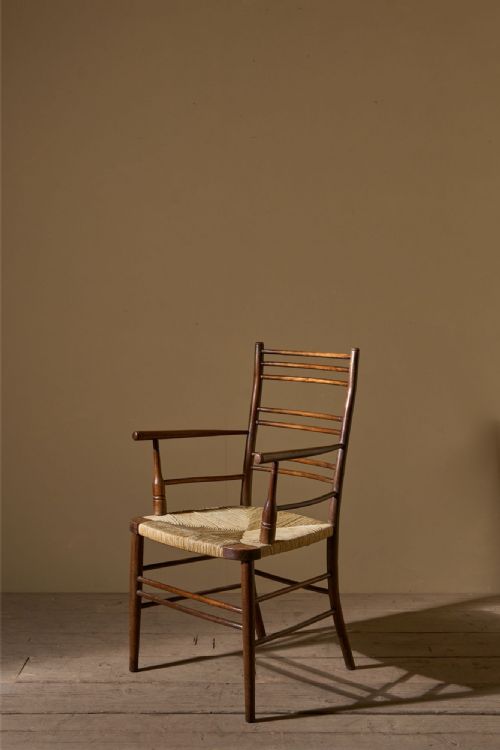
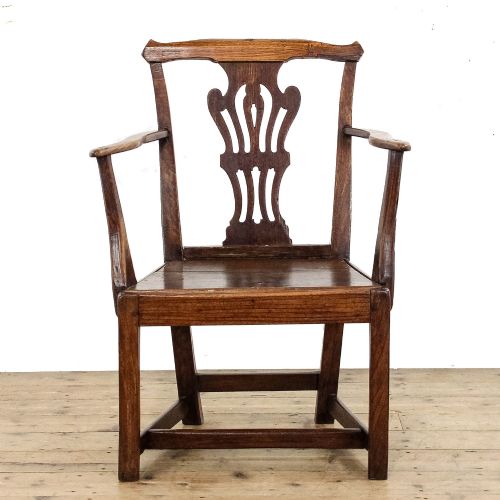
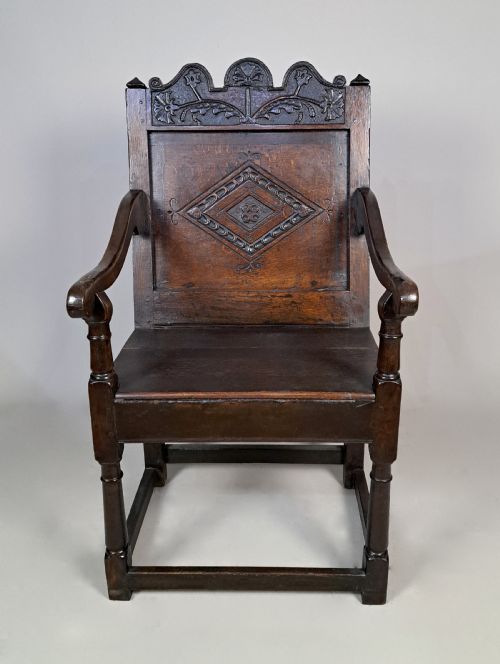
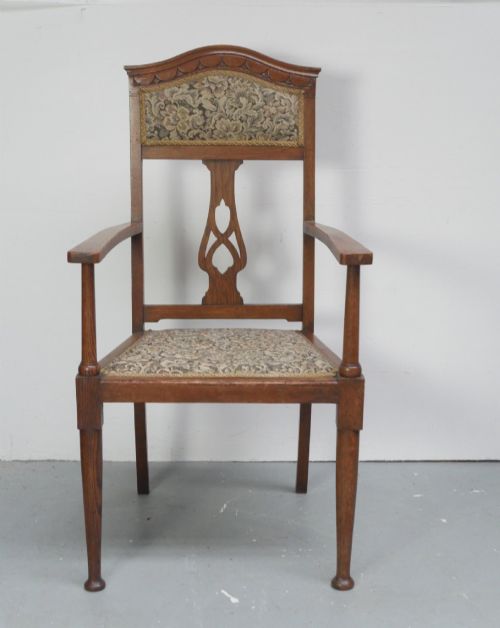
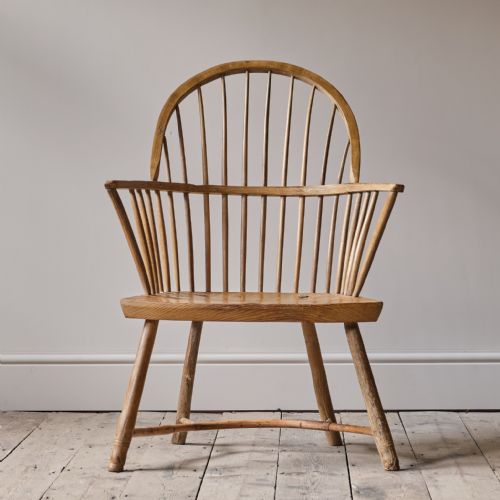
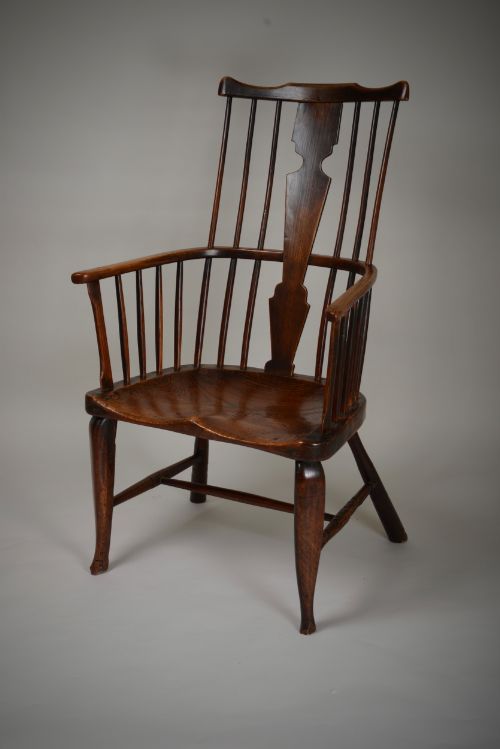
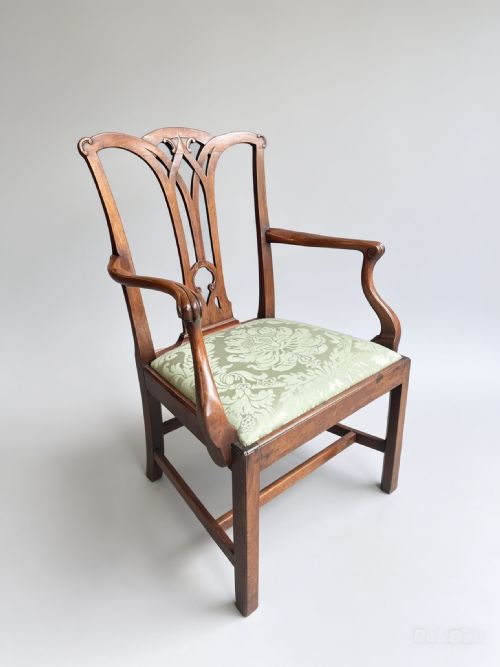
When you search for oak dining armchairs, you encounter seating designed to anchor substantial dining tables with authoritative timber frames and supportive side arms. The selection ranges from early Wainscot models and eighteenth-century country Windsors to nineteenth-century Gothic revivals and twentieth-century Arts and Crafts iterations.
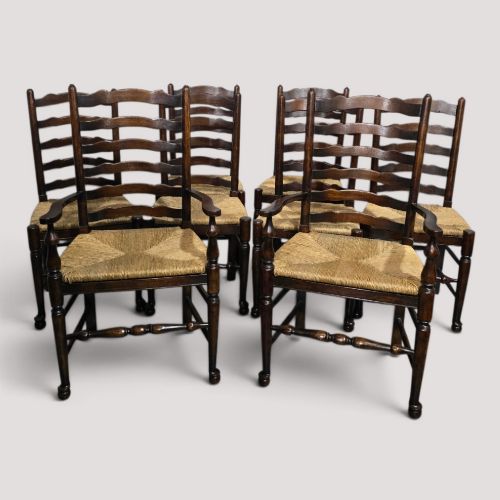
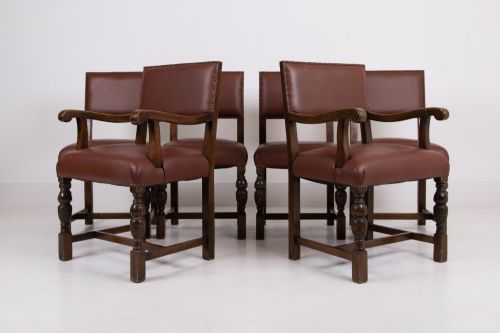
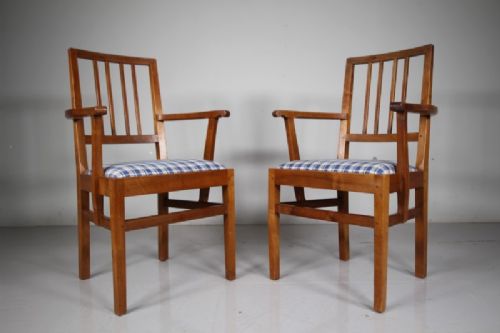
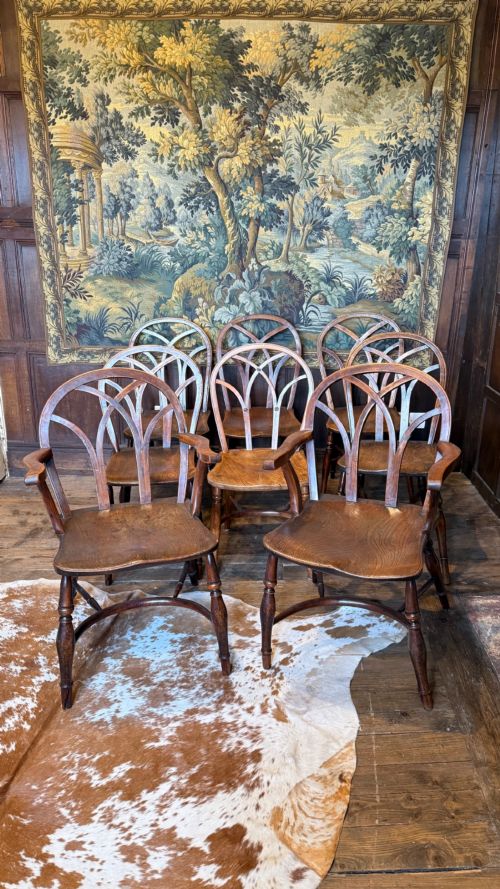
You are most likely to meet nineteenth-century examples and 1930s sets on this page, often appearing as matched suites or individual carvers meant to sit at the heads of a table. Regional country variants such as ladderbacks with rush seats and hooped Windsor forms frequently populate the listings alongside formal carved revival styles.
The objects serve practical dining functions while displaying distinct stylistic eras, from plain farmhouse kitchen seating to elaborate Jacobean revival carving and clean-lined studio work. Buyers select them to bring structural weight and historic character directly into contemporary dining spaces.
Materials and Construction
Makers built these chairs primarily from solid oak, frequently combining secondary timbers like elm, ash, and beech for bentwood components or spindle work in Windsor designs. Frames rely on traditional joinery methods, utilising mortise and tenon joints locked with wooden pegs rather than modern metal fasteners.
Seating areas incorporate woven rush, solid planking, or upholstered pads finished in leather, fabric, or brass studs depending on the period and the maker's workshop tradition. Structural stability often stems from turned stretchers connecting the legs, providing necessary rigidity under daily use.
Listings feature oak dining armchairs spanning the seventeenth century through the 1930s, incorporating rush, leather, and fabric seating.
Distinctions in Quality
The top of the range is distinguished by originality of surface timber, crispness of hand-carved detail, and the integrity of early construction without intrusive replacement parts. Chairs bearing maker stamps or attributed to notable workshops command higher regard for their documented lineage.
Lower tiers typically involve heavier modern timber replacements, excessive sanding that flattens original patination, or compromised structural joints requiring extensive intervention. Consistency across a large matched set also dictates value, as assembling disparate chairs to mimic a unified suite alters the integrity of the group.
Edward Barnsley·Dicon Nance·St.Ives Studio·Lamb Of Manchester·Mouseman
The Oak Dining Armchairs Glossary
- Wainscot
- An early heavy wooden armchair constructed with panelled backs and solid armrests. These pieces represent some of the earliest domestic seating forms found in timber.
- Windsor
- A chair built with a solid wooden seat into which the legs and back spindles are directly socketed. They often incorporate bentwood bows and comb-backs.
- Ladderback
- A chair featuring horizontal slats set between two upright rear posts. These frames commonly support woven rush or cord seating surfaces.
- Carver
- A term applied to an armchair designed to match a set of smaller side dining chairs, traditionally placed at the table ends.
- Stretcher
- The horizontal wooden rail connecting the legs of a chair to provide structural reinforcement. They often appear turned on lathes in revival and country pieces.
Oak Dining Armchairs: Frequently Asked Questions
How do I spot a marriage in a dining set?
Examine the timber grain, colour tone, and underside construction across all chairs in the suite to identify subtle variations. Differences in hand-carving depth or minor dimensional shifts often reveal if individual chairs were gathered together later rather than manufactured as one group.
Inspect the joinery methods and wear patterns underneath each seat for inconsistencies. Original sets share identical tool marks and uniform ageing, whereas assembled sets display mismatched construction details.
Can I mix armchairs with side chairs?
Placing two armchairs at the head and foot of a table while filling the sides with matching side chairs is a traditional historic arrangement. This configuration provides distinct seating for hosts while maintaining a cohesive aesthetic through shared wood types and design motifs.
Ensure the seat heights align correctly so diners sit at an even level around the table surface. Matching the period or style ensures the armchairs complement rather than disrupt the room.
How do I care for antique rush seats?
Keep rush-seated chairs away from excessive moisture and direct heat sources to prevent the natural sedge material from becoming brittle and fracturing. Vacuum the undersides gently with a soft brush attachment to remove dust accumulation.
Avoid sitting on rush surfaces with sharp objects or rivets that can catch and tear the woven strands. Maintaining stable indoor humidity levels preserves the flexibility of the natural fibres over decades of use.
What defines a smoker's bow?
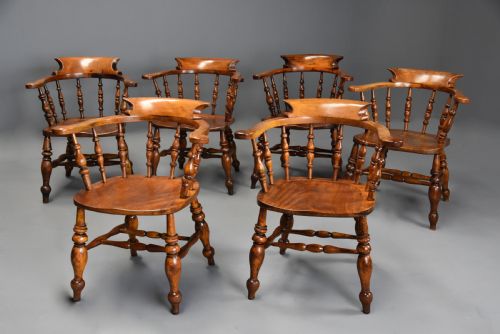
A smoker's bow is a sturdy low-backed armchair featuring a continuous bentwood top rail supported by turned spindles above a solid saddle-shaped wooden seat. These forms developed from Windsor chair traditions and served as robust seating in domestic and public spaces.
They are characterised by their comfortable low profile and sturdy armrests designed for relaxed seating. The sturdy ash or elm construction ensures they withstand heavy daily use.