



Oak Counter Display Showcase
An oak counter display showcase is a shopkeeper's window onto small wares, built to sit on a counter and hold goods under glass.
Oak Counter Display Showcase
An oak counter display showcase provides a clear glass view into merchandise while protecting it from handling by customers. These shop fittings serve as practical display units on shop counters, designed to attract attention and organise small items.
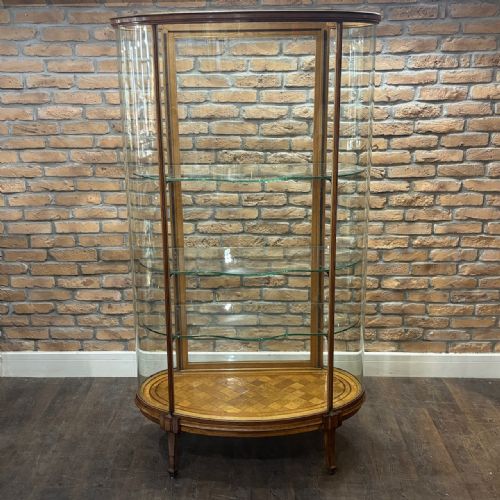
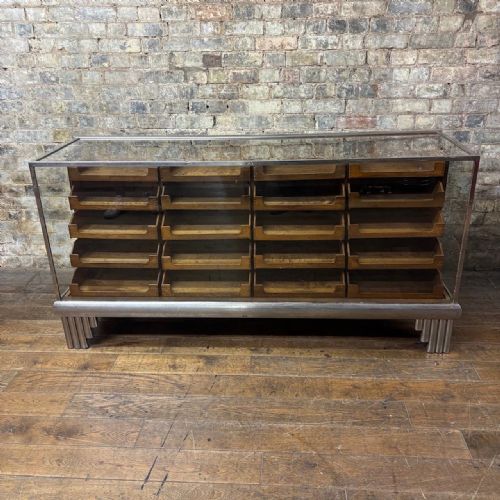
The versions met on this page range from Victorian and Edwardian examples to 1920s and 1930s commercial pieces. Forms include countertop display cabinets, large shop display counters, and museum display cases made to stand in public rooms.
How they were made
Makers built these cabinets using solid oak for the framing, paired with large sheets of glass to enclose the display area. Brass fittings and chrome hardware appeared on doors, hinges, and handles depending on the period of manufacture.
Interiors often incorporated wood or velvet linings to cushion the items on display. Later commercial pieces introduced metal frameworks alongside the traditional oak structure to meet the demands of busy shops.
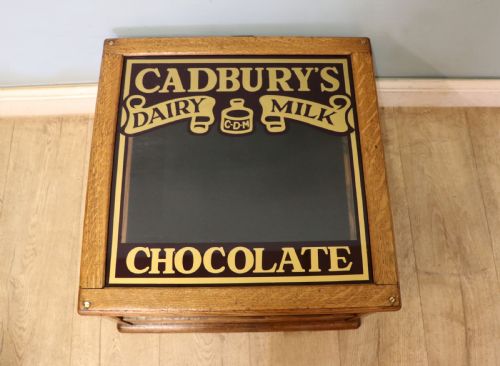
Some early twentieth-century cabinets carry later sign-writing for Frys and Cadburys Chocolate.
What varies in quality
The standard of construction depends on the joinery of the oak frame and the clarity of the glass panels. Pieces built for major commercial outfitters exhibit robust framing and refined details that distinguish them from simpler workshop builds.
Original hardware such as brass or chrome fixtures and intact velvet linings elevate a piece. Later modifications, including applied sign-writing, alter the character of a cabinet and reflect its commercial history.
F Sage & Co·Dudley & Co
The Oak Counter Display Showcase Glossary
- Countertop display cabinet
- A glazed box designed to sit upon a shop counter for merchandise exhibition. These units protect small goods while keeping them visible to buyers.
- Haberdashery counter
- A long retail fixture fitted with drawers and display space for selling sewing goods and accessories. These pieces form part of commercial shop interiors.
- Museum display case
- A specialised cabinet constructed to exhibit artefacts securely. They share the glazed construction of shop fittings but often display a more formal design.
- Shop fitting
- Fixtures and furniture built for commercial retail premises. This category includes the counters and display cabinets utilised in late nineteenth and early twentieth century shops.
Oak Counter Display Showcase: Frequently Asked Questions
What are oak counter display showcases?
These pieces are glazed cabinets built from oak, designed to sit on retail counters and display small merchandise securely.
They originated as practical shop fittings during the Victorian and Edwardian periods, evolving into commercial display units through the 1920s and 1930s.
How were these cabinets used?
Shopkeepers placed them on counters to exhibit goods like chocolate, haberdashery, and small wares while keeping items clean and safe.
The glass panels allowed customers to inspect merchandise clearly before asking the shopkeeper for assistance.
How do I live with one?
These cabinets suit modern domestic interiors as display spaces for collections, jewellery, or ceramics on tabletops and sideboards.
Their glass and oak construction brings texture and period character into a room without dominating the floor space.
How can I tell the periods apart?
Victorian and Edwardian examples tend to feature traditional timber mouldings and brass hardware, reflecting standard cabinet-making practices.
Later pieces from the 1920s and 1930s introduce chrome fittings, Art Deco lines, and early commercial designs that mark a shift in shop interiors.