


Victorian Shop Counter Cabinet
These Victorian shop counter cabinet pieces brought trade goods to eye level in nineteenth-century commerce, and today they bring architectural presence to a room.
Victorian Shop Counter Cabinet
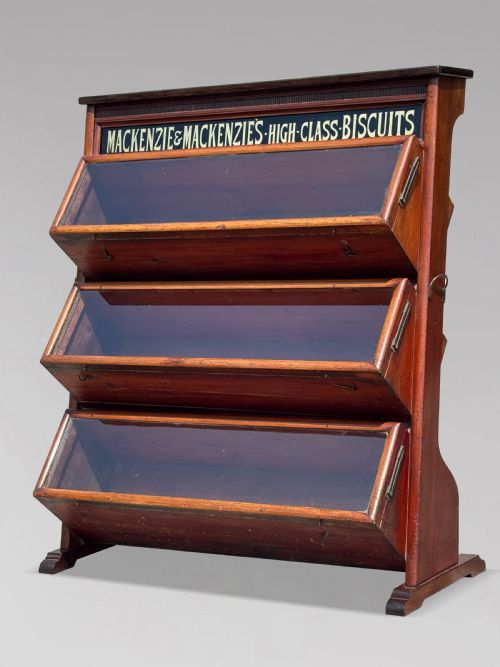
A victorian shop counter cabinet combines utilitarian display with commercial function, designed to sit atop retail furniture and showcase goods to customers. The most frequent examples encountered on this page are mahogany or oak countertop display cases featuring glazed panels for merchandise visibility.
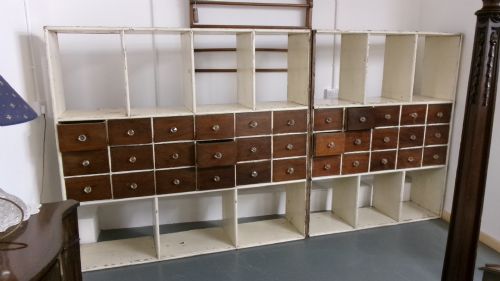
Beyond standard display cases, the selection includes bank of drawers and haberdashery units originating from chemist shops, drapers, and confectioners. These commercial fittings span from the nineteenth century into the early twentieth century, taking forms such as wall-anchored shelving, counter fronts, and desktop apothecary boxes.
Origins range from English commercial workshops to regional pharmacies, with specific pieces bearing the branded names of chocolate and cotton manufacturers. The core intention of these pieces remains unchanged: presenting small wares clearly while maintaining a robust wooden structure.
Materials and construction methods
Construction relies heavily on dense timbers like mahogany, walnut, and oak, alongside utilitarian pine for internal drawer banks and structural carcasses. Glass panels are integrated into glazed doors and sides to maximise light admission, supported by brass hinges, handles, and small locking mechanisms.
Cabinet makers utilised dovetail joints for drawer construction and moulded framing to secure glass panes within wooden rebates. Surface finishes vary from polished hardwood to applied paint schemes in cream, white, and green, occasionally accented with gold leaf or sign-written advertising panels.
Some fifty-drawer pine fittings still smell faintly of the nineteenth-century remedies stored inside them by village pharmacists.
Assessing build quality and material integrity
Quality in a commercial cabinet rests on the grade of timber selected and the crispness of the joinery used to bear the weight of heavy glass and stock. Superior pieces exhibit well-figured mahogany or quarter-sawn oak with tight joints, while simpler pine variants rely on sturdy utility and functional painted surfaces.
The degree of original commercial branding, such as manufacturer etchings on glass or painted trade lettering on wood, alters the character of a piece. Retaining original hardware, brass fittings, and uncompromised glass panels distinguishes examples that survived heavy retail use intact.
Mackenzie's Biscuits·John Stow Ltd of Bradford·Manoah Rhodes & Sons Ltd·Ermen & Roby·Cadbury's Cocoa
The Victorian Shop Counter Cabinet Glossary
- Haberdashery cabinet
- A multi-drawer storage unit originally built for small sewing goods and textiles. These pieces feature numerous shallow drawers designed to organise ribbons, buttons, and cotton spools.
- Countertop display case
- A glazed showcase built to sit upon a shop counter for customer browsing. They elevate goods like jewellery, tobacco, and confectionary directly into the buyer's line of sight.
- Apothecary box
- A portable or fitted wooden chest compartmented for medicines and botanical ingredients. They contain secure lids and small internal drawers for storage.
- Bank of drawers
- An assembly of multiple small drawers arranged in a grid for inventory management. Pharmacists and drapers utilised these to sort small stock items efficiently.
Victorian Shop Counter Cabinet: Frequently Asked Questions
What were these cabinets used for?
Merchants used these countertop units to display and protect small retail goods, ranging from cotton spools and biscuits to tobacco and jewellery.
The glass enclosures kept merchandise clean while placing items directly in front of waiting customers to encourage point-of-sale purchases.
How do I clean the glass?
Wipe the glass panes gently using a soft cloth dampened with a mild, non-ammonia cleaning solution.
Take care to keep moisture away from antique wood frames and painted trade lettering during the cleaning process.
Can I use one in a kitchen?
These cabinets suit modern domestic spaces well, functioning effectively on kitchen worktops or sideboards to store dry goods and tableware.
The glazed compartments keep contents visible while protecting them from dust in daily home environments.
How do I date these pieces?
Examine the timber species, construction joinery, hardware style, and any commercial lettering present on the glass or wood.
Mahogany and heavy brass fittings often point to the earlier nineteenth century, while Edwardian examples introduce lighter oak framing and alternative hardware.