



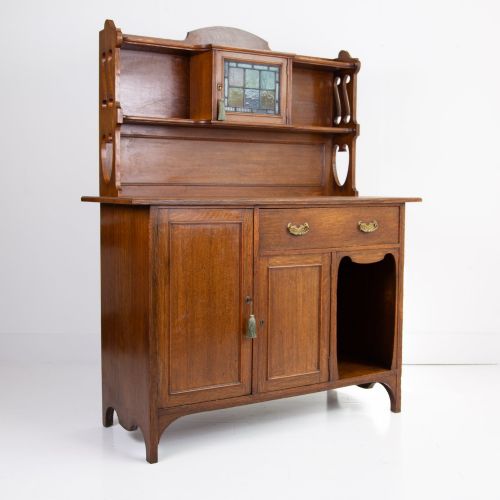
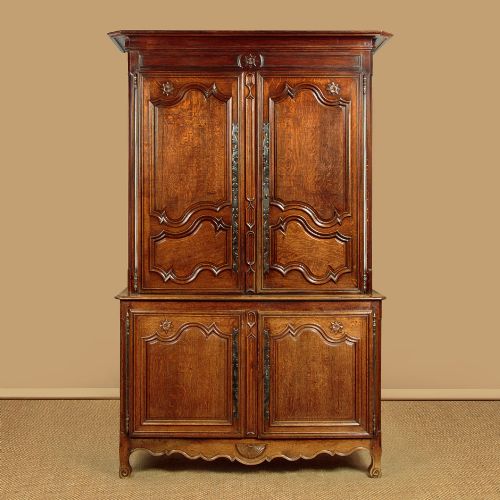
Oak Buffet Cabinet
An oak buffet cabinet provides substantial timber storage, meeting dining room needs through centuries of regional design.
Oak Buffet Cabinet
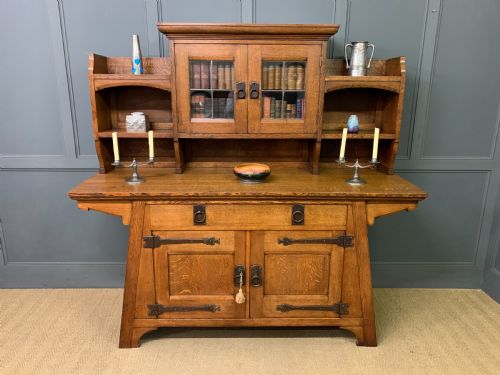
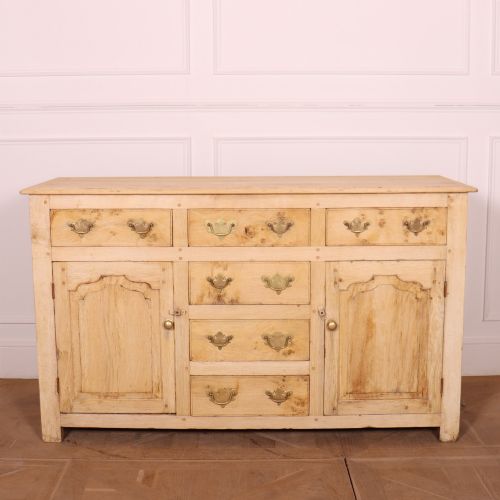
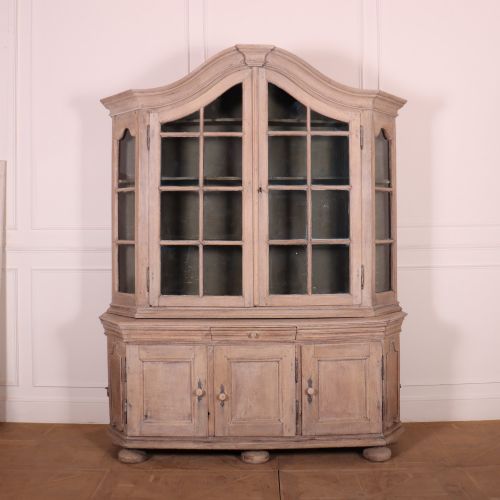
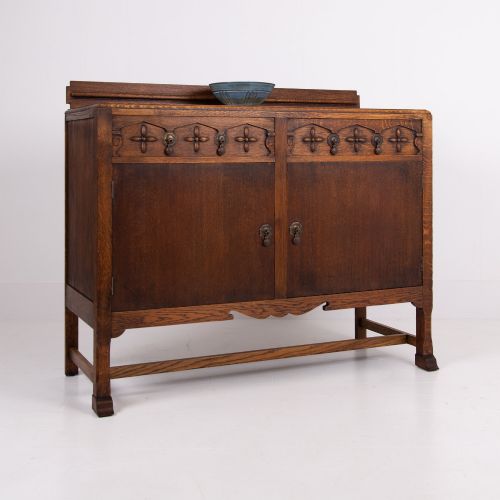
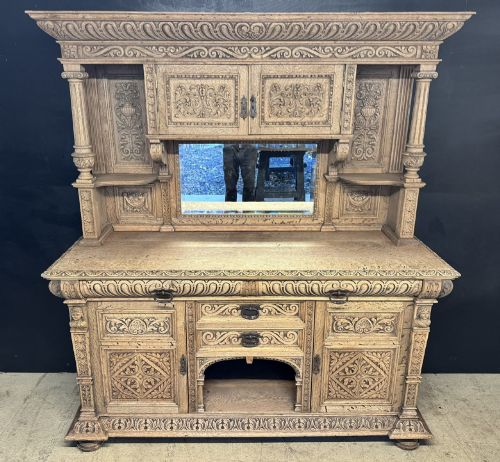
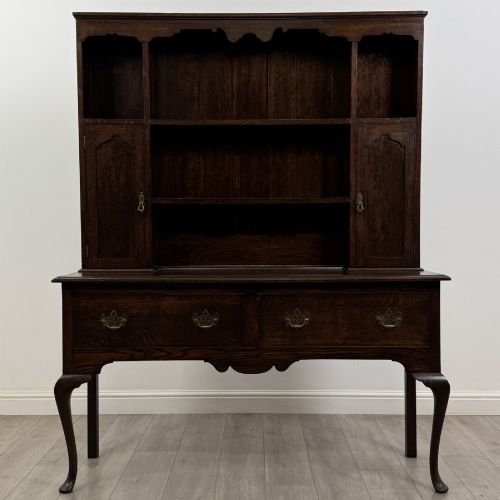
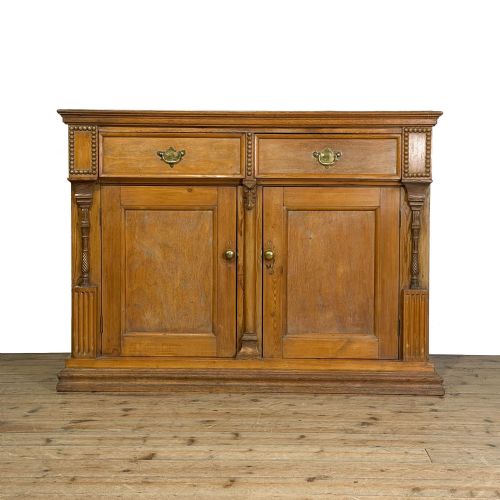
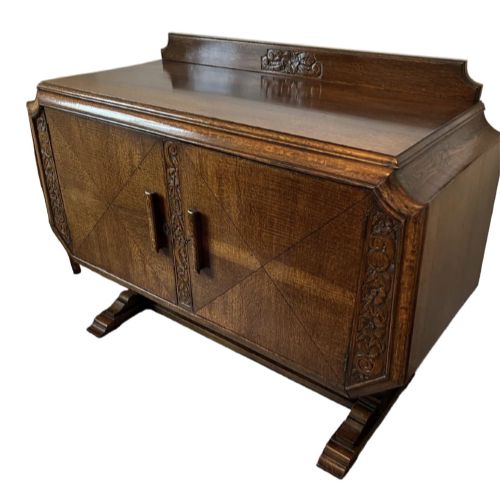
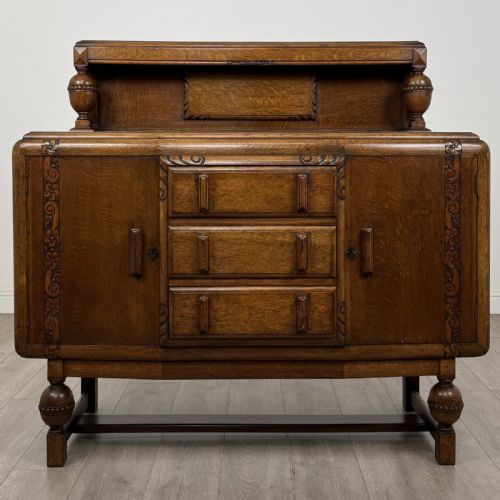
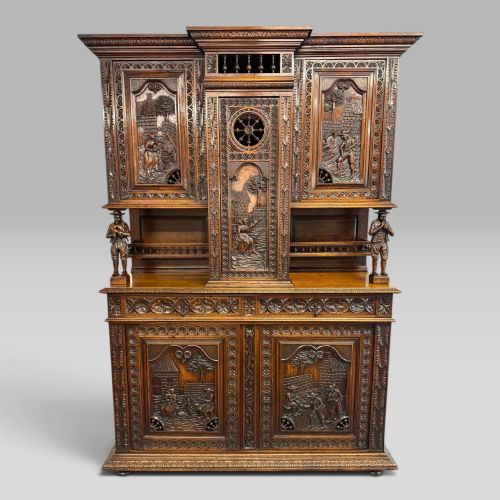
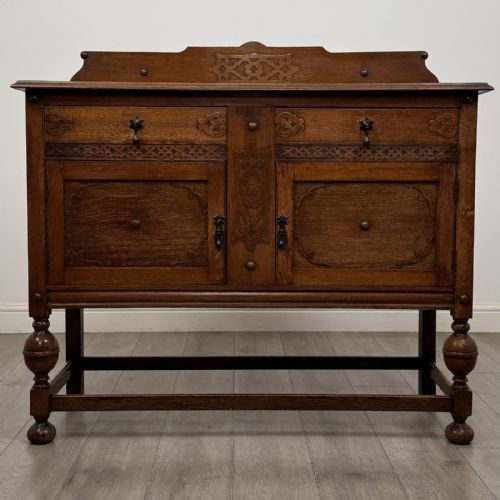
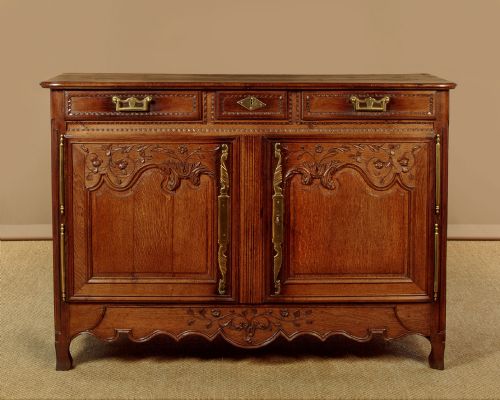
When searching for an oak buffet cabinet, buyers encounter substantial dining furniture spanning multiple centuries and stylistic revivals. The listings here encompass forms described variously as sideboards, court cupboards, dresser bases, and enfilades.
Edwardian golden oak pieces and Victorian heavily carved iterations appear with great frequency alongside 18th-century country examples and French provincial models. These items originate from English and French workshops, utilising native hardwoods for domestic storage and display.
The domestic interior relies on these low cupboards and server units to anchor dining spaces while concealing tableware behind panelled doors. Buyers select these cabinets to gain functional surface area coupled with historical cabinet-making presence.
Materials and Technique
Joinery relies heavily on solid oak and pollard oak, often accented with brass hardware, iron fittings, and glass panels. Master cabinet-makers united frame and panel construction with pegged mortise and tenon joints to withstand decades of daily domestic use.
Surface ornamentation derives from deep hand-carving, applied barley twist columns, and period moulding techniques rather than applied veneers. Timber surfaces receive wax or polished finishes that accentuate the natural grain patterns and tiger oak figuring native to the material.
Oak Buffet Cabinet Retail Price Guide 2026
Typical asking prices for oak buffet cabinet among the pieces listed under this phrase on Sellingantiques today, from the lower quarter to the upper quarter. They describe what is for sale here now, not the wider market.
French hunting sideboards frequently incorporate carved hares and pheasants into their door panels to celebrate rural harvests.
The Spectrum of Execution
Execution ranges from vernacular regional carpentry to ambitious workshop commissions bearing documented attribution. The depth, crispness, and relief of the hand-carving distinguish standard production items from exceptional cabinet-maker outputs.
Proportional harmony and timber selection dictate overall merit, with figured grain patterns and Pollard oak elevating specific examples. Original iron and brass hardware, intact panelled doors, and stable structural joinery preserve the integrity of the piece.
Ambrose Heal·Heal & Son·Gillow & Co·Gomme
The Oak Buffet Cabinet Glossary
- Court cupboard
- An enclosed medieval or revival storage cabinet featuring an upper recess supported by columns or carved brackets. These pieces typically display extensive strapwork and geometric panelling.
- Enfilade
- A long cabinet or sideboard format originating in France, designed with multiple doors accessing a continuous interior storage space. They function well as modern server units.
- Barley twist
- A turning technique producing a spiral rope motif along table legs, structural columns, and furniture supports. This decorative detail frequently characterises late Victorian and Edwardian oak furniture.
- Dresser base
- A low cabinetry unit fitted with drawers and cupboards beneath a flat top surface, lacking the upper plate rack of a traditional Welsh dresser. These serve identically to modern sideboards.
- Tiger oak
- A descriptive term for oak timber exhibiting pronounced medullary rays that create a striped figuring resembling tiger stripes. Furniture makers prize this visual characteristic for prominent display surfaces.
Oak Buffet Cabinet: Frequently Asked Questions
How do I date an oak buffet?
Dating relies upon examining the underlying construction methods, such as hand-cut dovetails, peg joinery, and tool marks left by the maker. Characteristic mouldings and carving styles also align pieces to specific eras like the Jacobean revival or Arts and Crafts movement.
Secondary indicators include the type of hinges, handles, and backboards employed in the assembly. Comparing these details against known dated examples helps narrow the period of origin.
Where should I place a buffet cabinet?
Dining rooms remain the traditional location for these cabinets, offering convenient storage for china, glassware, and table linen. Their flat top surfaces double as serving areas during meals or display spaces for decorative objects.
Placing them away from direct heat sources and sunlight protects the timber from drying out and fading. Adequate clearance ensures cupboard doors and drawers operate without obstruction.
How do I maintain oak furniture?
Routine maintenance involves dusting with a soft, dry cloth to prevent grit accumulation on the polished surface. Applying a quality beeswax periodically nourishes the timber and preserves the natural lustre without building up heavy residues.
Avoiding excessive moisture and rapid temperature fluctuations prevents the solid oak from warping or cracking. Promptly wiping up spills safeguards the historic finish from water marks.
What is a court cupboard?
A court cupboard is an early form of enclosed storage featuring a recessed upper section supported by turned posts. They served to display plate and store provisions in wealthy historical households.
Later revival iterations adapted these proportions for Victorian and Edwardian dining interiors. Their distinctive silhouette provides deep lower storage combined with an upper display shelf.