
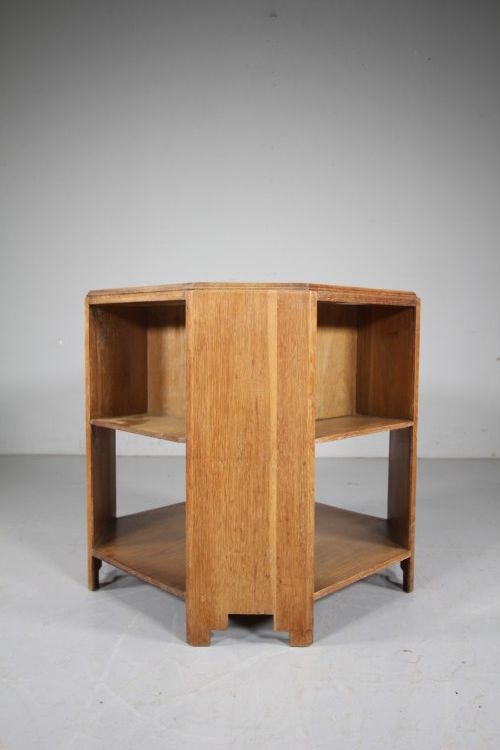


Oak Bookcase Table
An oak bookcase table combines storage and surface space in one sturdy piece, offering practical utility for any room.
Oak Bookcase Table
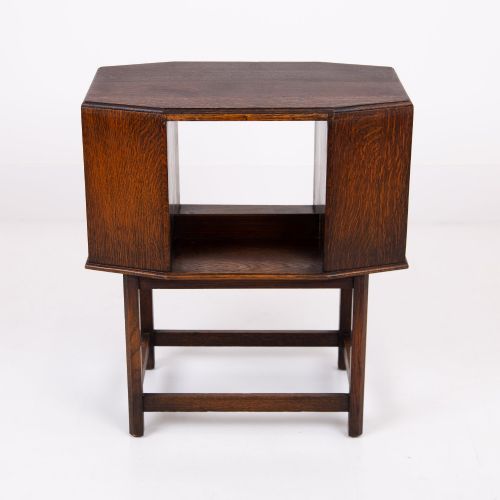
An oak bookcase table brings together the utility of book storage and the flat surface of a table, often appearing as revolving designs, side tables with lower shelves, or small book stands. When you search for an oak bookcase table, you encounter forms that span from the Victorian period through the Edwardian era into the nineteen-thirties.
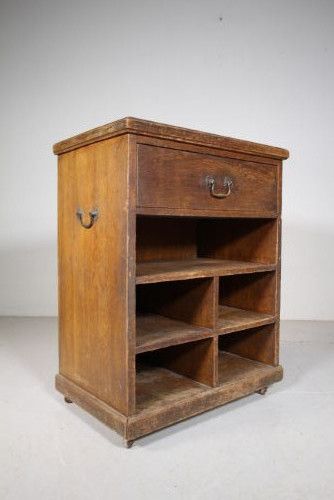
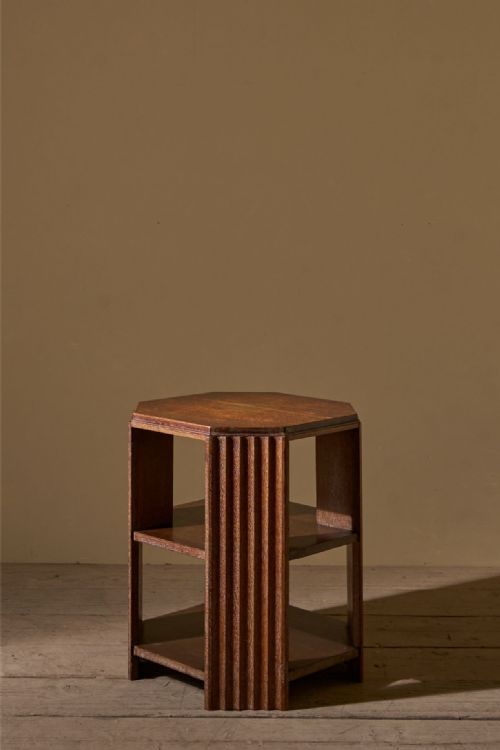
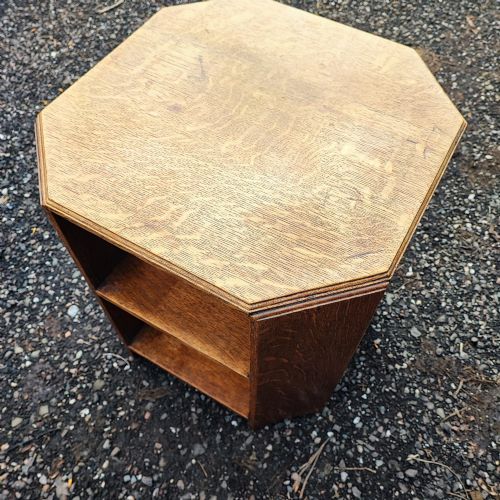
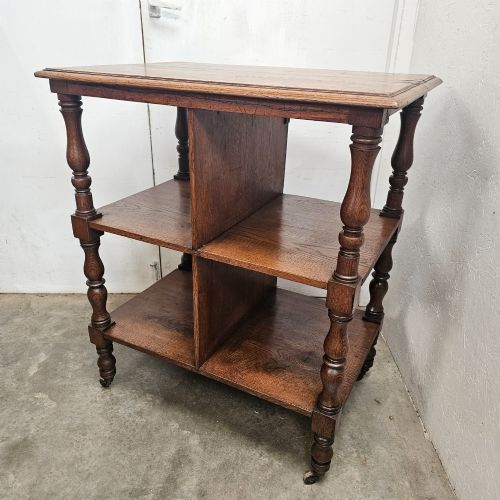
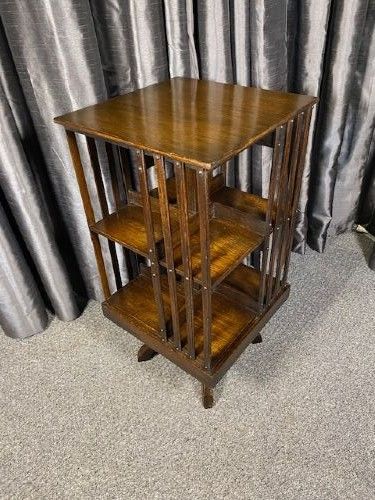
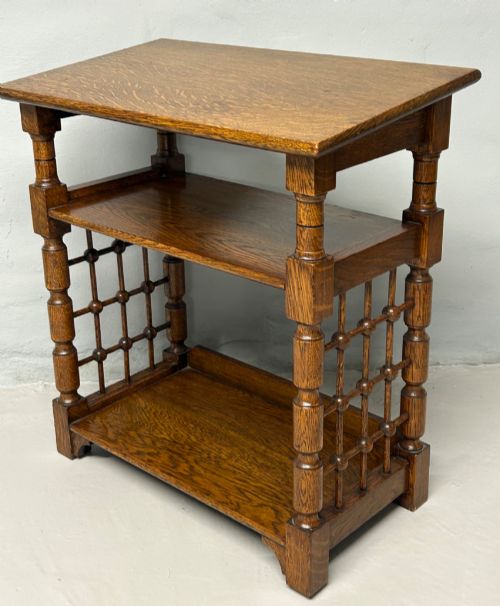
The pieces on this page include revolving table-top models, side tables with integrated shelving, and low occasional pieces designed to hold volumes within arm's reach. Edwardian and Arts and Crafts examples sit alongside Art Deco and Victorian pieces, showing how makers adapted the form across decades.
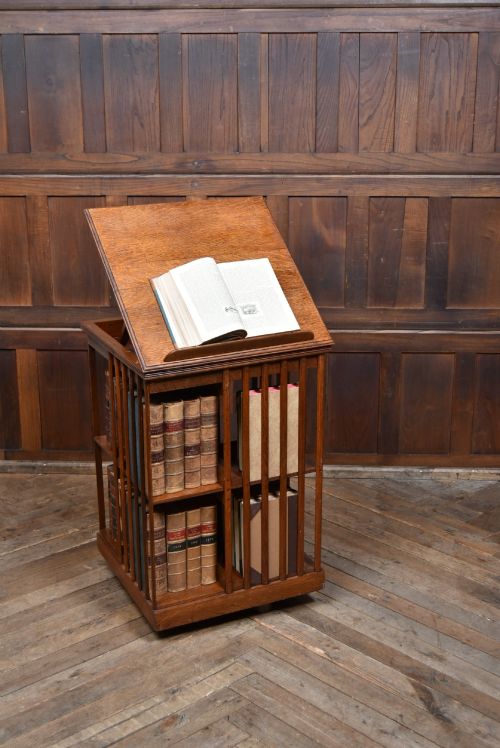
Many variations incorporate open shelves beneath a solid top, while others utilise revolving mechanisms or adjustable reading slopes. These hybrid furniture forms suited libraries, studies, and drawing rooms where space economy mattered.
Materials and construction
Solid oak forms the primary material across these pieces, often finished to show the natural grain, though limed oak and ebonised variations also appear in the record. Workshops selected quartersawn timber for its durability and distinctive medullary rays, which added visual texture to the surfaces.
Brass and iron components frequently provide functional support, appearing as hinges, castors, and the internal mechanisms of revolving bookstands. Joinery techniques such as dovetailed joints and pegged framing ensured stability under the weight of heavy volumes.
Listings feature oak predominantly, alongside mahogany, brass, and iron across Victorian, Edwardian, and nineteen-thirties periods.
Assessing craftsmanship
Quality rests in the precision of the joinery and the selection of the timber, where evenly figured oak indicates careful material sourcing. Pieces that retain smooth rotation in their revolving tiers or well-fitted adjustable elements demonstrate higher initial workshop standards.
Design detail separates standard production from finer pieces, seen in carved mouldings, subtle chamfering, or Arts and Crafts movement influences. The integrity of the original hardware, such as brass fittings and castors, also marks the distinction between ordinary and superior execution.
Heals·Good Furniture Units·Libertys
The Oak Bookcase Table Glossary
- Quartersawn oak
- Timber cut radially from the log to produce a straight grain pattern with prominent fleck markings. This method provides greater dimensional stability for furniture construction.
- Revolving bookcase
- A freestanding or table-top stand fitted with a internal pivot mechanism allowing rotation. This design grants access to books stored on multiple sides from a single stationary position.
- Arts and Crafts
- A design movement prioritising traditional craftsmanship and simple forms over mass production. Pieces from this style often display visible construction details and honest use of materials.
- Limed oak
- A wood finishing technique where a white pigment is rubbed into the open pores of oak. This process lightens the overall tone and highlights the natural grain pattern.
- Adjustable shelf
- A horizontal board supported on movable pegs or ratchets allowing variable height placement. This feature accommodated books of different vertical dimensions within the same cabinet.
Oak Bookcase Table: Frequently Asked Questions
How do I date an oak bookcase table?
Dating relies on observing stylistic markers, construction methods, and materials recorded across different eras. Victorian and Edwardian pieces often feature heavier mouldings or carved details, while nineteen-thirties pieces lean towards modernist or limed finishes.
Hardware and joinery also provide clues. Hand-cut elements point towards earlier nineteenth-century manufacture, whereas standardised fittings typically indicate twentieth-century production.
Where were these pieces used originally?
These items served primarily in domestic libraries, studies, and sitting rooms where books needed to be kept close to seating areas. Table-top revolving versions sat on desks or larger tables for quick reference.
Free-standing or side-table variants provided accessible storage beside armchairs or in smaller reading corners. Their dual function saved space in period homes.
How should I care for solid oak furniture?
Maintain oak surfaces by dusting regularly with a dry cloth and avoiding excessive moisture. Occasional application of a suitable beeswax preserves the natural finish without building up heavy residues.
Keep pieces away from direct heat sources and strong sunlight to prevent the timber from drying out or warping over time. Stable indoor humidity protects both the wood and any internal revolving mechanisms.
What is the difference between fixed and revolving models?
Fixed models offer static shelf space beneath a solid top table surface, functioning much like standard side tables with integrated book storage. They remain stationary and hold volumes facing one direction.
Revolving models utilise a central pivot mechanism allowing the entire tiered bookcase section to spin. This allows access to multiple compartments from a single seated position.