
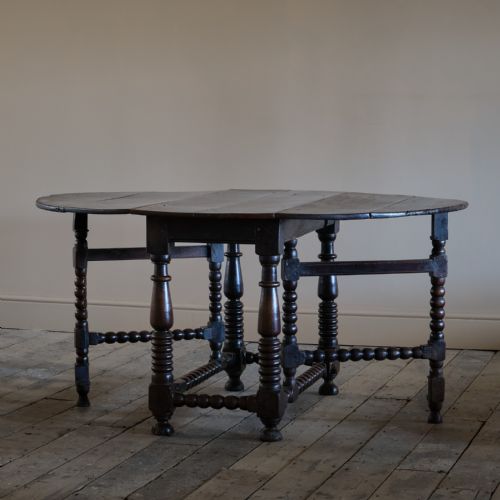


Oak Bobbin Leg Table
An oak bobbin leg table brings the distinct tactile geometry of seventeenth-century turning into a room, offering practical surface space through compact side tables and expandable gatelegs.
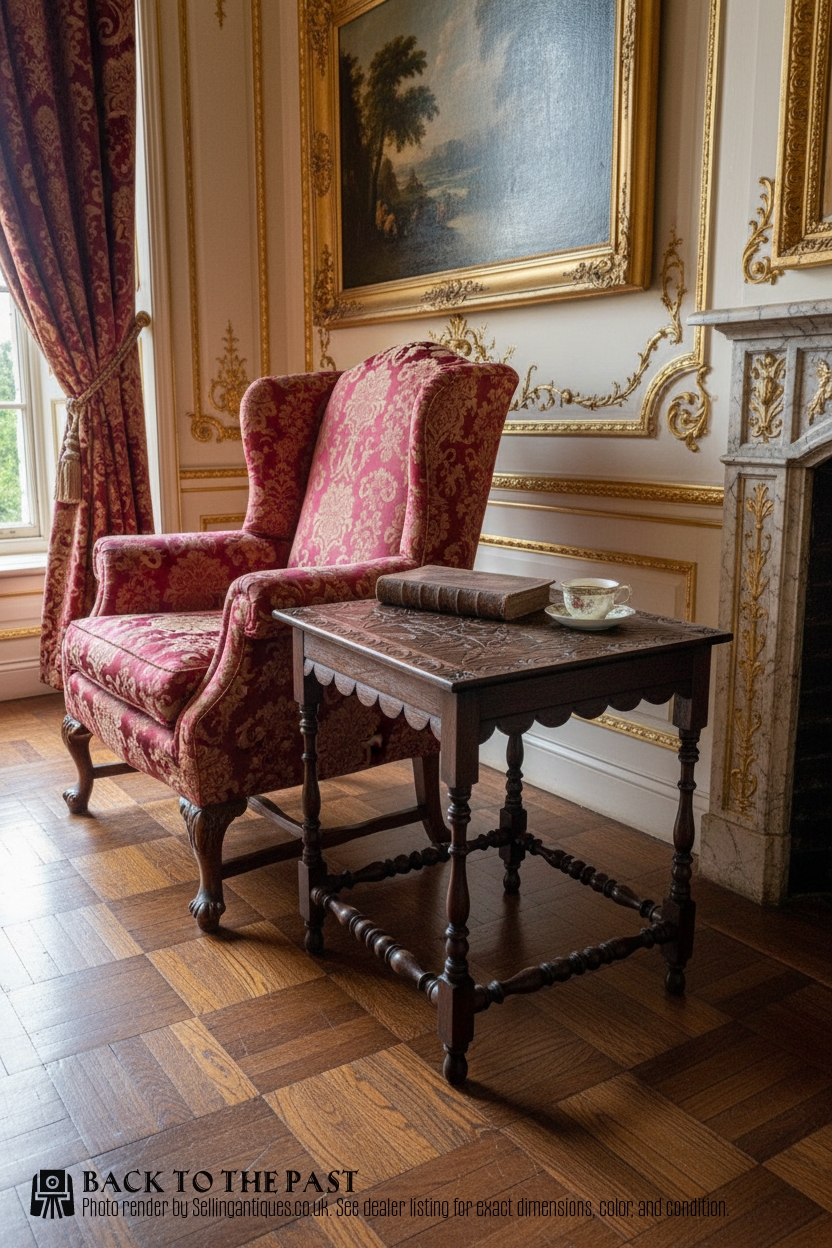
Oak Bobbin Leg Table
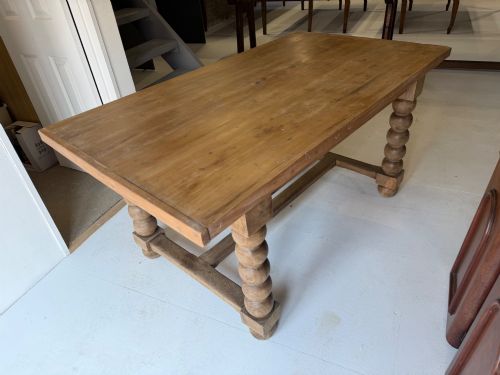
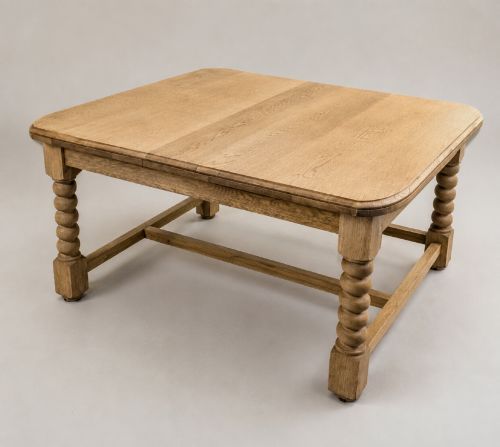
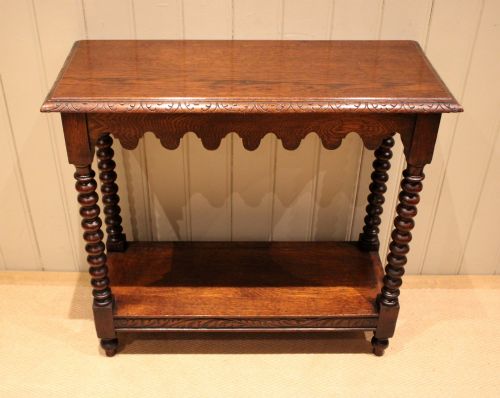
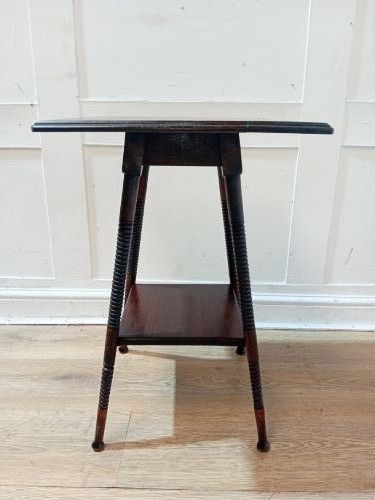
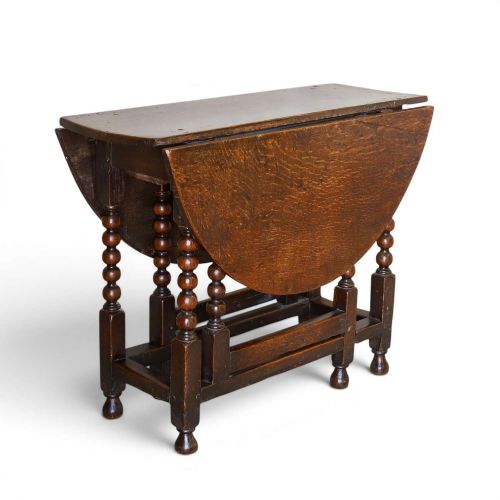
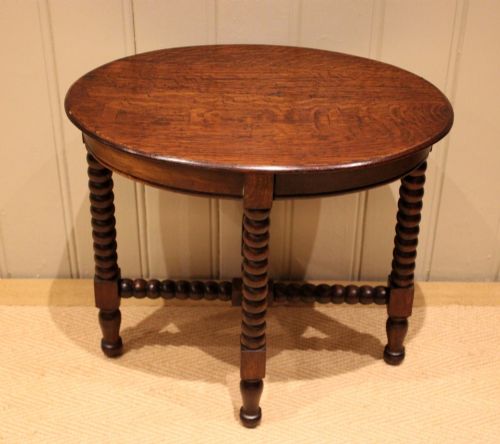
When you search for an oak bobbin leg table, you encounter practical surfaces defined by spool-shaped or spindle-turned legs. These pieces range from seventeenth-century Charles II gateleg dining tables and side tables to nineteenth-century Victorian revivals and later twentieth-century occasional furniture.
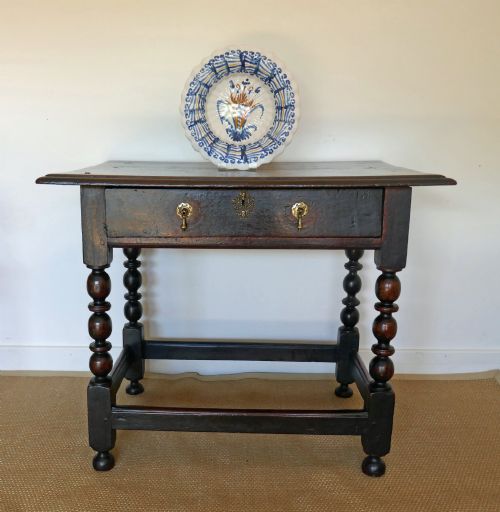
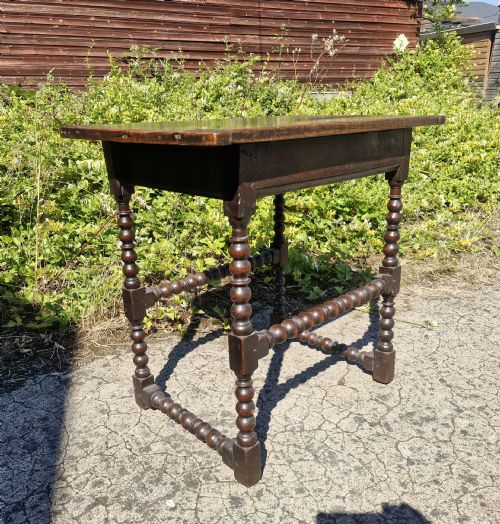
The form appears most frequently as a side table with a single drawer or as a larger gateleg drop-leaf table capable of seating several people. Secondary timbers such as elm, beech, and yew often accompany the primary oak structure across these periods.
Materials and construction
Makers fashioned the characteristic bobbin legs on a lathe, turning cylindrical lengths of timber down to repeat spool or disc motifs separated by narrow collars. These turned legs and stretchers were then joined to solid oak table tops, sometimes utilising two plank constructions or drop-leaf hinges.
Secondary woods like elm and beech frequently appear in structural framing or secondary components, while brass hardware and tweed linen upholstery feature in specific variants such as dressing table stools and occasional tables.
One unexpected variant pairs the serious craft of seventeenth-century turning with a playful gypsy-style occasional table.
Quality differences
The standard of a piece rests upon the crispness of the lathe work and the proportional harmony between the robust turned underframe and the top. Bold proportions and substantial timber thickness distinguish seventeenth-century originals from later revival interpretations.
Surface preservation also dictates worth, as genuine period patination and original timber density hold more integrity than heavily bleached or later altered examples.
William Birch·Liberty of London
The Oak Bobbin Leg Table Glossary
- Bobbin turning
- A type of lathe work producing a series of rounded, spool-like shapes along the length of a wooden leg or stretcher. This repetitive geometric profile defines the entire style.
- Gateleg table
- A drop-leaf table featuring hinged flaps supported by legs that swing outward like a gate. This design allows the surface to expand significantly for dining.
- Refectory table
- A long, narrow dining table traditionally used for communal meals. Examples listed combine oak and elm across historical periods.
- Patina
- The surface sheen and mellowing developed by wood over centuries of use and exposure to light. It is a key indicator of age and handling.
- Stretcher
- A horizontal wooden brace connecting the legs of a table for stability. On these pieces, stretchers are frequently turned in matching bobbin patterns.
Oak Bobbin Leg Table: Frequently Asked Questions
How do I date an oak bobbin leg table?
Dating relies on examining construction joints, timber selection, and the profile of the turnings. Seventeenth-century examples typically show hand- cleft oak, pegged joints, and heavier proportions compared to later Victorian revivals.
Secondary woods and hardware further clarify the timeline, with twentieth-century iterations displaying modern fixings and lighter structural framing.
How were gateleg bobbin tables used?
These folding tables served primarily as flexible dining or side surfaces in historic homes. Dropping the leaves allowed the furniture to sit against a wall when not in use.
Expanding the flaps provided ample surface area for meals or gatherings, supported securely by the pivoting leg frames.
Are bobbin leg tables sturdy enough for daily use?
Solid oak construction and integrated stretchers provide substantial structural stability for everyday placement. Side tables and coffee tables handle regular surface weight easily.
Gateleg variants require care when operating the folding leaves to avoid stressing the hinge mechanisms and turned leg pivots.
What rooms suit a bobbin leg table?
Compact side tables and console tables fit narrow hallways, landings, or living rooms as lamp stands. Larger gateleg and refectory formats function effectively as dining room centerpieces.
Their distinct turned geometry adds visual texture to both traditional country house interiors and contemporary spaces.