


Oak Barley Twist Armchairs
Oak barley twist armchairs are solid timber seating pieces that bring distinct turned woodwork and heavy historic revival character into a room.
Oak Barley Twist Armchairs
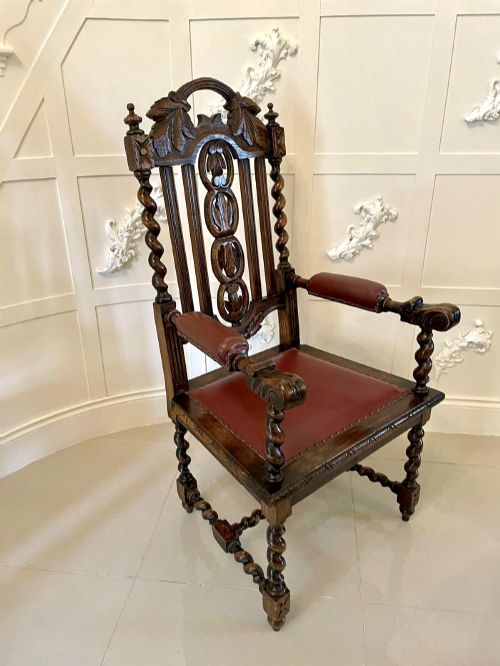
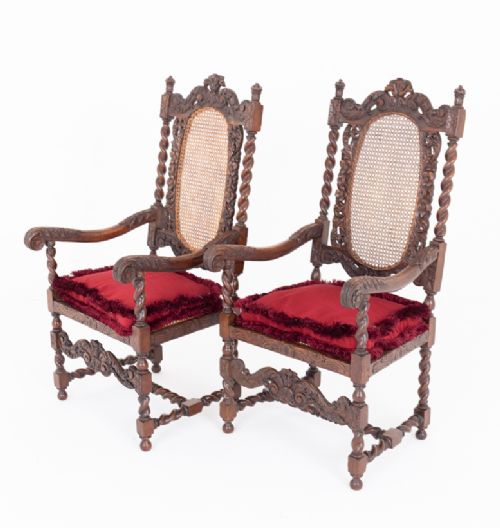
When you search for oak barley twist armchairs, you meet substantial seating built across the nineteenth and twentieth centuries, drawing heavily on seventeenth century revival idioms. The examples gathered here run from mid Victorian library chairs to later Edwardian carvers and dining suites.
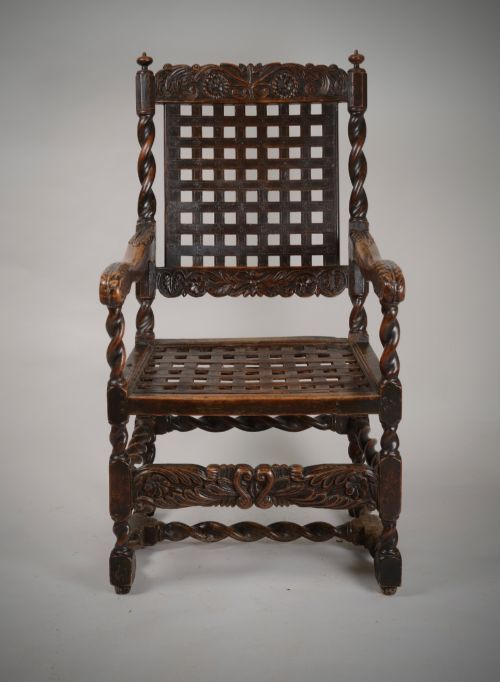
Most pieces on this page originate from the Victorian era and the early decades of the twentieth century. They adopt Jacobean, Carolean and Gothic revival styles, featuring structural turning and high backs.
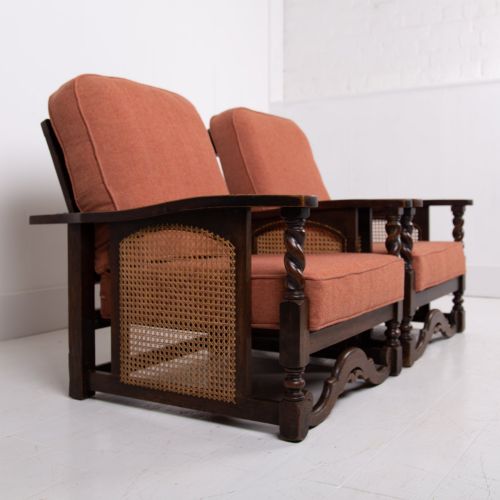
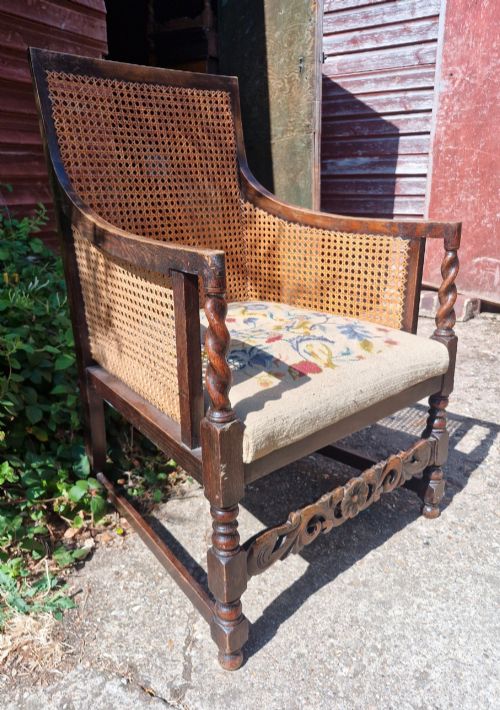
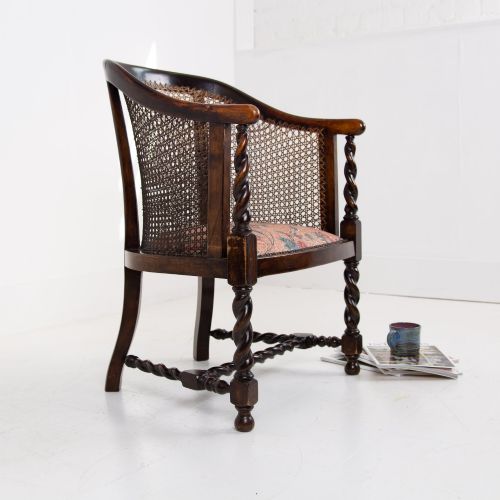
Forms range from open armchairs and heavy throne chairs to reclining library seats and cane bergere models. The presence of carved lion heads, green men and deep upholstery marks these out from standard dining seating.
Materials and construction
The framework relies entirely upon solid oak, frequently turned on a lathe to create the characteristic helical barley twist uprights and stretchers. Joinery employs traditional tenons and pegged joints designed to support heavy carved crests and arms.
Upholstery materials vary from original leather and velvet to later woven tapestry fabrics and replacement cane panels. Brass studs and decorative cord often secure the textile coverings to the heavy timber frames.
The listings here span from the mid nineteenth century through to the 1930s, constructed predominantly in solid oak with secondary elements of brass, leather, and cane.
Judging the work
Quality rests in the crispness of the hand carving on the crest rails, arm terminals and front stretchers. Deeply undercut foliage and well-defined animal or human faces separate better examples from mechanical production.
Proportion and timber selection dictate overall merit. Dense, figured oak with uniform twist turning provides the structural integrity expected in heavier throne and library chairs.
The Oak Barley Twist Armchairs Glossary
- Barley twist
- A decorative turning technique resembling a spiralling rope or helix, frequently used on the legs and uprights of seventeenth century revival furniture. This form defines the structural aesthetic of the pieces gathered here.
- Carver armchair
- A sturdy wooden chair with arms, historically placed at the head of a dining table or used as an occasional seat. These pieces often match larger dining sets.
- Bergere
- An enclosed armchair featuring woven cane panels on the back and sides. It offers a lighter aesthetic while retaining a solid wooden frame.
- Throne chair
- A tall, imposing armchair with an elevated back and heavy carved ornamentation. They are typically executed in solid oak with deep upholstery.
- Jacobean style
- A heavy, formal design vocabulary originating from the early seventeenth century and revived during the Victorian period. It relies on rectilinear frames and dark timber.
Oak Barley Twist Armchairs: Frequently Asked Questions
How do I date an oak barley twist armchair?
Dating relies on examining the construction methods, tool marks on the timber, and the style of the carving. Revival pieces from the Victorian and Edwardian periods often combine earlier motifs with later nineteenth or twentieth century framing techniques.
Secondary woods, upholstery webbing, and the wear patterns on the oak feet help narrow down the decade of manufacture. Comparing the turning profile to dated examples provides further clarity.
Were these chairs used for dining or lounging?
Both functions appear across the inventory. Some pieces are designed as upright carver chairs for dining tables, while others function as deep easy chairs or low library seats.
Heavier throne and reclining variants were built for studies and reception rooms rather than dining use. Upholstery depth and arm height usually indicate the intended setting.
How do I care for the oak and upholstery?
Maintaining the wood requires simple dusting and occasional application of traditional wax to nourish the grain. Harsh modern cleaners should be avoided to preserve the original patina of the oak.
Upholstery care depends entirely on the fabric used, whether leather, velvet, or cane. Gentle vacuuming protects textiles, while leather benefits from specialised conditioning balms.
What is a green man carving?
A green man is a sculptural motif depicting a face surrounded by or entwined in foliage and vines. It symbolises rebirth and appears frequently on nineteenth century revival oak furniture.
On these chairs, the motif typically decorates the crest rail or the front stretcher. Its presence signals a deliberate nod to medieval and early modern architectural ornamentation.