





Oak Apprentice Cabinet
An oak apprentice cabinet is a scaled-down piece of furniture demonstrating a maker's skill, offering practical tabletop storage with period character.
Oak Apprentice Cabinet
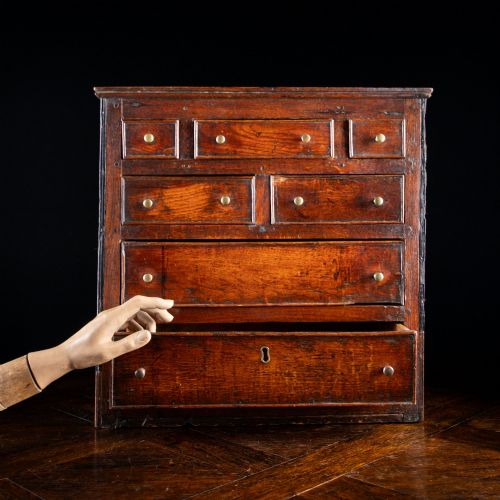
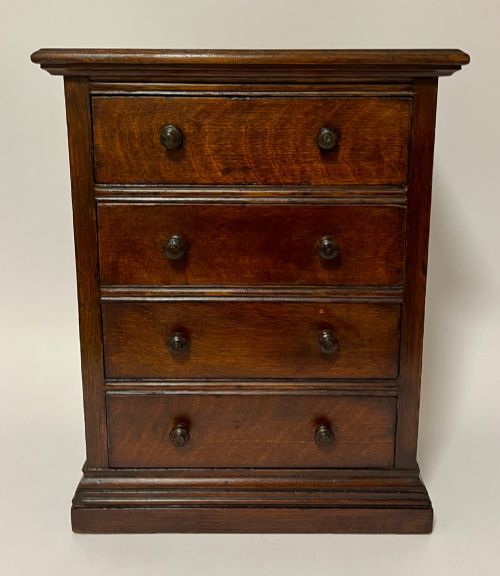
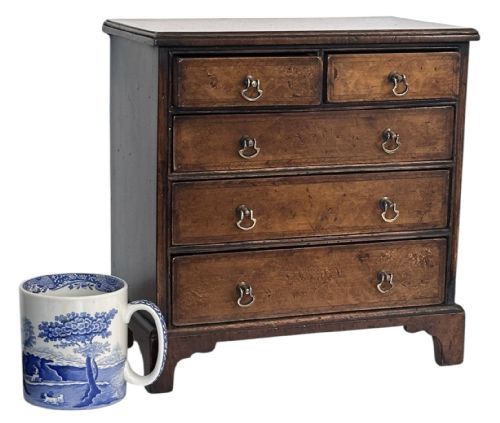
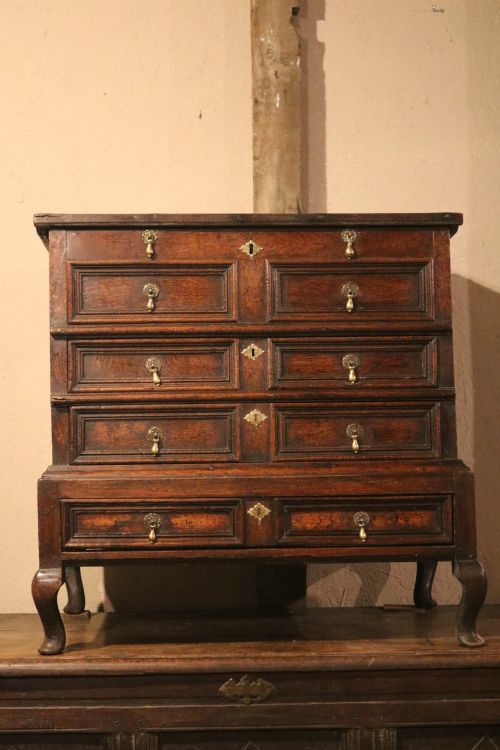
An oak apprentice cabinet represents miniature furniture made to demonstrate mastery, appearing in forms such as miniature chests of drawers, spice boxes, court cupboards, and kneehole desks. These pieces span the eighteenth century, Georgian era, Victorian period, and Edwardian times, often utilising solid oak alongside pine, walnut, or mahogany.
The version most commonly met on this page is the miniature chest of drawers or tabletop cabinet, reflecting domestic storage forms executed on a smaller scale. These objects serve as compact display and storage items rather than full-sized furniture, retaining the joinery techniques of their larger counterparts.
How these pieces were made
Makers constructed these cabinets using solid oak boards, frequently pairing them with secondary woods like pine for drawer linings and backboards. Joinery relied on traditional methods such as dovetailing for drawer construction and mortise and tenon joints for frames.
Surface details incorporate brass handles, escutcheons, and hinges, alongside occasional ebonised wood accents or inlay work. These materials and techniques mirror the cabinet-making standards of the eighteenth and nineteenth centuries.
One recorded piece takes the literal form of a miniature bookcase, allowing books about small furniture to sit inside a small piece of furniture.
What varies in quality
The standard of execution in miniature furniture depends upon the precision of the joinery and the integrity of the timber used. Finer examples display meticulous dovetailing, well-fitted drawers, and proportional scaling that mirrors full-sized furniture accurately.
Secondary wood selection and the retention of original hardware, such as brass pulls and locks, distinguish superior pieces. The sophistication of the form, ranging from plain spice boxes to elaborate tallboys or court cupboards, also dictates the distinction within the range.
The Oak Apprentice Cabinet Glossary
- Apprentice piece
- A demonstration item made by a craftsman to prove skill before gaining full guild membership. These pieces reproduce full-scale furniture accurately in miniature.
- Court cupboard
- A traditional enclosed storage unit featuring tiers, often with carved panels or doors. It represents one of the earlier regional forms found in oak.
- Kneehole desk
- A small writing desk with a central recess for the legs, flanked by pedestals of drawers. Miniature versions replicate this sophisticated domestic form.
- Tallboy
- A chest of drawers comprising one chest stacked upon another, creating a tall vertical unit. Miniature examples scale this impressive form down for tabletop use.
- Dovetail
- A joint formed by interlocking wedge-shaped fingers, commonly used in drawer construction. Its tightness and precision indicate the skill of the maker.
Oak Apprentice Cabinet: Frequently Asked Questions
How were these miniature cabinets used?
Originally, these items served as masterworks or demonstration pieces for craftsmen showing their readiness for trade guild admission. Some functioned as salesman samples to display furniture designs to prospective buyers.
In domestic settings, they were utilised for storing valuables, spices, documents, or small collection items. Their portable scale made them versatile for tabletop placement.
How do I date an oak apprentice cabinet?
Dating relies upon examining the construction methods, timber choice, and stylistic details present in the piece. Eighteenth-century examples often display hand-sawn boards and pegged joinery, while Victorian pieces may incorporate machine-sawn elements and different hardware.
Comparing the form and decorative motifs to standard furniture chronologies helps establish the period. Secondary woods like pine can also provide clues regarding the era of manufacture.
Where should I place a miniature cabinet?
These cabinets suit tabletops, sideboards, or dedicated display shelves where their detailed construction can be appreciated at close range. Because of their compact size, they fit well in rooms with limited floor space.
Keep them away from direct sunlight and fluctuating heat sources to protect the aged oak timber and any brass fittings. Stable indoor humidity helps preserve the historic wood.