



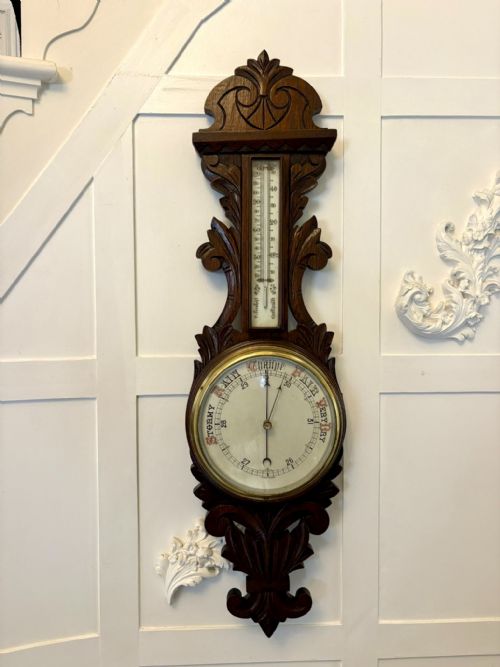
Oak Aneroid Barometer
An oak aneroid barometer measures atmospheric pressure using a mechanical metal capsule rather than liquid mercury, housed in a durable wooden case.
Oak Aneroid Barometer
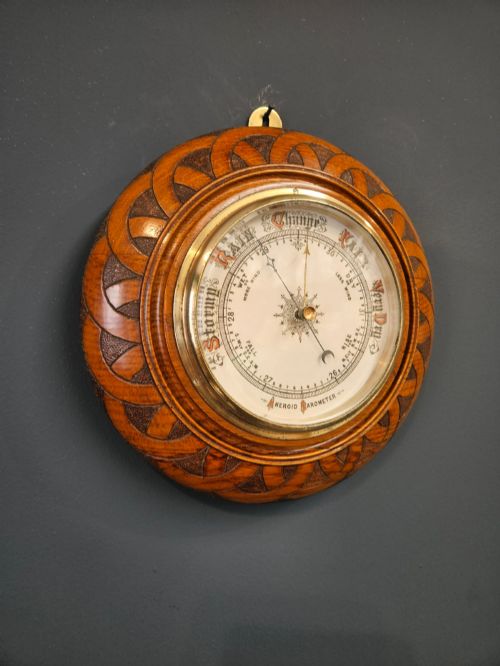
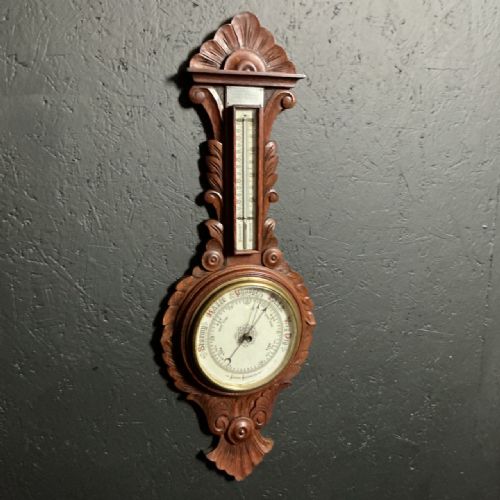
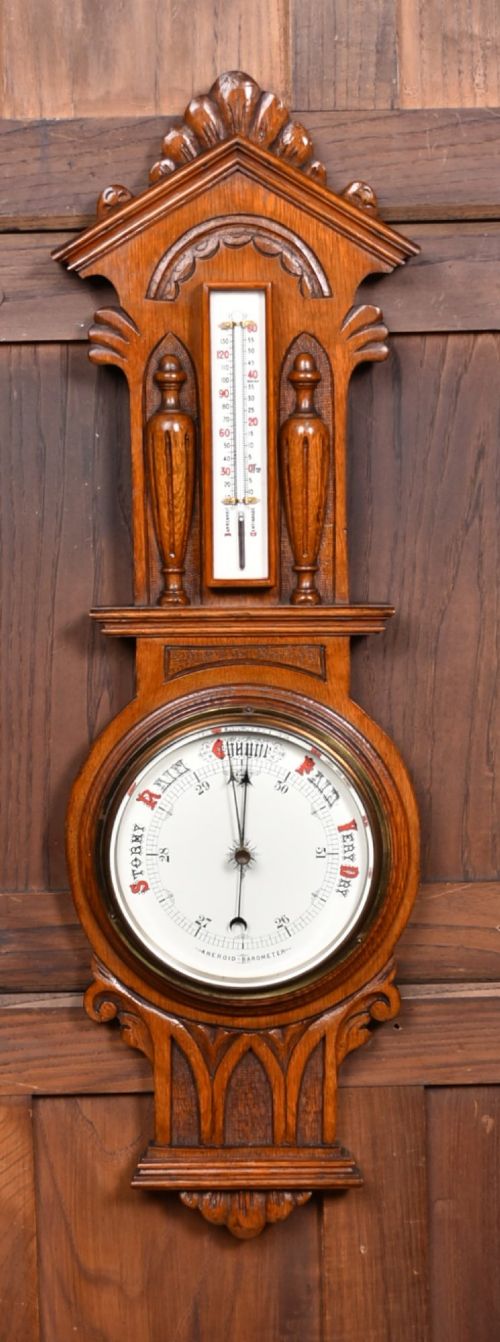
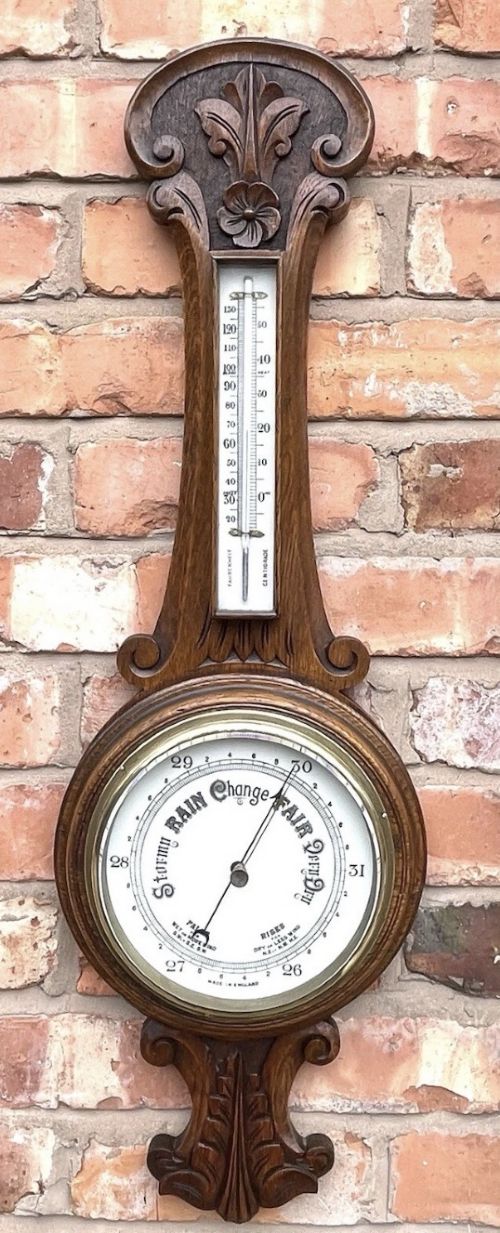
An oak aneroid barometer is a domestic meteorological instrument designed to hang on a wall, combining utility with decorative woodwork. The selection on this page spans the Victorian and Edwardian eras through to the early twentieth century, showing periods like 1860, 1890, and 1900.
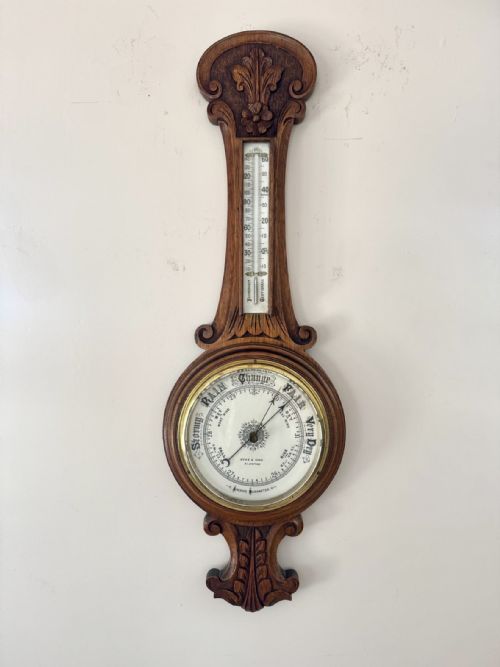
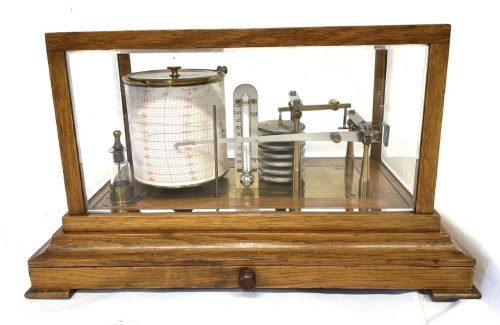
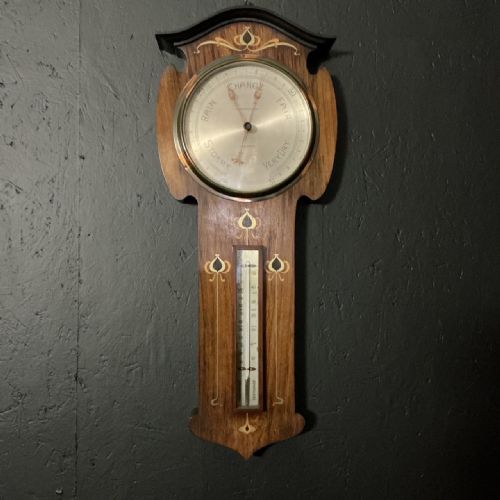
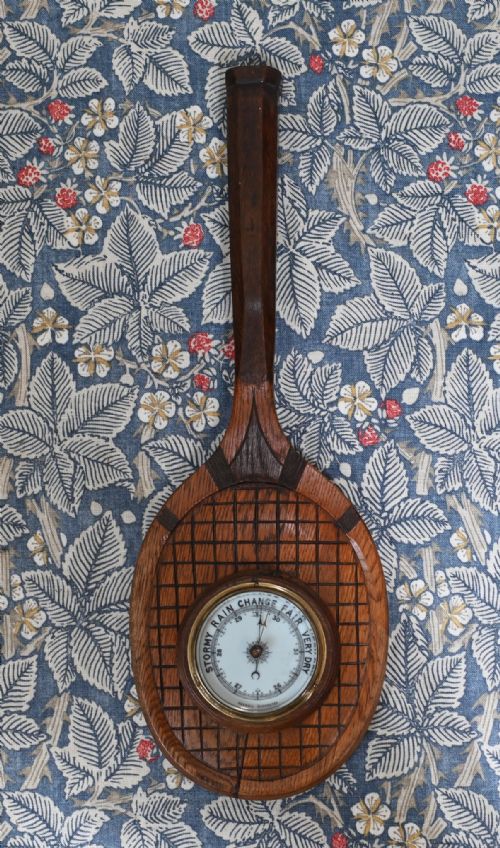
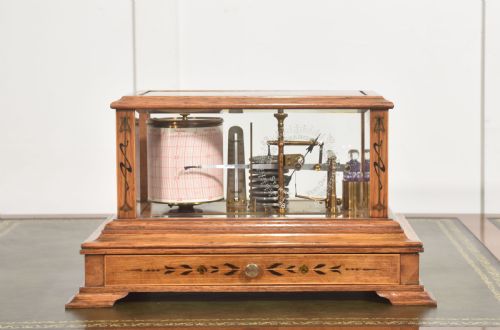
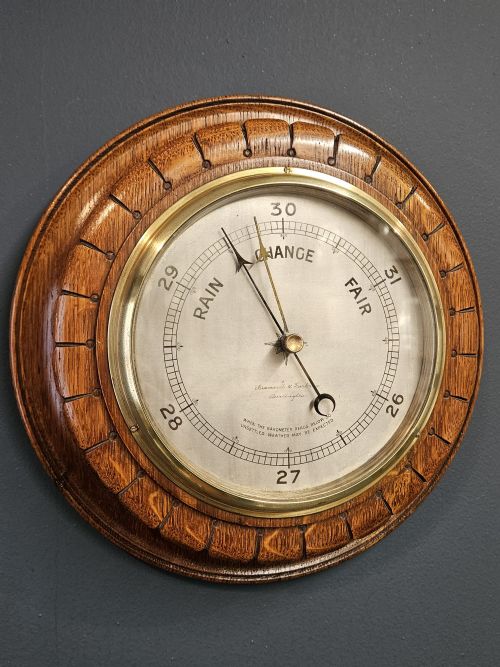
These instruments appear most frequently as banjo barometers with accompanying thermometers, circular bulkhead styles, or desk and wall barographs with chart drawers. The majority are framed in solid oak, occasionally enhanced by walnut, carved details, or bevelled glass.
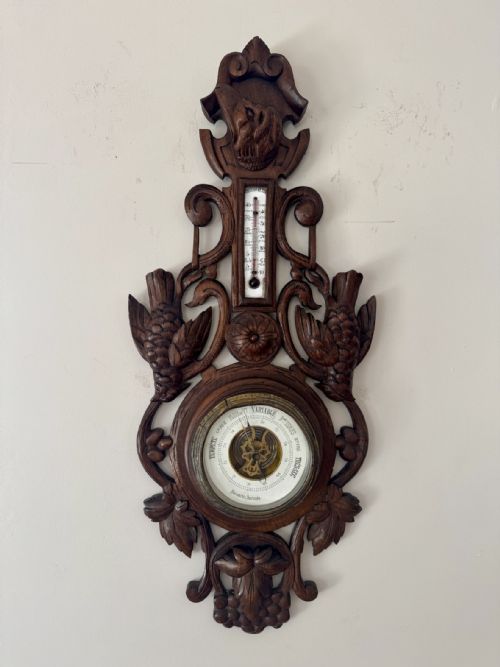
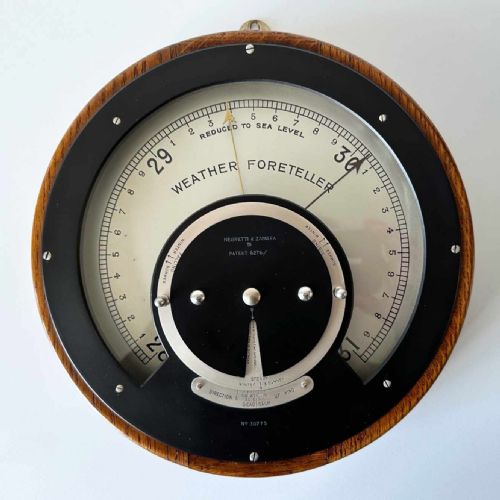
Makers and retailers range from renowned scientific instrument firms to regional opticians and clockmakers. The aesthetic crosses multiple design movements, taking in Black Forest carving, Gothic Revival, Arts and Crafts, and early Art Nouveau inlay.
How they were made
The cases rely on seasoned oak, sometimes turned on a lathe or carved deeply with foliage, geometric patterns, and birds. Workshops utilised brass for bezels and inner movements, while silvered or ceramic dials received precise engraved graduations.
Mechanical construction depends on the aneroid capsule, a sealed metal box that expands or contracts with air pressure and moves a pointer via levers. Bevelled glass protects the dial face, and many examples incorporate mercury or spirit thermometers mounted on the wooden stem.
Oak Aneroid Barometer Retail Price Guide 2026
Typical asking prices for oak aneroid barometer among the pieces listed under this phrase on Sellingantiques today, from the lower quarter to the upper quarter. They describe what is for sale here now, not the wider market.
Listings feature oak aneroid barometers alongside mechanical barographs, bulkhead ships instruments, and banjo wall clocks.
What varies in quality
Quality rests in the crispness of the wood carving and the grade of the internal mechanical movement. Signed dials by established makers command greater regard than unmarked workshop pieces.
The condition of the silvered brass dial and the presence of original bevelled glass influence desirability. Cases featuring integrated thermometers, ceramic scales, or specialised barograph drawers represent the upper tier of manufacture.
Hyde & Sons Sleaford·Negretti & Zambra·Bramwell & Harbron·Short & Mason·W Watson & Sons·Chadburns Liverpool·Dollond of London·Frederick Cox·Ross London
The Oak Aneroid Barometer Glossary
- Aneroid barometer
- A device that measures air pressure via a flexible metal box without using liquid. It relies on mechanical expansion and contraction to move the dial pointer.
- Banjo barometer
- A wall instrument shaped like a stringed instrument with a bulbous lower base and a long stem. The layout accommodates both the dial and a thermometer.
- Barograph
- A scientific instrument that records barometric pressure continuously onto a paper chart. These are typically housed in oak cases with glass panels and a drawer for spare charts.
- Bevelled glass
- Glass with an angled edge fitted into the brass bezel above the dial. This technique adds depth and catches light across the instrument face.
- Silvered dial
- A brass dial plate treated to achieve a brushed silver finish before engraving. Numbers and weather descriptions are then filled with black wax for legibility.
Oak Aneroid Barometer: Frequently Asked Questions
How do I read an aneroid barometer?
The main pointer indicates the current barometric pressure in inches of mercury or millibars. A secondary manual pointer is set directly over the main needle to track whether pressure rises or falls.
Changes in the reading over several hours indicate shifting weather patterns. Higher pressure points towards settled conditions while falling pressure suggests rain or wind.
Where should I hang a wall barometer?
Hang the instrument on an interior wall away from direct sunlight, radiators, and draughts. Extreme temperature fluctuations affect the metal internal components and alter the reading.
Secure the barometer firmly to a wall plug or stud using the hanging bracket on the reverse. Avoid damp rooms like kitchens or bathrooms to protect the oak case and brass bezel.
How do I set the barometer?
Turn the small adjustment screw located at the back of the movement until the pointer matches the known local barometric pressure. Local weather reports provide the correct baseline figure.
Tap the glass gently with your finger before taking a reading to overcome any friction in the mechanical linkages. Adjust the instrument only when stationary and settled in its permanent location.
How can I tell a Victorian barometer from an Edwardian one?
Victorian examples often feature heavier, deeper carving with motifs like leaves, acorns, or Gothic geometric designs. The wood finishes tend towards darker tones and robust proportions.
Edwardian pieces generally present cleaner lines, lighter oak shades, and occasional Arts and Crafts simplicity or subtle inlay. Banjo shapes during this period became slightly more compact.