


Oak and Silver Tantalus
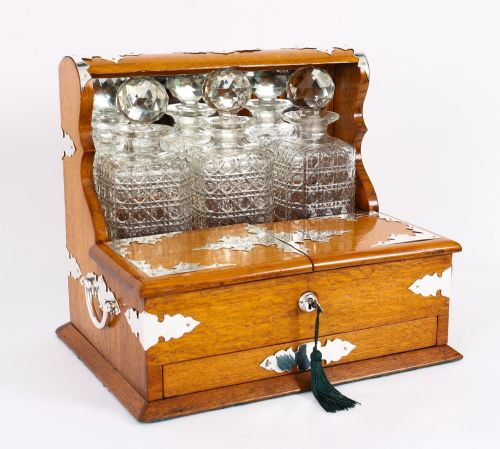
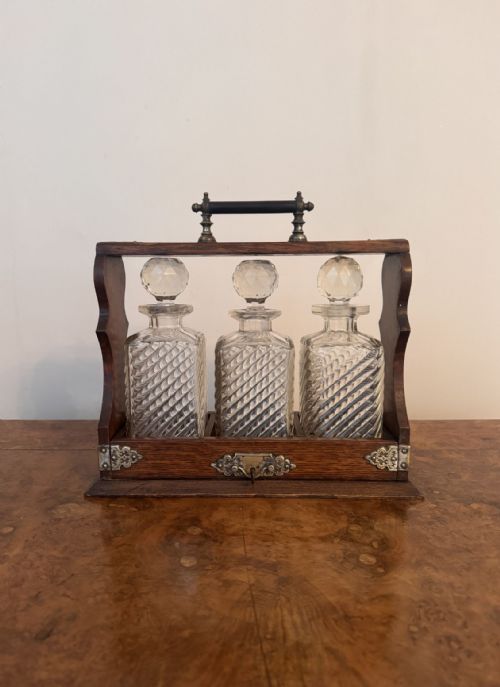
An oak and silver tantalus secures your finest spirits behind a locking wooden frame, combining Victorian ingenuity with heavy barware.
Oak and Silver Tantalus
An oak and silver tantalus stands as a heavy barware container designed to keep host-held spirits secure from unauthorized access. The locking mechanism holds decanters firmly in place until a key releases the handle.
You meet these pieces primarily in Victorian and Edwardian forms, spanning single bottle versions up to large three bottle setups. Many examples on this page combine the tantalus with a games compendium or dry bar.
The core timber is oak, frequently partnered with silver plate mounts, brass details, and cut glass decanters. These functional pieces served as central fixtures in period reception rooms.
How they were made
Cabinetmakers utilised solid oak and blonde oak to build the robust housings, incorporating internal mirror glass and compartments for games. Metalwork elements like silver plate and brass form the locking bars, hinges, and handles.
The vessels housed within consist of cut glass and cut crystal decanters, shaped to fit precisely beneath the locking mechanism. Each piece relies on sturdy joinery to support the combined weight of glass, liquid, and timber.
The name tantalus comes from a mythological king tortured by unreachable fruit and water, perfectly describing locked-away whiskey.
What varies in quality
The distinction between standard items and superior examples lies in the complexity of the internal fittings and the robustness of the timber housing. Multi-bottle setups integrated with games compendiums represent more elaborate manufacturing than single bottle cases.
Finish and mount details also separate tiers of production, with heavier silver plate and finer cut glass marking out better workshop output. The presence of functioning locks and intact mirror glass adds substance to the build.
Walker and Hall
The Oak and Silver Tantalus Glossary
- Games Compendium
- A fitted box containing multiple board games and playing equipment alongside a barware section. These multi-use pieces were popular for entertaining in Victorian and Edwardian reception rooms.
- Silver Plate
- A base metal coated with a thin layer of silver used for the locking bars and mounts. This technique provided the bright appearance of solid silver at a lower production cost.
- Cut Glass
- Glass decorated by cutting facets or patterns into the surface using a wheel. It catches the light particularly well inside a mirrored cabinet or bar.
- Blonde Oak
- A lighter-toned variety of oak timber used for cabinetwork. It offers a brighter appearance than darker fumed or polished oak.
Oak and Silver Tantalus: Frequently Asked Questions
How does a tantalus lock work?
A metal bar drops over the stoppers of the decanters, locking down into the wooden base. Turning the key releases the bar so the bottles can be lifted free.
Without the key, the stoppers cannot be removed and the decanters remain trapped inside the frame.
What is a games compendium tantalus?
It is a combined cabinet that houses both locking decanters and compartments for playing cards, boards, or game pieces. These dual-purpose objects were designed for host entertainment in period homes.
They combine heavy barware storage with folding boxes for after dinner pastimes.
How do I date an oak tantalus?
Dating relies on the style of the oak housing, the type of silver plating, and the cut of the glass decanters. Victorian and Edwardian pieces show specific shifts in hardware design and cabinet proportions.
Inscriptions or patent marks on the locking bar also help pinpoint the production era.
Were these made for specific rooms?
They were built primarily for drawing rooms, smoking rooms, or studies where hosts entertained guests after dinner. The locking feature kept expensive imported spirits under the control of the householder.
Their robust construction suited heavy daily use on sideboards and partner desks.