




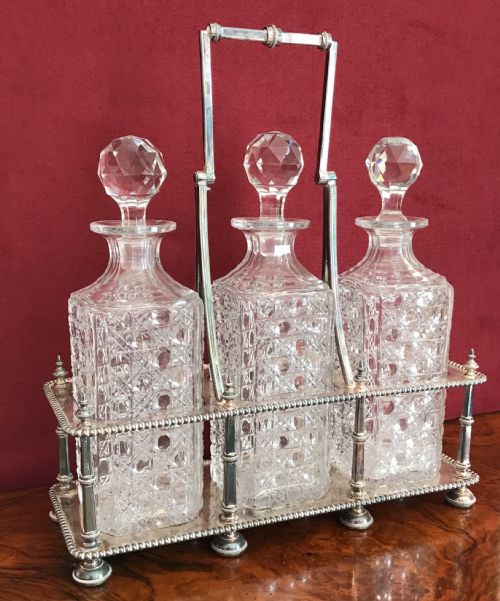
Edwardian Three Bottle Tantalus
These Edwardian three bottle tantalus pieces are clever locking barware frames that protect fine spirits, combining practical security with handsome display.
Edwardian Three Bottle Tantalus
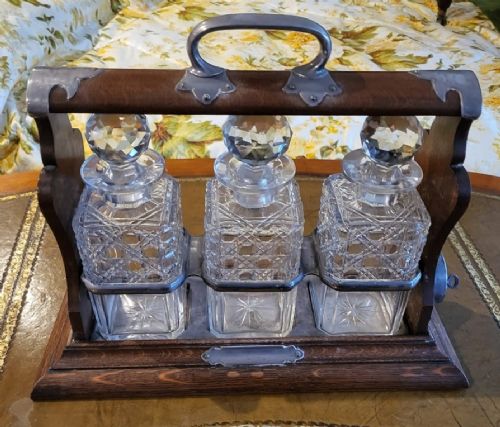
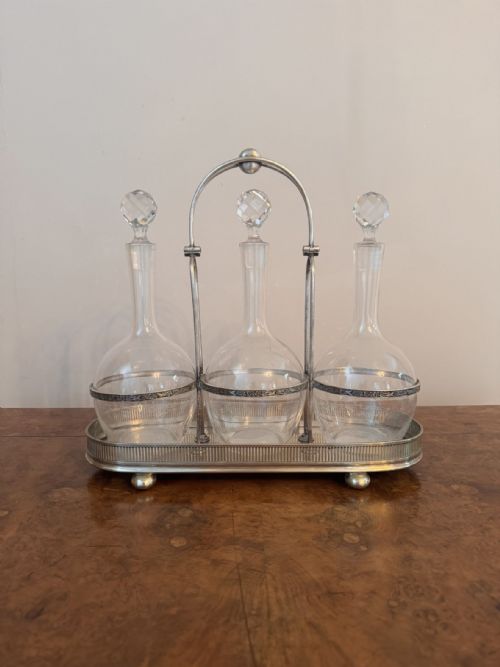
An Edwardian three bottle tantalus is a locking barware frame designed to hold three decanters securely while allowing the cut glass and liquor to remain visible. Most examples found here date from the Edwardian period or around nineteen hundred, though Victorian and later pieces also appear.
The primary form involves a sturdy wooden base fitted with a locking metal mechanism that grips the stoppers of the decanters, preventing them from being removed without a key. Alongside standard frames, the listings include combined decanter sets, barware, and versions incorporating games compendiums.
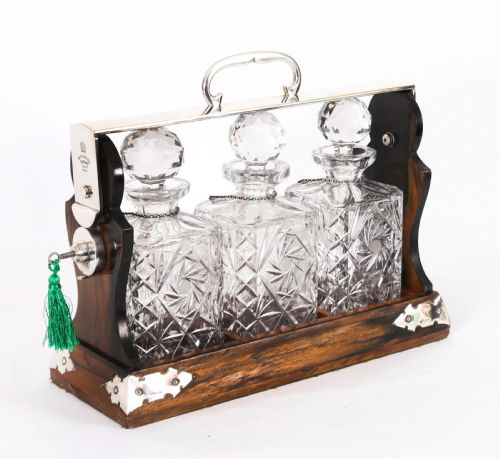
Oak is the predominant material for the frames, frequently paired with silver plated mounts or brass fittings to create a formal aesthetic suited to a smoking room or sideboard. Cut glass and cut crystal decanters fill the frames, often complemented by mirror glass bases.
How they were made
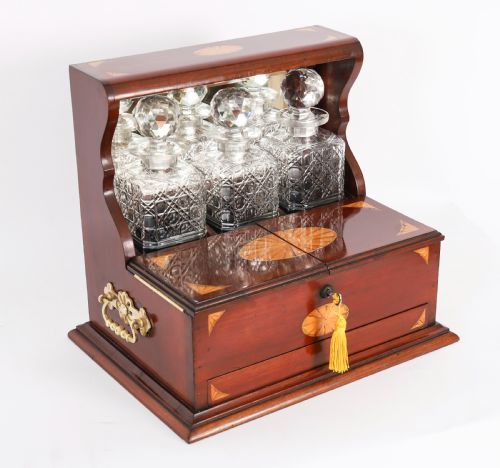
Makers built these frames using solid oak, sometimes incorporating decorative timbers such as satin wood or coromandel, and finished them with marquetry stringing or brass mounting. The woodwork required precise joinery to house the locking mechanism and support the weight of three full glass decanters.
Metalworking formed an essential part of construction, utilising silver plate or brass for the locking bars, carrying handles, and corner brackets. Cut glass and cut crystal decanters were heavily faceted by hand to catch the light, fitted with matching glass stoppers secured beneath the metal framework.
Edwardian Three Bottle Tantalus Retail Price Guide 2026
Typical asking prices for edwardian three bottle tantalus among the pieces listed under this phrase on Sellingantiques today, from the lower quarter to the upper quarter. They describe what is for sale here now, not the wider market.
What varies in quality
The distinction between standard and superior pieces rests on the choice of cabinet timbers and the refinement of the metal mounts. Oak frames with simple brass fittings represent the utilitarian end, whilst those utilising coromandel, satin wood inlay, or heavy silver plating demonstrate finer craftsmanship.
Decanter quality significantly influences the overall standard, with deep hand cut crystal showing greater clarity and weight than standard cut glass. The mechanical precision of the locking mechanism and the presence of original working keys further separate ordinary frames from exceptional examples.
Betjemann’s
The Edwardian Three Bottle Tantalus Glossary
- Tantalus
- A locking drink cabinet or frame that displays three decanters while preventing access to the contents without a key. The name derives from the mythological figure of Tantalus, who could see water but could not drink it.
- Silver Plate
- A thin layer of silver applied to a base metal framework or mount. It provides the bright appearance of solid silver while maintaining structural strength for the locking mechanism.
- Cut Crystal
- Glass containing lead oxide, which increases weight, brilliance, and clarity, shaped by deep hand cutting. It forms the decanters housed within the tantalus frame.
- Marquetry
- Decorative woodwork where small pieces of veneer are fitted together to form geometric patterns or pictures on the surface. It appears on the wooden bases of finer tantalus pieces.
- Coromandel
- A dense, dark cabinet wood with contrasting light grain, imported from Asia and used for luxury Victorian and Edwardian frames. It is highly valued for its rich colour and distinctive figure.
Edwardian Three Bottle Tantalus: Frequently Asked Questions
How does the locking mechanism work?
The locking bar swings down over the glass stoppers of the three decanters, preventing them from being lifted out of the frame. Turning the key operates a spring or bolt that secures the bar in place.
When unlocked, the metal arm pivots upward or swings sideways to release the necks of the decanters for pouring.
What periods do these pieces come from?
The majority of the pieces date from the Edwardian era and around nineteen hundred, reflecting the height of their popularity in middle and upper class homes. Victorian examples from the late nineteenth century also appear alongside occasional later pieces from the nineteen thirties.
Design details such as heavy brass mounts point toward the Victorian period, while lighter oak construction and specific silver plating styles align with Edwardian manufacturing.
Were these used in specific rooms?
Tantalus sets were traditionally kept in dining rooms, libraries, or smoking rooms where hosts entertained guests with spirits. The locking mechanism was originally intended to prevent domestic staff from helping themselves to the household liquor.
Today, they function primarily as decorative barware displays on sideboards or drinks cabinets while retaining their mechanical operation.
What materials are the frames made from?
Oak is the standard wood used for the base and back panels, varying from plain timber to highly figured varieties. Finer examples incorporate decorative elements like satin wood inlay, coromandel, or marquetry stringing.
The metal components consist of brass or silver plated brass, while the interior bases sometimes feature mirror glass to reflect the cut crystal decanters.