



Lockable Decanter Tantalus
A lockable decanter tantalus holds spirits securely behind a clever locking bar, combining hospitality with discretion in the Victorian and Edwardian home.
Lockable Decanter Tantalus
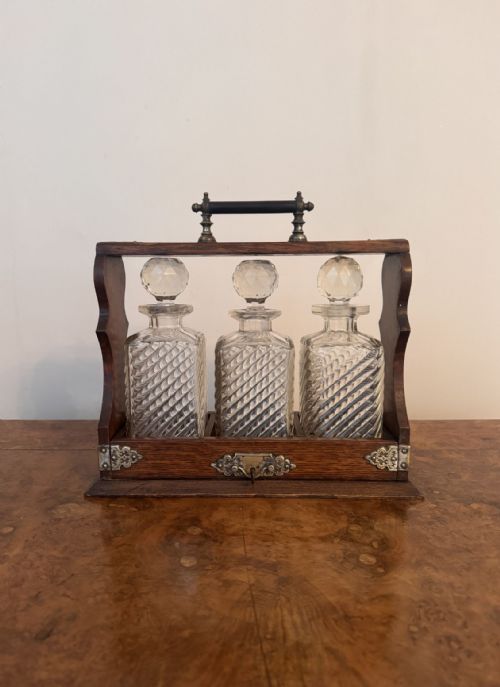
When you search for a lockable decanter tantalus, you encounter drinking frames designed to prevent unauthorised access to expensive spirits. The pieces on this page span the Victorian and Edwardian eras, alongside Regency, Art Deco, and later twentieth-century iterations.
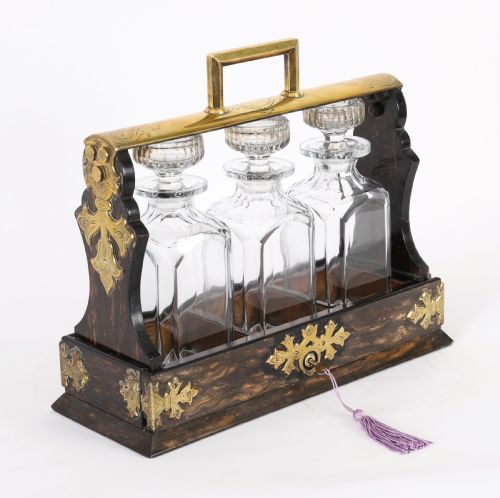
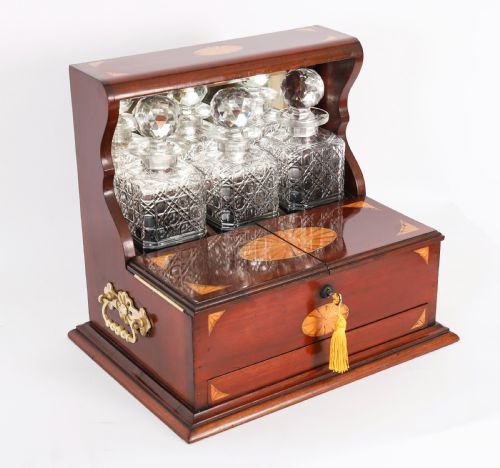
Most examples take the form of three-bottle or two-bottle frames fitted with cut glass or cut crystal decanters. Alongside standard tantalus frames, you find combined decanter boxes and games compendiums that house cards and counters beneath the bottles.
Assessing quality in a tantalus
Quality rests in the density of the timber framing, the crispness of the brass or silver-plated mechanism, and the integrity of the locking system. Superior pieces incorporate marquetry stringing, fine grain timbers like coromandel, and integrated games compendiums.
The glassware dictates the overall standard of the piece, with heavy cut crystal decanters sitting at the upper end of the scale. The presence of matching stoppers and robust metal mountings further separates standard utilitarian frames from exceptional examples.
Periods represented span from Regency and Victorian eras through Edwardian designs to Art Deco modernist chrome work.
The Goldsmith Co.·Philip Ashberry·Jacques Adnet
The Lockable Decanter Tantalus Glossary
- Tantalus
- A locking frame designed to hold decanters of spirits securely in place. It prevents guests or servants from helping themselves by trapping the bottle stoppers beneath a metal bar.
- Compendium
- A multi-functional box containing games equipment alongside a drinking service. These pieces typically combine a decanter tantalus with compartments for playing cards and tokens.
- Escutcheon
- A protective metal plate surrounding a keyhole. On these pieces, it reinforces the lock that releases the tantalus bar.
- Marquetry
- Decorative woodwork formed by fitted pieces of veneer. Craftsmen applied these intricate patterns to the wooden bases of better quality boxes.
- Silver plate
- A thin layer of silver bonded to a base metal. This finish provides the bright appearance of solid silver on handles, locking bars, and mounts.
Lockable Decanter Tantalus: Frequently Asked Questions
How does a tantalus lock?
A metal sliding bar drops over the necks of the decanters, blocking the stoppers from being lifted out. Turning a key in the side lock secures this bar in place.
Without the key, the decanters remain firmly trapped within the wooden base, keeping the contents safe.
What periods do these pieces date from?
The selection ranges primarily from the nineteenth century into the twentieth century. Victorian and Edwardian examples appear most frequently.
Regency items and later Art Deco modernist pieces in chrome also feature within the grouping.
Are the decanters always matching?
Many examples retain their original matching set of three or two cut crystal bottles. Some pieces feature fitted compartments designed specifically for these exact glass forms.
It remains important to inspect whether the stoppers match the cut patterns of the decanters.
What is a games compendium combination?
Certain tantalus frames incorporate storage drawers or compartments beneath the bottle stand for playing cards and gaming counters. These dual-purpose items served as complete social station units for the parlour.
They combine the locking spirit service with entertainment provisions in a single wooden box.