


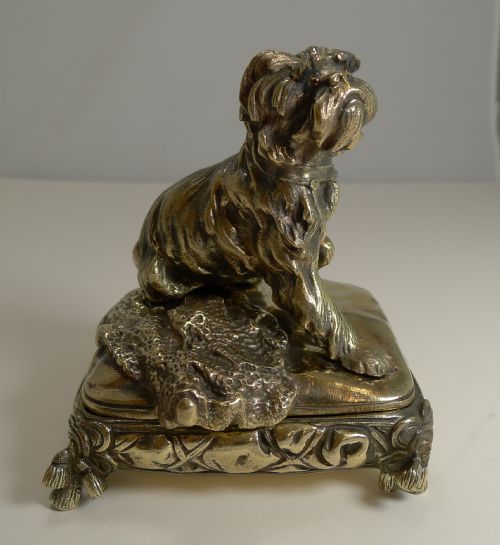


Novelty Brass Box
A novelty brass box combines utility with wit, taking the form of animals, shoes, or vehicles to delight the desk or pocket.
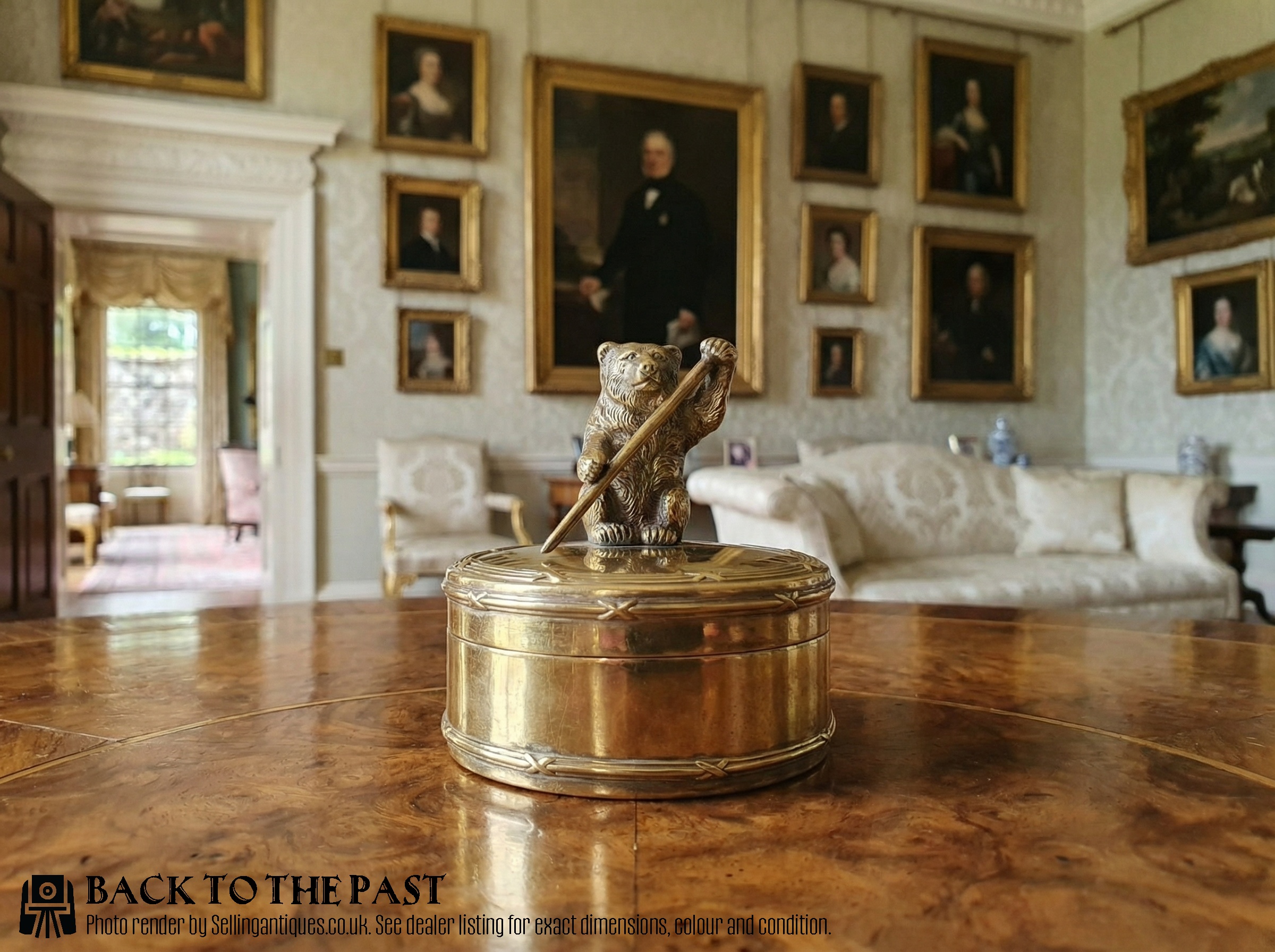
Novelty Brass Box
A novelty brass box serves as a small container shaped to resemble an animal, a shoe, a vehicle, or a book rather than taking a standard geometric form. These humorous pieces appear in various configurations across the nineteenth and twentieth centuries, including the Victorian and Edwardian eras, as well as the Art Deco period.
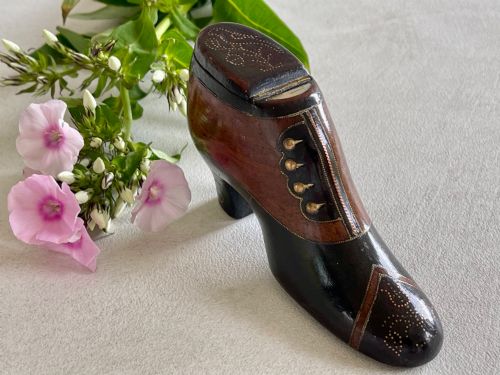
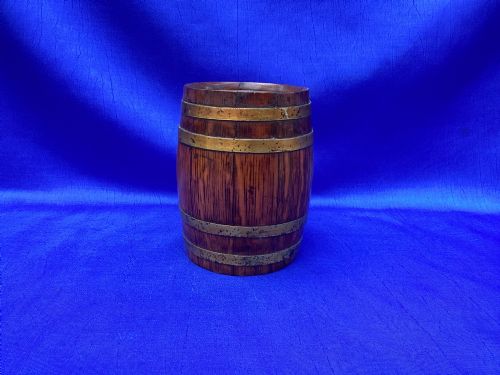
The most frequent examples found on this page take the shape of footwear, such as snuff shoes with hinged lids, alongside animal figures like dogs, bears, and lions. Other common forms include miniature carriages, barrels, and hat boxes.
Makers utilised these amusing formats for practical items like vesta cases, snuff boxes, and cigarette boxes, allowing owners to carry matches or tobacco with a touch of humour. Origins span English workshops, Scottish makers, and French centres such as Palais Royal.
Materials and construction
Brass forms the primary structural material of these items, frequently cast or hand-beaten into complex shapes such as animals and coaches. Artisans often plated this brass with nickel or gilt finish to alter the surface appearance and protect against tarnishing.
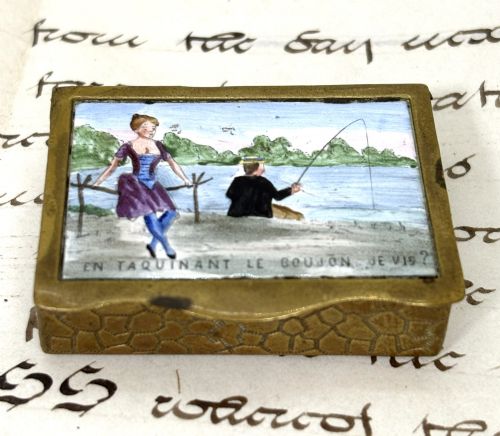
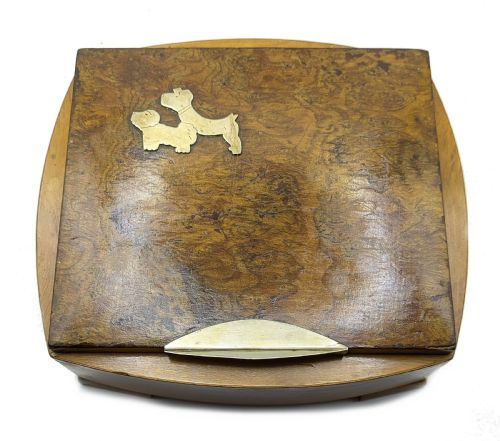
Many pieces incorporate contrasting materials alongside the base metal, including carved wood, bone, oak, and burr walnut. Enamel work, brass wire inlay, and delicate pique work foliage frequently decorate the surfaces of these containers.
Hinged mechanisms allow the shoes, animals, and books to open securely, revealing small storage compartments for matches, snuff, or trinkets. In some examples, glass elements like opaline eggs or stone panels such as Pietra Dura are integrated into the brass framework.
One unfortunate gentleman was immortalised forever as a nickel-plated matchbox face.
Judging the quality
The integrity of the mechanism marks the distinction between a robust survivor and a fragile item. Quality boxes feature tight hinges and well-fitted lids that close flush against the body without wobbling.
The integration of secondary materials such as enamel, inlaid bone, or coloured glass elevates the complexity of the object. When these elements remain secure and undamaged within the brass housing, the overall standard rises significantly.
The Novelty Brass Box Glossary
- Vesta case
- A small pocket container designed to hold matches, typically featuring a striking surface on the base. These cases often took amusing shapes.
- Pique work
- A method of decorating a non-metallic surface with tiny points of metal, such as brass wire or pins. This technique appears on the foliage and flowers of wooden snuff boxes.
- Palais Royal
- A Parisian district known for producing luxury souvenirs and novelty items during the nineteenth century. Pieces from this origin often combine gilt brass with glass or porcelain.
- Pietra Dura
- An artistic technique using cut and fitted polished coloured stones to create pictorial designs. It appears on the lids of certain match safes.
- Treen
- Small handmade wooden household objects and bric-a-brac. Collectors use this term for early wooden shoe-shaped containers.
Novelty Brass Box: Frequently Asked Questions
What were novelty brass boxes used for?
These containers served everyday functional purposes for past owners, primarily holding matches, snuff, or tobacco. People carried vesta cases in pockets or kept trinket boxes on desks for small valuables.
The amusing shapes provided a talking point during social occasions while protecting the contents from moisture and damage.
How do I date a brass novelty box?
Dating relies on stylistic clues, manufacturing techniques, and occasional stamped registration marks or inscribed dates on the metal. Art Deco pieces show geometric lines from the 1920s and 1930s, while Victorian and Georgian examples display heavier cast ornamentation.
Comparing the hinge construction and wear patterns against known periods helps narrow down the decade of production.
Can I still use my box every day?
While these items remain robust enough for gentle handling, the age of the hinges and delicate enamel or gilt surfaces warrants careful treatment. Regular use as a modern matchbox or pill case is possible if the lid mechanism functions smoothly.
Collectors generally prefer to display them safely rather than subjecting antique catches to daily pocket wear.
How do I clean an antique brass box?
Dusting with a soft, dry cloth is usually sufficient to maintain the surface without removing the accumulated patina of decades. Avoid harsh chemical polishes that can strip away original gilt finishes, enamel work, or aged darkening in the recesses.
If the piece incorporates wood, bone, or leather elements, keep moisture away from those areas entirely.