

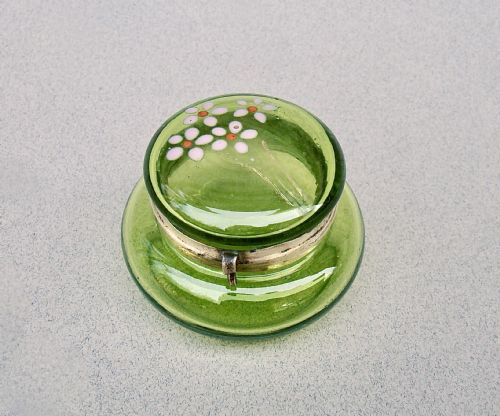
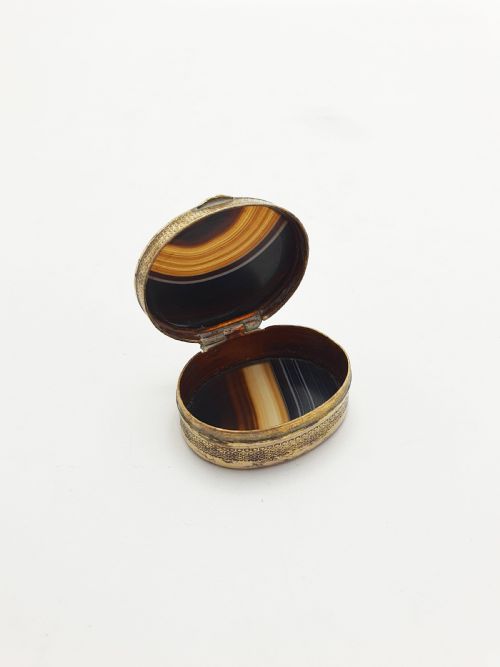


Brass Pill Box
A brass pill box offers a neat pocket-sized vessel for carrying small comforts, combining crisp metalwork with enamels, stones, and glass.
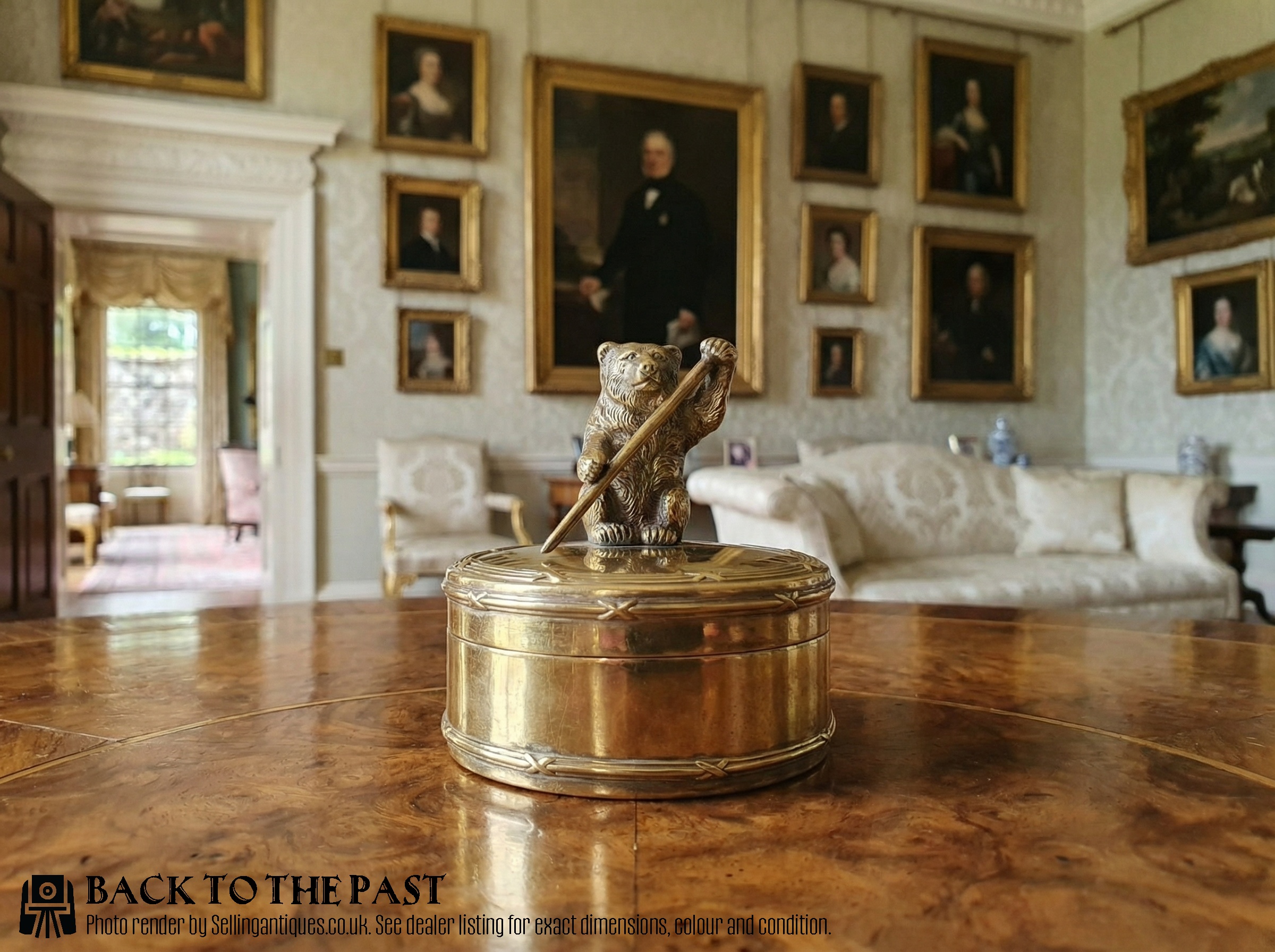
Brass Pill Box
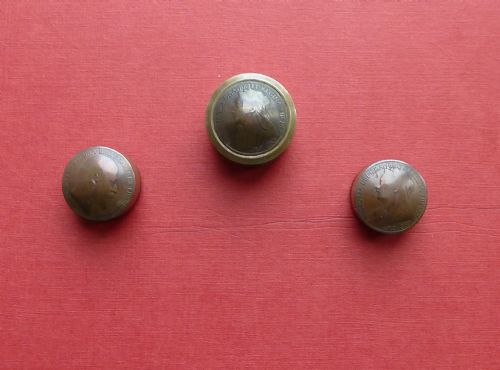
A brass pill box spans centuries of small metal containers used to hold pills, snuff, patches, and trinkets. You will frequently encounter 19th-century and Victorian examples alongside Georgian pieces on this page.
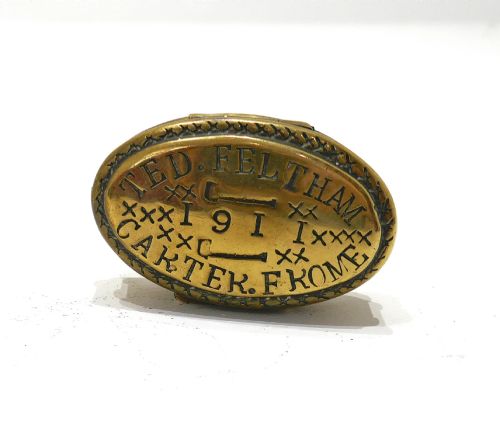
Makers shaped these boxes into circles, ovals, and double-sided formats for domestic and personal use. Forms range from simple engraved metalwork to elaborate French and English designs.
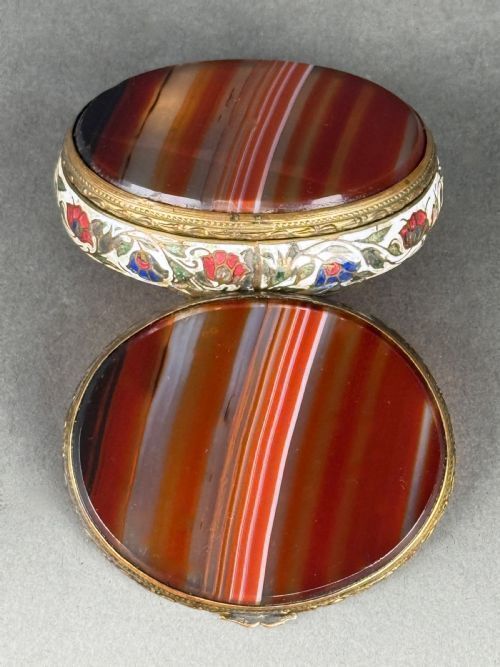
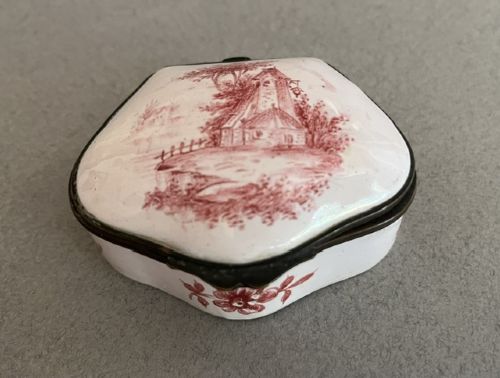
The materials paired with brass include porcelain, glass, banded agate, and champlevé enamel. These combined media create variety across the objects catalogued here.
Materials and construction methods
Craftsmen used brass, gilt brass, and gilt metal as the primary structural frames for hinges, rims, and bodies. These metals were cast, beaten, and engraved to form secure lids and bases.
Surfaces were often enhanced with enamel, porcelain panels, or banded agate inserts. Artisans secured these decorative elements into the metal mounts using bezels and pins.
Specialist techniques like champlevé enamel, guilloche enamel, and gold-raised detailing added colour and texture to the metallic surfaces.
Assessing quality in small containers
Quality rests in the crispness of the chasing and engraving on the metalwork, where sharper lines show better hand skill. The tightness of the lid closure and the smoothness of the hinge also mark superior execution.
The integration of inset materials determines the refinement of the piece. Well-fitted agate stones, intact enamels without loss, and finely painted porcelain panels elevate the standing of the box.
The Brass Pill Box Glossary
- Champlevé
- An enamelling technique where troughs are dug into the metal surface and filled with vitreous enamel before firing. This method creates bold coloured patterns against the metal background.
- Guilloche
- A decorative mechanical engraving technique that produces precise, intricate recurring geometric patterns. It is often glazed with translucent enamel.
- Patch box
- A small container originally used to hold cosmetic fabric patches worn on the face in the eighteenth century. They frequently feature mirrored interiors.
- Bonbonniere
- A small ornamental box made for holding sweets or sugar plums. These pieces are often highly decorated with enamel or porcelain.
- Finial
- A small decorative ornament fixed to the top of a lid. On these boxes, they take forms such as cast animals or geometric grips.
Brass Pill Box: Frequently Asked Questions
What is a brass pill box used for?
These small boxes served historic purposes for carrying medicinal pills, herbal lozenges, or scented powders in pockets and reticules.
Today, they function as decorative desk accessories or secure holders for modern small items like rings and earrings.
How do I date a brass pill box?
Dating relies on stylistic clues, hinge construction, and materials characteristic of specific periods like the Georgian or Victorian eras. Engraved dates or maker marks, where present, offer direct chronological evidence.
Material combinations such as banded agate with gilt brass or Bilston enamels also point clearly to eighteenth or nineteenth-century production windows.
Are these boxes made of solid brass?
Many examples utilise solid brass or bronze for their primary structure, while others employ gilt metal or gilt brass over a base metal core.
Precious metal plating or fire gilding was frequently applied to enhance the appearance and protect the underlying alloy from tarnishing.
How should I clean antique brass boxes?
Maintenance requires gentle dusting with a soft dry cloth to preserve existing patination and delicate surface finishes.
Harsh metal polishes should be avoided, particularly near enamel, glass, or porcelain panels, to prevent scratching and chemical damage.