
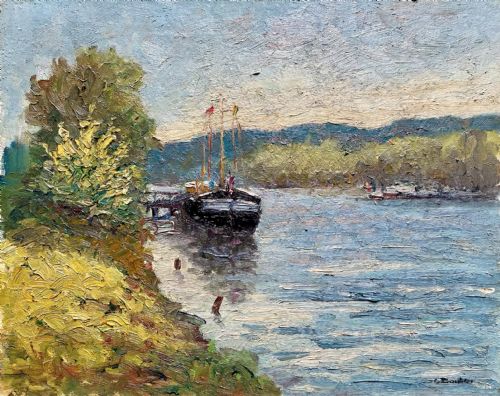
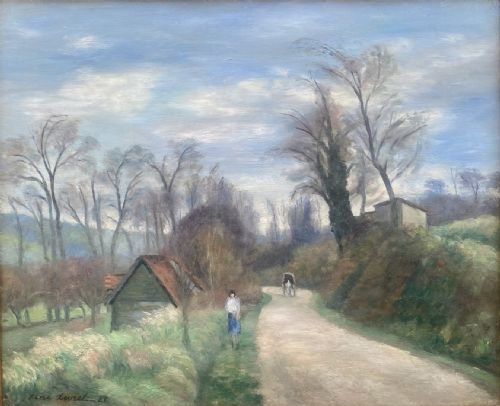


Normandy Landscape Oil Painting
These normandy landscape oil painting works capture the shifting light and pastoral river valleys of northern France across multiple decades.
Normandy Landscape Oil Painting
When you search for a normandy landscape oil painting, you encounter compositions depicting rivers, coastal cliffs, and rural scenes set in northern France. The selection spans from the late nineteenth century through the mid twentieth century, recording regional scenery through various lenses.
Most examples adopt styles ranging from French Impressionism and Post-Impressionism to French Provincial interpretations. Canvas and wood panel serve as the primary supports for these regional landscape works.
How they were made
Artists painted these works using oil paint applied to canvas or wood panel supports, sometimes employing gesso preparation layers. Painters worked plein air or in studios to capture the distinct atmospheric conditions of the Alabaster Coast and river valleys.
Framing often complemented the period aesthetic, enclosing the painted surface to preserve the edges and support the structure of the panel or stretched canvas.
Listings feature oil paint applied to canvas, wood panel, and board supports across multiple decades.
What varies in quality
Quality rests in the handling of light and atmosphere, where skilled brushwork conveys the distinctive English weather and river mist of the region. The depth of the colour palette and the certainty of the composition distinguish more accomplished interpretations.
The integration of the support, whether canvas or wood panel, alongside the condition of the paint layer, dictates the overall integrity of the piece.
Rene Levrel·Paul Elie Gernez·Paul Jean Anderbouhr·Raimond Louis Lecourt·Fred Pailhes·Martin Lamotte
The Normandy Landscape Oil Painting Glossary
- Plein air
- Painting outdoors to directly capture the natural light and atmosphere of a landscape. This method defined much of the regional French work.
- Post-Impressionism
- An art movement extending Impressionism while rejecting its limitations, emphasising symbolic content and expressive use of paint. Several listed works reflect this aesthetic.
- Oil on panel
- A technique involving the application of oil paint directly onto a wooden board rather than woven fabric. Panels provide a rigid support for the pigment.
- Gesso
- A primer mixture consisting of a binder mixed with chalk or pigment, applied to canvas or wood before painting. It prepares the surface to receive the oil colours.
Normandy Landscape Oil Painting: Frequently Asked Questions
What periods do these paintings cover?
The works span from the late nineteenth century through the mid twentieth century, capturing decades of artistic interpretation across northern France.
This timeline includes late nineteenth century river views alongside post war wartime documentation and mid century rural scenes.
What materials are used for the supports?
Artists utilised woven canvas and wooden panels as the primary surfaces for applying oil paint. Gesso preparations frequently served as the foundational layer on these supports.
These materials ensured stability for the pigment layers during outdoor plein air execution and studio completion.
How do the regional art styles differ?
Styles range from Impressionist and Post-Impressionist approaches focusing on light to French Provincial interpretations of rural scenery. Each movement brought distinct brushwork and atmospheric observation to the canvas.
The progression from nineteenth century river views to mid century depictions reveals evolving techniques among the recorded artists.
Where were these landscape scenes painted?
Locations include the Seine near Giverny, the Alabaster Coast, Pourville, Rouen, and the River Orne. Artists focused on the specific topography and weather patterns of Normandy.
These settings provided the rivers, rolling hills, and coastal cliffs that inspired the regional paintings.