


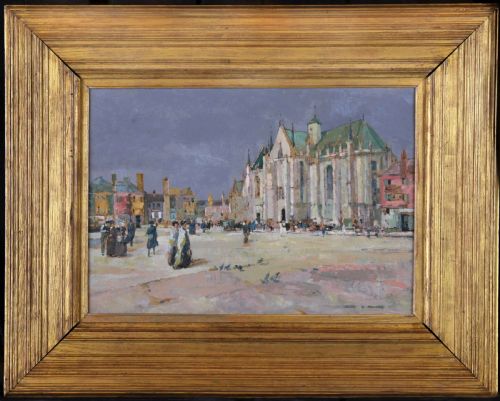

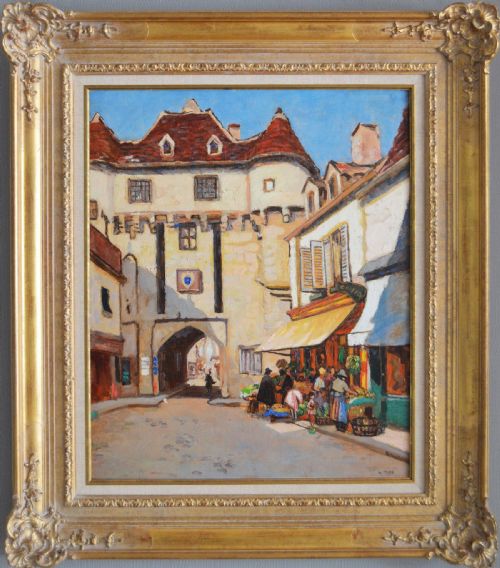
Twentieth Century French Oil
Twentieth century french oil paintings bring the bold brushwork and luminous palettes of Parisian studios and coastal villages straight to your walls.
Twentieth Century French Oil
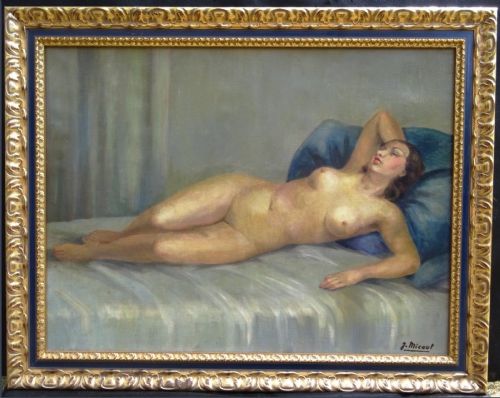
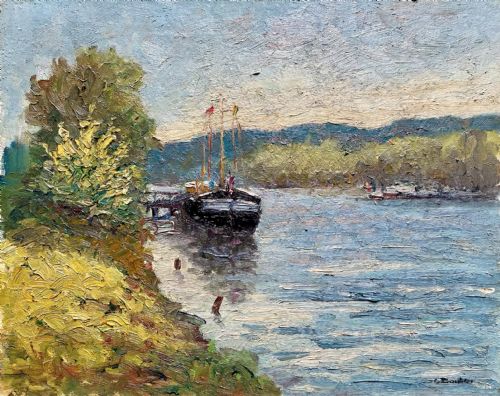
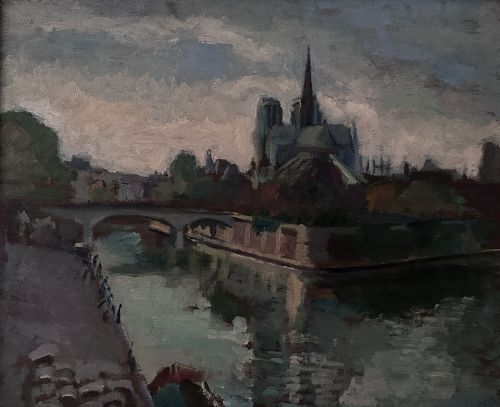
A buyer seeking twentieth century french oil encounters a rich array of paintings, ranging from post-impressionist river scenes and art nouveau mythological depictions to expressive coastal views and mid-century townscapes. These works capture the changing light of Normandy, the bustling streets of Paris, and quiet rural moments through the lens of distinct artistic movements spanning several decades.
The pieces on this page include framed canvases, panels, and boards executed by named painters and followers of major traditions alike. Subjects stretch from intimate nudes and figures to sunlit landscapes and harbour views.
Dating primarily from the early decades through the mid-twentieth century, these oil paintings reflect the vibrant artistic climate of France across different periods such as art deco, expressionism, and realism.
Materials and execution
Artists relied on oil paint applied to prepared canvas, wood panel, or board, building up textured surfaces with confident brushstrokes. The physical support often determines the handling of pigment, with wooden panels offering a firm resistance to the brush compared to the spring of stretched canvas.
Many of these works retain their period frames constructed from wood and gesso, frequently finished with gilt moulding that complements the painted composition. The interaction between the painted surface and the original frame defines the complete visual object.
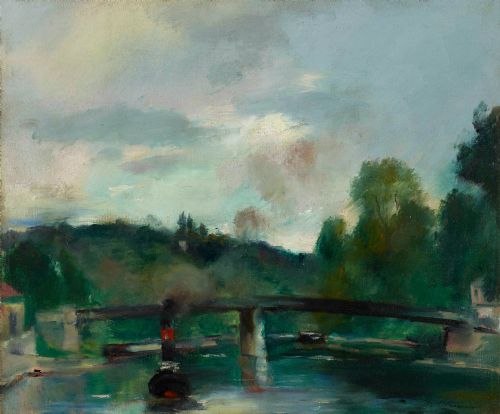
Seaweed gatherers in Brittany share space with sunlit Parisian bridges, proving French artists found beauty in both mud and monuments.
Assessing quality and presence
Quality rests in the sureness of the handling and the cohesion of the composition, where light and colour balance to create a convincing sense of place or form. A superior painting demonstrates authority in brushwork and a clear command of tone, whether depicting a crowded Parisian bridge or a tranquil coastal cliff.
The integrity of the surface and the harmony of the framing contribute significantly to the overall impact of the piece. Works that retain their original character and presentation offer a more direct connection to the period.
Henri Ottmann·Paul Élie Gernez·Antoine Calbet·Gabriel Dauchot·Merio Ameglio·Jean Sobieski·Cecil R Doyly John·Pinchus Krémègne·Augustus William Enness·Allan Douglass Mainds·Charles Edmund Rene His·Letitia Marion Hamilton
The Twentieth Century French Oil Glossary
- Oil on canvas
- A traditional painting method utilising pigment suspended in drying oil applied to a woven fabric support stretched over a wooden frame. This combination allows for rich texture and subtle blending of colour.
- Gesso
- A traditional paint mixture consisting of a binder mixed with chalk, gypsum, or pigment used to prepare wood or canvas surfaces. It provides a smooth, stable ground for oil painting and frame ornamentation.
- Post-Impressionism
- An artistic movement following impressionism that rejected its limitations in favour of bolder colours, distinct brushstrokes, and symbolic content. Painters explored subjective visions rather than strictly optical recording.
- Art Deco
- A design style characterised by sleek lines, geometric shapes, and stylized representations popular during the early decades of the twentieth century. It influenced both decorative arts and figurative painting.
- Gilt moulding
- Decorative wooden framing strips finished with a thin layer of gold leaf or metallic paint. These frames enhance the visual weight and period context of the artwork.
Twentieth Century French Oil: Frequently Asked Questions
Should I reframe a vintage French painting?
Period frames contribute historical context and often complement the aesthetic of the artwork as originally intended.
Retaining the original framing preserves the integrity of the piece, though unstable mouldings may require careful stabilization by a specialist.
How do I identify the period of an oil painting?
Clues lie in the stylistic hallmarks of movements like art nouveau, post-impressionism, or mid-century realism, alongside framing techniques and materials.
Signatures, dates inscribed on the reverse, and stretcher construction also offer reliable indicators of the decade of creation.
Where should I hang an oil painting at home?
Select a wall away from direct sunlight and fluctuating heat sources such as radiators to protect the canvas and oil pigments.
Ensure the hanging height allows comfortable viewing at eye level, letting the natural light in the room enhance the brushwork.