


Nomadic Woven Tapestry
Nomadic woven tapestry pieces bring bold tribal patterns and rich wool textures into modern interiors.
Nomadic Woven Tapestry
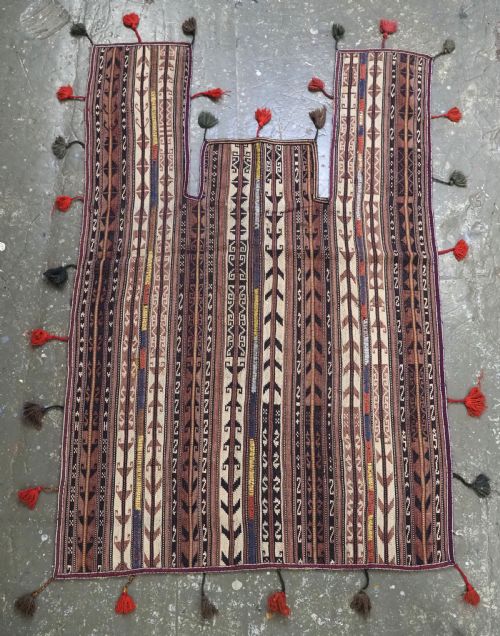
When you search for nomadic woven tapestry, you encounter heavy functional textiles produced by tribal groups across Central Asia, Persia, and Anatolia. These pieces served practical domestic purposes in nomadic camps before finding new life as decorative wall hangings and rugs.
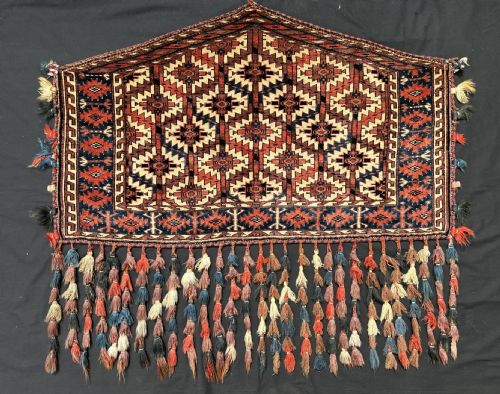
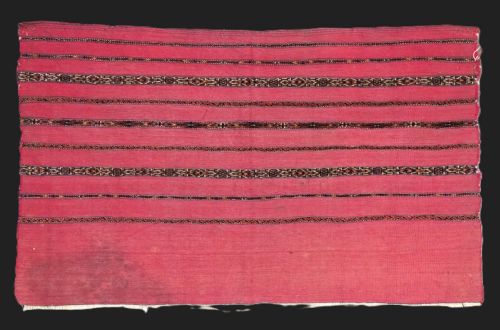
The selection on this page relies heavily on tribal bag faces, storage sacks, and flatweave panels dating from the mid-nineteenth century to the early twentieth century. Common forms include Turkmen chuvals, Shahsavan khorjins, Qashqa'i kilims, and Uzbek panels rather than conventional European wall hangings.
Makers from tribal traditions utilised specific local motifs, such as guls and chevron patterns, to identify their lineage and region. Each survivor reflects the practical needs of tent dwelling alongside a deep heritage of textile craftsmanship.
Materials and Technique
The primary material across these textiles is hand-spun wool, often paired with cotton foundations and occasional leather or wood accents. Natural dyes provide the deep colour palettes characteristic of nineteenth-century tribal work.
Weavers employed flatweave and soumak techniques to create dense, durable surfaces without pile. These interlaced structures allowed utilitarian items like saddlebags and tent bands to withstand heavy daily use while displaying complex geometric designs.
Listings span from eighteen-fifty to nineteen-twenty, concentrating heavily on wool and natural dyes across Turkmen, Shahsavan, and Qashqa'i traditions.
Assessing Quality
Quality rests upon the tightness of the weave and the precision of the geometric design. Tighter knots and finer flatweave structures distinguish workshop-level dedication from standard utilitarian output.
The depth and preservation of natural dyes also dictate the visual strength of a piece. Well-preserved wool and crisp contrast in motifs separate exceptional survivors from heavily worn examples.
The Nomadic Woven Tapestry Glossary
- Chuval
- A large tent storage bag produced by Turkmen tribes. These items held household goods inside yurts and feature distinct tribal guls.
- Soumak
- A flatweave technique involving wrapping supplementary weft threads over warp threads. This method creates a textured, durable surface with a braided appearance on the face.
- Gul
- A medallion motif repeated across tribal carpets and bags. Different tribal groups use specific guls to denote their ancestry.
- Sofreh
- A woven spread or cloth used for sharing meals or processing dough. These flatweaves often feature minimalist geometric layouts.
- Mafrash
- A rectangular storage chest panel used by nomadic groups for bedding and clothes. They are frequently encountered today as flatweave panels or bag faces.
Nomadic Woven Tapestry: Frequently Asked Questions
What are nomadic woven tapestries?
These pieces are functional tribal textiles originally woven by nomadic groups in Central Asia, Persia, and the Caucasus for daily camp life.
Today, collectors appreciate them as wall hangings and flatweave rugs that display authentic tribal history and geometric artistry.
How were these bags used?
Nomadic families used storage bags and panels like chuvals and khorjins to transport and house household belongings inside tents.
Many survivors retain hanging loops or structural remnants from their original utilitarian lives on the steppe.
How do I care for wool flatweaves?
Keep these textiles out of direct sunlight to protect natural dyes from fading over time. Gentle vacuuming without a rotating brush helps remove dust from the tight wool weave.
Professional textile cleaners should handle any deeper maintenance.
How do I identify tribal designs?
Tribal patterns rely on distinct geometric motifs, such as the repeated guls seen on Turkmen chuvals or the chevron layouts of Baluch kilims.
Comparing structural techniques like soumak work helps narrow down the regional origin of a piece.