

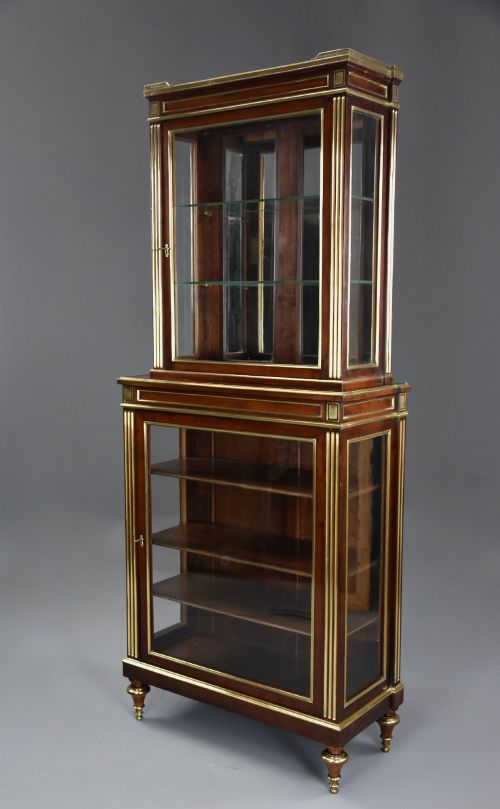
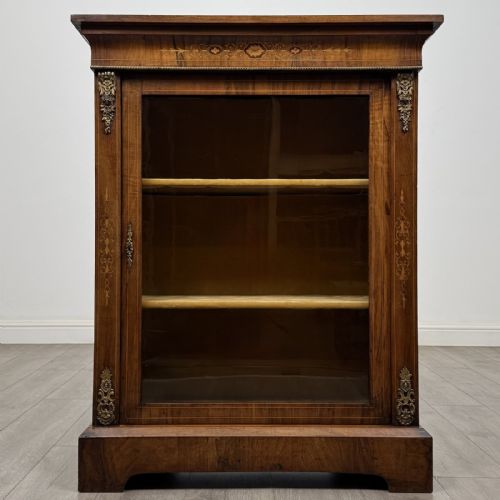
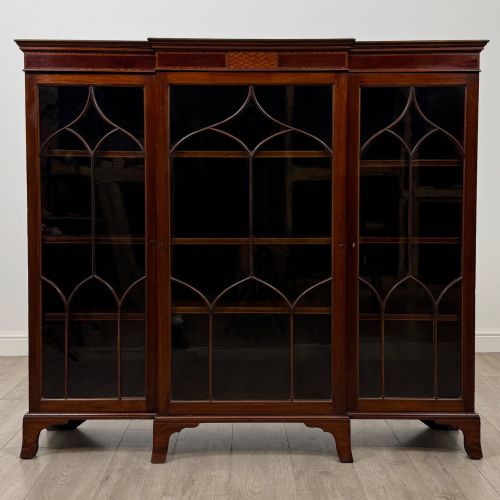
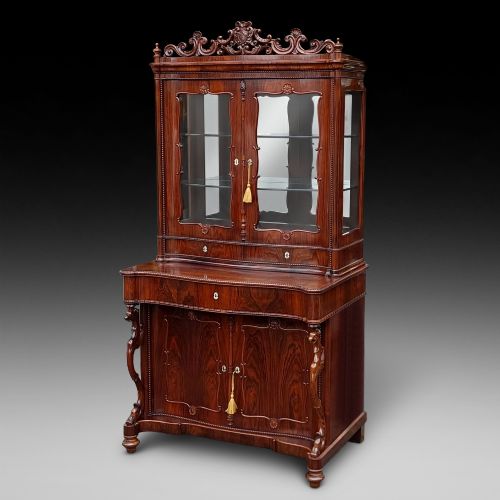
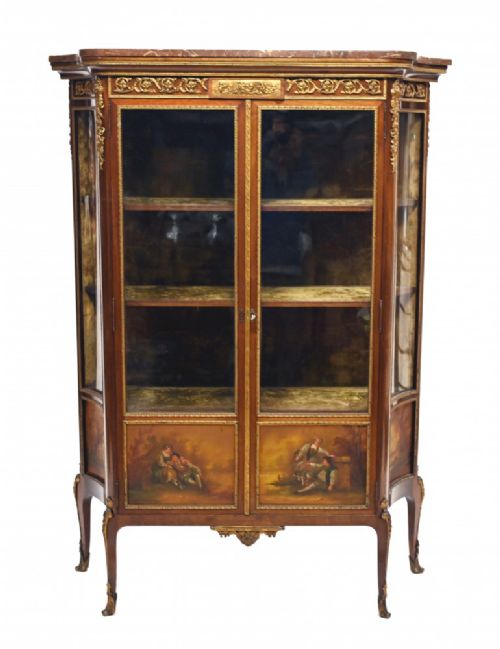


Nineteenth Century Vitrine Cabinet
A nineteenth century vitrine cabinet displays precious objects behind glass, bringing continental elegance and meticulous craftsmanship into a room.
Nineteenth Century Vitrine Cabinet
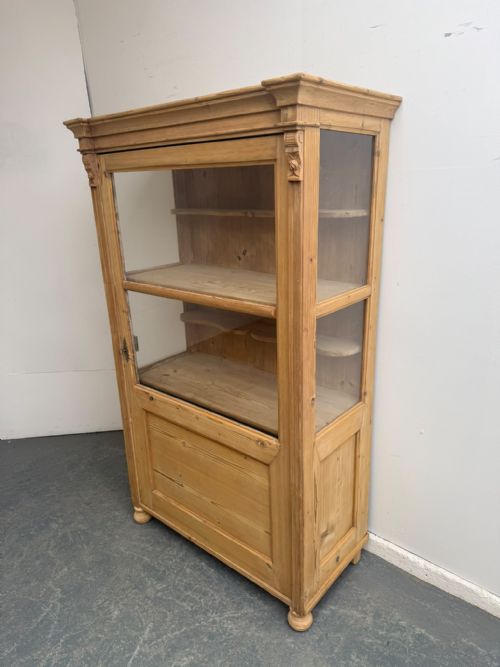
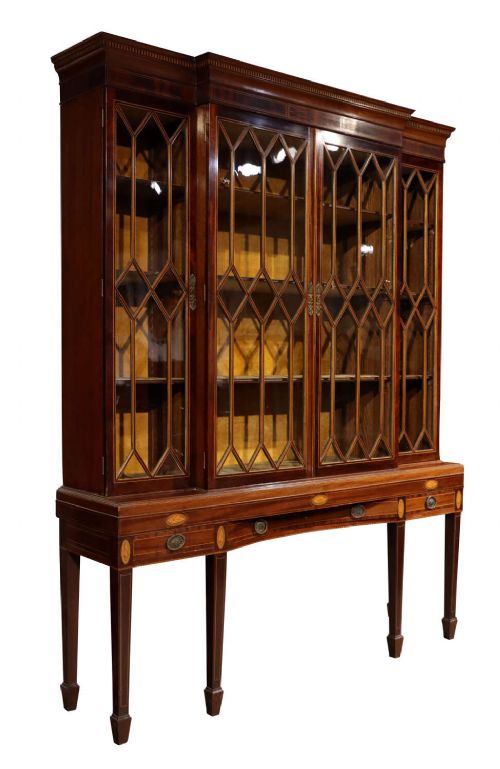
A nineteenth century vitrine cabinet brings together glazed display architecture and rich cabinetmaking traditions from Victorian England and continental Europe. Buyers encounter French pieces finished in kingwood, rosewood, and vernis martin alongside English mahogany, walnut, and pine variants.
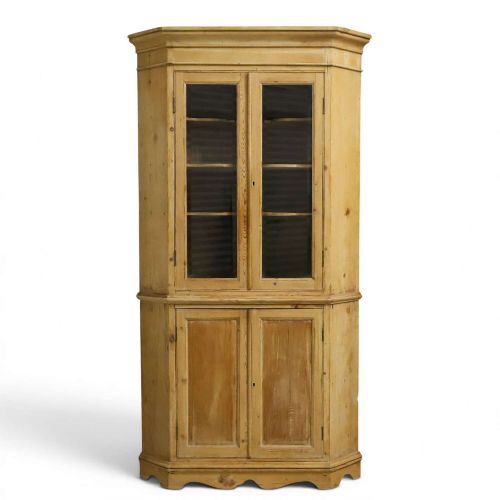
Forms range from tall pier cabinets and breakfronts to corner cupboards and bombe display pieces on stands. The Victorian examples lean towards architectural marquetry and substantial timber frames, while French items favour revival styles like Louis XV and Louis XVI.
Cabinets span decades from the mid nineteenth century through to nineteen hundred. Most pieces use glass panels to enclose shelves, designed specifically to showcase porcelain, silver, and curiosities.
Materials and Technique
Maker workshops build carcases from dense hardwoods like mahogany, kingwood, and rosewood, often over pine or oak secondary foundations. Selected veneers are laid in geometric or marquetry patterns across the surfaces.
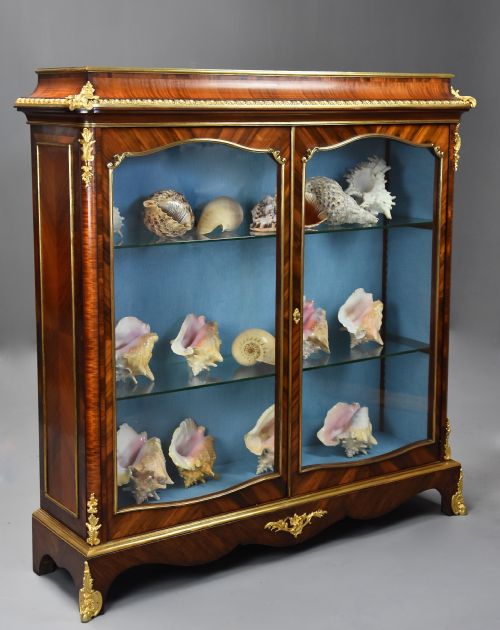
Ormolu mounts cast in gilt bronze frame doors, corners, and feet, adding structural highlight and ornamental relief. Hand-painted vernis martin panels depict pastoral scenes on French-influenced cabinet doors.
Glazing techniques secure curved or flat glass panes within timber rebates using traditional glazing bars. Cabinet doors frequently lock with fitted brass or iron mechanisms.
Nineteenth Century Vitrine Cabinet Retail Price Guide 2026
Typical asking prices for nineteenth century vitrine cabinet among the pieces listed under this phrase on Sellingantiques today, from the lower quarter to the upper quarter. They describe what is for sale here now, not the wider market.
Cabinetmakers occasionally hid secret compartments behind decorative ormolu mounts to secure the most personal of trinkets.
Standards of Execution
The precision of the veneer matching and the depth of the timber figuring separate standard joinery from high workshop output. Fine examples display continuous grain flow across drawers and doors.
Ormolu mounts reveal quality through the crispness of their chasing and the richness of their fire gilding, whereas lesser pieces show soft casting and dull metal finishes. Hand-painted panels demonstrate artistic skill in brushwork and composition rather than mechanical printing.
The integrity of the internal carcass and the original state of the glass panes indicate how well a cabinet has survived. Superior pieces retain their original keys, working locks, and fitted velvet or fabric linings.
Jas Shoolbred·Collinson & Lock·Edwards & Roberts·G. Durand·François Linke
The Nineteenth Century Vitrine Cabinet Glossary
- Vitrine
- A glass-fronted cabinet designed for displaying fine objects and porcelain. These pieces originated in France and rely on expansive glazing to let light circulate around the contents.
- Ormolu
- Gilt bronze ornaments applied to furniture surfaces for decorative effect. The technique involves treating brass or bronze with an amalgam of gold.
- Kingwood
- A dense, richly figured tropical timber used extensively in high-end cabinetmaking. It offers dark violet-brown tones with lighter golden streaks.
- Vernis Martin
- A type of decorative lacquer finish developed in France to imitate Asian lacquer. Artisans paint pastoral scenes beneath translucent varnishes.
- Marquetry
- The art of applying thin veneers of different woods to a structure to form decorative patterns. Craftsmen cut contrasting timbers to create pictorial designs.
- Boulle
- A form of marquetry using brass and tortoiseshell inlaid into carcase furniture. This technique is named after the master cabinetmaker André-Charles Boulle.
Nineteenth Century Vitrine Cabinet: Frequently Asked Questions
What is a nineteenth century vitrine cabinet?
A glazed display piece built during the eighteen hundreds to showcase precious objects and collections.
These cabinets combine fine timber carcases with extensive glass panels and decorative metal mounts.
How were these cabinets used?
Owners placed them in drawing rooms and reception spaces to exhibit porcelain, silver, and curiosities.
The glass kept dust away from delicate items while allowing guests to admire them easily.
How do I style a vitrine cabinet?
Position the piece against a solid wall where natural light can strike the glass panels.
Keep the internal lighting soft and arrange collections with varying heights and textures on the shelves.
How do I tell French and English styles apart?
French cabinets frequently employ kingwood veneers, ormolu mounts, and painted vernis martin panels.
English variants tend to use mahogany, walnut, or pine with structured marquetry or classical revival details.