



Nineteenth Century Tilt Table
A nineteenth century tilt table brings clever pivot mechanisms and rich timber surfaces together for flexible living.
Nineteenth Century Tilt Table
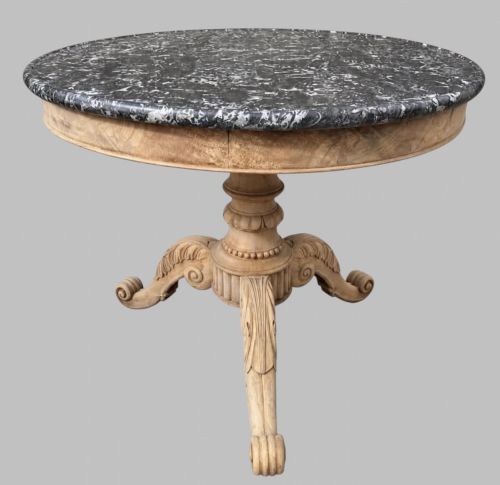
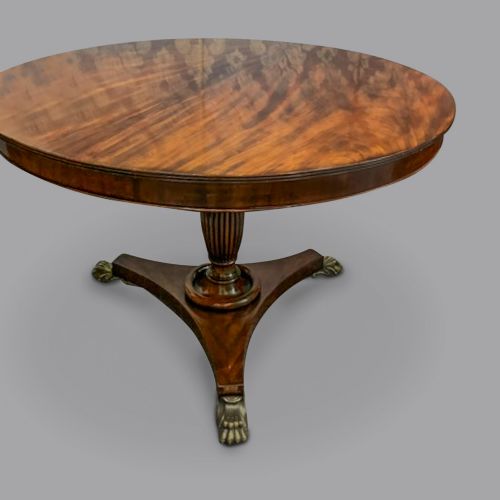
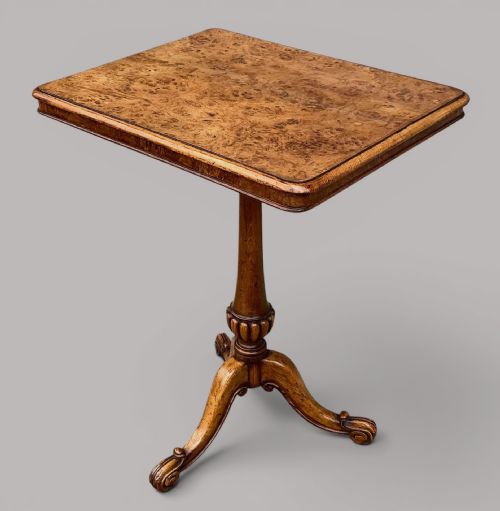
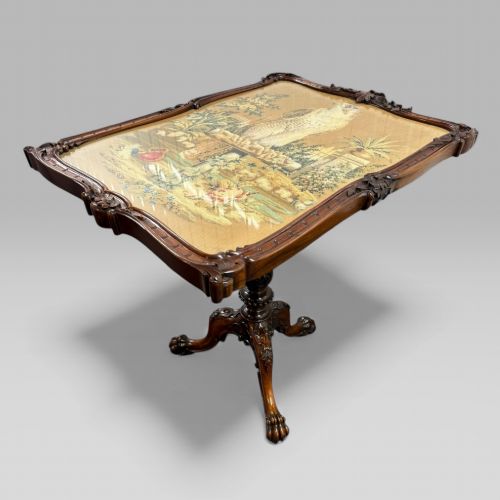
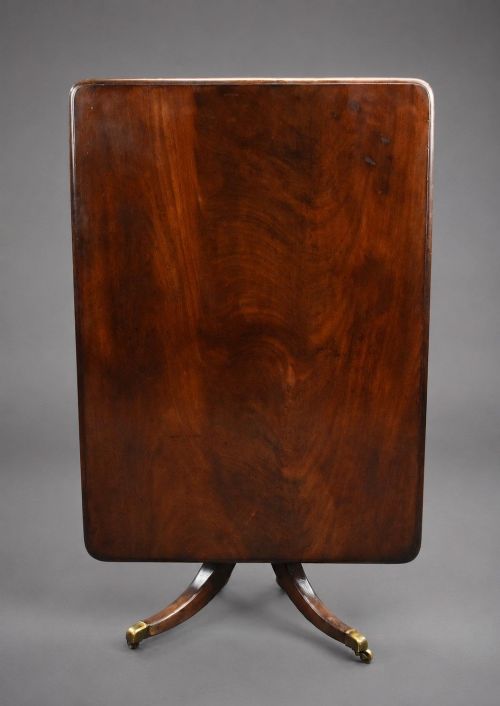
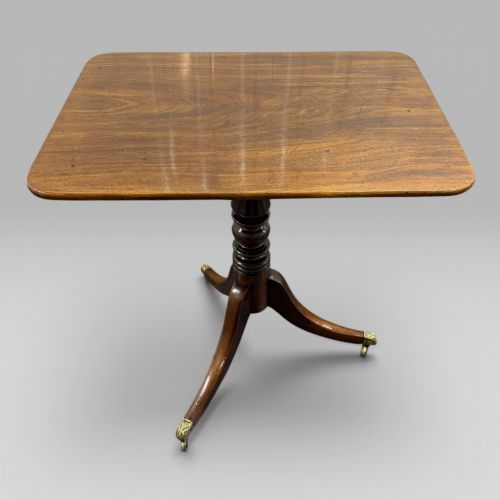
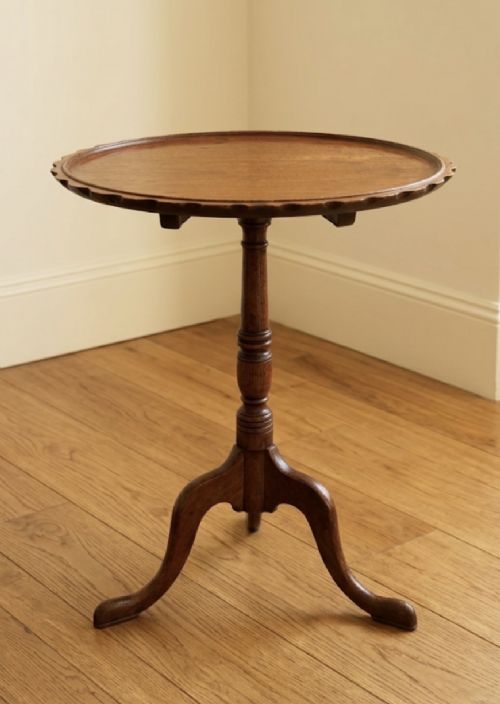
A nineteenth century tilt table is a versatile circular or rectangular stand designed with a hinged top that folds flat when not in use. These tables take many forms across this selection, including small tripod wine tables, occasional stands, breakfast tables, and larger dining formats.
The pieces appearing here span the Regency, William IV, and Victorian periods, alongside continental examples in French and Swedish styles. Buyers encounter both compact tripod pedestals and substantial pillar bases suited to various domestic spaces.
How they were made
Cabinet makers relied predominantly on dense hardwoods such as mahogany, walnut, and rosewood, frequently enhanced with boxwood stringing, marquetry inlay, or segmental wood veneers. Structural supports often incorporated turned pedestals resting on tripod legs, occasionally fitted with brass casters for mobility.
The characteristic tilting mechanism relies on a sturdy wooden catch and block assembly mounted beneath the top, allowing the surface to pivot upright against the pillar.
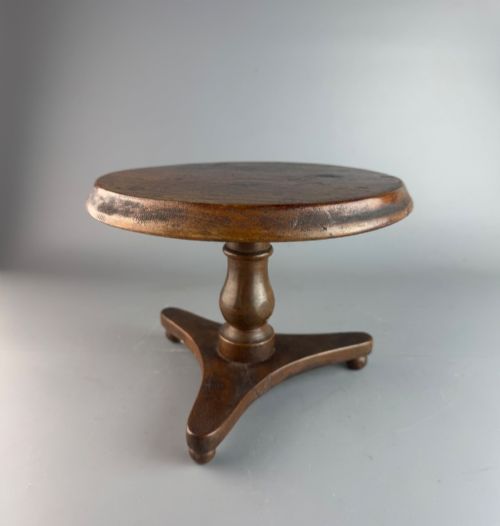
One exceptional Victorian treen treenware piece masquerades entirely as a miniature tip-top tripod table while serving as a functional candlestand.
What varies in quality
Quality reveals itself in the selection of timber grain, particularly in figured mahogany, burr oak, and walnut veneer tops. Superior examples demonstrate crisp hand-carved pedestal details, precise marquetry work, and robust pivoting catches that hold the top firm without wobble.
Proportion and stability separate standard utility pieces from finer cabinet work, especially where slender tripod legs meet a central pillar with balanced tension.
Gillows·Holland and Sons·James Winter
The Nineteenth Century Tilt Table Glossary
- Tilt top
- A table top mounted on a hinge mechanism that pivots vertically to save space against a wall. This clever design allows the furniture to function as a decorative screen or side piece when stowed.
- Tripod table
- A small occasional table supported by three legs radiating from a central pillar. This stable configuration became immensely popular throughout the Georgian and Regency periods for wine and candle stands.
- Marquetry
- Decorative inlay work using various coloured wood veneers to create geometric or pictorial patterns on the table surface. Skilled artisans fit these thin wood sections together with great precision.
- Stringing
- Thin inlaid lines of contrasting wood, such as boxwood, set into the edges or borders of a table top. This subtle technique frames the timber grain and defines the geometric outline of the piece.
- Pedestal table
- A table supported by a single central column rather than four corner legs. This construction provides maximum legroom around the perimeter of the top.
Nineteenth Century Tilt Table: Frequently Asked Questions
How do I operate the tilt mechanism?
Most nineteenth century tilt tables use a simple brass or wooden catch beneath the top that releases the surface from its horizontal lock. Lifting this catch allows the table face to pivot upward against the central column.
To lower the top back into position, gently guide it down until the latch drops securely back into its housing. Ensure the catch engages fully to prevent any unexpected movement during use.
Where should I place a tilt table?
These versatile tables fit comfortably beside seating as occasional stands or wine tables, particularly when the top is tilted upright against a wall. Their compact tripod footprints suit empty corners and smaller reception rooms.
Larger breakfast and centre formats work well positioned in the middle of a room where the timber top can be fully appreciated from all sides.
How do I tell Regency from Victorian examples?
Regency pieces often display restrained classical lines, brass stringing, and elegant reeded tripod legs dating from the early decades of the century. Woods like premium mahogany and rosewood dominate this refined aesthetic.
Victorian versions frequently feature bolder carved details, heavier pillar proportions, and intricate marquetry or walnut veneers. These later tables span broader stylistic revivals including French Rococo influences.