



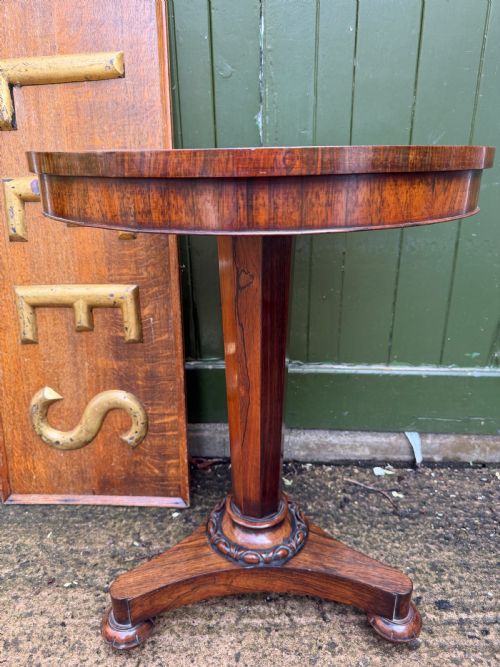


Tripod Base Accent Table
A tripod base accent table provides a steady, compact surface with a distinctive three-legged support, prized for placing beside seating.
Tripod Base Accent Table
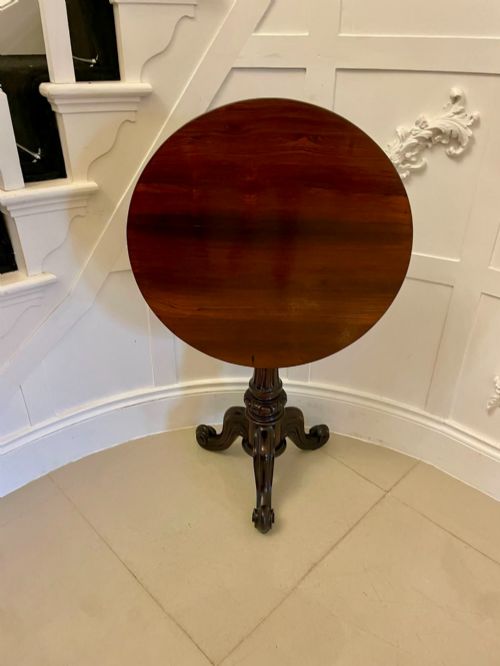
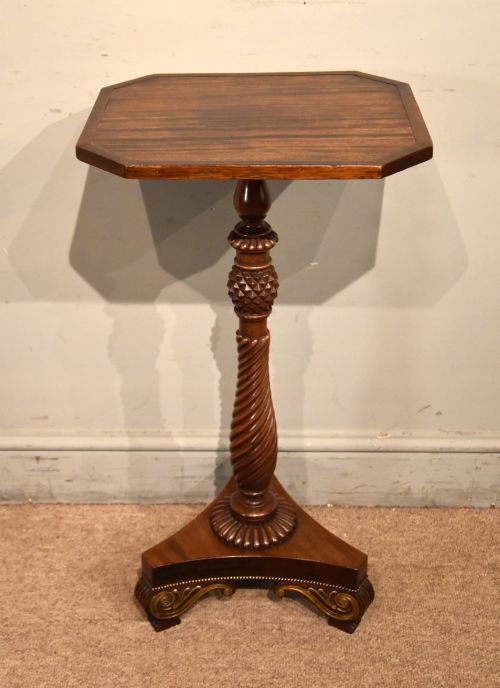
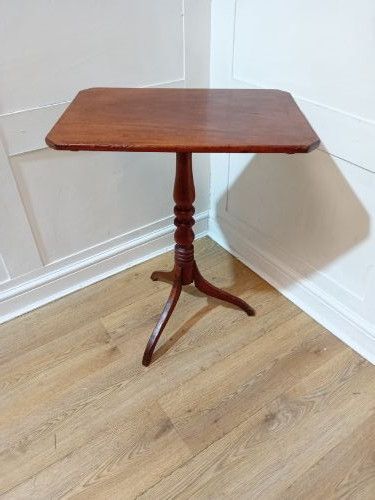
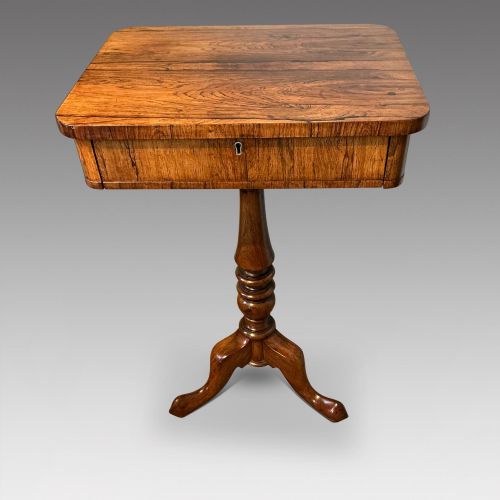
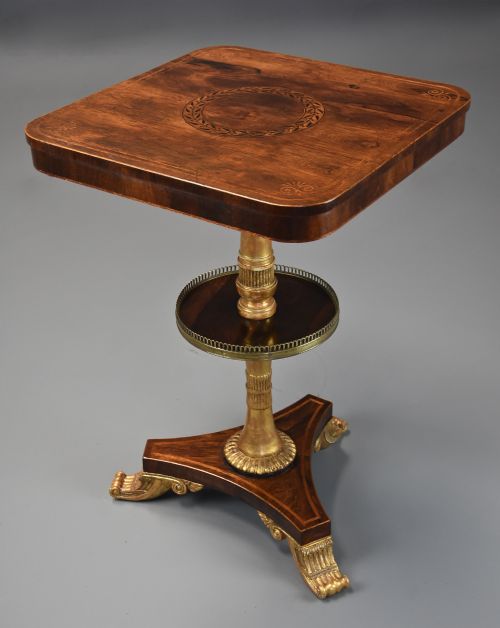
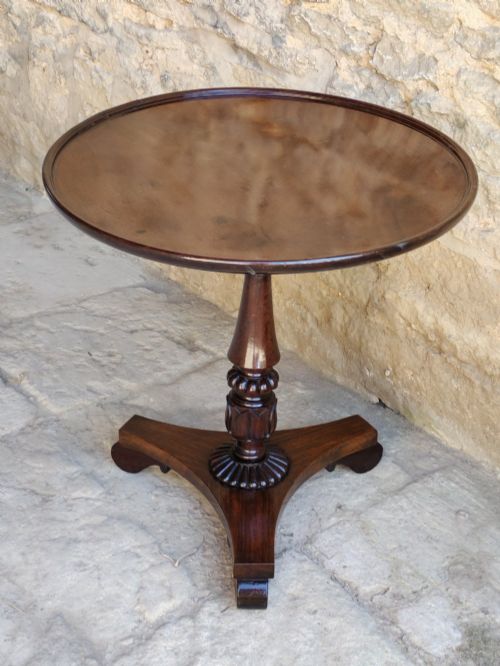
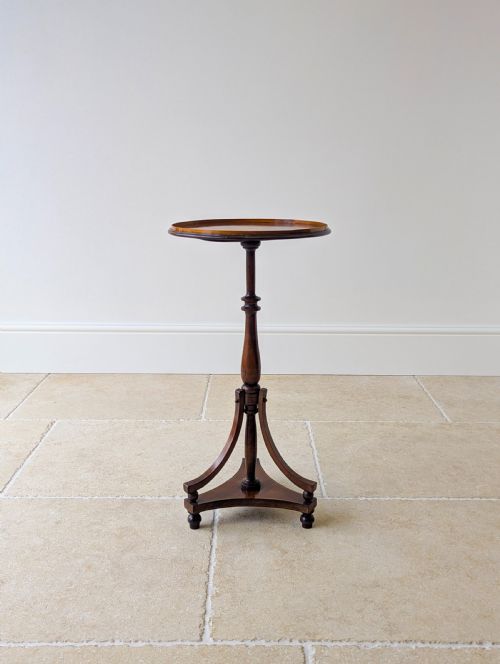
A tripod base accent table stands upon three supporting legs that converge centrally, offering stability on uneven floor surfaces without rocking. When searching for a tripod base accent table, buyers encounter formats spanning from compact wine tables and lamp stands to multi-tiered dumb waiters.
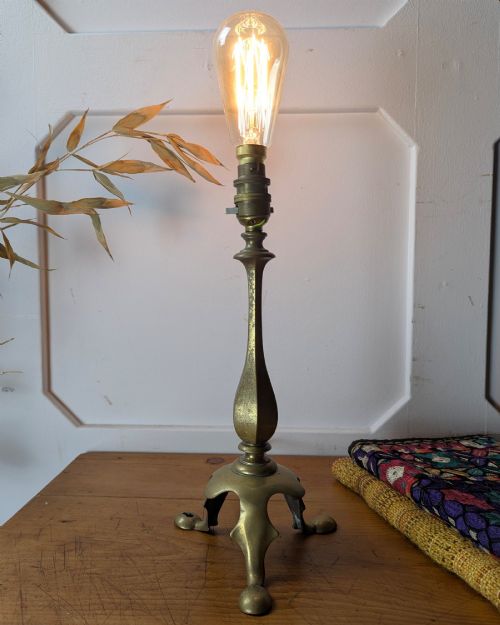
The selections span distinct periods including Georgian, Regency, William IV, Victorian, and Edwardian eras. Mahogany and rosewood examples appear most frequently, accompanied by walnut, oak, brass, and giltwood variations.
Forms serve diverse domestic roles, functioning as occasional tables, plant stands, torchiere stands, and candlestands. These pieces originate from various historical workshops, displaying regional craftsmanship from the late eighteenth century into the early twentieth century.
Materials and construction
Cabinetmakers utilised dense timbers such as mahogany, rosewood, walnut, and oak to construct the tops and central pillars. Turning lathes shaped central pedestals, whilst hand-carving produced subtle decorative elements on knees and feet.
Legs joined central columns through dovetail or tenon joints, often terminating in brass castors, pad feet, or carved hoof designs. Finer variants incorporated decorative inlays, ebonised detailing, or marble inserts fitted directly into wooden frames.
Assessing quality and craftsmanship
Superior examples demonstrate tighter timber figuring, particularly in matched rosewood veneers or burr walnut tops, paired with crisp, hand-carved detailing on the central column and leg terminals. Lesser pieces rely on simpler turned pillars with plain mahogany boards.
Structural integrity hinges upon the rigidity of the central pillar block connection to the three splayed legs. Master workshops ensured balanced weight distribution, whereas inferior assembly leads to perceptible wobbling at the pedestal junction.
George Bullock·Gillows
The Tripod Base Accent Table Glossary
- Tripod base
- A support structure comprising three legs radiating from a central vertical column. This configuration prevents rocking on uneven historical flooring.
- Wine table
- A small circular occasional table designed originally for holding glasses and bottles. These pieces feature single-board tops atop slender pedestals.
- Dumb waiter
- A tiered serving table featuring multiple revolving or stationary circular trays on a central column. They assist with dining room service.
- Torchere stand
- A tall, slender pedestal intended to elevate a single candle or light source. They frequently display intricate carving along the shaft.
- Dishtop
- A table top with a raised, concave perimeter carved directly from the solid timber board. This feature prevents small items from rolling off.
Tripod Base Accent Table: Frequently Asked Questions
What is a tripod base accent table used for?
These pieces function primarily as movable surfaces for lamps, drinks, books, or decorative objects beside armchairs and sofas. Their compact footprints suit smaller reception rooms where traditional four-legged furniture proves too bulky.
Historically, specific formats like wine tables and torchiere stands fulfilled targeted domestic tasks during evening entertaining. Today, they serve equally well as prominent accent pieces in hallways or corners.
How do I date a mahogany tripod table?
Dating relies upon observing construction methods, timber selections, and stylistic motifs corresponding to Georgian, Regency, or Victorian eras. Earlier pieces often display pegged joints and solid mahogany tops without heavy veneers.
Later Victorian and Edwardian examples introduce machine-sawn components, denser secondary timbers, and varied aesthetic revivals such as French Chateau or chinoiserie influences.
What is the difference between a lamp table and a wine table?
Lamp tables generally offer slightly wider circular or rectangular surfaces designed to support the weight and footprint of a lighting fixture. Wine tables traditionally feature smaller, dishtouched tops meant for holding drinking vessels.
In modern usage, these terms often overlap as owners repurpose compact pedestals according to spatial requirements rather than strict historical function.