


Nineteenth Century Tea Chest
Nineteenth century tea chests are timber caddies and campaign boxes built to store precious leaf, offering tactile history for any room.
Nineteenth Century Tea Chest
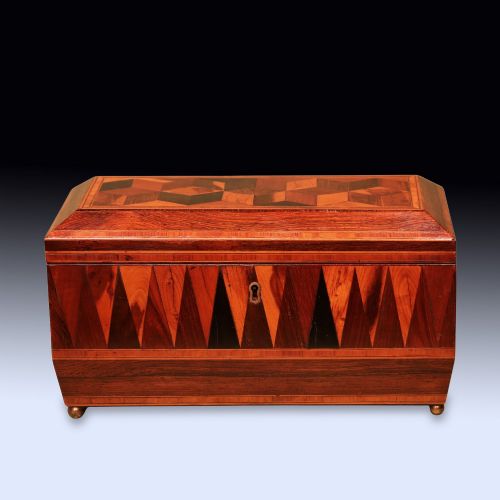
A nineteenth century tea chest encompasses timber caddies, teapoys, and campaign boxes originating across the Regency, Victorian, and William IV periods. These pieces range from sarcophagus double tea caddies to brass-bound teak campaign chests designed for travel.
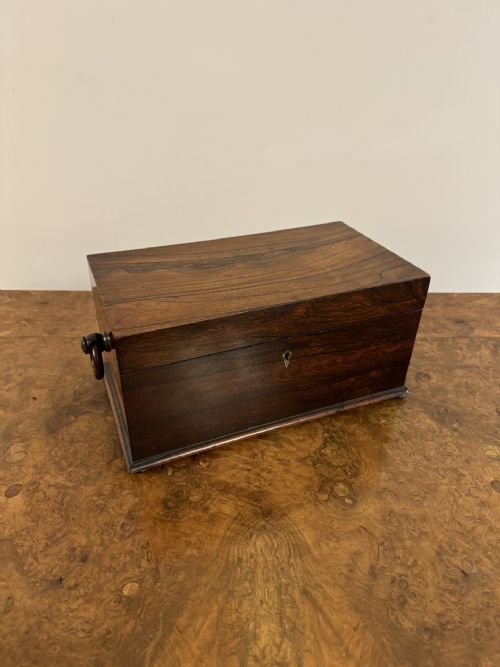
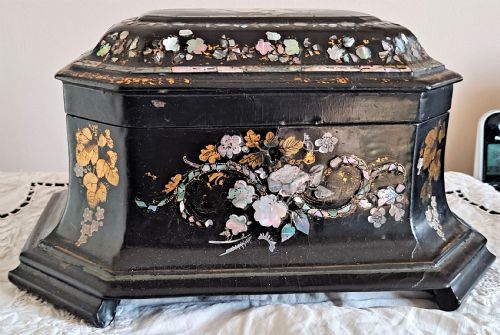
Rosewood, mahogany, and papier-mâché dominate the selections, alongside burr walnut, burr yew-wood, and teak. Buyers most frequently meet caddies shaped as sarcophagi or boxes inlaid with mother-of-pearl, brass, and amboyna veneer.
Origins stretch from English workshops to Scottish and French makers, incorporating decorative schemes such as hand-painted panels, penwork, and boullework.
Materials and Construction
Carpenters utilised dense hardwoods like mahogany, teak, and rosewood, applying veneers of amboyna, burr walnut, and burr yew to exterior surfaces. Solid timbers provided structural stability for both domestic caddies and heavy campaign chests.
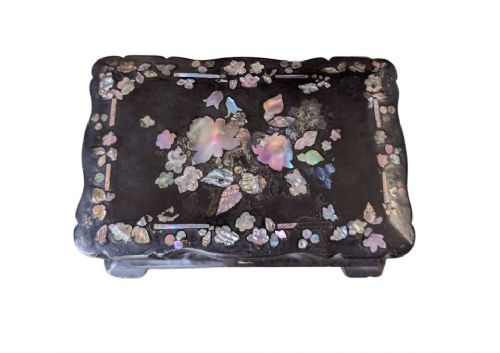
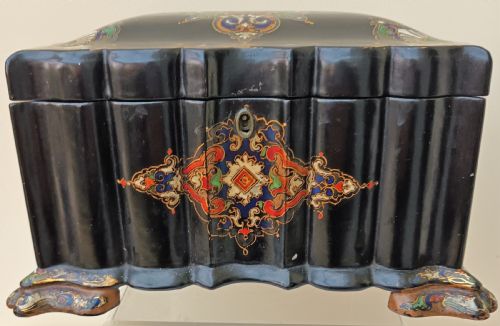
Surface decoration involved meticulous hand-painting, penwork, and the setting of mother-of-pearl inlay into dark papier-mâché. Brass bindings, escutcheons, and hinges added robust reinforcement and visual contrast to the timber frames.
Interior compartments frequently retained fitted lids and mixing bowls, constructed with fine joinery to protect stored tea from dampness and air.
Nineteenth Century Tea Chest Retail Price Guide 2026
Typical asking prices for nineteenth century tea chest among the pieces listed under this phrase on Sellingantiques today, from the lower quarter to the upper quarter. They describe what is for sale here now, not the wider market.
Listings feature woods such as rosewood, mahogany, teak, burr walnut, and burr yew, spanning the Regency and Victorian eras.
Defining Quality
The sophistication of the timber veneer work dictates distinction, with symmetrical burr walnut or figured flame mahogany sitting at the upper end of craftsmanship. Plain surfaces or heavy past repairs lower the standing of a piece.
Complexity of inlay and hardware integration separates standard boxes from finer examples, such as intricate brass stringing, penwork, and genuine mother-of-pearl motifs. Complete internal fittings and original mixing bowls further elevate a piece.
Structural integrity of the carcase and the precision of joints, particularly in sarcophagus and bombé forms, reveal the original maker's skill.
Gillows
The Nineteenth Century Tea Chest Glossary
- Sarcophagus
- A box form featuring a convex, domed lid and tapered body resembling a monumental stone coffin. This shape proved popular for Regency and Victorian double tea caddies.
- Teapoy
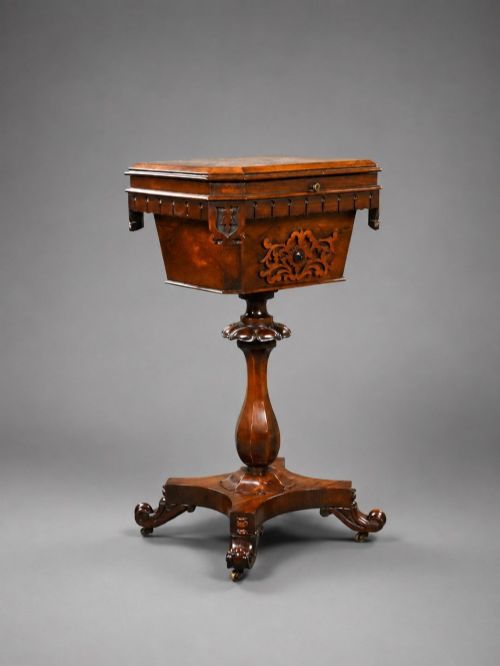
- A pedestal table or heavy stand fitted with a tea chest or caddy compartment on top. They often stood on pillar supports with carved or splayed legs.
- Boulle
- A style of marquetry utilising tortoiseshell and brass inlay, named after a French cabinetmaker. It appears on select nineteenth century pieces.
- Penwork
- A decorative technique using fine ink drawings on light wood surfaces, finished with protective varnish. This method created delicate motifs on Regency pieces.
- Campaign chest
- A sturdy timber chest constructed in sections with recessed brass handles and corner brackets, built for military transport. Teak versions with brass bindings are typical.
Nineteenth Century Tea Chest: Frequently Asked Questions
What is a teapoy?
A teapoy is a container or chest mounted on a central pillar or stand, designed to hold tea leaves.
Unlike standard table-top caddies, these pieces function as independent furniture items intended to sit beside seating.
How were these chests used?
Owners used them to store expensive tea leaves under lock and key to protect them from theft and moisture.
Inside compartments separated different tea varieties, and many included glass bowls for blending leaves.
How do I care for antique wood?
Keep wooden and papier-mâché caddies away from direct sunlight and radiators to prevent timber splitting and veneer lifting.
Apply occasional traditional wax polish to nourish the grain and maintain the surface sheen.