
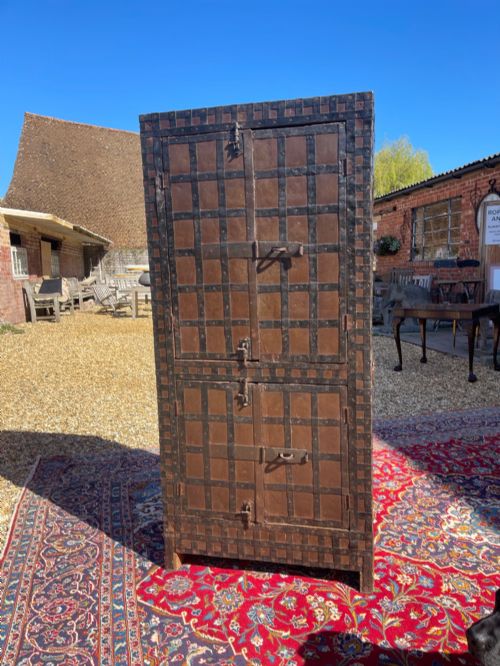


Nineteenth Century Tall Chest
A nineteenth century tall chest provides upright storage with a smaller footprint, combining practical capacity with period presence.
Nineteenth Century Tall Chest
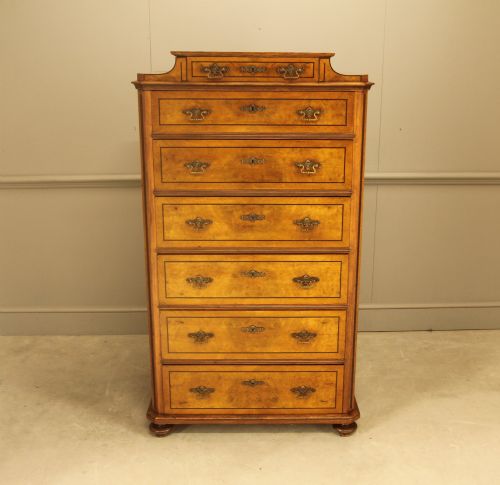
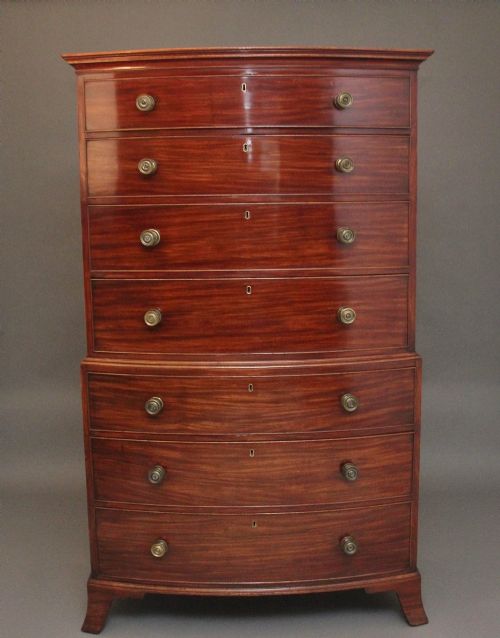
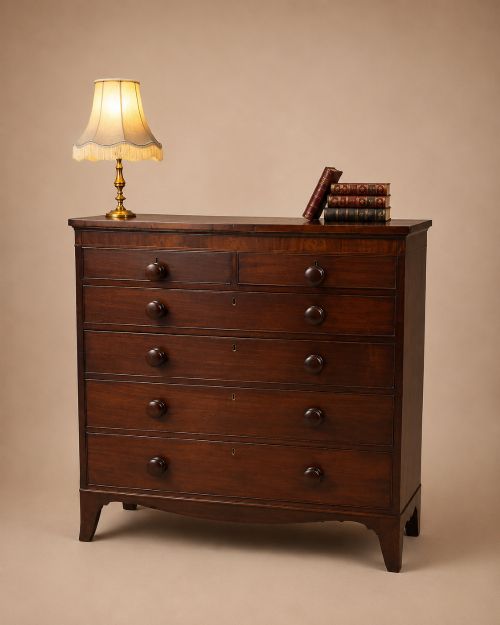
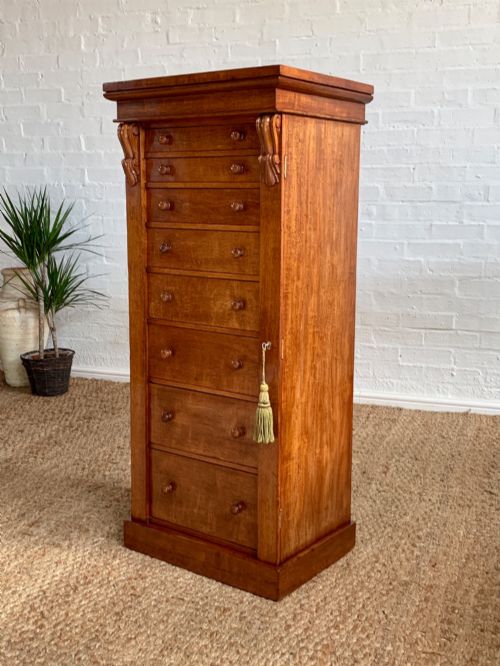
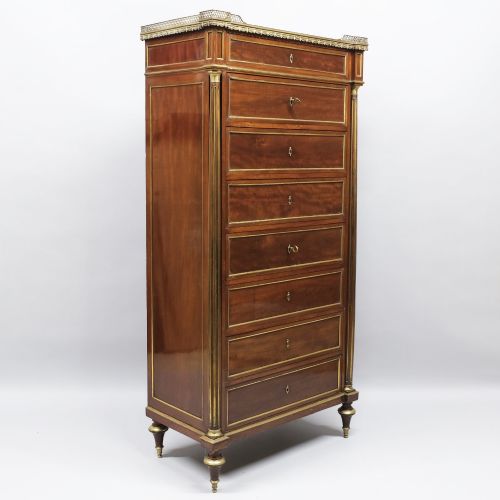
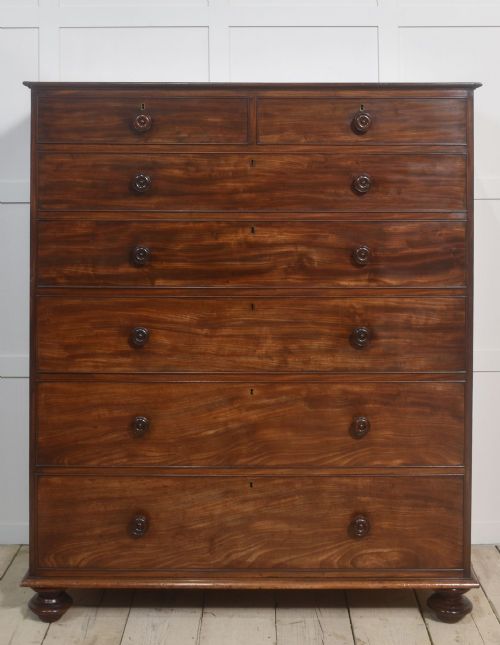
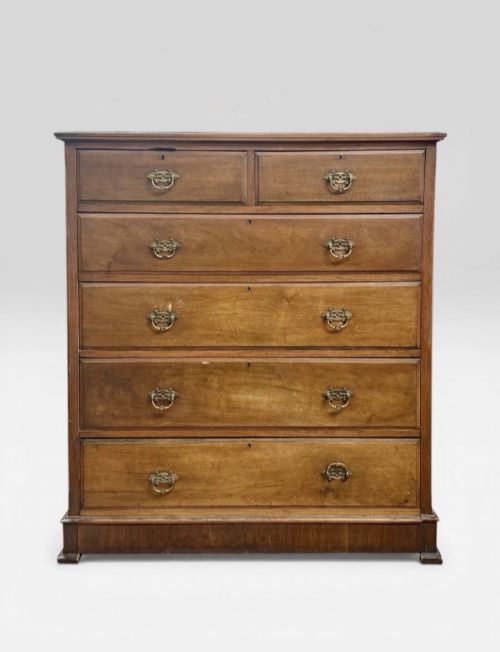
A nineteenth century tall chest comprises various upright storage forms designed to maximise vertical space in period interiors. Buyers encounter tallboys, chest on chests, semainiers, and Wellington chests spanning the Regency and Victorian eras.
The regional diversity is wide, featuring pieces made in Scotland, France, Holland, and colonial India alongside standard English workshops. Timber choices range from flame mahogany and burr walnut to satin birch, fruitwood, and pine.
Many examples incorporate specific drawer configurations, such as five-height arrangements, narrow proportions, or specialised collector and gentleman's formats. French Empire and Dutch Neoclassical influences appear alongside robust country house designs.
Materials and Construction
Cabinetmakers utilised solid timbers and veneers over secondary woods, applying mahogany, walnut, and rosewood to primary visible surfaces. Drawer construction relies on hand-cut dovetails, while structural framing employs pine and oak.
Surface ornamentation incorporates brass handles, keyplates, metal banding, and delicate string inlay. French and English makers frequently selected figured wood grains like flame mahogany and burr walnut to create patterned drawer fronts.
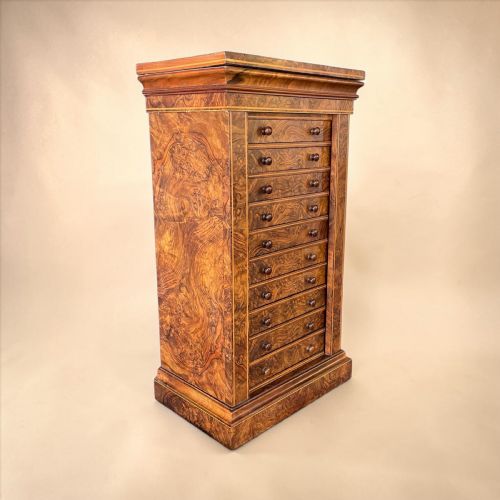
Specialised locking mechanisms, particularly the hinged locking stile characteristic of Wellington chests, required precise carpentry. Painted finishes, scumble paint, and leather accents also appear on specific continental and country house pieces.
Listings feature nineteen-century tall chests in mahogany, walnut, burr walnut, satin birch, rosewood, and pine.
Judging Quality
The refinement of the timber selection dictates the initial visual impact, with matched flame mahogany or burr walnut marking superior output. Workshops known for high-grade cabinetry, such as Holland & Sons, demonstrate greater attention to internal construction.
Proportion and execution of decorative details, including brass hardware, inlay work, and turned knobs, separate standard domestic output from high-style pieces. Original fittings and uncompromised surface patination preserve the integrity of the design.
Holland & Sons
The Nineteenth Century Tall Chest Glossary
- Semainier
- A tall French chest traditionally containing seven drawers, one for each day of the week. These pieces often feature book-matched walnut or mahogany veneers.
- Tallboy
- A tall chest of drawers made in two sections, frequently a chest on chest configuration. The upper section usually sits upon a larger base chest.
- Cartonnier
- A piece of furniture fitted with multiple compartments or drawers designed for holding papers and documents. Leather-bound examples appear in nineteenth-century French contexts.
- Scumble paint
- A decorative surface finish applied to create simulated wood grain or mottled patterns. It is frequently found on country house furniture.
Nineteenth Century Tall Chest: Frequently Asked Questions
What is a Wellington chest?
A Wellington chest is a tall, narrow set of drawers secured by a hinged locking stile on one side. This wooden flap fastens with a key to lock all drawers simultaneously.
Cabinetmakers designed these pieces during the nineteenth century to store small garments and personal items securely in bedrooms and dressing rooms.
How do you tell a semainier apart?
A semainier is a French tall chest traditionally built with seven drawers, corresponding to the days of the week. They often display symmetrical burr walnut or mahogany veneers.
Unlike standard English tallboys, they are built as a single tall carcass rather than two separate stacked sections.
Where should a tall chest go?
These pieces suit bedrooms, dressing rooms, and hallways where floor space is limited. Their vertical proportions provide substantial storage without dominating the room footprint.
Ensure the tall proportions are secured properly to the wall if positioned in high-traffic household areas.
What timber was used most?
Mahogany remains the dominant timber across nineteenth-century examples, appearing in plain, flame, and figured varieties. Walnut and burr walnut are also common on higher-style pieces.
Secondary timbers like pine and oak appear internally within drawer linings and carcase backs.