
Nineteenth Century Storage Drawers
Nineteenth century storage drawers are practical wooden chests and cabinets built to hold household belongings with solid proportion.
Nineteenth Century Storage Drawers
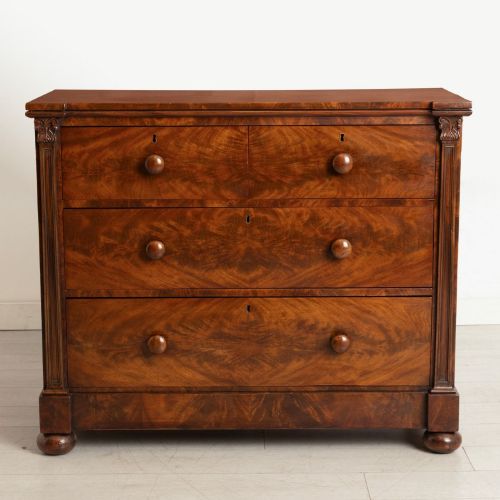
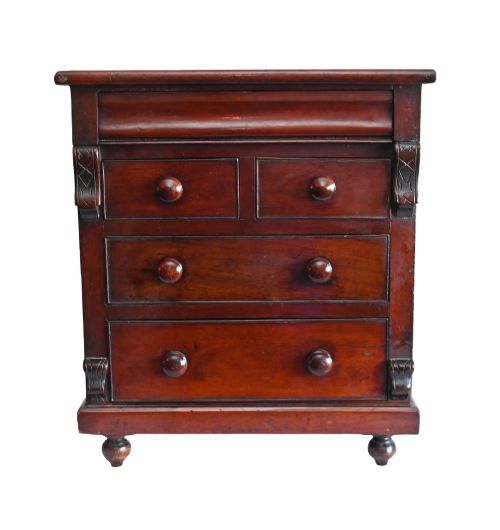
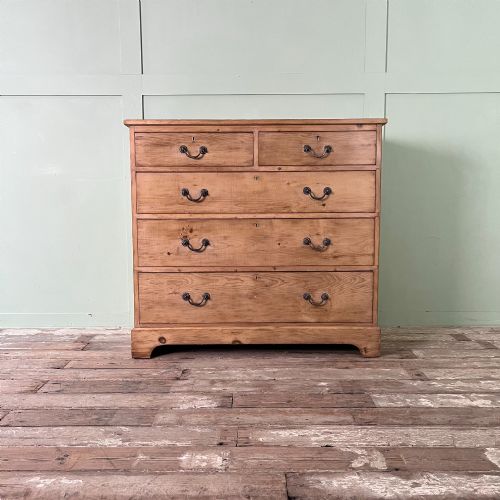
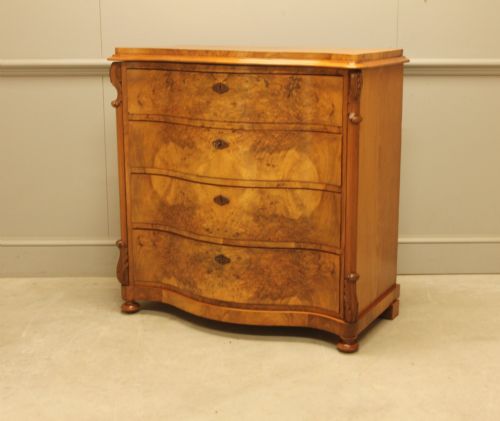
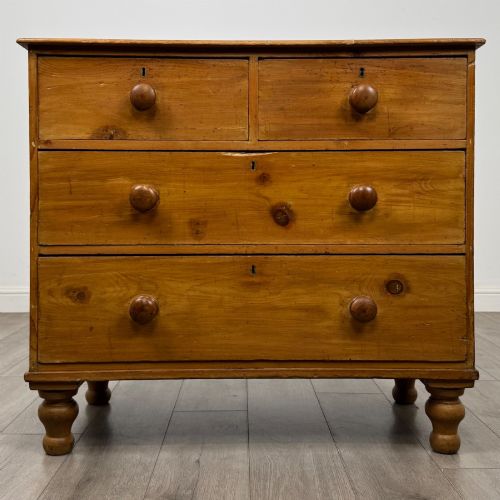
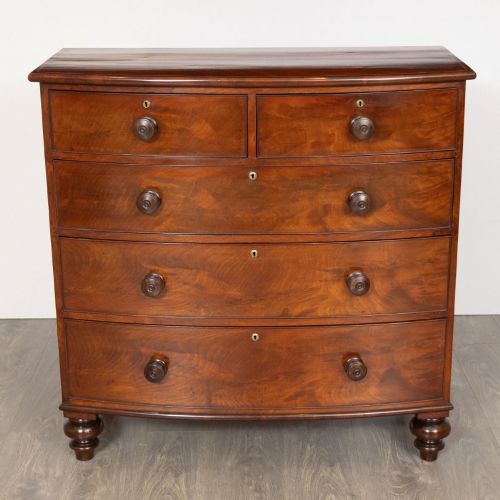
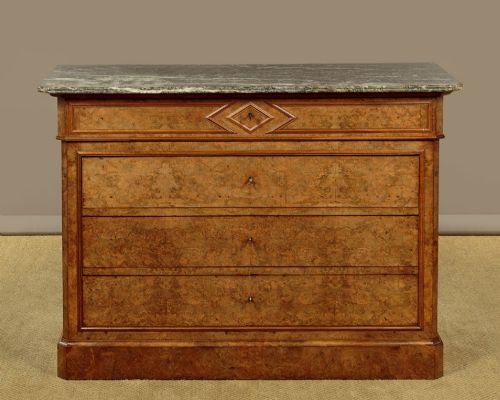
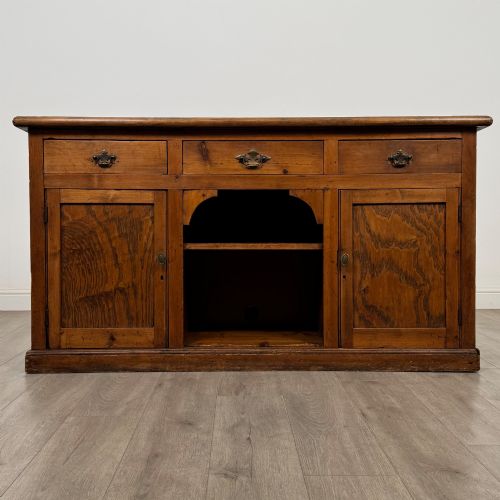
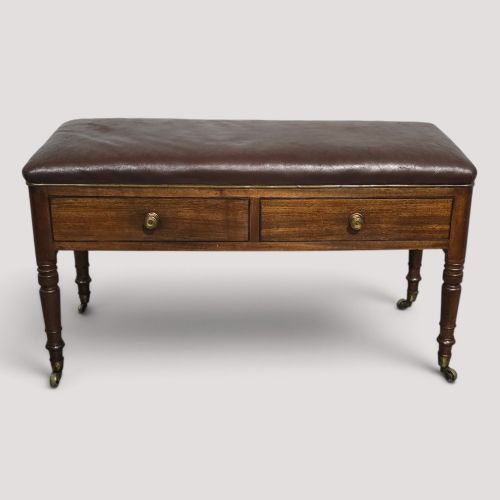
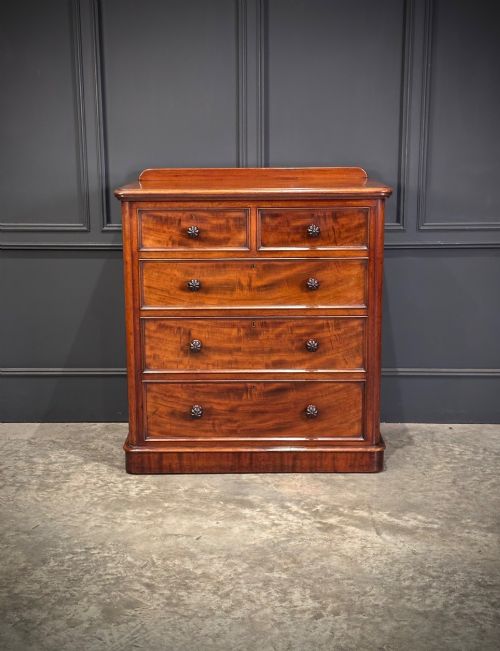
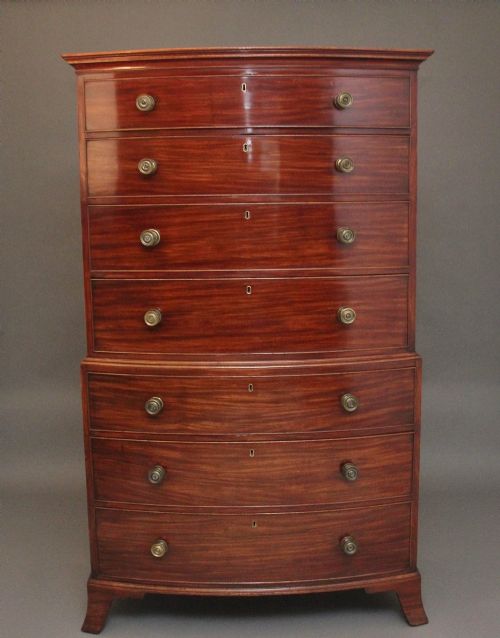
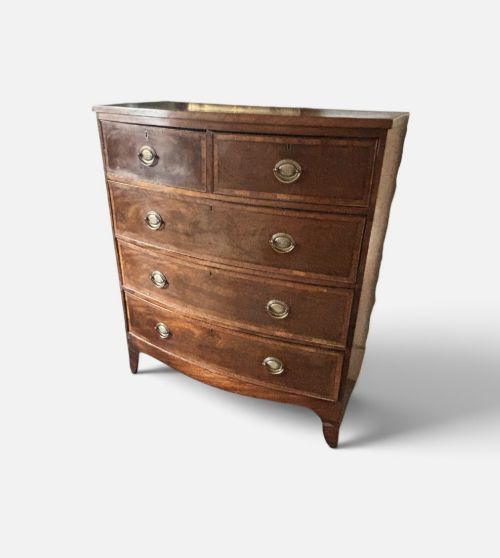
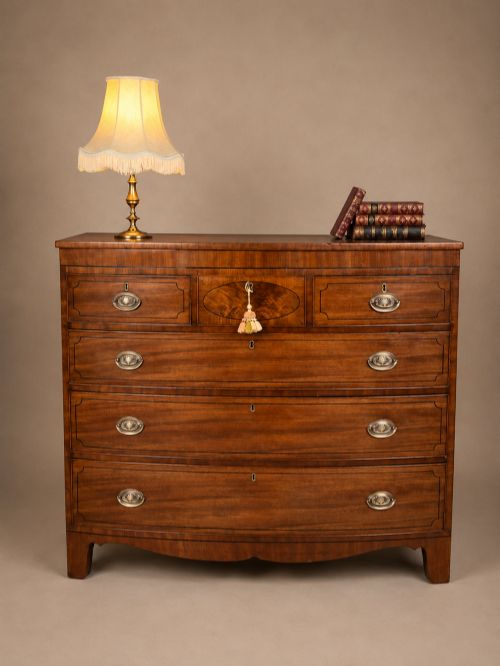
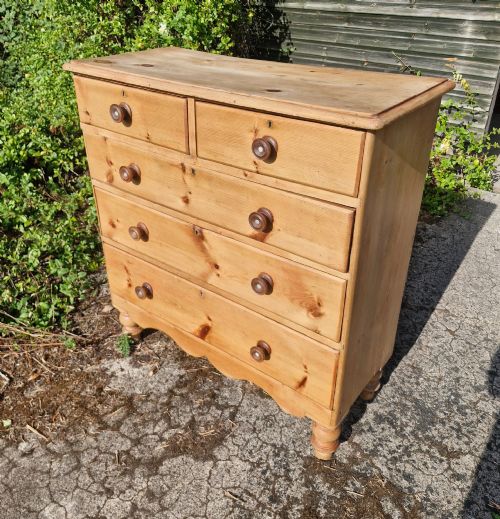
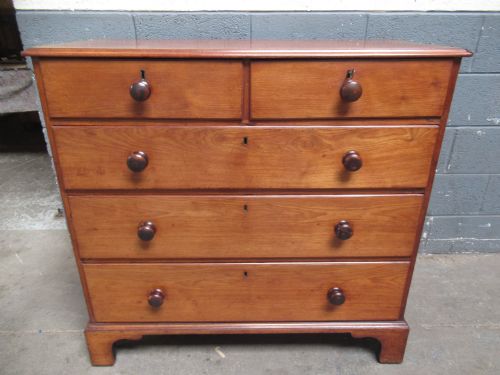
Nineteenth century storage drawers encompass a variety of utilitarian and formal furniture forms designed for domestic use. The pieces on this page are predominantly chests of drawers, alongside tallboys, Wellington chests, and dressers.
The dominant aesthetic draws upon Victorian and Regency periods, utilising mahogany, pine, and satinwood across straight front, bow front, and serpentine shapes.
Makers and workshops of the era produced these items in standard configurations ranging from small miniature chests to large storage units.
Materials and Construction
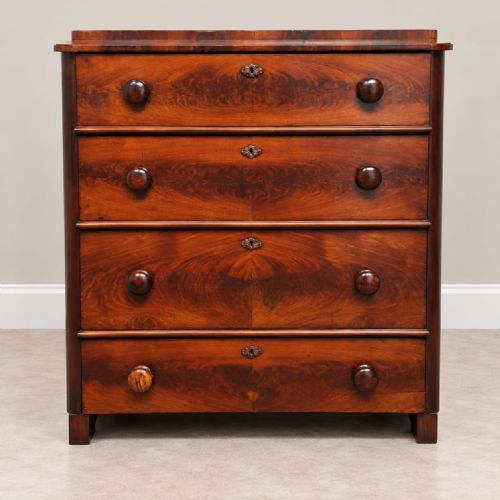
Makers utilised solid timbers alongside veneers, relying on mahogany and pine as foundational woods. Flame mahogany veneer and satinwood crossbanding provided decorative surface patterns on formal pieces.
Drawer linings frequently incorporate secondary woods such as oak, while brass fittings and bone escutcheons serve as functional hardware details.
Apprentice chests allowed young woodworkers to demonstrate their mastery of dovetailing before entering the guild.
Judging Quality
The standard of timber selection divides basic utility items from finer formal commissions. Rich grain matching in flame mahogany and crisp execution of crossbanding distinguish superior examples.
Structural integrity depends on the precision of drawer construction and the retention of original hardware, such as brass pulls and locks.
Edwards and Roberts
The Nineteenth Century Storage Drawers Glossary
- Bow front
- A convex curved cabinet or chest front that swells outward at the centre. This curved facade became popular during the Regency period.
- Tallboy
- A tall piece of furniture formed by stacking one chest of drawers upon another. It maximises vertical storage space within a compact floor footprint.
- Crossbanding
- A narrow strip of veneer laid perpendicular to the grain of the surrounding surface. It creates a contrasting border frame on drawer fronts and tabletops.
- Wellington chest
- A tall, narrow chest of drawers secured by a hinged vertical locking strip on one side. This locking mechanism protected the contents from unauthorized access.
- Escutcheon
- A protective plate surrounding a keyhole. These elements are commonly formed from brass or bone.
Nineteenth Century Storage Drawers: Frequently Asked Questions
What rooms suit nineteenth century storage drawers?
These chests function effectively in bedrooms and living spaces for organising clothing and household items.
Their solid wooden construction allows them to integrate easily alongside modern interior layouts.
How do I identify a Regency chest?
Regency pieces often display classical proportions, mahogany surfaces, and bow front profiles characteristic of the early nineteenth century.
Secondary woods like oak linings help confirm the period of manufacture.
What is the difference between pine and mahogany chests?
Pine chests typically served utilitarian functions in country or domestic service settings and often retain painted finishes.
Mahogany versions were intended for formal reception rooms and feature finer grain patterns and decorative veneers.
How should I care for waxed pine drawers?
Regular applications of beeswax maintain the moisture balance of the timber and preserve the historic finish.
Avoid placing these items near direct heat sources to prevent the wood from splitting.