




Deep Drawer Chest Mahogany
These deep drawer chest mahogany pieces offer substantial storage through generous proportions, built primarily during the Victorian and Regency periods.
Deep Drawer Chest Mahogany
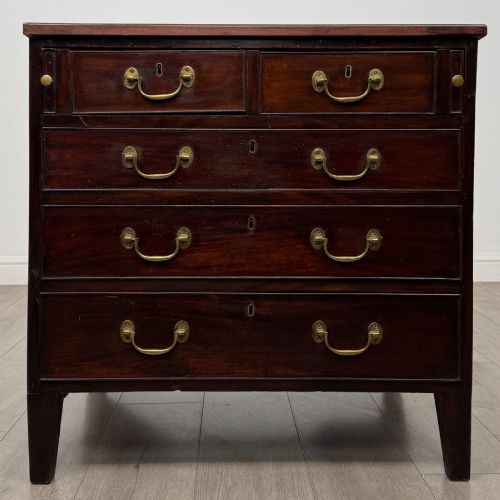
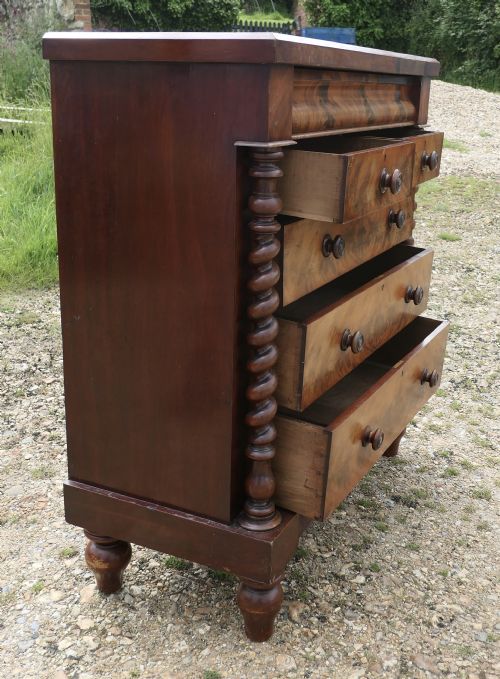
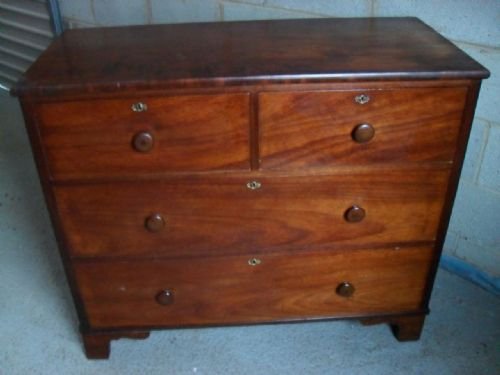
A deep drawer chest mahogany serves as a substantial storage solution originating predominantly from the Victorian and Regency periods, often taking the form of Scotch chests or bow fronts. Buyers encounter pieces configured with two short drawers above two deep drawers, or large single deep bottom drawers designed for voluminous garments.
Forms span from 19th century tall proportions to narrower paired configurations, frequently incorporating secondary timbers like pine alongside the primary hardwood. These items satisfy the demand for imposing bedroom furniture possessing deep capacity and traditional nineteenth century craftsmanship.
How They Were Made
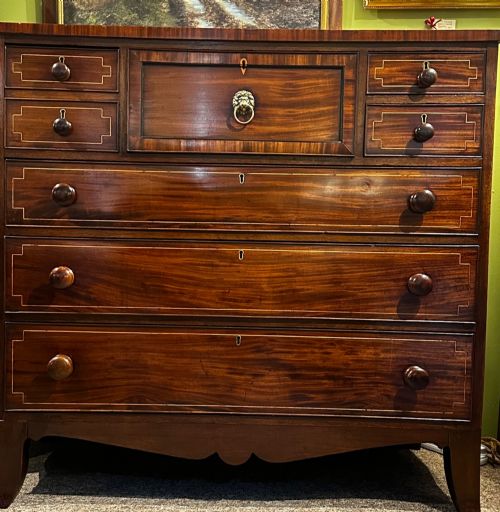
Cabinet makers utilised solid mahogany and flame mahogany veneer applied over secondary woods such as pine, integrating boxwood stringing for linear contrast. Structural framework often incorporated oak linings within the interior compartments to withstand heavy daily use.
Surface detailing relied on timber selection rather than applied ornament, showcasing natural grain patterns alongside turned wooden knob handles, bun feet, and brass fittings.
Some nineteenth century chests include hidden top drawers designed to keep valuables safely out of sight from visiting guests.
What Varies in Quality
Quality rests upon the visual impact and selection of the timber, where highly figured flame mahogany veneer displays superior depth compared to plain sawn boards. The crispness of the joinery and the integrity of the secondary woods inside the drawers dictate the standard of execution.
Proportion and scale also separate standard items from grander examples, particularly in pieces featuring bow fronts, robust plinth bases, or balanced drawer arrangements from the Regency era.
The Deep Drawer Chest Mahogany Glossary
- Flame Mahogany Veneer
- A decorative sheet of wood sliced from specific sections of the mahogany tree to produce a distinct flame-like pattern. This figure provides the primary visual appeal on high grade nineteenth century drawer fronts.
- Scotch Chest
- A traditional tall chest of drawers originating from Scotland, typically featuring a central concealed bonnet drawer above deep lower storage. These pieces dominate the larger Victorian formats.
- Bow Front
- A convex curved cabinet front popular during the Regency and Victorian periods. This curved construction requires advanced woodworking skill to shape the solid timber and matching drawers.
- Plinth Base
- A heavy flat-faced wooden platform upon which the entire chest rests, replacing traditional feet. It grounds the substantial proportions of large nineteenth century storage pieces.
- Boxwood Stringing
- Narrow inlaid lines of pale boxwood set flush into darker mahogany surfaces. This technique adds subtle linear definition to drawer edges and top panels.
Deep Drawer Chest Mahogany: Frequently Asked Questions
What is a Scotch chest?
A Scotch chest is a traditional tall furniture form from the nineteenth century featuring generous proportions and often a deep concealed top drawer. These pieces provide exceptional storage capacity for larger household linens and garments.
They frequently display bold mahogany veneers and robust turned wooden handles, making them a focal point in period bedroom settings.
How do I spot flame mahogany?
Flame mahogany is identified by its characteristic swirling, feather-like grain pattern that ripples across the surface of the wood. Cabinet makers selected these decorative veneers for the most prominent areas of the chest.
This dramatic figuring catches the light differently depending on the angle, distinguishing higher quality nineteenth century items from plain timber builds.
Where were these chests used?
These large storage pieces were historically placed in bedrooms and dressing rooms to hold bulky Victorian attire, heavy blankets, and folded linens. The inclusion of deep bottom drawers accommodated items that required extra vertical space.
Today, they function effectively in modern bedrooms or hallways where substantial clothes storage is required.
How do I care for mahogany?
Mahogany furniture requires maintenance through gentle cleaning with a soft, dry cloth to preserve the natural polish and finish of the wood. Avoid placing these pieces in direct sunlight or near heat sources to prevent the veneer from drying out.
Applying a traditional wax periodically helps maintain the rich lustre of the nineteenth century timber surfaces.