




Nineteenth Century Rosewood Desk
Nineteenth century rosewood desks bring rich timber grain and classic proportions to a study, with Regency and Victorian examples leading the selection.
Nineteenth Century Rosewood Desk
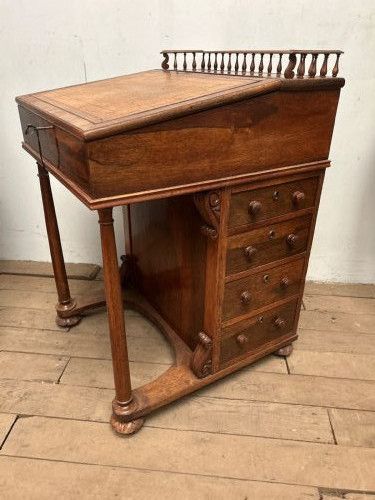
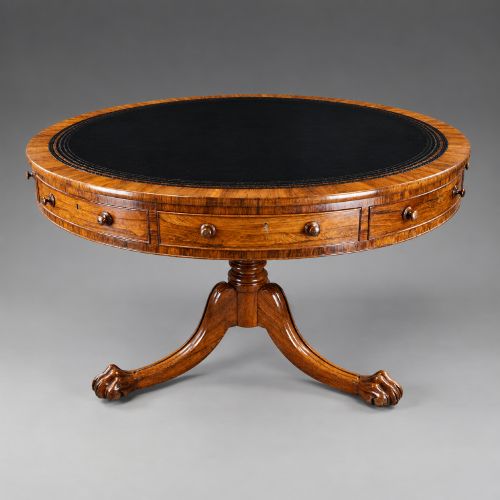
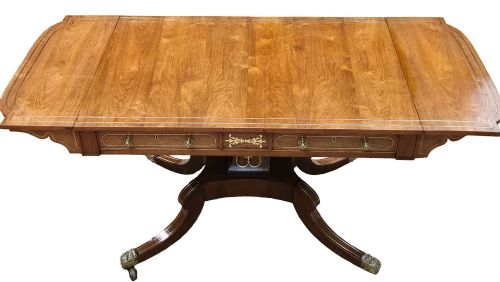
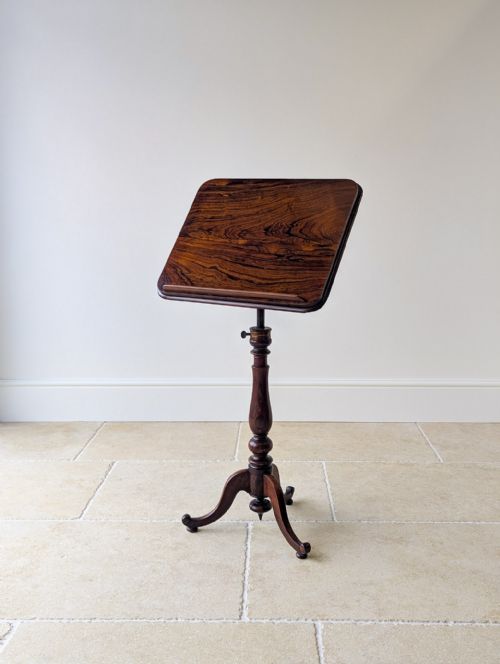
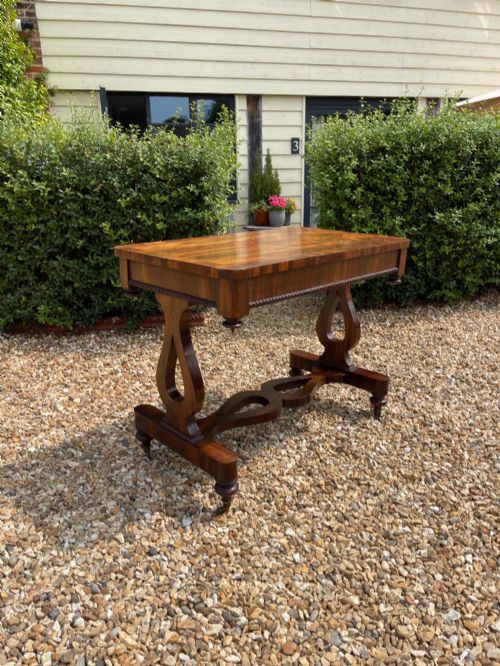
A nineteenth century rosewood desk encompasses various forms designed for correspondence and study, spanning compact writing slopes and substantial library tables. Buyers seeking a nineteenth century rosewood desk most frequently encounter Davenport desks, sofa tables utilised for writing, and freestanding library tables from the Regency and Victorian periods.
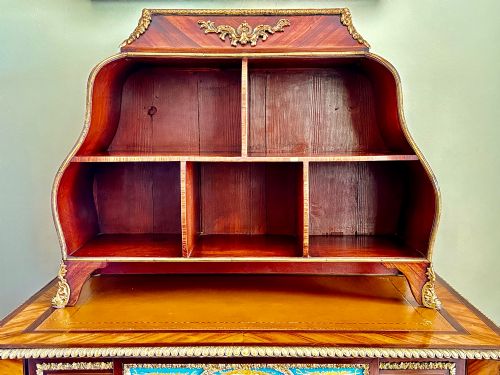
The selection includes specialised writing furniture such as bonheurs de jour, bureau plats, and campaign secretaire chests alongside standard writing desks. These pieces originate from English and French workshops, reflecting the shifting tastes of the nineteenth century from restrained Regency lines to elaborate revival styles.
Assessing quality in rosewood writing furniture
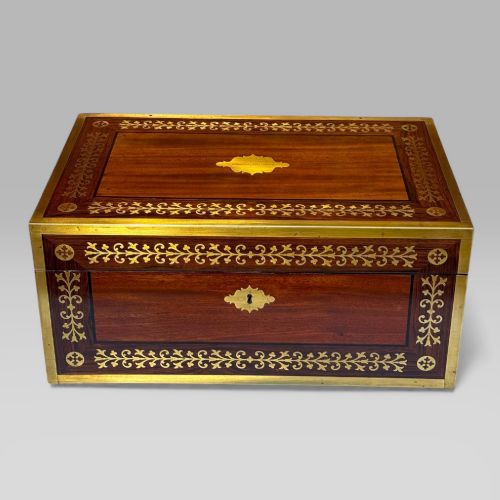
Quality rests on the selection and matching of rosewood veneers, where continuous grain patterns across drawer fronts indicate superior craftsmanship. The crispness of brass inlay, cast ormolu mounts, and hand-carved details distinguishes workshop output.
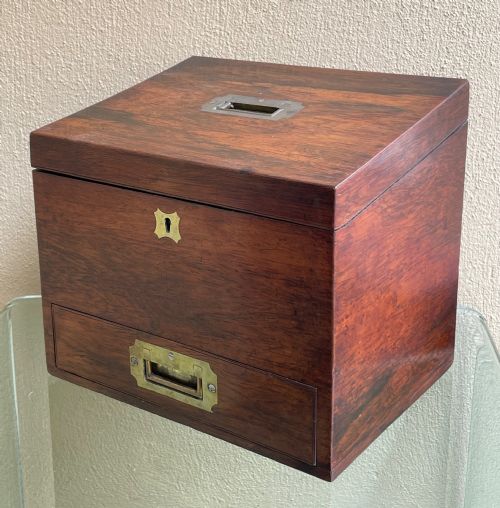
Interior fittings reveal the standard of construction, showing secondary timbers of high grade and thoughtful division within writing slopes and correspondence boxes. Original leather inserts, working locks, and signed components elevate a piece.
Listings feature nineteenth century rosewood desks incorporating brass, leather, ormolu, and boxwood across Regency, Victorian, and William IV styles.
John McClean·Gillows·Henry Marc·S Simpson Southampton
The Nineteenth Century Rosewood Desk Glossary
- Rosewood
- A dense, heavily figured tropical timber prized for its dark purple-brown colour and contrasting black grain lines. It was extensively utilised in high-end cabinet making throughout the nineteenth century.
- Davenport
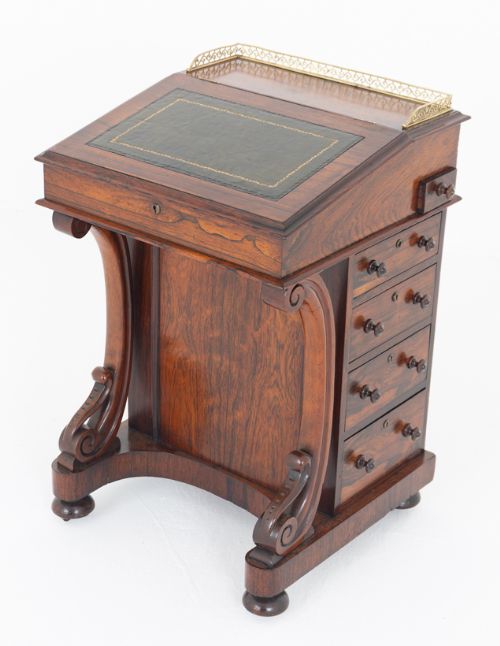
- A compact desk featuring a sloping writing surface above a pedestal of drawers, often with a stationary compartment on top. This form became popular during the Regency and Victorian eras.
- Ormolu
- Gilt bronze mounts cast and chased to adorn furniture, particularly pieces influenced by French styles. It provides metallic contrast against dark rosewood surfaces.
- Writing slope
- A portable or stationary box with an angled lid that opens to reveal a velvet or leather-lined writing surface and compartments for ink and pens.
- Library table
- A large freestanding table designed to sit in the centre of a room, typically featuring drawers beneath the top and finished on all sides.
Nineteenth Century Rosewood Desk: Frequently Asked Questions
What is a nineteenth century rosewood desk?
A nineteenth century rosewood desk is a writing table or cabinet fashioned from dense tropical hardwood during the 1800s. These pieces include Davenport desks, library tables, and slope boxes.
Craftsmen built them for writing letters, storing documents, and managing household accounts. They display the distinctive dark grain and warm polish characteristic of the period.
How do I date a rosewood desk?
Dating relies on stylistic clues, construction methods, and materials recorded in the piece. Regency examples often feature brass inlay and saber legs, while Victorian pieces show heavier carving.
Examining the secondary timbers inside drawers and the type of brass hardware helps narrow the decade of manufacture. Maker stamps or labels provide definitive chronological evidence.
Where should I place a library table?
A library table is designed as a freestanding piece meant to occupy the centre of a room rather than sit against a wall. This allows access to drawers from multiple sides.
Ensure the rosewood surface stays away from direct sunlight and heat sources to prevent the timber and leather from drying out. Adequate clearance lets chairs slide comfortably underneath.
How do I care for antique rosewood?
Maintain rosewood surfaces by dusting with a soft, dry cloth and avoiding silicone-based polishes. Occasional application of quality wax preserves the finish and nourishes the grain.
Keep the room at a stable humidity level to protect the timber and any delicate veneer work from cracking. Protect leather writing inserts from moisture and ink spills.