


Nineteenth Century Ormolu Candlesticks
These nineteenth century ormolu candlesticks bring gilt bronze and patinated metal together to illuminate interiors with classical French and Regency presence.
Nineteenth Century Ormolu Candlesticks
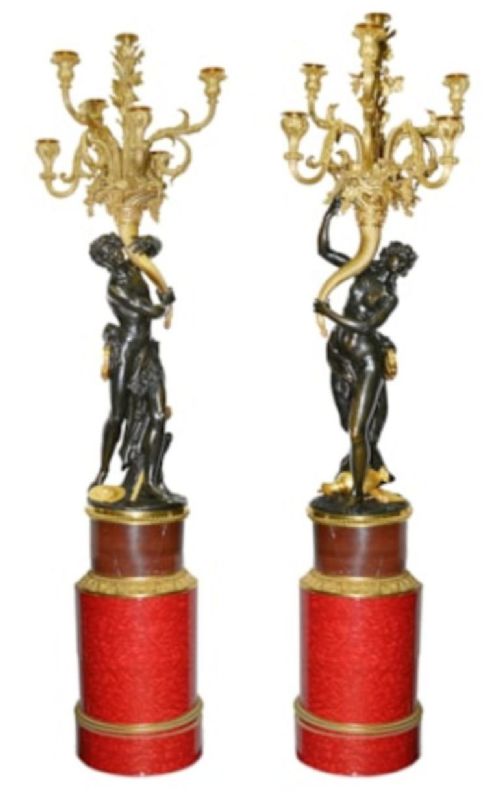
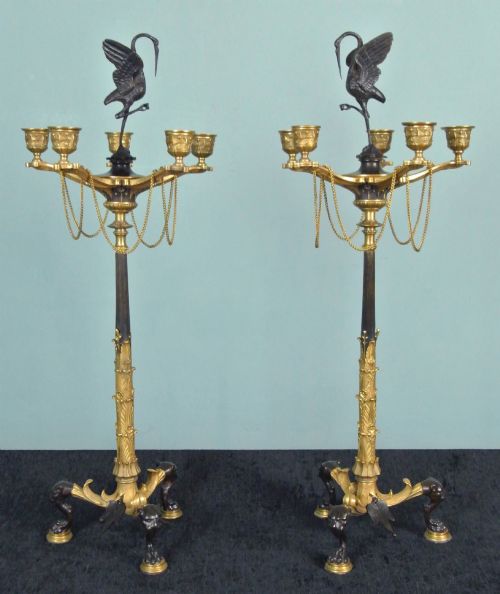
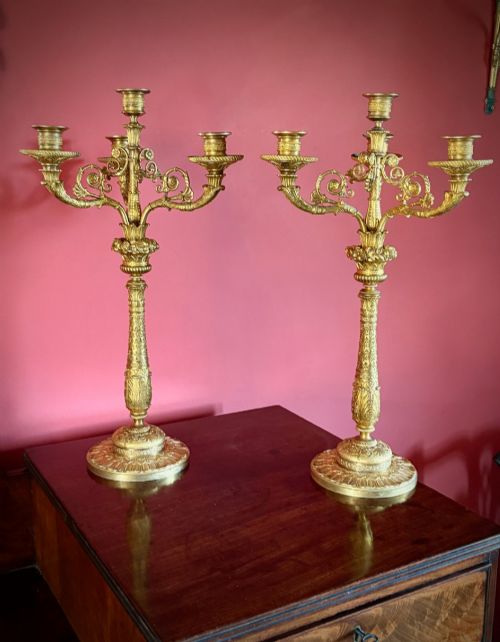
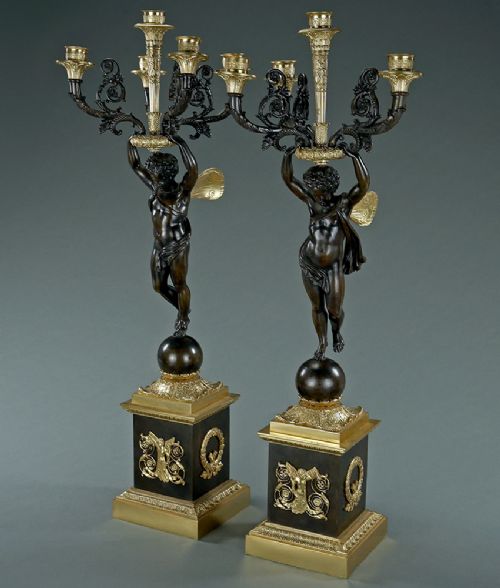
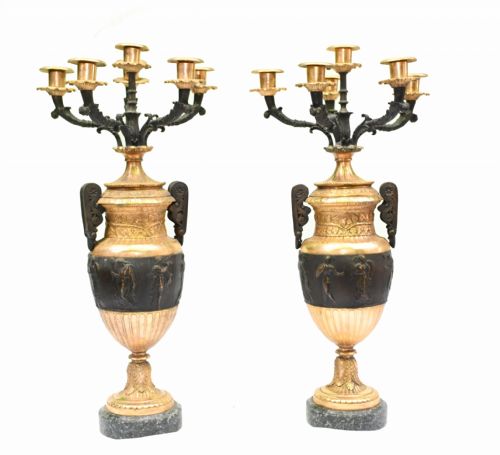
Nineteenth century ormolu candlesticks comprise pairs and sets cast in bronze, patinated metal, and gilt bronze, often taking the form of multi-branch candelabra. You meet pieces designed in French Empire, Regency, Louis XVI, and Renaissance Revival styles, frequently incorporating figures such as cherubs.
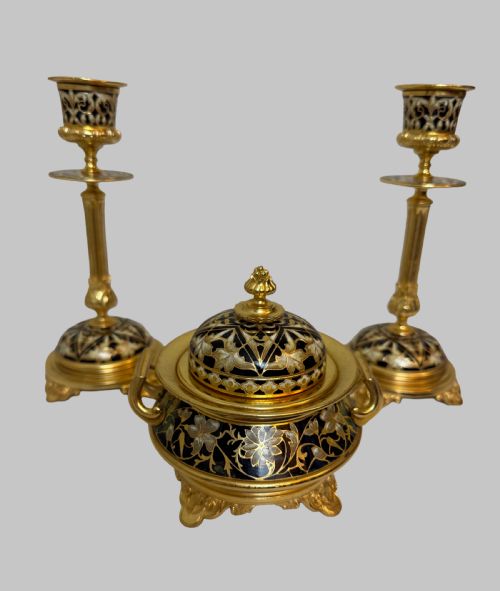
The objects served primarily to light rooms by holding candles, though several examples double as table lamps, desk accessories, or inkwells. Surviving pieces span the breadth of the eighteen-hundreds, from early Regency and Charles X work through to later French production of the eighteen-eighties.
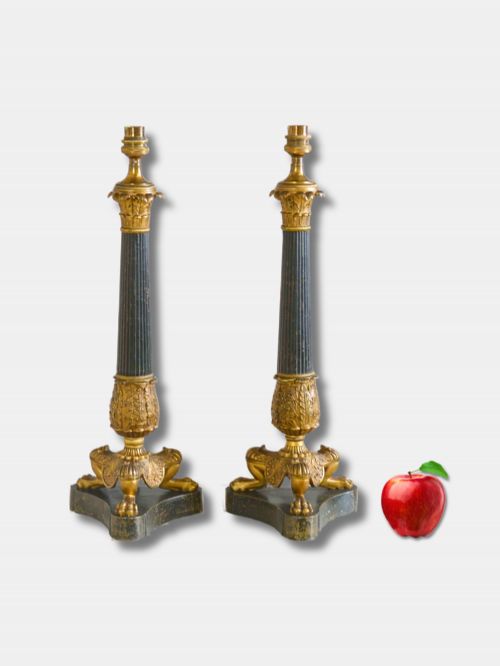
Makers and designers referenced in the period include Thomas Hope and Barbedienne, alongside diverse unnamed foundries across France and England. Collectors encounter varied configurations, including adjustable arms, column lamps with lions paw feet, and combinations featuring slate or champleve enamel.
Materials and Casting Techniques
Foundries manufactured these pieces by casting bronze and brass, applying mercury gilding or modern electroplating to create the bright ormolu surface alongside dark patinated bronze elements. Artisans combined these metallic components with contrasting bases of marble, slate, and cut glass.
Decoration relied upon precise chasing of the cast metal, integrating champleve enamel, cloisonne, and figural details like cherubs into the design. Multi-branch candelabra utilised screw-threaded junctions to secure arms, stems, and drip pans.
The selection includes adjustable arm candelabra, column lamps, and sets combining candlesticks with inkwells.
Assessing Quality and Execution
Quality rests upon the crispness of the bronze chasing and the depth of the mercury gilding, where sharper cast details separate superior work from softer secondary casting. The weight of the metal and the stability of multi-branch construction indicate the standard of original manufacture.
The integration of secondary materials such as fossil marble, slate, or champleve enamel defines the ambition of the piece, with finer examples utilising dense stones and hand-applied enamels. Surviving original patination and minimal wear to the gilt surfaces mark the best-preserved specimens.
Barbedienne·Thomas Hope
The Nineteenth Century Ormolu Candlesticks Glossary
- Ormolu
- Gilt bronze produced by applying a mercury and gold amalgam to cast bronze before heating. This historic technique creates a durable, warm golden finish characteristic of French decorative metalwork.
- Patinated bronze
- Bronze treated with chemicals or heat to alter its surface colour to a dark brown or greenish tone. It provides contrast against the bright gilt areas on nineteenth-century lighting.
- Candelabra
- A branched candlestick holding multiple candles on separate arms. These pieces often feature a central light flanked by symmetrical branches.
- Champleve
- An enamelling technique where troughs are dug into the metal surface and filled with vitreous enamel powder before firing. The resulting coloured patterns decorate the body of the candlestick.
- Restauration
- A French design period spanning the early decades of the nineteenth century between the fall of the Empire and the July Monarchy. The style simplifies classical forms while retaining rich bronze mounts.
Nineteenth Century Ormolu Candlesticks: Frequently Asked Questions
How do I clean nineteenth century ormolu?
Dust the metal gently with a soft dry brush to remove surface particles without abrasive friction.
Avoid chemical polishes or water, which can strip the historic gilt finish and damage underlying bronze.
Were these wired for electricity?
Original nineteenth-century pieces were designed exclusively for wax or tallow candles held in drip pans.
Many examples were later converted into table lamps by running a cord through the central column.
How do I identify French Empire style?
French Empire pieces rely on strict classical symmetry drawn from ancient Roman and Greek military motifs.
Common markers include lions paw feet, winged figures, and stark contrasts between dark patinated bronze and bright ormolu.