


Nineteenth Century Natural History
Nineteenth century natural history brings together glass, taxidermy, and watercolours to capture the study of the natural world in domestic interiors.
Nineteenth Century Natural History
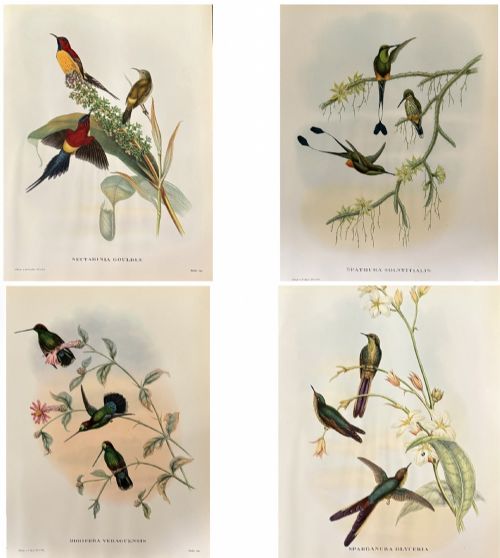
Nineteenth century natural history encompasses framed paintings, prints, taxidermy domes, and collectors cabinets. Buyers encountering this group find works originating from the Victorian period alongside pieces from the eighteenth and twentieth centuries.
The objects span varied forms, including taxidermy display cases, bird engravings, and watercolour paintings. A significant proportion of the items on this page reflect Victorian natural history and French neoclassical botanical styles.
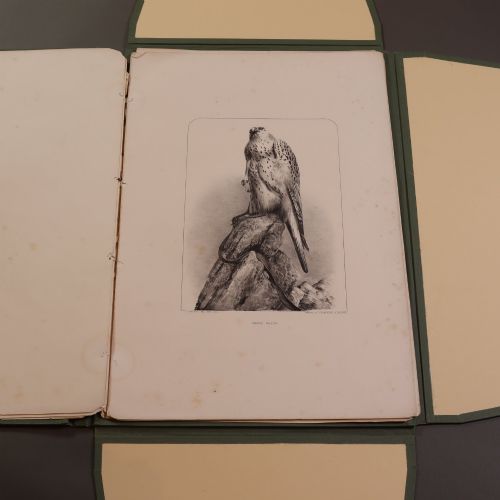
Works on paper and bound books sit alongside three-dimensional taxidermy displays. These pieces collectively represent the period's intense engagement with scientific illustration and specimen preservation.
How they were made
Makers utilised glass and wood to construct protective domes and multi-drawer cabinets for delicate specimens. Paper, watercolour, and ink served as the primary media for botanical and ornithological illustrations produced during the period.
Taxidermy specimens were mounted and enclosed within glass cases using cloth and framing materials to maintain structural integrity. Engravings and prints were produced using traditional press methods on paper substrates, often accented with hand-colouring.
Materials across these listings include glass, paper, wood, watercolour, feathers, gold leaf, ink, and cloth.
What varies in quality
The fidelity of the illustration and the precision of the taxidermy mount determine the standing of each piece. Works associated with documented naturalists or specific studios exhibit a higher degree of execution than anonymous examples.
The preservation of the materials, from the clarity of the glass domes to the stability of the paper and pigments, influences the integrity of the object. Cabinet construction relies on the quality of the timber and the exact fit of the numerous drawers.
John Hancock·Henry Ward London·Rowland Ward of London·William Swainson·Thomas Berwick·Pierre-Joseph Redouté
The Nineteenth Century Natural History Glossary
- Dome
- A glass cover designed to protect delicate taxidermy displays from dust and moisture. These enclosures are often mounted on wooden bases.
- Engraving
- An image printed from an engraved plate, frequently used for scientific illustration in natural history books and plate collections.
- Taxidermy
- The art of preparing, stuffing, and mounting the skins of animals for display. Victorian examples often incorporate naturalistic groundwork inside glass cases.
- Collectors cabinet
- A piece of furniture featuring multiple shallow drawers built for storing natural history specimens such as insects or botanical samples.
- Watercolour
- A painting method using water-based pigments on paper. Botanical and ornithological studies frequently utilise this technique for accurate colour representation.
Nineteenth Century Natural History: Frequently Asked Questions
How are taxidermy domes cleaned safely?
Glass domes require gentle wiping with a soft cloth and mild glass cleaner applied to the cloth rather than the glass. Care must be taken near the seal to prevent moisture reaching the interior.
Wooden bases should be dusted with a dry cloth. Avoid chemical polishes that might damage historic finishes or affect the enclosed specimens.
Where were collectors cabinets placed?
Cabinets with numerous shallow drawers were housed in studies, libraries, or designated rooms for natural history collections. Their primary purpose was the systematic organisation of specimens.
These pieces were built from dense timbers like mahogany to support the weight of many drawers filled with reference materials.
How do you date a bird print?
Dating relies on the paper quality, printing technique, and typography associated with the publication era. Watermarks and ink analysis provide further indication of age.
Attributions to known illustrators or publishers often narrow the production window to specific decades within the nineteenth century.
Can framed watercolours hang in sunlight?
Watercolour pigments and paper are sensitive to ultraviolet light and fade permanently with prolonged exposure. Direct sunlight should be avoided entirely.
Displaying these works on interior walls away from direct windows preserves the intensity of the original ink and paint.