



Nineteenth Century Marquetry Cabinet
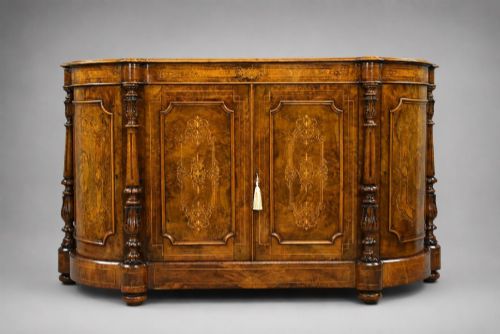
A nineteenth century marquetry cabinet brings complex wood inlays and rich timber grains into a room, offering both display space and refined storage.
Nineteenth Century Marquetry Cabinet
A nineteenth century marquetry cabinet encompasses varied forms created primarily during the Victorian era and the later decades of the eighteen hundreds. Buyers encounter credenzas, side cabinets, display pieces, and writing desks that reflect both English craftsmanship and French revival styles.
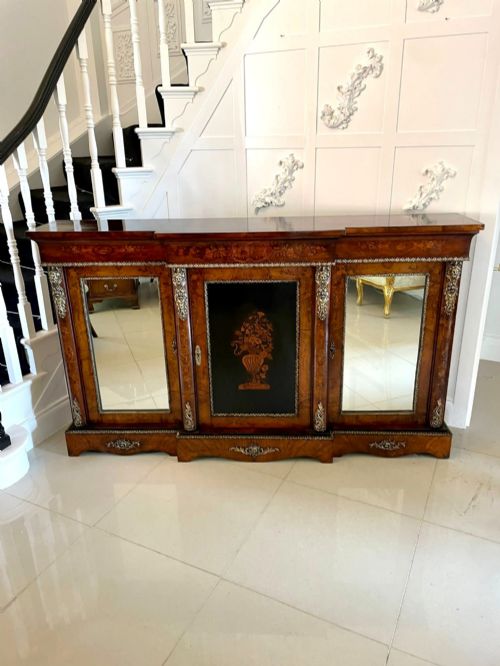
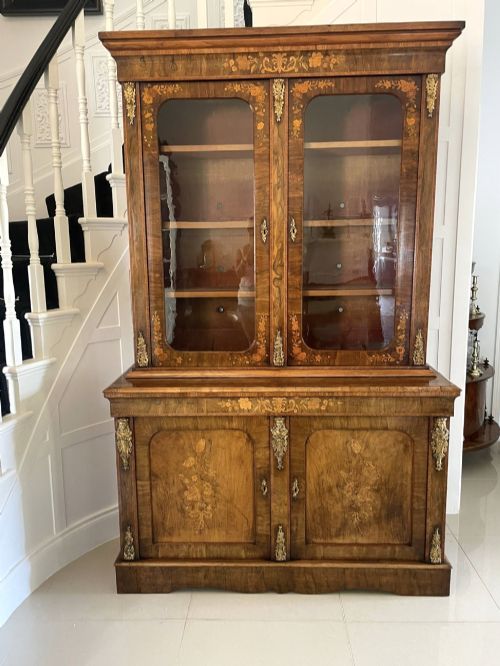
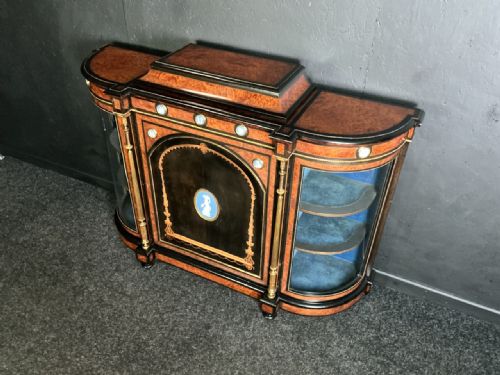
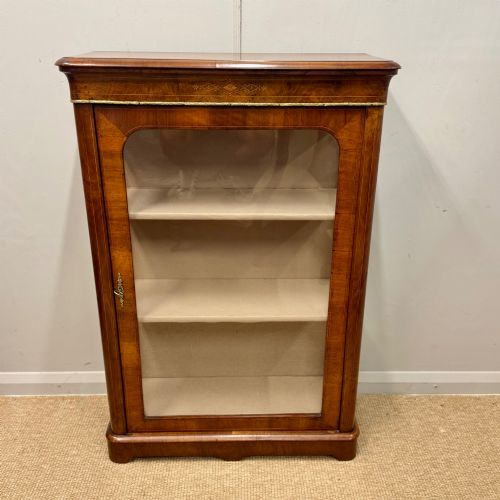
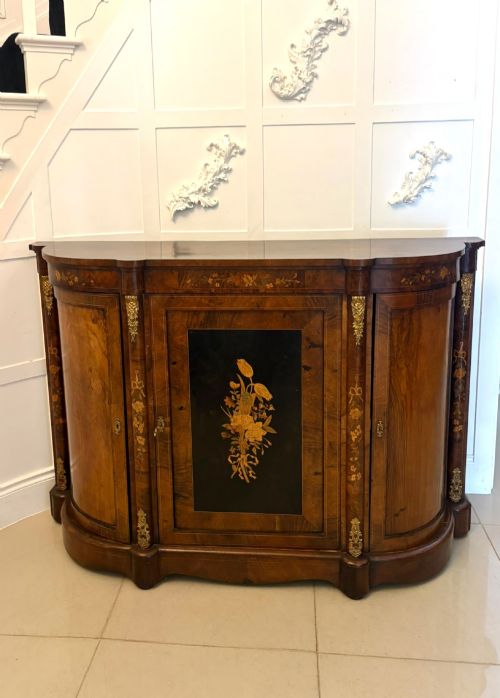
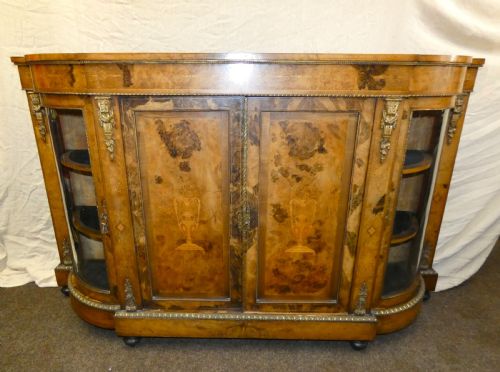
The most frequent version on this page is the burr walnut credenza or display cabinet, often featuring elaborate floral inlays and curved glass doors. These low storage pieces served formal reception rooms and display precious porcelain or books.
Materials and construction
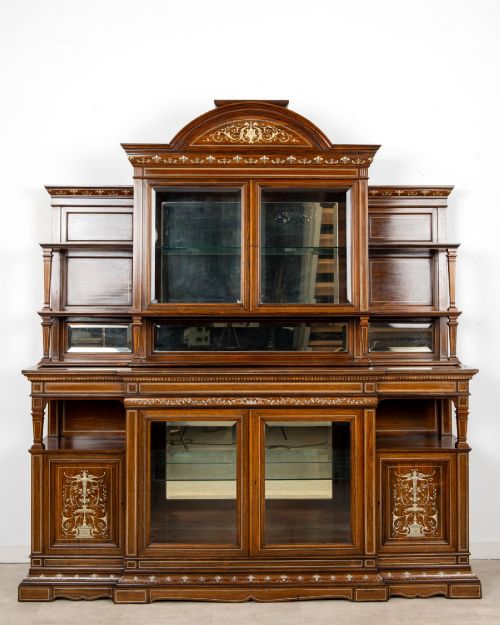
Cabinet makers built these pieces using foundational carcases of walnut, mahogany, or ebonised wood, overlaid with figured veneers such as burr walnut, kingwood, and rosewood. Detailed marquetry patterns used contrasting timbers like boxwood to form floral and geometric motifs across the doors and panels.
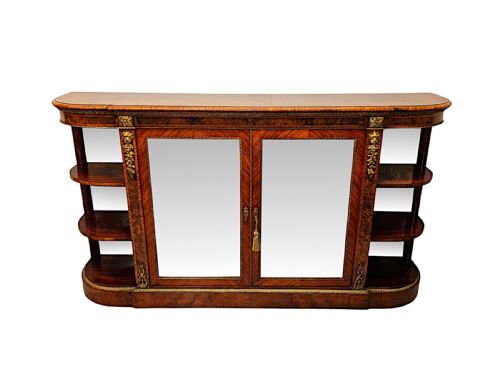
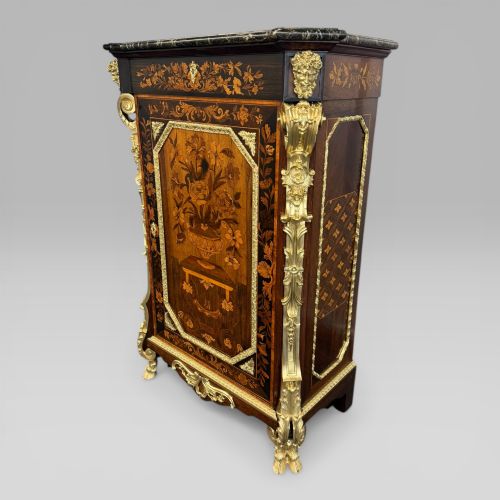
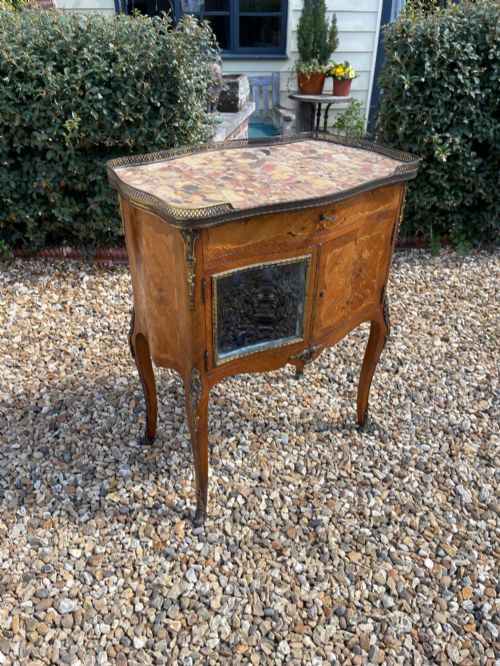
Mounts in cast ormolu and gilt bronze embellished the corners, friezes, and feet, while inset marble tops appeared on select French pieces. Glass panelling, sometimes curved, enclosed display sections alongside brass locks and hinges.
The inventory records pieces incorporating glass, ormolu, brass, and marble elements across various revival styles.
Assessing quality
Quality rests upon the depth and intricacy of the marquetry work and the choice of veneer figure, where richly swirled burr walnut or select kingwood commands attention. Crispness in the cast ormolu mounts and the weight of the underlying timber define the superior examples.
Internal secondary timbers and the precision of the joinery distinguish standard production from exceptional workshop output. Pieces bearing recorded signatures or stamps show superior hand-finishing in every structural detail.
Collinson & Lock·Gillows·Edward Holmes Baldock·Blake·Holland & Sons·G. Durand·Joseph Zwiener·Edwards & Roberts·Jean-Henri Riesener·Victor Raulin
The Nineteenth Century Marquetry Cabinet Glossary
- Marquetry
- Decorative veneer work forming pictures or patterns by assembling small pieces of varied coloured wood. It covers flat surfaces on doors and tabletops.
- Ormolu
- Gilded bronze used for decorative mounts and furniture trim. It provides metallic contrast against dark timber.
- Credenza
- A low cabinet or sideboard designed for storage and display. Victorian examples often feature glazed side compartments.
- Burr walnut
- Timber taken from the growth growths of a walnut tree, yielding swirling grain patterns. It forms the primary decorative surface on many Victorian cabinets.
- Vitrine
- A glass-fronted display cabinet intended for porcelain and ornaments. French examples frequently utilise kingwood.
Nineteenth Century Marquetry Cabinet: Frequently Asked Questions
Where were these cabinets placed?
These cabinets stood principally in formal reception rooms, drawing rooms, and libraries of nineteenth century homes. They held prized porcelain, books, and writing materials.
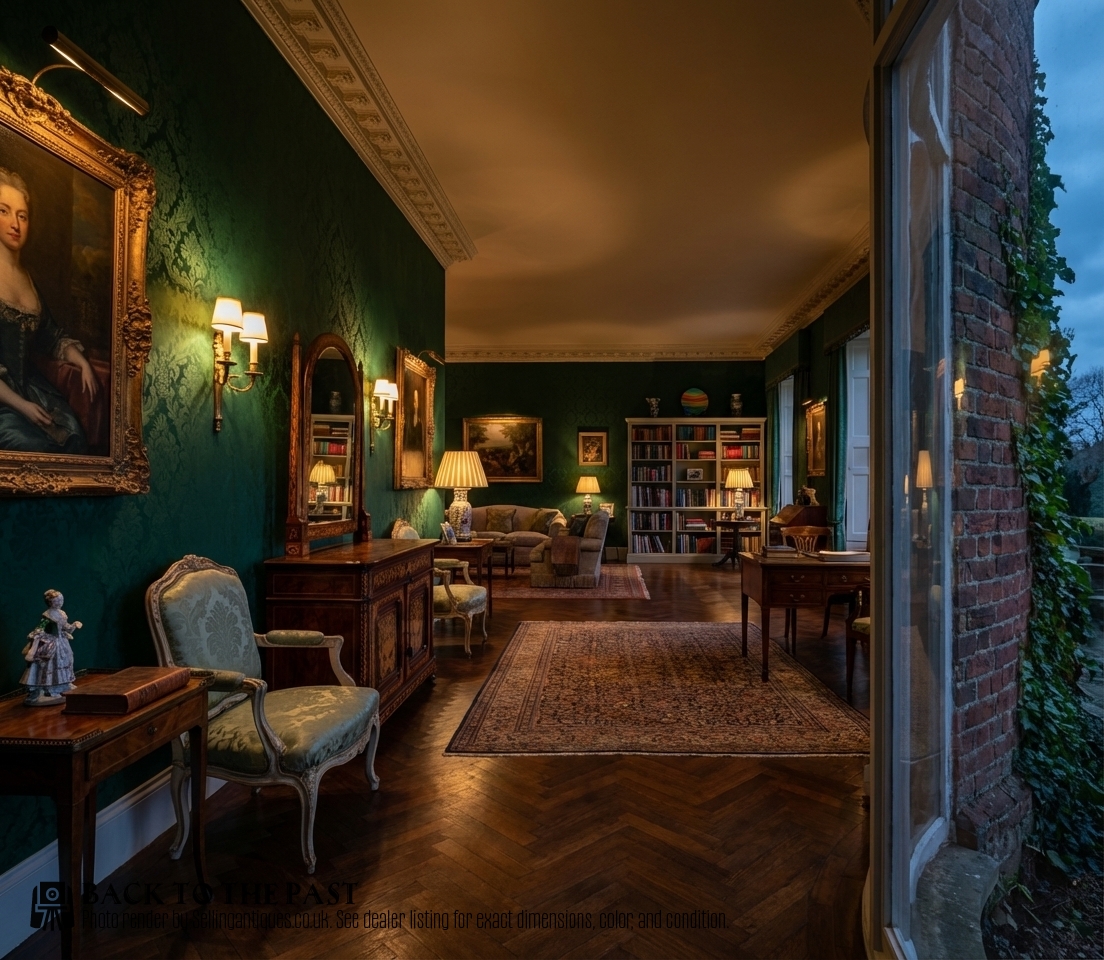
Lower credenzas and pier cabinets fitted neatly against drawing room walls between windows or beneath large mirrors, maintaining an open floor plan while providing surface display area.
How do I care for burr walnut?
Burr walnut veneers require stable indoor humidity away from direct sunlight and heat sources to prevent timber movement. Regular dusting with a dry, soft cloth maintains the polished finish.
Avoid commercial silicone sprays and excess moisture, applying a quality furniture wax sparingly only when the wood appears dry.
What is a pier cabinet?
A pier cabinet is a narrow piece built specifically to fit the wall space between windows, known as the pier. These items often feature glass doors and velvet-lined shelves.
Their shallow depth allowed them to furnish restricted wall spaces without obstructing movement through the room.
How do French and English styles differ?
English nineteenth century pieces typically employ burr walnut and ebonised timber with restrained ormolu mounts and architectural lines. They favour functional utility within domestic settings.
French cabinets more often utilise kingwood, elaborate gilt bronze mounts, and marble tops following Louis XV and XVI revivals, prioritising decorative display.