


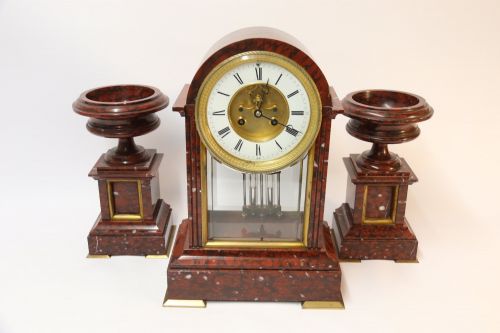

Nineteenth Century French Clock
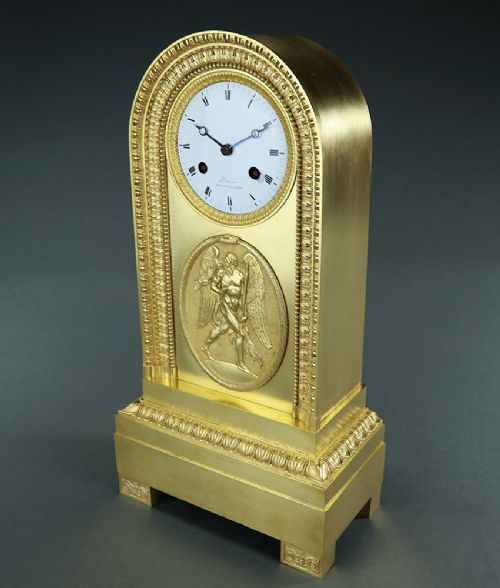
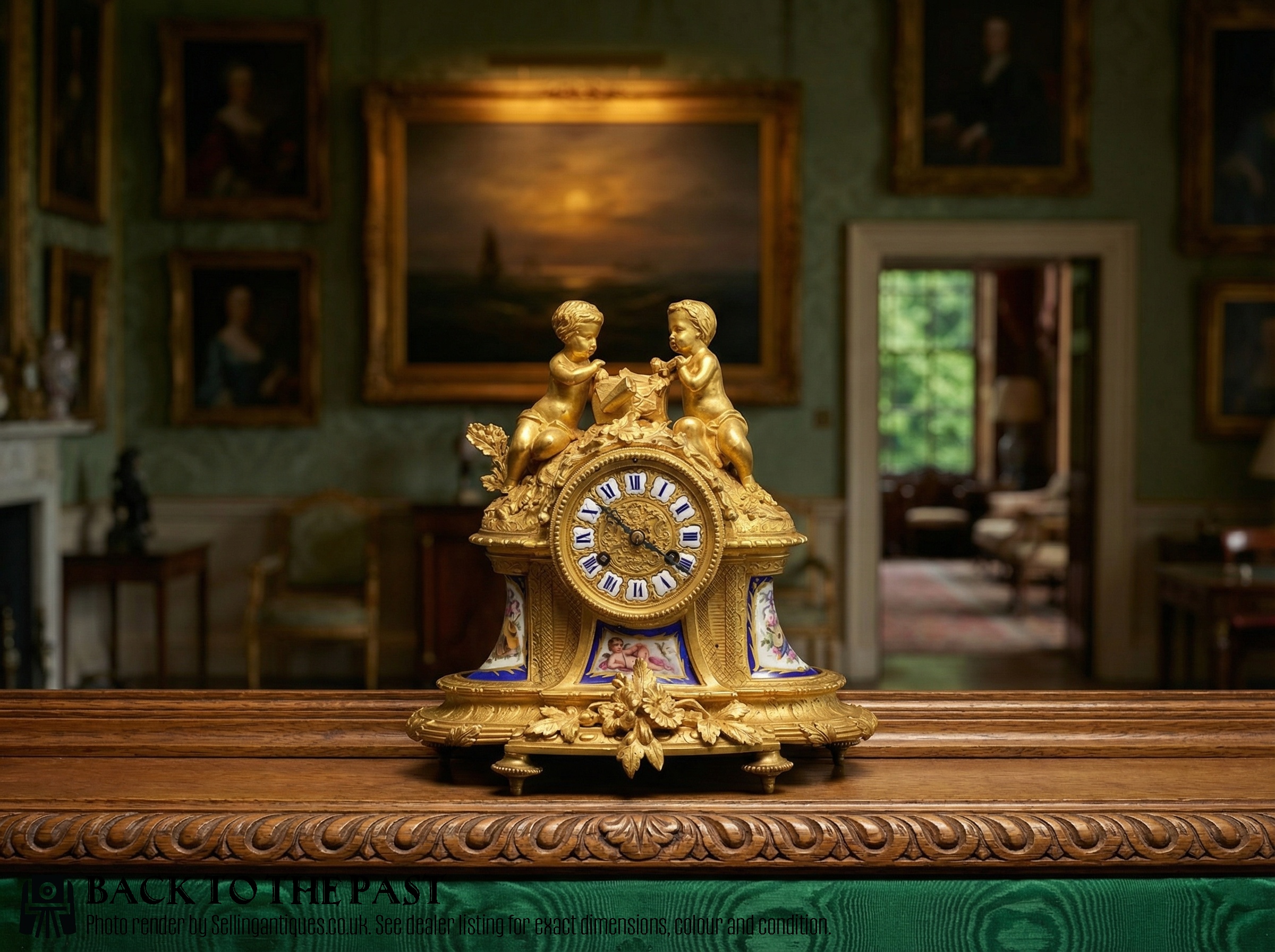
A nineteenth century french clock brings heavy gilt bronze, painted porcelain and striking mechanical work into a room.

Nineteenth Century French Clock
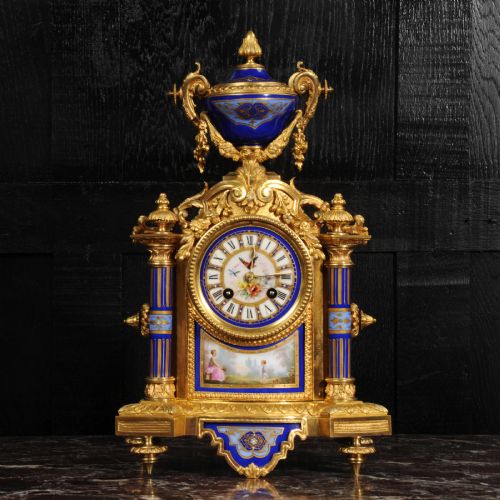
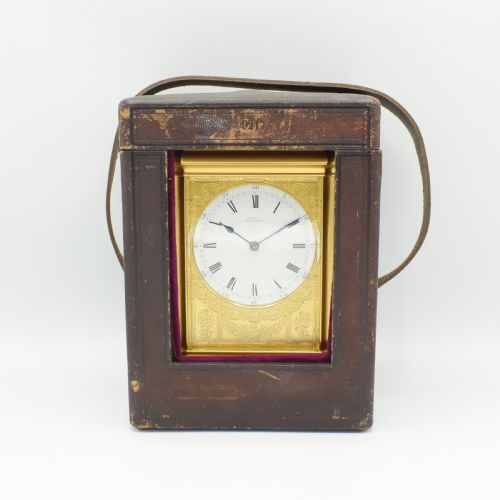
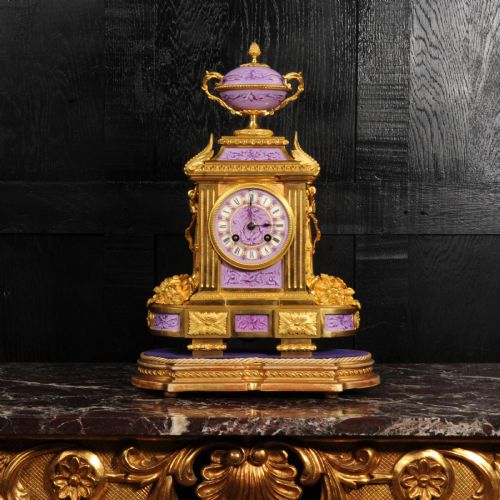
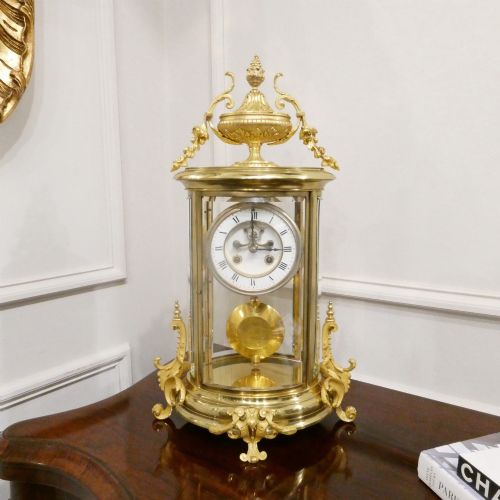
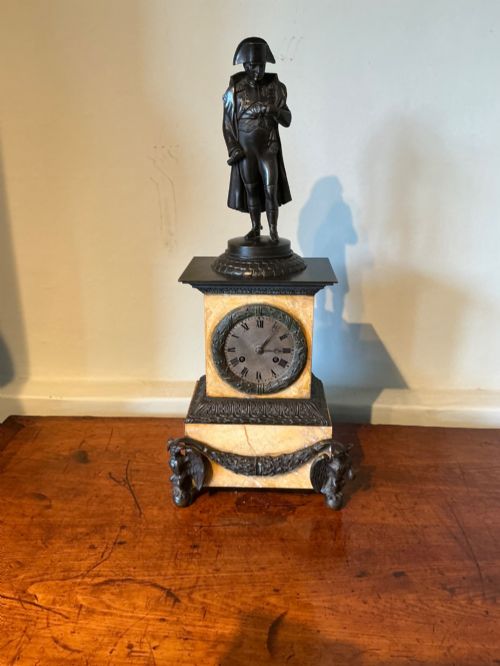
A nineteenth century french clock comprises heavy mantel pieces, architectural portico models, brass carriage clocks for travel, and delicate four glass designs. These items served both to tell the time and to anchor the decor of a grand room.
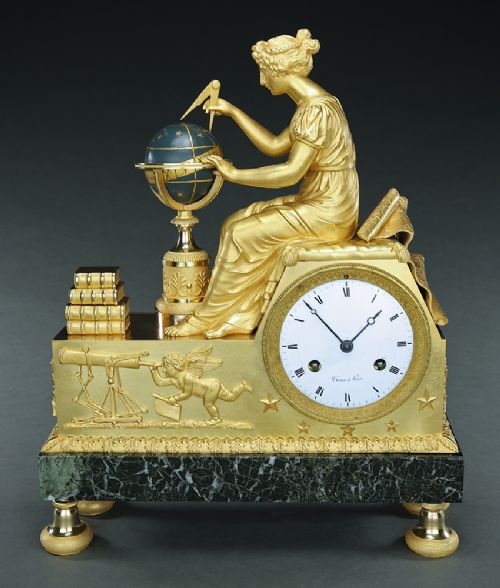
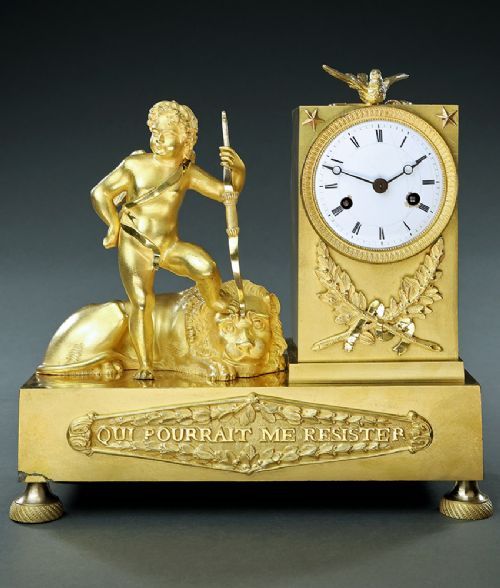
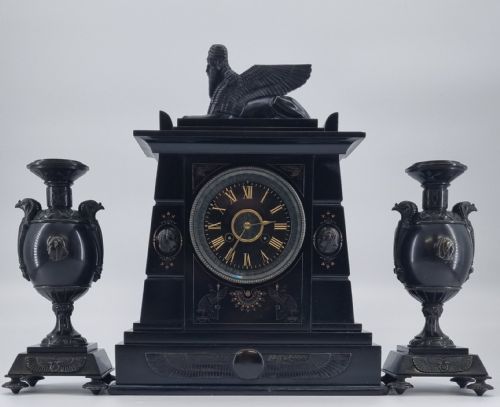
Mantel clocks dominate the selection, often accompanied by matching garnitures of urns or side vases. They draw upon styles ranging from the classical restraint of the Empire period to the exuberant curves of the Rococo revival and the architectural symmetry of the Neoclassical movement.

How they were made
Foundry workers cast components in bronze, brass, and ormolu, applying fire gilding to create rich metallic surfaces. Marble and onyx provide heavy, stable plinths and column bodies, while exotic timbers such as mahogany and rosewood form the housings for portico and bracket pieces.
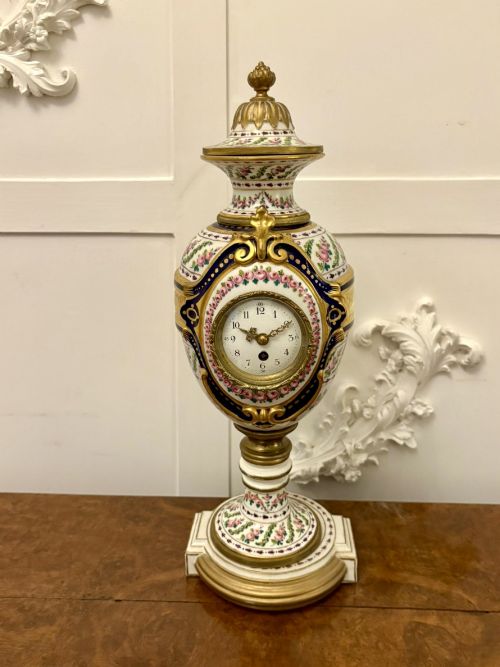
Dials frequently incorporate hand-painted enamel or Sèvres porcelain panels depicting pastoral scenes or classical motifs. Mechanics rely on intricate brass gear trains, often featuring platform escapements or striking mechanisms housed within glass or timber cases.
Nineteenth Century French Clock Retail Price Guide 2026
Typical asking prices for nineteenth century french clock among the pieces listed under this phrase on Sellingantiques today, from the lower quarter to the upper quarter. They describe what is for sale here now, not the wider market.
Materials span heavy marble, gilt bronze, brass, Sèvres porcelain, and exotic woods like rosewood and mahogany.
What varies in quality
The crispness of the bronze chasing and the weight of the ormolu mark the division between standard production and masterwork pieces. Finer examples display deep, hand-chiseled surface detail rather than soft, mass-produced casting.
The complexity of the movement influences value, with grand sonnerie strikes, calendar complications, and signed mechanisms by known makers standing above simple timepieces. Hand-painted porcelain panels and undamaged marble cases further elevate a piece.
Japy Freres·Achille Brocot·Samuel Marti·Henry Dasson·Etienne Lenoir·Antoine Redier
The Nineteenth Century French Clock Glossary
- Ormolu
- Gilded bronze produced by applying a mercury-gold amalgam to a base metal and heating it until the mercury vaporised. This technique creates a distinctive, deep golden finish found on fine nineteenth century pieces.
- Garniture
- A set consisting of a central mantel clock flanked by matching decorative objects such as urns or vases. These sets provide symmetrical balance when placed on a mantelpiece.
- Portico clock
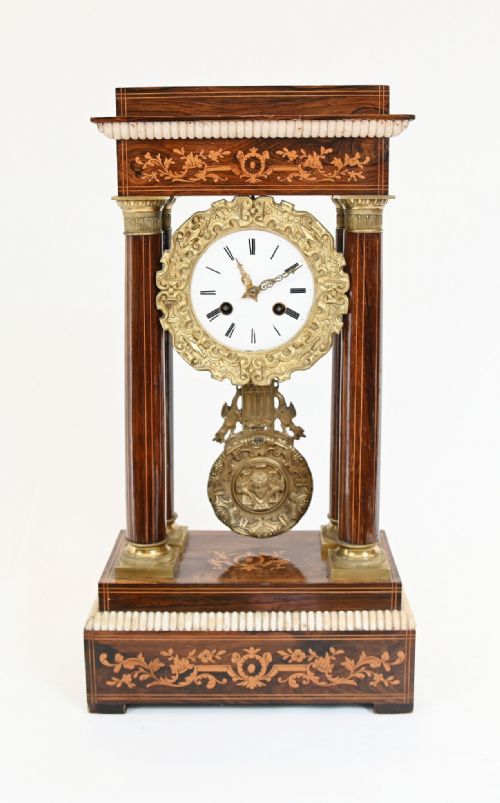
- A mantel clock featuring a architectural case supported by four columns, resembling a classical portico. These often house a suspended pendulum visible between the pillars.
- Grand Sonnerie
- A complex clock striking mechanism that chimes the hours and the quarters automatically on every quarter hour. It represents a high level of horological skill.
- Four glass clock
- A mantel clock enclosed by four bevelled glass panels within a brass or gilt bronze frame, allowing an unobstructed view of the movement from all sides.
Nineteenth Century French Clock: Frequently Asked Questions
Where should I place a heavy marble mantel clock?
Position the clock on a sturdy, level surface such as a fireplace mantel or a heavy sideboard capable of supporting substantial stone and bronze weight. Stability is essential for proper pendulum operation.
Avoid locations exposed to direct sunlight, high humidity, or dramatic temperature fluctuations, which can damage delicate porcelain dials and timber cases.
How do I tell an Empire style clock from a Rococo one?
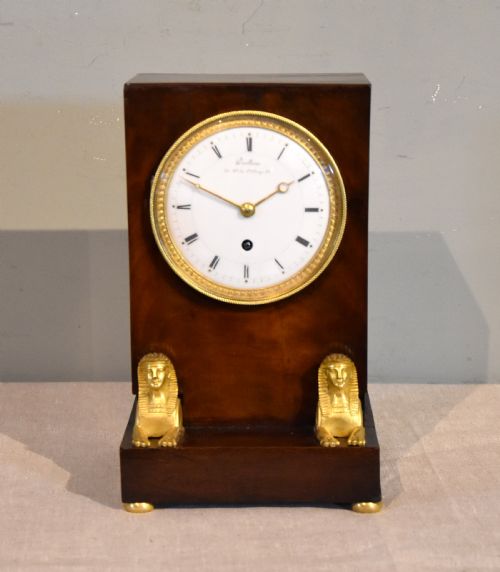
Empire clocks display strict classical symmetry, architectural columns, and motifs inspired by ancient Rome, Greece, and Egypt. They favor patinated bronze and crisp ormolu mounts.
Rococo revival clocks feature asymmetrical shapes, scrolling acanthus leaves, naturalistic floral motifs, and flowing curves. These pieces embrace ornate decoration over rigid geometric form.
What is a garniture set?
A garniture set includes a central clock accompanied by two matching side ornaments, typically urns, vases, or candelabra. These items were designed to be displayed together on a mantelpiece.
Matching materials, such as coloured marble or gilt bronze, unify the three pieces into a single decorative scheme.