


Nineteenth Century Empire Table
A nineteenth century empire table brings neoclassical gravity to a room, combining rich mahogany and walnut with striking ormolu mounts.
Nineteenth Century Empire Table
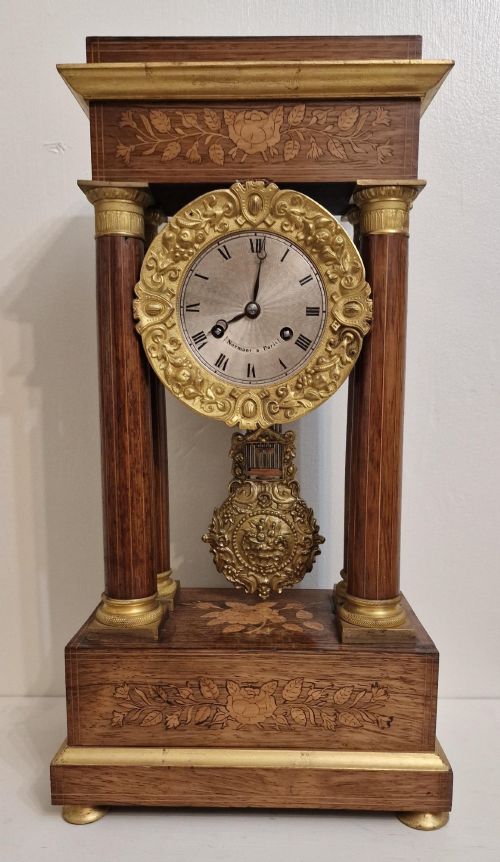
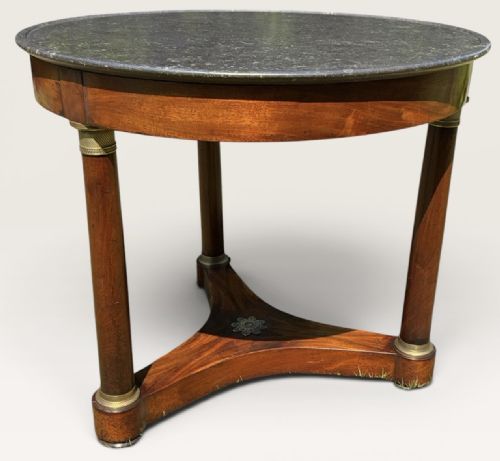
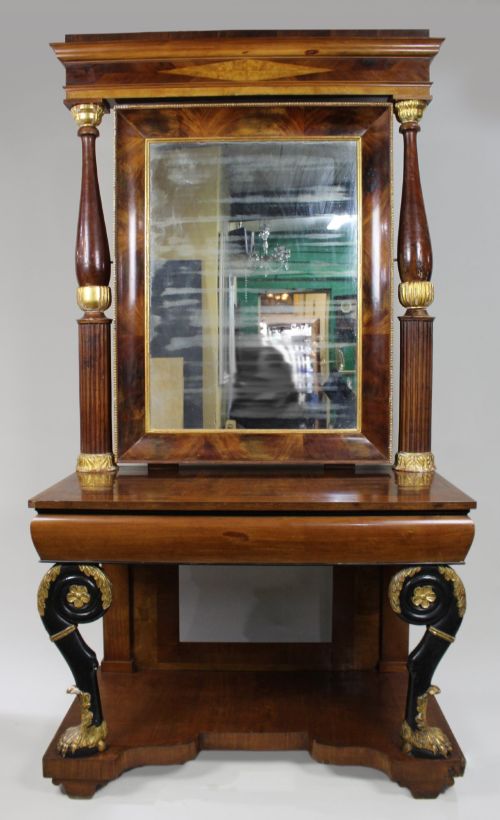
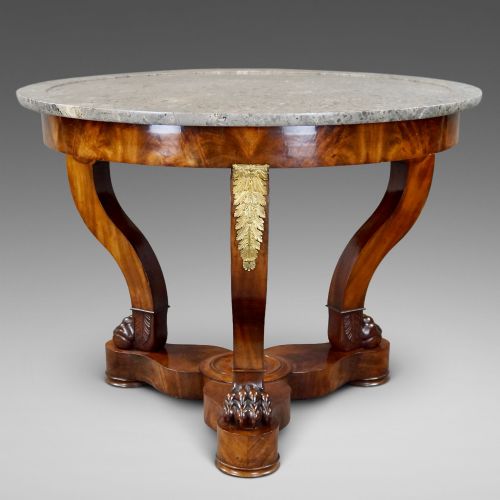
A nineteenth century empire table typically takes the form of a round gueridon or a console table designed with classical restraint. These pieces emerge from the nineteenth century, including Regency and Napoleon III periods, carrying the architectural weight of French Neoclassical and French Empire styles.
The selection here centres on freestanding centre tables with marble tops and mahogany or walnut frames, often supported by columns or paw feet. Console tables and occasional variants also appear, reflecting the formal interior arrangements of the period.
Buyers seek these tables for their architectural presence and rich timber surfaces. They anchor a reception room or hallway with distinct classical proportions established during the early nineteenth century.
How they were made
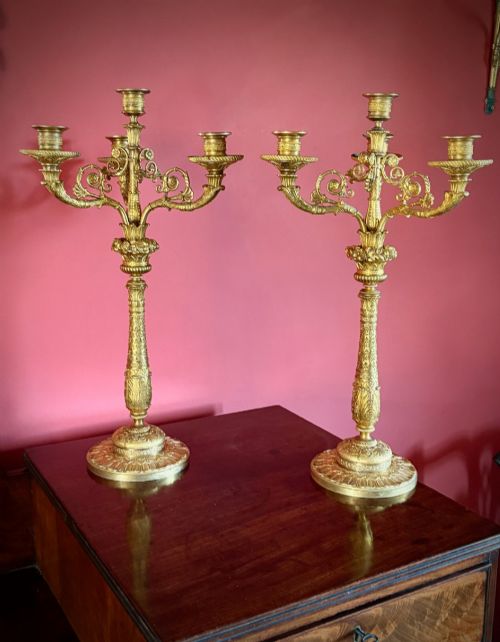
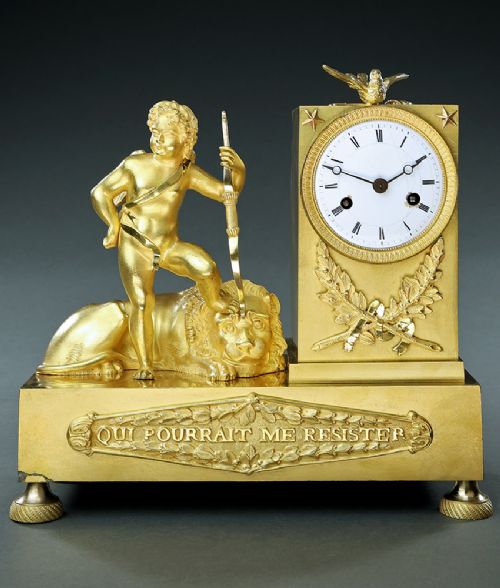
Cabinetmakers constructed these tables using solid mahogany and walnut foundations, frequently applying veneers to achieve smooth, figured surfaces. Ormolu and gilt bronze mounts were cast and fire-gilded to accent the structural lines and structural motifs.
Marble tops, often white or veined, were precision-cut to fit the recessed upper frames of gueridons and consoles. Parcel gilt details and patinated bronze elements were added by hand to create the characteristic contrast of the Empire style.
Nineteenth Century Empire Table Retail Price Guide 2026
Typical asking prices for nineteenth century empire table among the pieces listed under this phrase on Sellingantiques today, from the lower quarter to the upper quarter. They describe what is for sale here now, not the wider market.
Listings for a nineteenth century empire table frequently pair the form with ormolu mounts, marble tops, and mahogany or walnut timbers.
What varies in quality
The division between ordinary and exceptional nineteenth century empire table examples lies in the crispness of the ormolu chasing and the depth of the timber grain. Superior pieces display finely detailed cast bronze mounts where every leaf and classical motif remains sharp.
Construction methods also dictate worth, as seen in the weight of the marble slab and the stability of the central pillar or leg assembly. Master workshops ensured that joints remained tight and that applied gilding retained its original lustre without excessive rubbing.
Jean Joseph Chapuis·Japy Freres·Reiche·Berger Paris
The Nineteenth Century Empire Table Glossary
- Guéridon
- A small round table, usually supported by a single central pillar or three legs. Originating in France, these tables function well as centrepieces.
- Ormolu
- Gilt bronze created by applying a mercury and gold amalgam to cast bronze. This technique imparts a rich, deep yellow lustre.
- Console table
- A wall-mounted or freestanding table designed to sit flat against a vertical surface. They often feature marble tops and heavy front supports.
- Parcel gilt
- Portions of a wooden or metal object highlighted with gold leaf. This method draws the eye to specific carved details.
- Patinated bronze
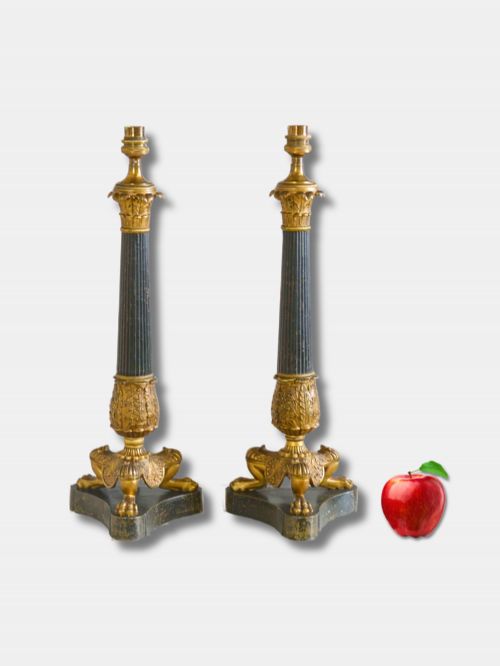
- Bronze that has acquired a darkened surface tone through age or chemical treatment. It provides a contrast to bright ormolu mounts.
Nineteenth Century Empire Table: Frequently Asked Questions
What is an empire table?
An empire table is a heavy, neoclassical piece influenced by French design under Napoleon. These tables use dark timbers and classical metal mounts.
They serve as focal points in formal rooms, often featuring round tops and architectural column supports.
How do I style a nineteenth century empire table?
Place a gueridon in the middle of a room to hold a lamp or bronze tazza. Keep the surrounding space open to let the architectural legs show.
Console tables work well against hallway walls beneath large mirrors or artwork.
Are marble tops original to these tables?
Most antique gueridons and console tables feature fitted marble tops designed to add weight and formal utility. These stone slabs range from plain white to heavily veined dark marble.
Check that the marble sits flush within the wooden or ormolu retaining gallery.
How do I tell Empire from Regency style?
Empire style stems directly from French neoclassical tastes under Napoleon, emphasising military motifs, heavy ormolu, and dark mahogany. Regency design shares this classical vocabulary but reflects British interpretations.
Both periods favour column supports, paw feet, and rich parcel gilding.