



Empire Round Lamp Table
An empire round lamp table brings a sculptural centrepiece into a room, offering a polished surface for light and display rooted in classical design.
Empire Round Lamp Table
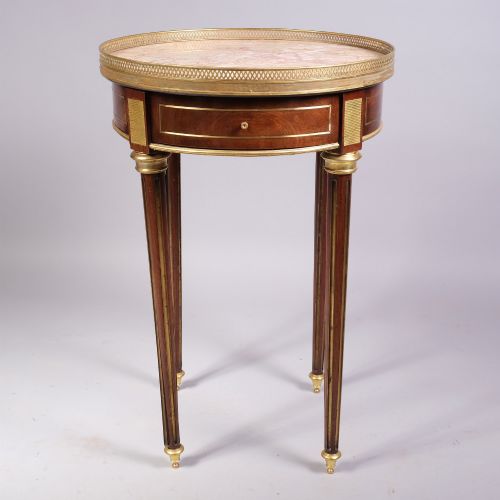
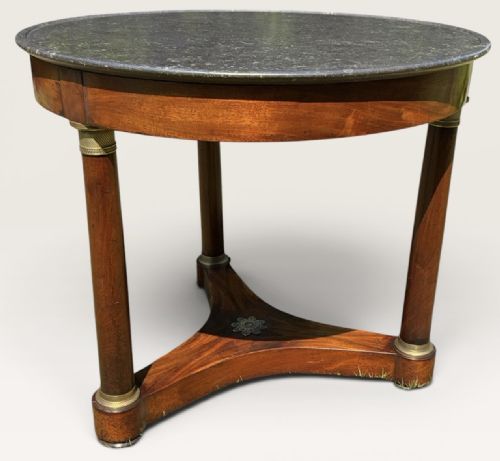
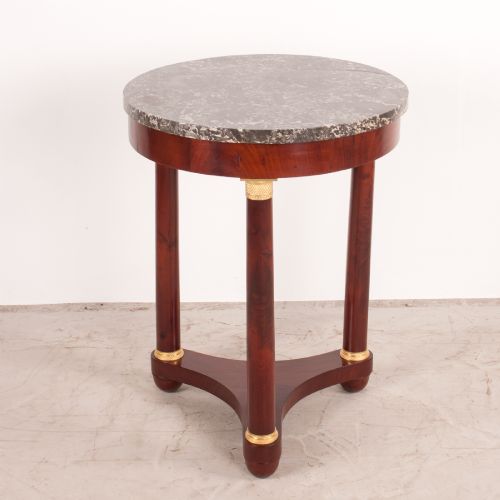
When you search for an empire round lamp table, you encounter circular tables primarily from the nineteenth century, including French Empire, Restauration, and Swedish Empire examples. These pieces function as occasional tables, centre tables, and side tables within domestic spaces.
The most common form on this page is the guéridon, a small round table designed to stand freely in a room. These tables frequently appear in mahogany, burr elm, and burr walnut, often paired with inset marble tops.
Origins span France and Sweden, reflecting the widespread influence of classical continental design during the 1800s, 1850, 1880, and 1890. Buyers meet variations ranging from plain mahogany to highly decorated examples with rams heads and canework.
Materials and construction
Cabinetmakers utilised rich timber veneers such as mahogany, burr elm, and burr walnut over stable core woods, creating highly figured circular surfaces. These tops often incorporate heavy slabs of marble fitted neatly into the wooden rims.
Metal enrichment plays a significant role in the construction of these tables, with brass and ormolu mounts decorating the frames and legs. Bronze details, including cast rams heads, appear on specific examples to emphasise the classical aesthetic.
Empire Round Lamp Table Retail Price Guide 2026
Typical asking prices for empire round lamp table among the pieces listed under this phrase on Sellingantiques today, from the lower quarter to the upper quarter. They describe what is for sale here now, not the wider market.
Listings feature pieces spanning the nineteenth century, specifically referencing the years 1800, 1850, 1880, and 1890 alongside broader nineteenth-century designations.
Judging quality
Quality rests upon the selection and matching of wood veneers, where lively burr grain or rich mahogany polish elevates the visual impact of the circular top. The integration of solid marble slabs also dictates the tier of the piece, depending on the thickness and tone of the stone.
The sophistication of the metalwork separates standard tables from superior examples. Finely chased ormolu mounts, cast bronze rams heads, and integrated canework demonstrate a higher level of workshop execution than simple turned wooden legs.
The Empire Round Lamp Table Glossary
- Guéridon
- A small French round table, typically supported by a central pillar or tripod base. This form dominates the nineteenth-century selection on this page.
- Ormolu
- Gilt bronze mounts applied to furniture for decorative effect. It provides a bright metallic contrast against dark mahogany and walnut timbers.
- Restauration
- A French design period bridging the gap between strict Empire style and later nineteenth-century revivals. Tables from this era often retain classical proportions with slightly softer detailing.
- Canework
- Woven cane panels utilised on lower tiers or shelves of tables. This technique introduces lighter textural contrast to heavy wooden furniture.
- Burr Elm
- Timber taken from the abnormal growth of an elm tree, yielding a swirling, highly decorative grain pattern. Cabinetmakers prized this material for prominent table tops.
Empire Round Lamp Table: Frequently Asked Questions
Where should I place an empire round lamp table?
These circular tables work well as freestanding centre pieces in a hallway or as occasional tables beside seating. Their compact round footprint allows them to sit comfortably in corners or between windows.
Ensure the height matches your surrounding furniture so that lamps or decorative objects sit at a comfortable visual level.
How do I care for a marble top table?
Wipe the stone surface regularly with a damp cloth and mild soap, avoiding acidic cleaners that can etch the polish. Use coasters beneath glasses to prevent moisture rings from penetrating unsealed marble.
Treat the wooden base separately using appropriate furniture wax to nourish the mahogany or walnut grain.
What is the difference between French Empire and Restauration styles?
French Empire furniture relies on heavy classical motifs, dark timbers, and prominent ormolu mounts reflecting imperial grandeur. Restauration pieces soften these severe lines slightly while maintaining classical proportions.
Both styles produce round lamp tables well suited to traditional and eclectic interiors alike.
Are these tables sturdy enough for daily use?
Nineteenth-century construction methods rely on solid timbers and stable central pillars designed for practical domestic service. The heavy marble inserts often add substantial weight to the base, keeping the table steady.
Treat the polished wooden surfaces with care to maintain the finish over years of regular handling.