

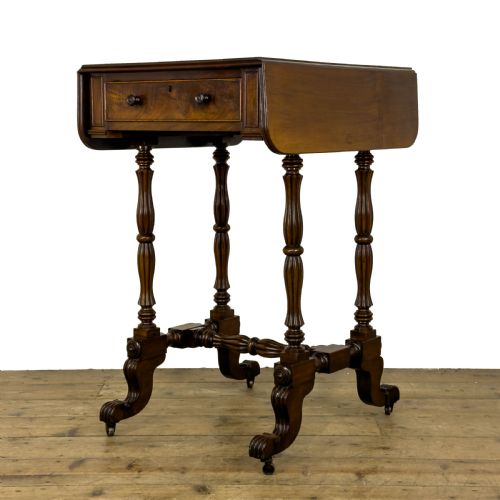
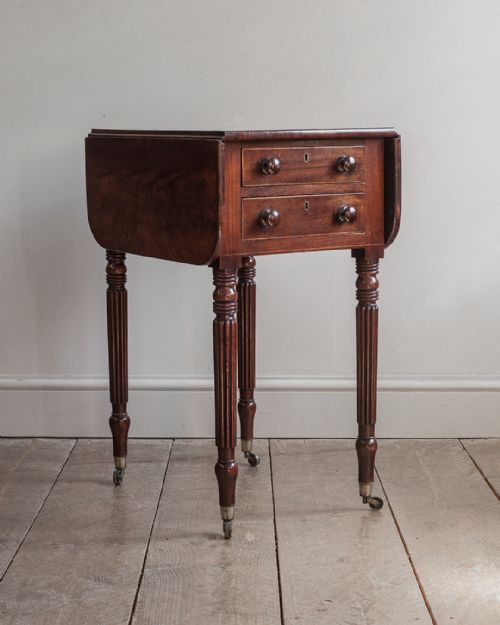


Nineteenth Century Drop Leaf
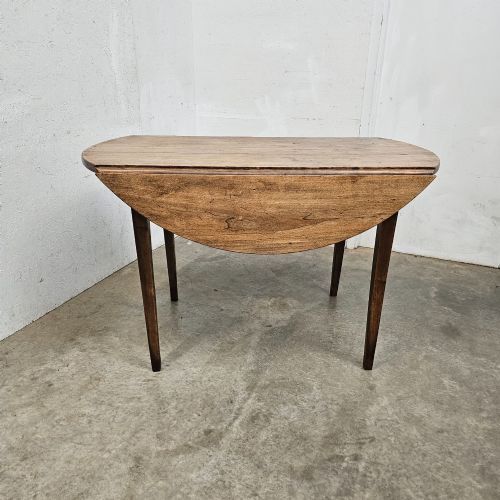
A nineteenth century drop leaf offers folding flaps that extend a compact surface into a generous table.
Nineteenth Century Drop Leaf
A nineteenth century drop leaf brings versatile folding architecture to dining rooms, libraries and drawing rooms alike. These tables extend on hinged flaps supported by swing legs or wooden brackets, shifting from narrow consoles to expansive surfaces in seconds.
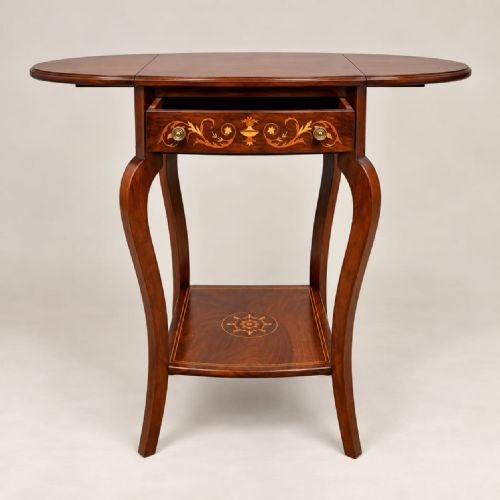
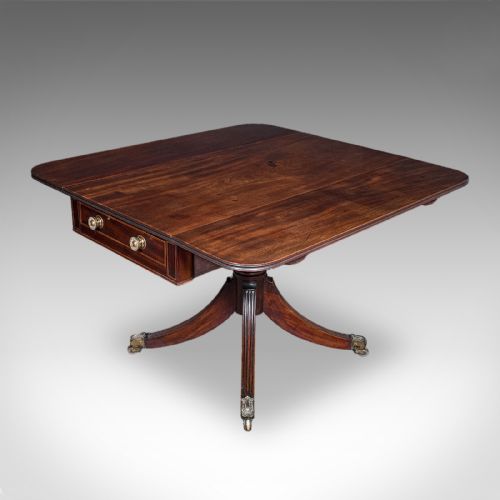
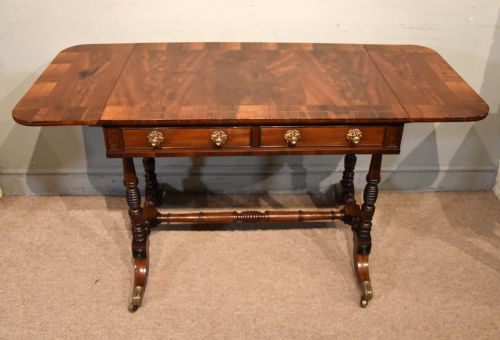
The selections here showcase the varied forms of the era, from sofa tables and Pembroke tables to occasional and Sutherland tables. Mahogany and rosewood dominate the output, though walnut, satin birch, pine and oak also appear across British, French and Swedish workshops.
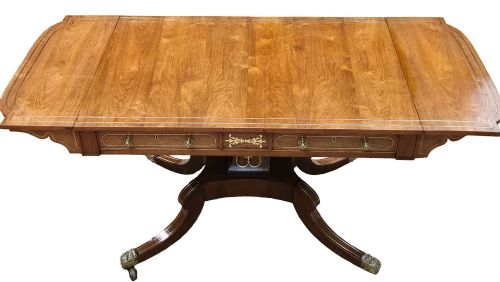
Regency and Victorian examples represent the core of what surfaces on this page, spanning formal crossbanded sofa tables to compact sewing and work tables fitted with drawers.
Materials and Construction Methods
Cabinetmakers relied heavily on rich timbers such as flame mahogany, rosewood and burr walnut, often laid over sturdy oak or pine carcases. Crossbanding in contrasting veneers and subtle stringing defined the decorative borders of superior tabletops.
Brass mounts, casters and parcel gilding frequently accented Regency pieces, while intricate turning shaped the legs of later Victorian Sutherland and occasional tables. Hinged drop leaves required precise joinery to ensure the flaps aligned flat with the main surface when raised.
One unexpected Victorian entry pairs drop leaf utility with natural pearl and diamond earrings.
Distinctions in Quality and Execution
Superior execution shows in the choice of timber figures, where book-matched flame mahogany or richly figured rosewood creates a continuous pattern across the folding leaves. Lesser pieces employ plain or secondary woods with minimal regard for grain continuity.
The stability of the drop leaf mechanism and the snugness of the hinge fit dictate daily utility. Master workshops integrated swing legs and underframes that bore weight securely without sagging at the joints.
Johnstone and Jeanes·James Mein·Jenks and Woods
The Nineteenth Century Drop Leaf Glossary
- Drop leaf
- A table featuring a fixed central section and hinged flaps that fold down at the sides to save space. Raising the leaves and engaging the support brackets enlarges the usable surface.
- Sofa table
- A rectangular occasional table traditionally designed to stand in front of a sofa, featuring drop leaves on either side and often fitted with small drawers. These tables typically rest on end-supports or pedestal bases.
- Pembroke table
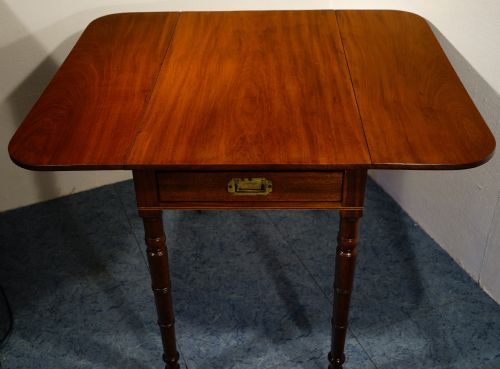
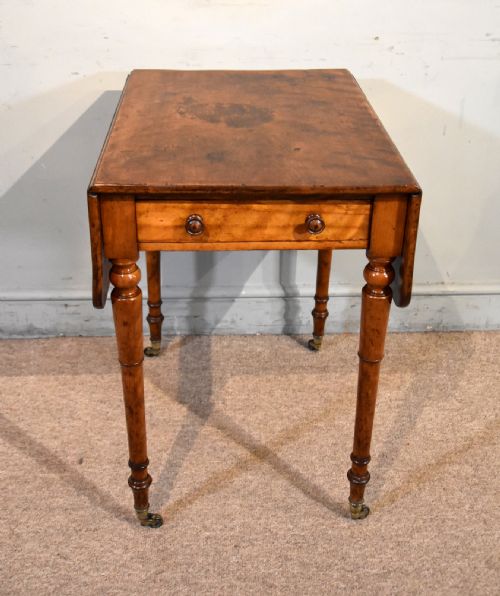
- A small rectangular table with two hinged drop leaves of narrow proportions, usually equipped with a single drawer. The design dates to the eighteenth century and remained popular throughout the nineteenth.
- Sutherland table
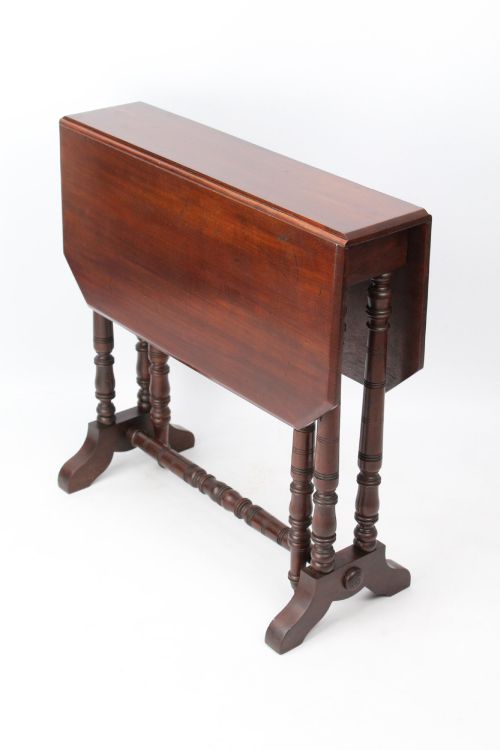
- A narrow drop leaf table featuring exceptionally slender leaves that fold down almost vertically on either side. A complex gateleg action supports the extended flaps.
- Crossbanding
- A decorative border technique where veneer strips are laid around the perimeter of a tabletop so the grain runs perpendicular to the central panel.
Nineteenth Century Drop Leaf: Frequently Asked Questions
How do drop leaf tables stay upright?
Hinged flaps are supported by pivoting wooden swing legs, gatelegs or folding wooden brackets beneath the top. These supports rotate outward from the frame to lock the extended leaves securely in place.
When folding the table down, the support swings back inward flush against the central underframe to allow the leaves to hang vertically.
What is a Sutherland table?
A Sutherland table is a specific form of drop leaf table characterised by very narrow hinged flaps and a complex gateleg framework. This construction allows the leaves to drop almost completely vertical, making the closed table exceptionally compact.
Victorian makers favoured this design for occasional use in smaller drawing rooms where floor space remained at a premium.
Where were sofa tables placed?
Sofa tables traditionally stood directly behind a central drawing room sofa, matching the height of the backrest. Their dual drop leaves allowed the surface to expand outward into the room when needed for writing or serving tea.
Nineteenth century interiors also utilised them as freestanding centre tables or Pembroke alternatives.
How do I identify a Regency period table?
Regency tables typically display classical restraint, incorporating premium rosewood or flame mahogany veneers alongside subtle brass mounts and ring-turned pillar supports. Look for elegant proportions, reeded edge details and occasional lyre-shaped end frames.
Construction from this era reflects early nineteenth century cabinetmaking standards, often paired with mahogany secondary timbers.