







Nineteenth Century Dining Armchairs
Nineteenth century dining armchairs are robust timber seating pieces built for the dining table, offering solid construction and period style for everyday dining.
Nineteenth Century Dining Armchairs
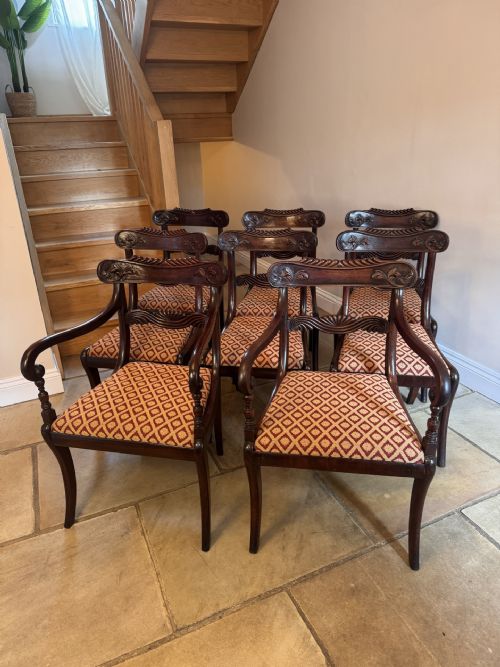
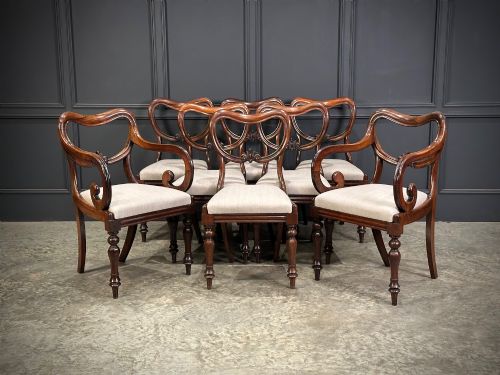
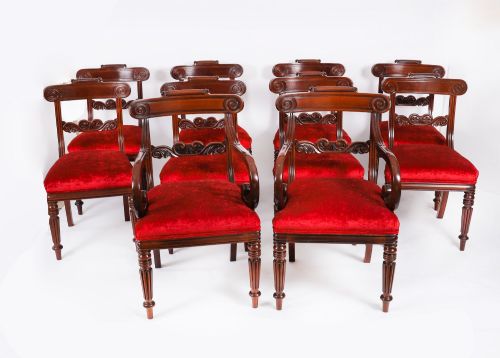
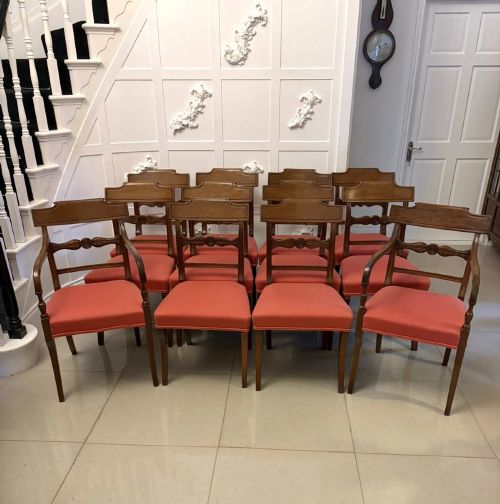
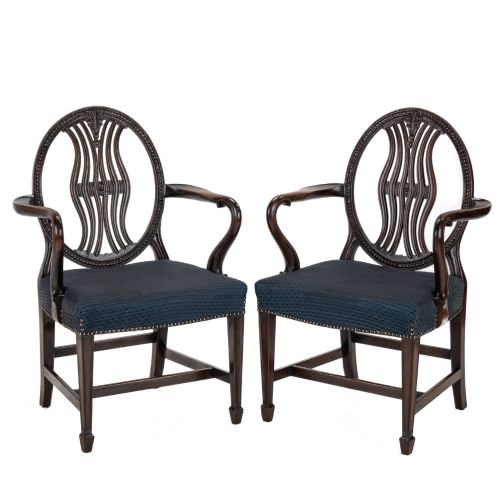
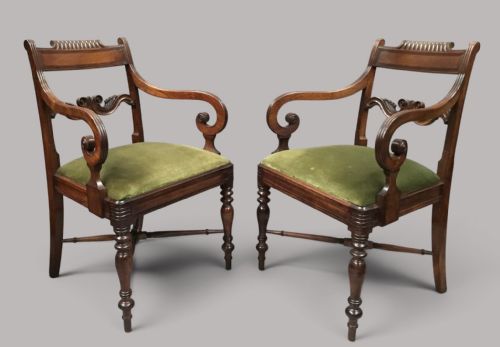
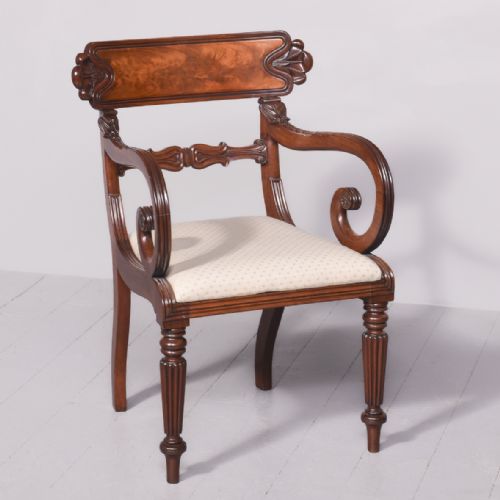
The material palette ranges from richly figured mahogany and bleached oak to sturdy vernacular timbers like elm and ash. Many examples feature upholstered seats finished in fabric, leather, or velvet, adding comfort to formal dining spaces.
Regional variations appear across the selection, including Scottish Regency armchairs and Yorkshire Windsor stick chairs. These pieces reflect diverse British cabinet-making traditions from the early eighteen-hundreds through to the late nineteenth century.
Materials and Construction
Cabinet-makers relied heavily on solid mahogany for formal revival styles, utilising its dense grain to support intricate carved details and open arm designs. Brass inlay appears on select Regency chairs, providing metallic contrast against dark timber surfaces.
Vernacular pieces employ contrasting woods such as elm seats combined with beech spindles and splat backs, ensuring durability under heavy daily use. Traditional joinery methods secure the framework, while dropped-in or fixed upholstery pads provide seating comfort.
Nineteenth Century Dining Armchairs Retail Price Guide 2026
Typical asking prices for nineteenth century dining armchairs among the pieces listed under this phrase on Sellingantiques today, from the lower quarter to the upper quarter. They describe what is for sale here now, not the wider market.
Recorded periods span the Regency era, George IV reign, Victorian Rococo Revival, and general nineteenth century production.
Evaluating the Pieces
Quality rests upon the crispness of carved details in revival models and the structural integrity of timber frames across both formal and vernacular types. Superior examples display carefully selected mahogany veneers and well-balanced proportions that maintain stability during dining use.
The finish of the wood and the execution of details such as brass inlay or pierced splats separate standard production from finer workshop output. Original timber patination and minimal structural intervention preserve the historical integrity of each chair.
The Nineteenth Century Dining Armchairs Glossary
- Carver
- A term commonly applied to an armchair designed to match a set of dining chairs, usually placed at the head of the table. These pieces feature wider proportions and supportive armrests.
- Splats
- The vertical wooden strip positioned in the centre of a chair backrest, often shaped or pierced in revival styles such as Hepplewhite and Chippendale.
- Windsor
- A traditional wooden chair construction where the legs and back spindles are wedged directly into a solid sculpted seat.
- Regency
- A stylistic period spanning the early nineteenth century, characterised by classical influences derived from Greek, Roman, and Egyptian design.
- Patina
- The surface sheen and colour acquired by timber through age, handling, and regular polishing over many decades.
Nineteenth Century Dining Armchairs: Frequently Asked Questions
Can I mix these with modern tables?
Nineteenth century dining armchairs adapt readily to contemporary dining tables, introducing tactile warmth and varied wood tones into a modern room.
Their classic proportions and sturdy timber construction ensure they function effectively alongside contemporary materials like glass or steel.
How do I care for mahogany frames?
Maintain mahogany frames by dusting regularly with a soft cloth and applying a quality beeswax sparingly to nourish the timber surface.
Keep these chairs away from direct heat sources and strong sunlight to prevent the timber and upholstery fabrics from drying out.
What is a carver chair?
A carver chair is an armchair specifically built with supportive armrests to match a set of single dining chairs.
They traditionally sat at the head and foot of the dining table for the host and hostess.
Are Windsor chairs comfortable?
Windsor armchairs feature saddle-shaped wooden seats sculpted to fit the body, offering surprising support without requiring deep padding.
Their rigid stick-back construction provides a sturdy posture suitable for extended periods sitting at a dining table.