


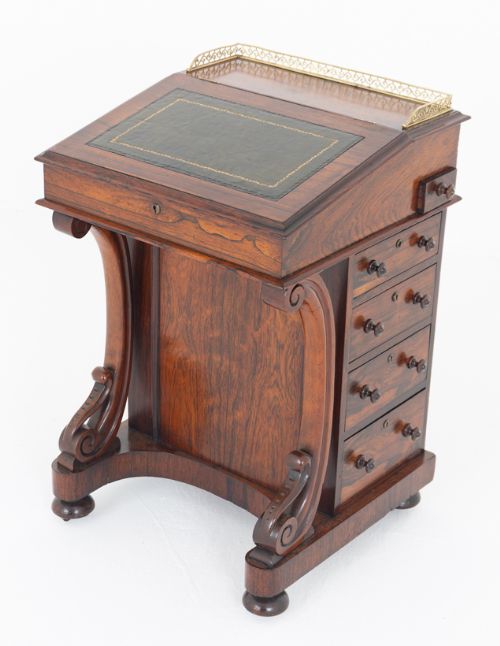


Nineteenth Century Davenport Desk
A nineteenth century davenport desk offers compact writing storage with sloping lids and pedestal drawers, combining clever ergonomics with rich period timbers.
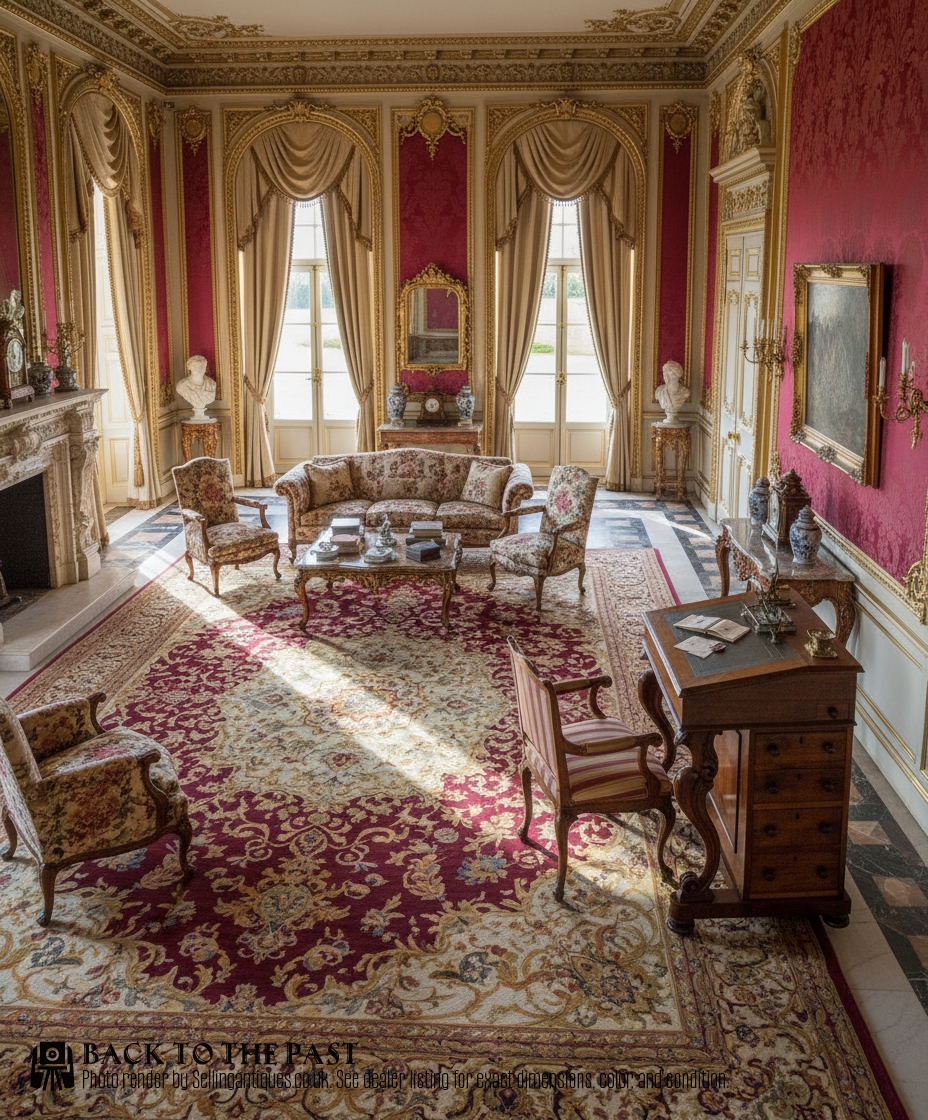
Nineteenth Century Davenport Desk
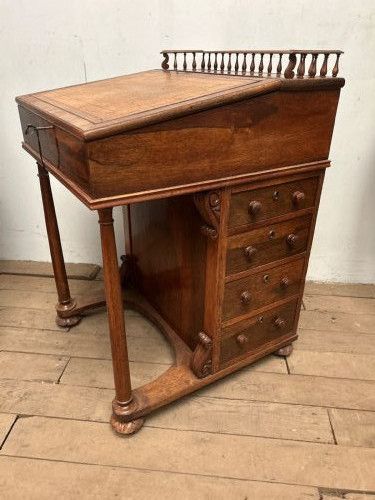
A nineteenth century davenport desk is a compact writing cabinet featuring a sloping lid that lifts to reveal interior compartments. These pieces usually stand on a pedestal base fitted with a bank of drawers opening to one side.
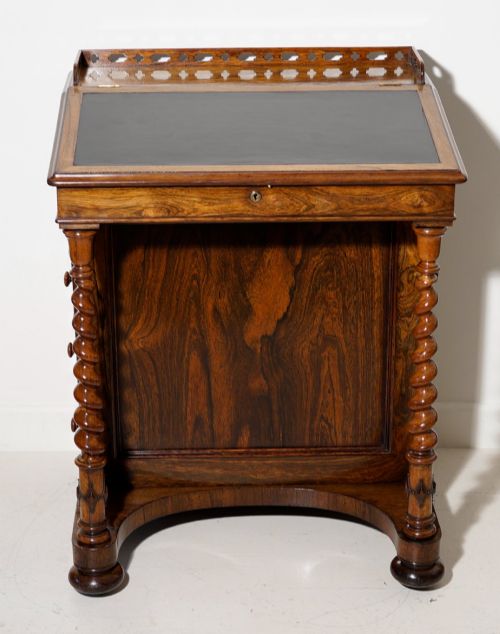
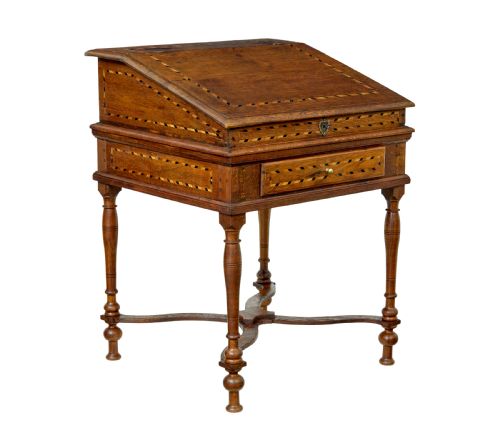
Buyers meet several distinct regional and stylistic interpretations within these listings. Examples span Regency rosewood models, Victorian walnut variants, and specific forms including piano davenports and Dutch inlaid oak writing slopes.
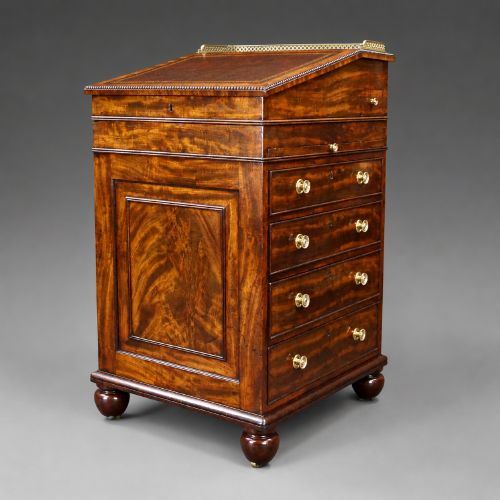
The prevalent materials across these desks include mahogany, flame mahogany, rosewood, burr walnut, and oak. Brass hardware and leather writing surfaces frequently complete the construction.
How they were made
Cabinet makers utilised dense hardwoods such as mahogany and rosewood as structural carcases, applying choice veneers like burr walnut and flame mahogany to visible exterior surfaces. Timber selection governed both the structural integrity and the decorative appeal of each writing desk.
Joinery techniques included dovetailed drawer construction and precise framing to support the heavy sloping writing surfaces and sliding mechanisms. Fine brass fittings, including castors and gallery rails, were integrated into the cabinetry alongside fitted leather writing inserts.
Some nineteenth century writing desks conceal ingenious secret drawers activated by hidden wooden latches inside the stationary well.
What varies in quality
Quality separates ordinary utility pieces from exceptional cabinet work through the selection of timber veneers and the precision of internal fittings. Superior desks display matched grain patterns across drawer fronts and intricate secret compartments within the superstructure.
The integration of mechanical elements, such as sliding tops and pop-up piano mechanisms, distinguishes high workshop output from simpler domestic furniture. Maker attribution, visible in documented examples by Gillows, elevates the standing of an individual piece.
Gillows
The Nineteenth Century Davenport Desk Glossary
- Sloping lid
- The inclined writing surface hinged at the top to allow access to internal stationary compartments. This slanted plane provides an ergonomic angle for handwriting.
- Pedestal base
- The supporting lower section containing a bank of drawers accessed from the side rather than the front. This design maximises storage within a small footprint.
- Gallery
- A low decorative rail mounted along the top edge of the desk to keep books or inkwells from sliding off. They are often pierced brass or turned timber.
- Palisander
- A dense tropical timber related to rosewood, frequently used during the Regency period for its dark grain and oily lustre. It takes a high polish.
Nineteenth Century Davenport Desk: Frequently Asked Questions
What is a davenport desk?
A davenport desk is a compact writing cabinet developed in the nineteenth century, featuring a sloping top for correspondence and a pedestal of side drawers for storage.
Most examples combine a small footprint with functional compartments, making them suited to domestic sitting rooms where space is limited.
How were davenport desks used?
Owners used these desks for personal correspondence, keeping stationery, inkwells, and letters stored securely within the internal pigeonholes and side drawers.
The sloping lid provided a convenient writing angle while seated on a low chair, keeping writing materials close at hand.
How do I date a davenport desk?
Dating relies on identifying period characteristics, such as Regency rosewood veneers with brass inlay, or Victorian walnut construction with heavier proportions.
Hardware styles, timber choices, and secondary woods like oak or mahogany also help place the desk within the nineteenth century timeline.
Where do I place a davenport?
These desks suit placement freestanding in a room or against a wall, as the side drawers remain accessible from one flank.
Their finished backs and compact dimensions allow them to function effectively in studies, bedrooms, or living spaces without dominating the floor plan.