




Nineteenth Century Country Scene
A nineteenth century country scene captures rural life through oil and watercolour, offering a direct view into past agrarian traditions.
Nineteenth Century Country Scene
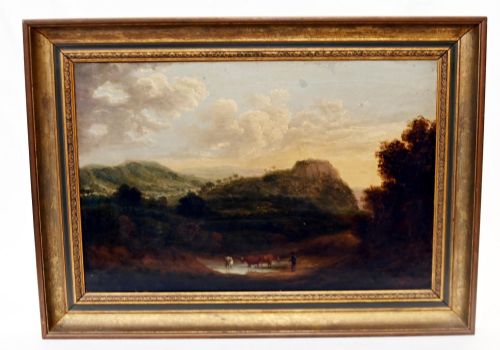
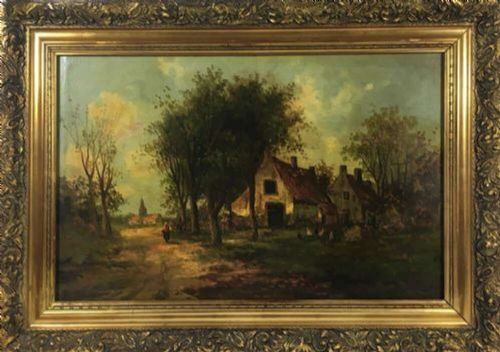
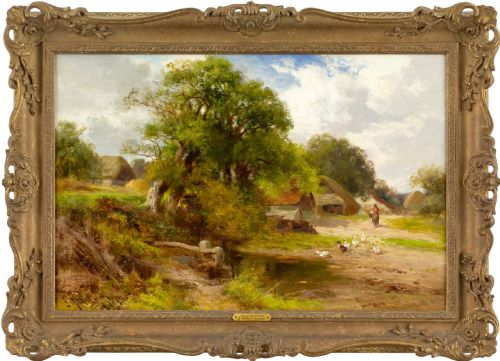
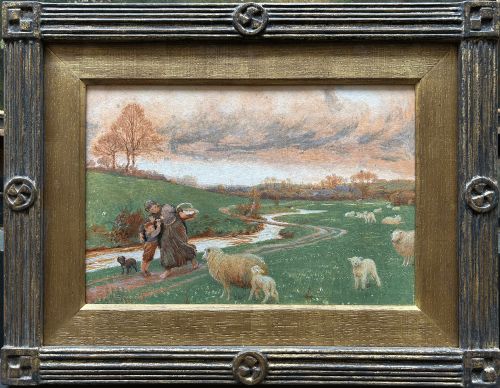
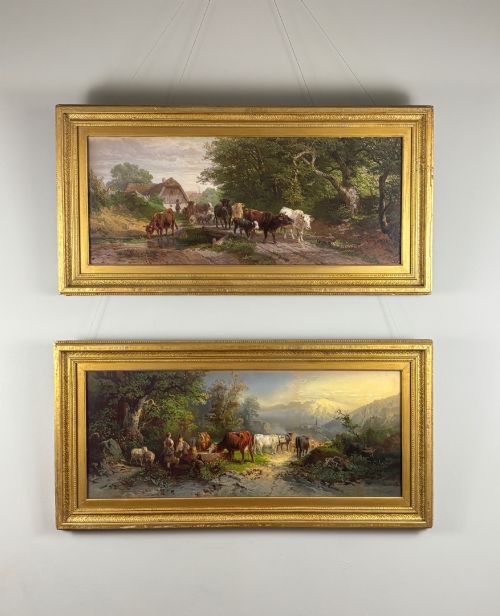
A nineteenth century country scene typically takes the form of an oil painting on canvas or panel, alongside watercolours on paper. These works depict rural landscapes, farmyard scenes, cottages, and agricultural labour across the British and European countryside.
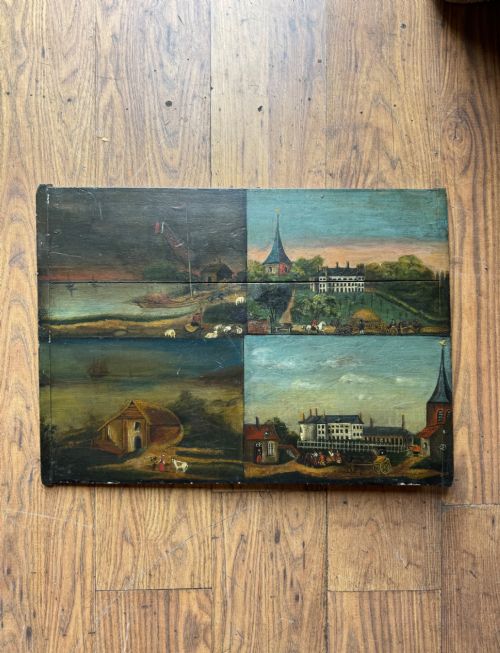
The selections on this page span the Victorian era, the Barbizon school, and naive folk art. Buyers frequently encounter framed pastoral views featuring figures harvesting, livestock near rivers, and village lanes.
Works range from provincial naïve studies to accomplished academic painting by listed artists. The focus remains consistently upon agrarian life, local trades, and domestic animals set within open fields.
How they were made
Artists painted primarily with oil paint upon prepared canvas, wooden panel, or board, while others employed watercolour on heavy paper. Giltwood and gilt wood frames frequently house these works, providing structural support and period presentation.
Brushwork varies from tight academic realism to looser impressionist application depending on the school and date. Hand-coloured engravings also appear, utilising printed lines finished with applied watercolour washes.
Several canvases record stubborn farmyard animals pausing indefinitely beside nineteenth century streams.
What varies in quality
The distinction between works rests upon draughtsmanship, handling of light, and anatomical accuracy in figures and animals. Superior examples demonstrate confident composition and atmospheric depth rather than formulaic arrangement.
Materials and framing contribute to the overall standard of a piece. Original giltwood frames and robust canvas supports elevate the preservation and visual presence of the artwork.
William Howard Hardy·John Horace Hooper·Frederick Walker·Edgar Hunt·Johann Friedrich Voltz·John Arthur Lomax·Henry John Yeend King·Andre de Moller·Robert John Hammond·Arthur Longley Vernon·Arthur Winter Shaw·George Kilburne·Claude Cardon·John Syer junior·Arthur Claude Strachan·Henry H Parker·Frank Saltfleet·William Greaves·Harold Lawes·John W Morris·Robert Thorne Waite
The Nineteenth Century Country Scene Glossary
- Barbizon School
- A nineteenth century French movement dedicated to painting landscape and rural life directly from nature. These artists influenced subsequent landscape traditions across Europe.
- Naive Folk Art
- Painting produced by self-taught artists working outside academic traditions. These pieces often feature flattened perspective and direct charm.
- Giltwood
- Wood carved and coated with gold leaf or a gold-coloured metallic finish. It is commonly found on traditional picture frames from this period.
- Genre Painting
- Art depicting scenes from everyday life, including agricultural labour and village interiors. Such works focus on human activity within familiar settings.
- Watercolour
- A painting method where fine pigments are suspended in a water-based solution on paper. It allows for translucent washes and delicate detail.
Nineteenth Century Country Scene: Frequently Asked Questions
What subjects appear in these scenes?
These works display rural activities such as harvesting, blacksmiths at work, and logging carts on village roads. Animals including Highland cattle, sheep, and ducks also feature prominently.
The compositions celebrate agrarian life, depicting cottages, stone houses, and rivers across the British countryside.
How do I hang a framed oil painting?
Ensure the wall fixings match the weight of the frame and canvas. Hang the piece at eye level away from direct sunlight and heat sources.
Stable indoor temperatures protect both the canvas support and the traditional wooden frame from warping.
Are watercolours different from oil paintings?
Watercolours use water-soluble pigments on paper and require glass protection against moisture. Oil paintings utilise oil-based pigments on canvas or panel and remain unglazed.
Both media record nineteenth century rural life but offer distinct surface textures and light-reflecting qualities.
How do I identify the period of a painting?
Examine the materials, stretcher frames, and framing style for period manufacturing techniques. Signatures and dates inscribed on the canvas or reverse provide direct chronological markers.
Stylistic elements like Victorian realism or Barbizon influence also help narrow the decade of creation.